Department of Gastroenterology and Hepatology, Kyorin University School of Medicine, 6-20-2 Shinkawa, Mitaka, Tokyo, 181-8611, Japan.
Department of Research, BioMedical Laboratory, Kitasato University Kitasato Institute Hospital, 5-9-1 Shirokane, Minato-ku, Tokyo, 108-8642, Japan.
Sci Rep. 2023 Jul 28;13(1):12241. doi: 10.1038/s41598-023-39491-x.
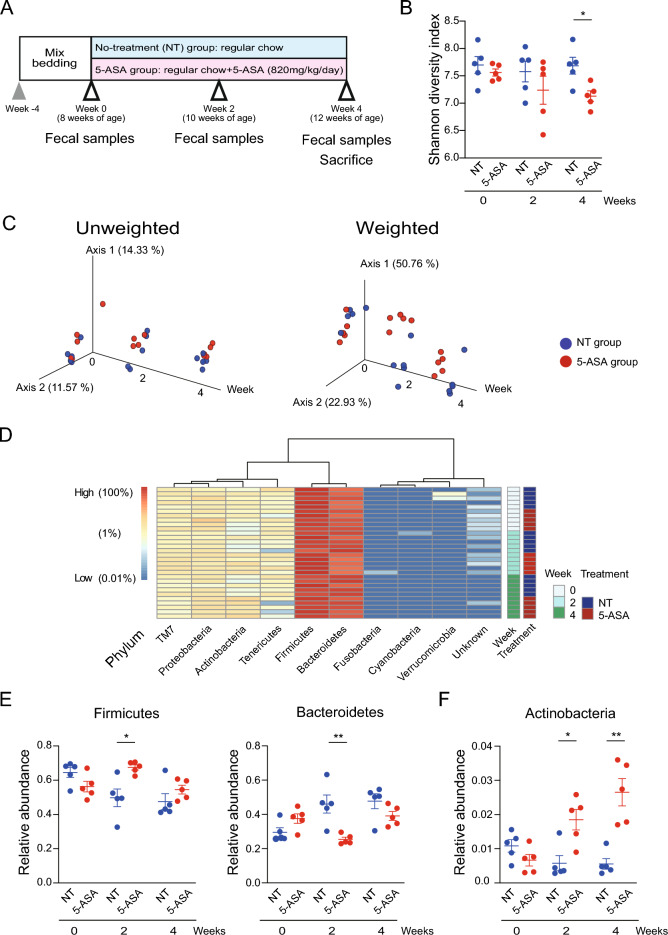
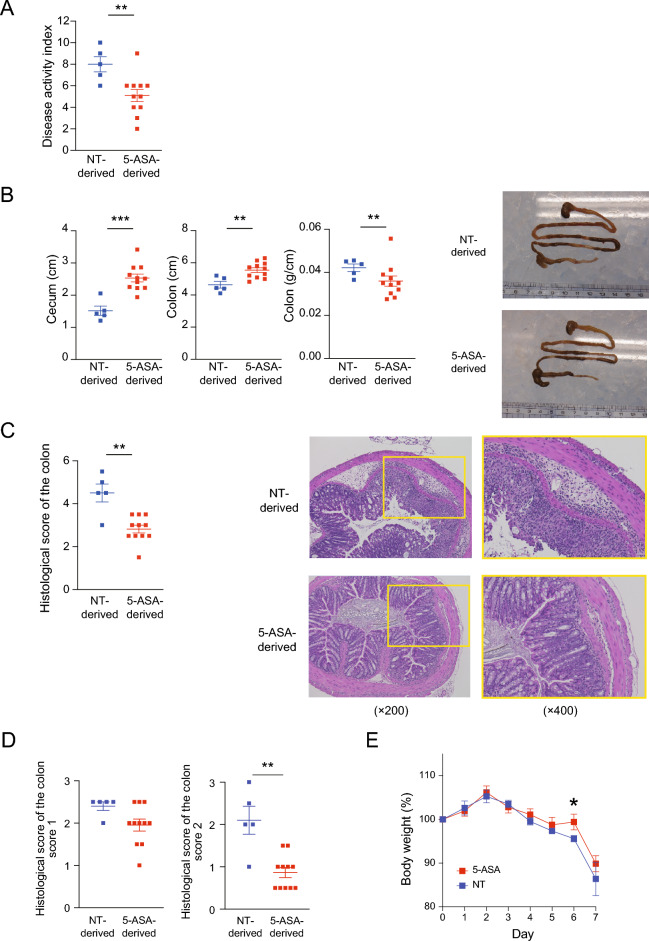
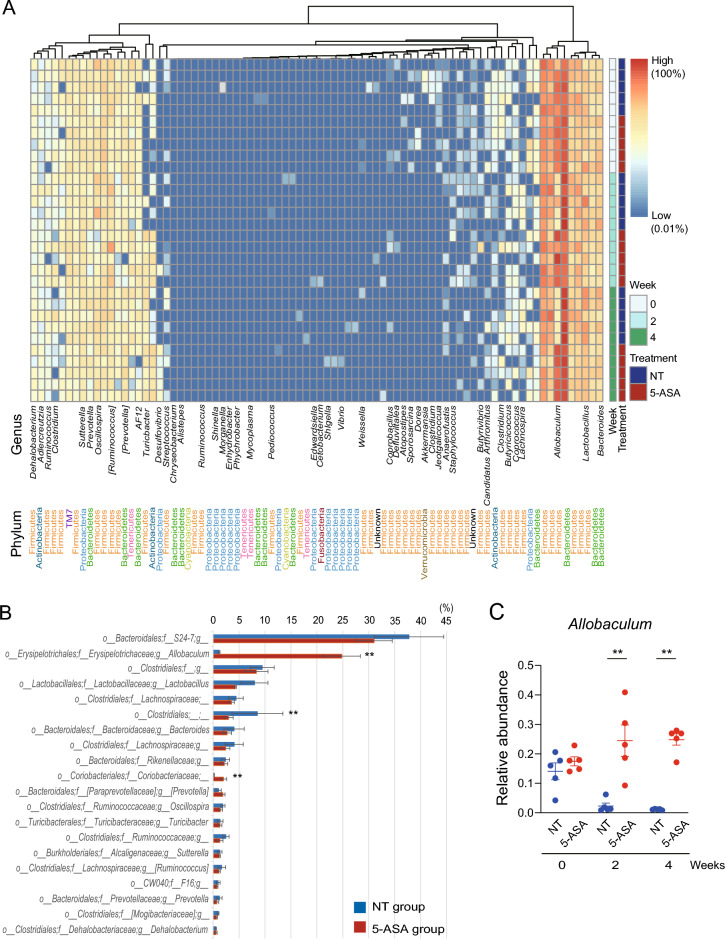
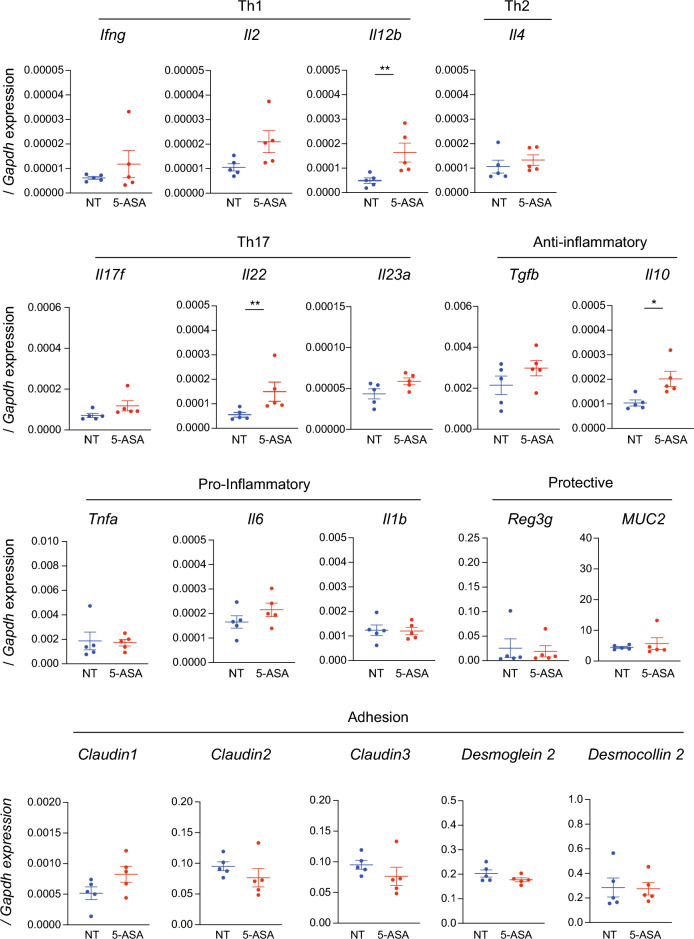
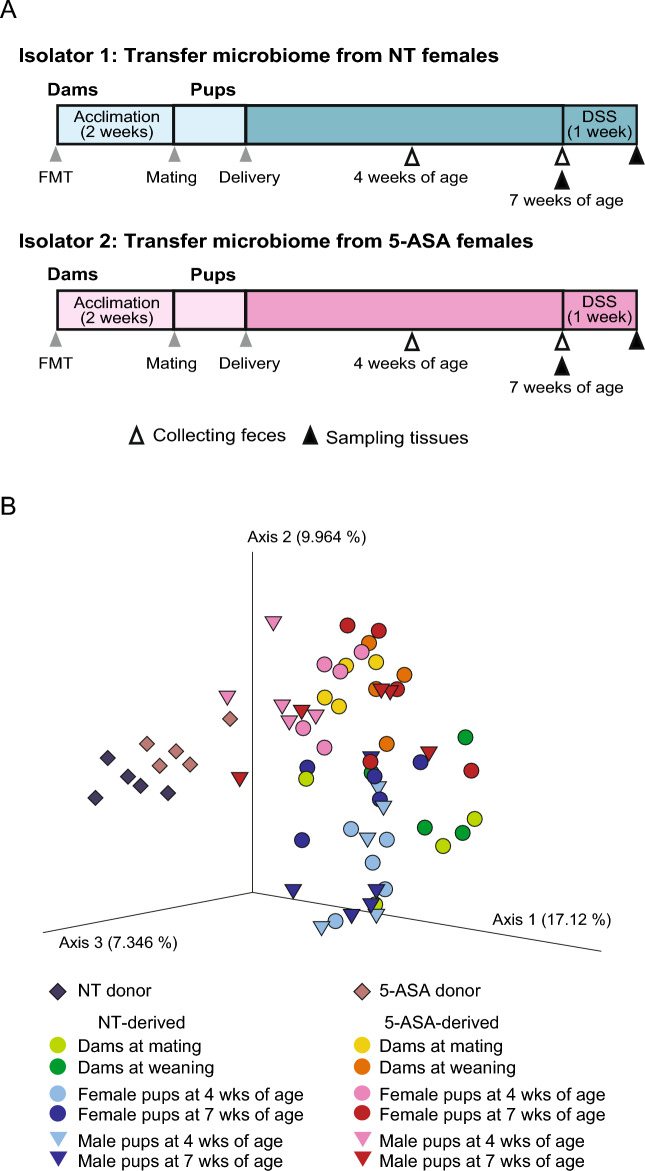
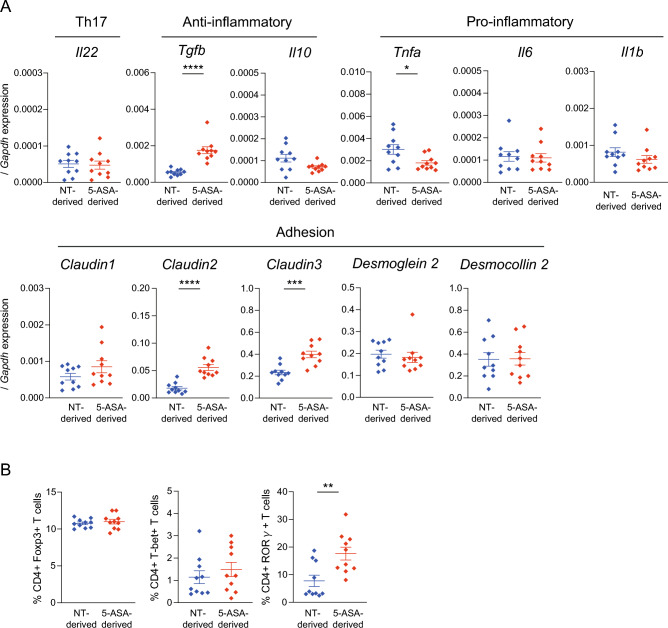
Although many therapeutic options are available for inflammatory bowel disease (IBD), 5-aminosalicylic acid (5-ASA) is still the key medication, particularly for ulcerative colitis (UC). However, the mechanism of action of 5-ASA remains unclear. The intestinal microbiota plays an important role in the pathophysiology of IBD, and we hypothesized that 5-ASA alters the intestinal microbiota, which promotes the anti-inflammatory effect of 5-ASA. Because intestinal inflammation affects the gut microbiota and 5-ASA can change the severity of inflammation, assessing the impact of inflammation and 5-ASA on the gut microbiota is not feasible in a clinical study of patients with UC. Therefore, we undertook a translational study to demonstrate a causal link between 5-ASA administration and alterations of the intestinal microbiota. Furthermore, by rigorously controlling environmental confounders and excluding the effect of 5-ASA itself with a vertical transmission model, we observed that the gut microbiota altered by 5-ASA affected host mucosal immunity and decreased susceptibility to dextran sulfate sodium-induce colitis. Although the potential intergenerational transmission of epigenetic changes needs to be considered in this study, these findings suggested that alterations in the intestinal microbiota induced by 5-ASA directed the host immune system towards an anti-inflammatory state, which underlies the mechanism of 5-ASA efficacy.
尽管有许多治疗选择可用于炎症性肠病 (IBD),但 5-氨基水杨酸 (5-ASA) 仍然是关键药物,特别是对于溃疡性结肠炎 (UC)。然而,5-ASA 的作用机制仍不清楚。肠道微生物群在 IBD 的病理生理学中起着重要作用,我们假设 5-ASA 改变了肠道微生物群,从而促进了 5-ASA 的抗炎作用。由于肠道炎症会影响肠道微生物群,并且 5-ASA 可以改变炎症的严重程度,因此在 UC 患者的临床研究中,评估炎症和 5-ASA 对肠道微生物群的影响是不可行的。因此,我们进行了一项转化研究,以证明 5-ASA 给药与肠道微生物群改变之间存在因果关系。此外,通过严格控制环境混杂因素,并使用垂直传播模型排除 5-ASA 本身的影响,我们观察到 5-ASA 改变的肠道微生物群影响宿主黏膜免疫,并降低对葡聚糖硫酸钠诱导结肠炎的易感性。尽管在这项研究中需要考虑肠道微生物群变化的潜在代际传递,但这些发现表明,5-ASA 诱导的肠道微生物群改变促使宿主免疫系统向抗炎状态发展,这是 5-ASA 疗效的机制。