Division of Gastroenterology and Hepatology, Third Department of Internal Medicine, Kansai Medical University, Hirakata 573-1010, Japan.
Int J Mol Sci. 2023 Jul 20;24(14):11697. doi: 10.3390/ijms241411697.
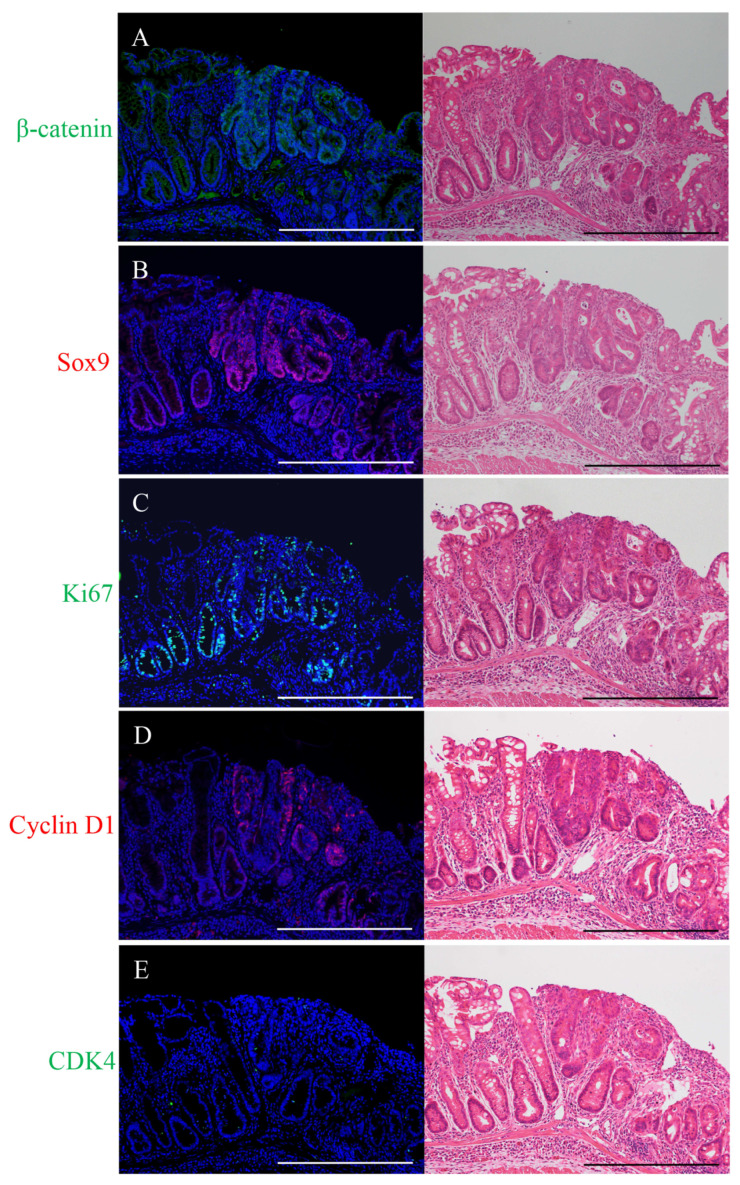
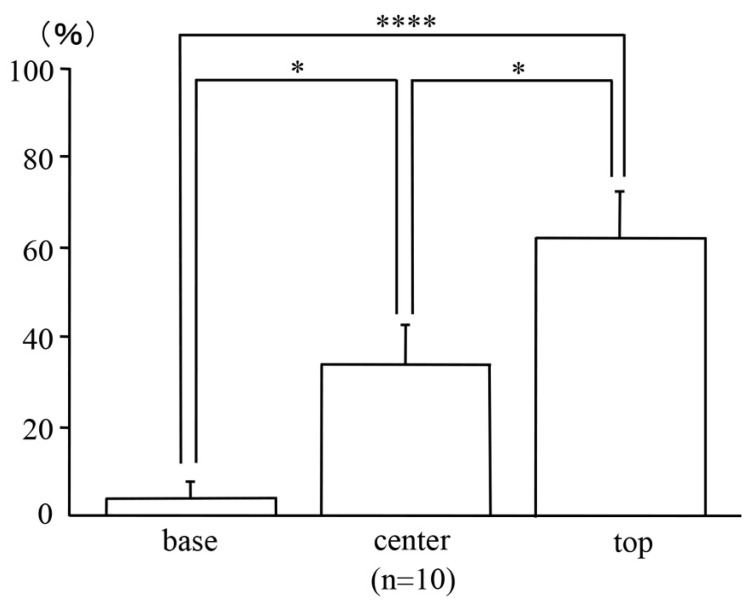
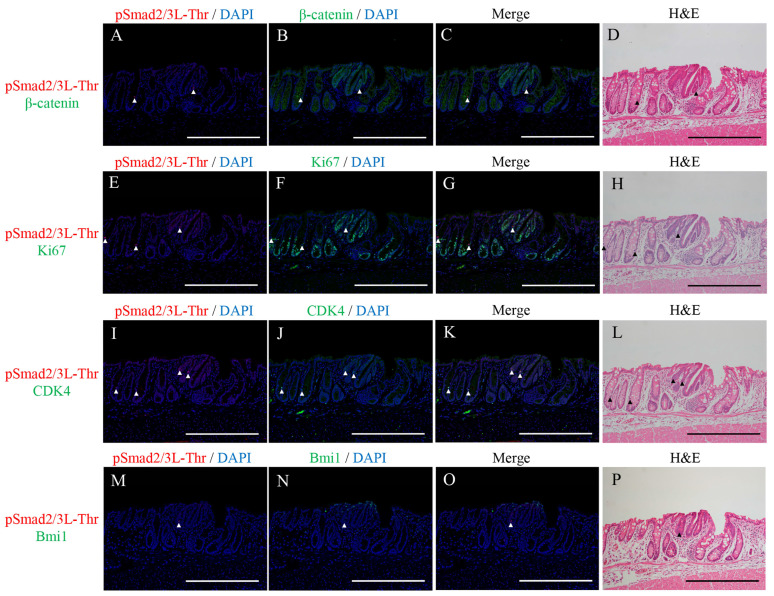
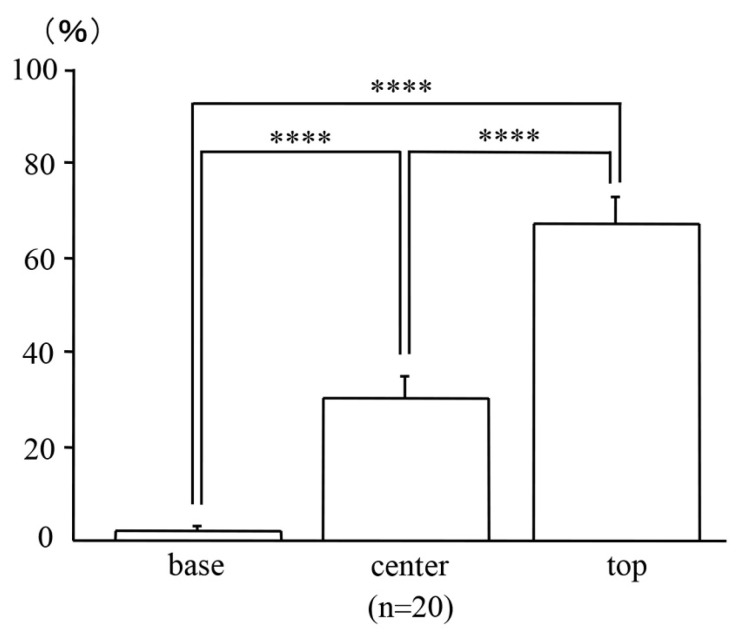
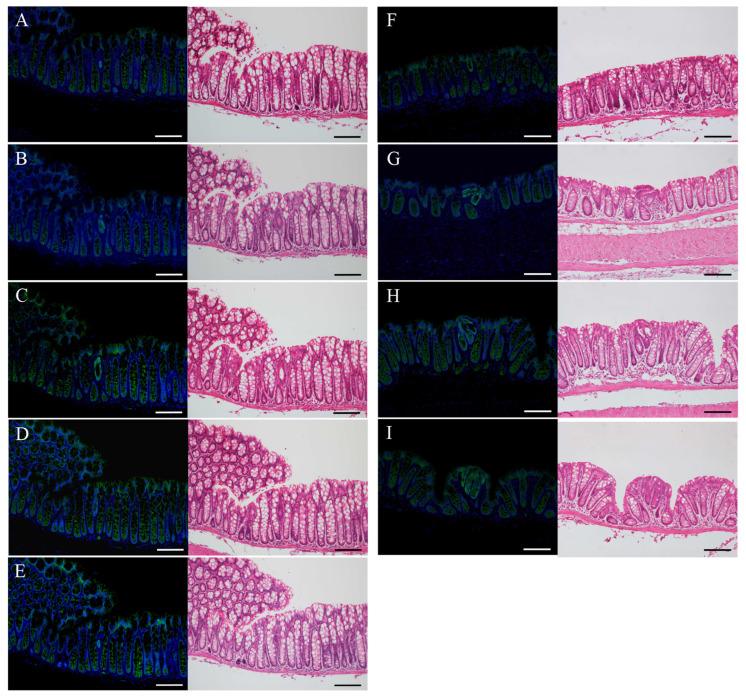
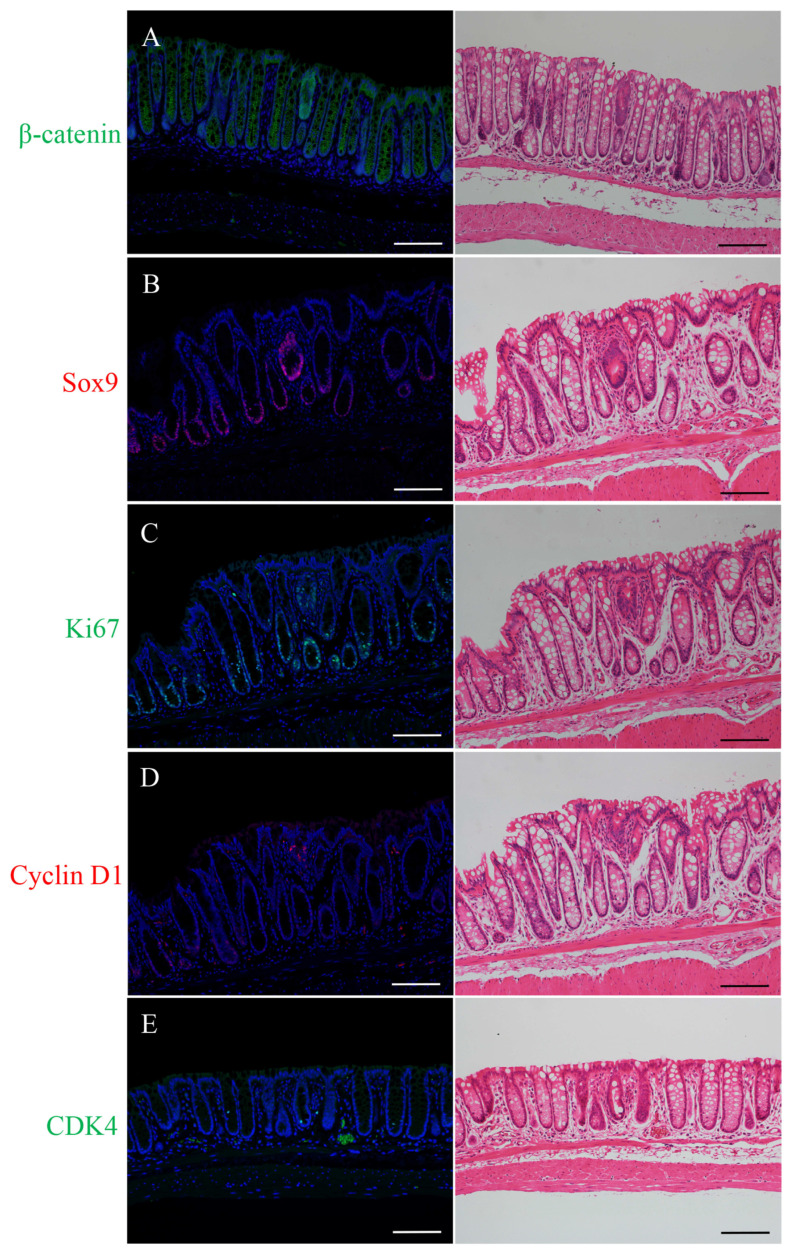
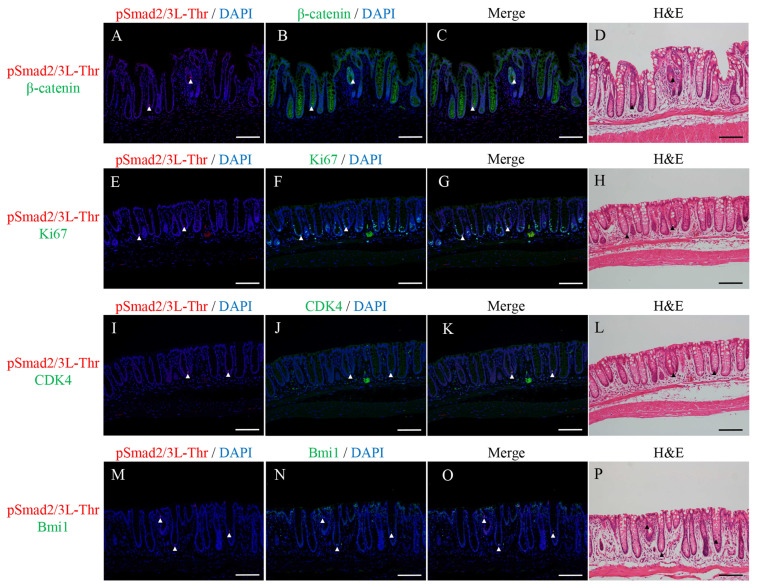
The mechanisms underlying the transition from colitis-associated inflammation to carcinogenesis and the cell origin of cancer formation are still unclear. The azoxymethane (AOM)/dextran sodium sulfate (DSS) mouse model reproduces human colitis-associated colorectal cancer. To elucidate the mechanisms of cancer development and dynamics of the linker threonine-phosphorylated Smad2/3 (pSmad2/3L-Thr)-positive cells, we explored the early stages of colitis-associated colorectal cancer in AOM/DSS mice. The AOM/DSS mice were sacrificed at 4 to 6 weeks following AOM administration. To analyze the initial lesions, immunofluorescence staining for the following markers was performed: β-catenin, Ki67, CDK4, Sox9, Bmi1, cyclin D1, and pSmad2/3L-Thr. Micro-neoplastic lesions were flat and unrecognizable, and the uni-cryptal ones were either open to the surfaces or hidden within the mucosae. These neoplastic cells overexpressed β-catenin, Sox9, Ki67, and Cyclin D1 and had large basophilic nuclei in the immature atypical cells. In both the lesions, pSmad2/3L-Thr-positive cells were scattered and showed immunohistochemical co-localization with β-catenin, CDK4, and Bmi1 but never with Ki67. More β-catenin-positive neoplastic cells of both lesions were detected at the top compared to the base or center of the mucosae. We confirmed initial lesions in the colitis-associated colorectal cancer model mice and observed results that suggest that pSmad2/3L-Thr is a biomarker for tissue stem cells and cancer stem cells.
结直肠炎相关癌症发生及细胞起源的癌变机制尚不清楚。氧化偶氮甲烷(AOM)/葡聚糖硫酸钠(DSS)小鼠模型可复制人类结直肠炎相关结直肠癌。为了阐明癌症发展的机制和连接丝氨酸磷酸化 Smad2/3(pSmad2/3L-Thr)阳性细胞的动力学,我们研究了 AOM/DSS 小鼠中结直肠炎相关结直肠癌的早期阶段。AOM 给药后 4-6 周处死 AOM/DSS 小鼠。为了分析初始病变,对以下标志物进行免疫荧光染色:β-连环蛋白、Ki67、CDK4、Sox9、Bmi1、细胞周期蛋白 D1 和 pSmad2/3L-Thr。微瘤病变是平坦且无法识别的,单隐窝病变要么向表面开放,要么隐藏在黏膜内。这些肿瘤细胞过度表达β-连环蛋白、Sox9、Ki67 和细胞周期蛋白 D1,在不成熟的非典型细胞中具有大的嗜碱性核。在病变中,pSmad2/3L-Thr 阳性细胞呈散在分布,并与β-连环蛋白、CDK4 和 Bmi1 呈免疫组化共定位,但从不与 Ki67 共定位。与黏膜的基底或中心相比,在顶部检测到更多的两种病变中β-连环蛋白阳性的肿瘤细胞。我们在结直肠炎相关结直肠癌模型小鼠中证实了初始病变,并观察到结果表明 pSmad2/3L-Thr 是组织干细胞和癌症干细胞的生物标志物。