School of Health Sciences, Western Sydney University, Campbelltown Campus, Locked Bag 1797, Penrith, NSW 2571, Australia.
Organization of People of Determination and Sustainable Development, Benghazi, Libya.
Nutrients. 2023 Jul 19;15(14):3207. doi: 10.3390/nu15143207.
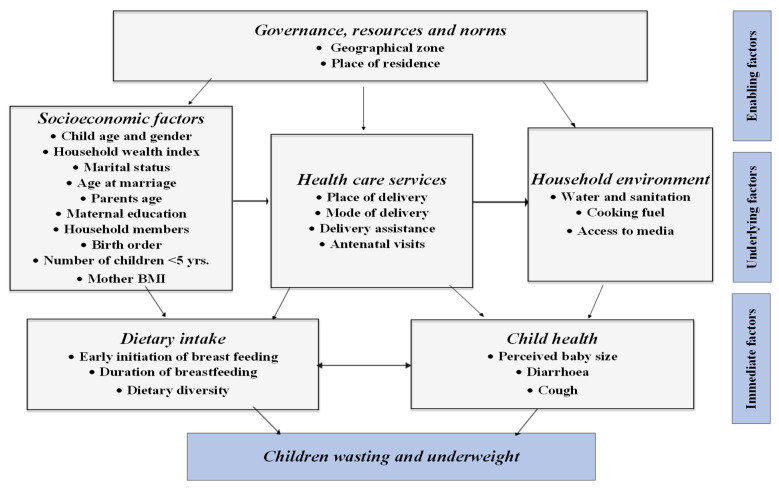
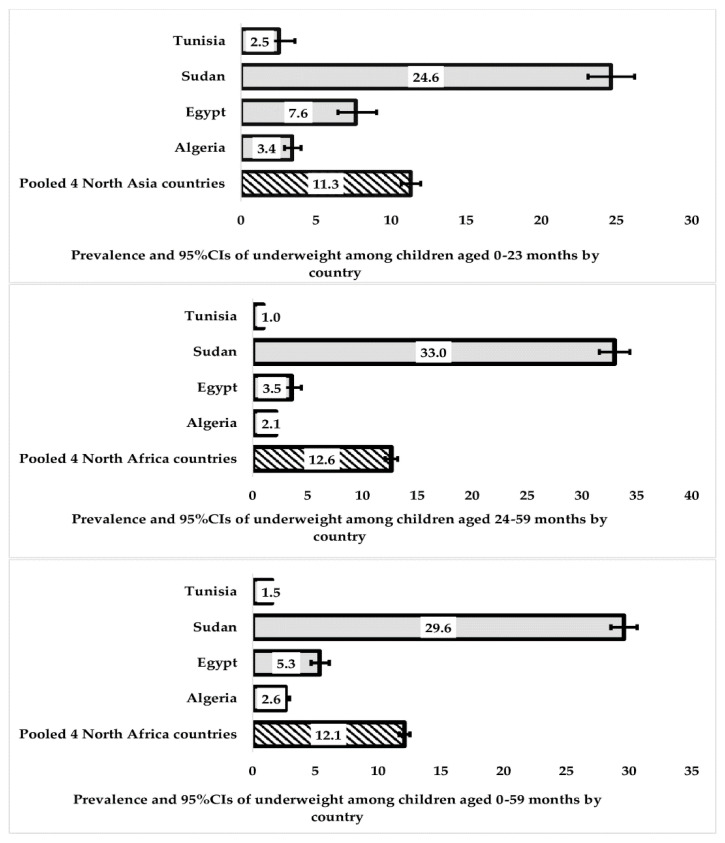
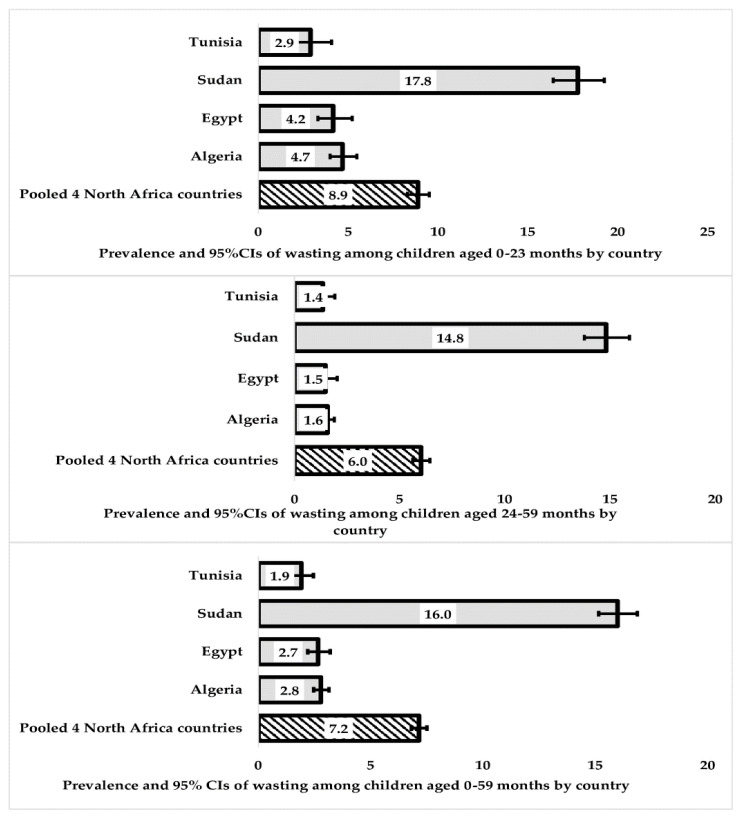
Northern Africa faces multiple severe detrimental factors that impact child nutrition. This study aimed to identify the predictors for wasting and underweight in children aged 0-59 months in Northern Africa. We analysed pooled cross-sectional data from multiple-indicator cluster surveys conducted in four countries (Algeria, Egypt, Sudan, and Tunisia) involving 37,816 children aged 0-59 months. A logistic regression analysis was used, considering clustering and sampling weights, to identify factors associated with wasting and underweight among children aged 0-23, 24-59, and 0-59 months. Among children aged 0-59 months, the overall prevalence was 7.2% (95% CI: 6.8-7.5) for wasting and 12.1% (95% CI:11.7-12.5) for underweight. Sudan and Algeria had the highest rates of wasting, while Sudan and Egypt had the highest rates of underweight. Multiple regression analyses indicate that factors associated with wasting and being underweight include child age, country, rural residency, poor wealth index, being male, birth order, maternal education, body mass index, media use, lack of diverse foods, longer duration of breastfeeding, perceived small baby size, and diarrhoea. These findings highlight the importance of implementing targeted health and nutrition initiatives, such as maternal education, family planning, and community engagement. Priority should be given to children from underprivileged areas who lack proper dietary variety.
北非面临着多种严重的不利因素,这些因素影响儿童营养。本研究旨在确定影响北非 0-59 个月儿童消瘦和体重不足的预测因素。我们分析了来自四个国家(阿尔及利亚、埃及、苏丹和突尼斯)的多指标群集调查的汇总横断面数据,涉及 37816 名 0-59 个月的儿童。使用逻辑回归分析,考虑到聚类和抽样权重,以确定与 0-23、24-59 和 0-59 个月儿童消瘦和体重不足相关的因素。在 0-59 个月的儿童中,消瘦的总患病率为 7.2%(95%可信区间:6.8-7.5),体重不足的总患病率为 12.1%(95%可信区间:11.7-12.5)。苏丹和阿尔及利亚消瘦率最高,而苏丹和埃及体重不足率最高。多元回归分析表明,与消瘦和体重不足相关的因素包括儿童年龄、国家、农村居住、贫困财富指数、男性、出生顺序、母亲教育程度、体重指数、媒体使用、缺乏多样化食物、母乳喂养时间较长、认为婴儿体型较小和腹泻。这些发现强调了实施有针对性的健康和营养计划的重要性,如母亲教育、计划生育和社区参与。应优先关注来自贫困地区的儿童,他们缺乏适当的饮食多样性。