Aslan Ismail, Tarhan Celebi Leyla, Kayhan Hulya, Kizilay Emine, Gulbahar Mustafa Yavuz, Kurt Halil, Cakici Bekir
Department of Pharmaceutical Technology, Hamidiye Faculty of Pharmacy, University of Health Sciences, İstanbul 34668, Turkey.
SFA R&D and Analysis Services, Teknopark İstanbul, İstanbul 34906, Turkey.
Pharmaceuticals (Basel). 2023 Jul 22;16(7):1041. doi: 10.3390/ph16071041.
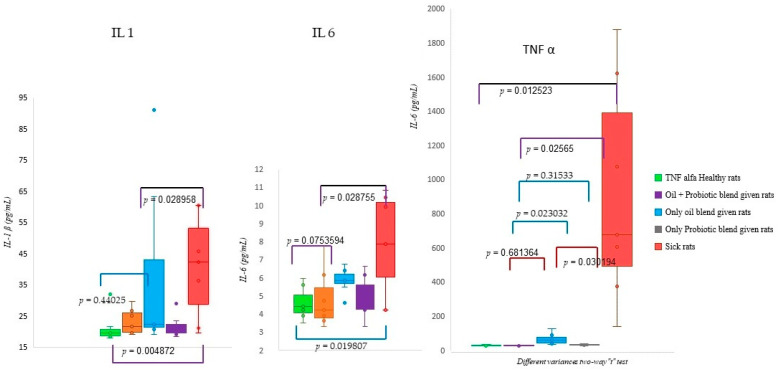
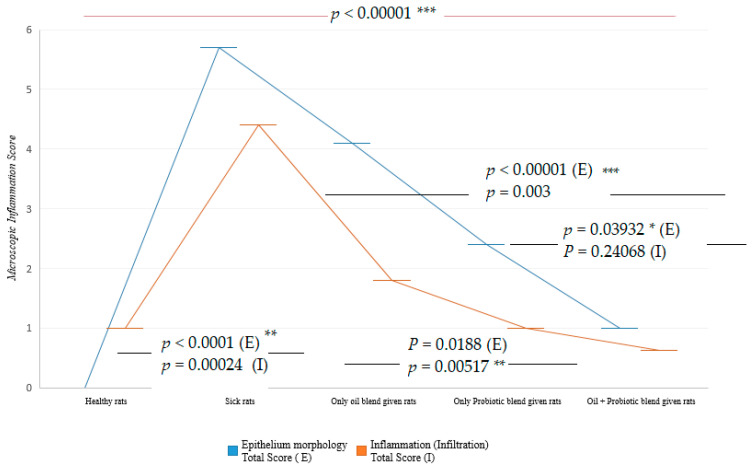
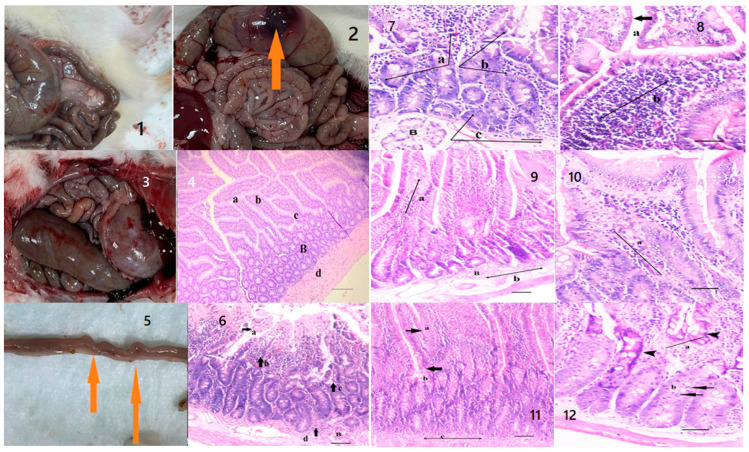
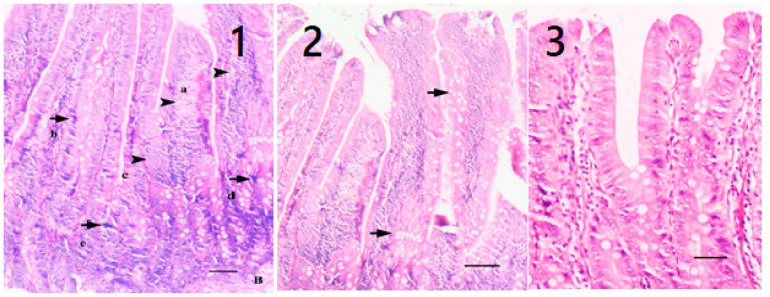
Dysbiosis of the gut microbiota is associated with the pathogenesis of intestinal diseases such as inflammatory bowel disease, irritable bowel syndrome (IBS), small intestinal bacterial overgrowth (SIBO), and metabolic disease states such as allergies, cardiovascular diseases, obesity, and diabetes. SIBO is a condition characterized by an increased number (>1 × 10 CFU) of abnormal bacterial species in the small intestine. Interest in SIBO has gained importance due to increased awareness of the human microbiome and its potential relationships with human health and disease, which has encouraged new work in this area. In recent years, standard antibiotic regimens (rifaximin and metronidazole) have been used to treat SIBO, but solo antibiotics or their derivatives are insufficient. In this study, the therapeutic effects of the probiotic form, which contains coconut oil and traces of peppermint-lemon-patchouli essential oil, were evaluated on the Dysbiosis-Based Rat SIBO Model. There are significant differences between sick and healthy rats ( = 0.014), between sick rats and rats treated with the oil mix plus probiotic mix protocol ( = 0.026), and between rats treated with only the probiotic and only oil protocols ( = 0.030) in the evaluation of TNF-α levels. Histologically, villi distortion and loss of crypts, epithelial shedding and necrotic changes in the apical regions of the villi, and inflammatory cell infiltrations extending to the lamina propria and submucosa were observed in sick rats. Mitotic figures in villus epithelium and crypts were observed in rats treated with 9.2 × 10 CFU/1000 mg/coconut oil + trace amounts of peppermint-lemon-patchouli essential oil and a probiotic mixture (oil + probiotic mix protocol). A regression of inflammatory reactions and an increase in goblet cells were observed. A decrease was observed in inflammation markers in sick rats. On the other hand, the oil plus probiotic mix protocol recovered digestive system defects in the animals caused by dysbiosis. In the future, these treatment approaches can be effective in the treatment of SIBO.
肠道微生物群失调与肠道疾病如炎症性肠病、肠易激综合征(IBS)、小肠细菌过度生长(SIBO)以及代谢性疾病状态如过敏、心血管疾病、肥胖和糖尿病的发病机制相关。SIBO是一种以小肠中异常细菌种类数量增加(>1×10 CFU)为特征的病症。由于对人类微生物组及其与人类健康和疾病潜在关系的认识增加,对SIBO的关注变得更加重要,这鼓励了该领域的新研究。近年来,标准抗生素方案(利福昔明和甲硝唑)已被用于治疗SIBO,但单独使用抗生素或其衍生物并不充分。在本研究中,对基于失调的大鼠SIBO模型评估了含有椰子油和微量薄荷 - 柠檬 - 广藿香精油的益生菌形式的治疗效果。在评估TNF-α水平时,患病大鼠与健康大鼠之间(P = 0.014)、患病大鼠与接受油混合物加益生菌混合物方案治疗的大鼠之间(P = 0.026)以及仅接受益生菌和仅接受油方案治疗的大鼠之间(P = 0.030)存在显著差异。组织学上,在患病大鼠中观察到绒毛扭曲、隐窝丧失、绒毛顶端区域上皮脱落和坏死变化以及炎症细胞浸润延伸至固有层和黏膜下层。在用9.2×10 CFU/1000 mg/椰子油 + 微量薄荷 - 柠檬 - 广藿香精油和益生菌混合物(油 + 益生菌混合物方案)治疗的大鼠中观察到绒毛上皮和隐窝中的有丝分裂象。观察到炎症反应消退和杯状细胞增加。患病大鼠的炎症标志物有所下降。另一方面,油加益生菌混合物方案恢复了由失调引起的动物消化系统缺陷。未来,这些治疗方法可能对SIBO的治疗有效。