Hubmann Martin, Schuschnigg Stephan, Ðuretek Ivica, Groten Jonas, Holzer Clemens
Polymer Processing, Department of Polymer Engineering and Science, Montanuniversitaet Leoben, 8700 Leoben, Austria.
Joanneum Research Forschungsgesellschaft mbH, Franz-Pichler Str. 30, 8160 Weiz, Austria.
Polymers (Basel). 2023 Jul 24;15(14):3147. doi: 10.3390/polym15143147.
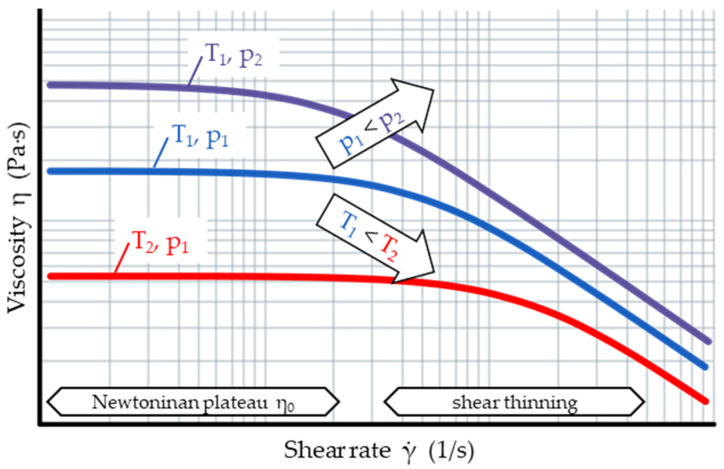
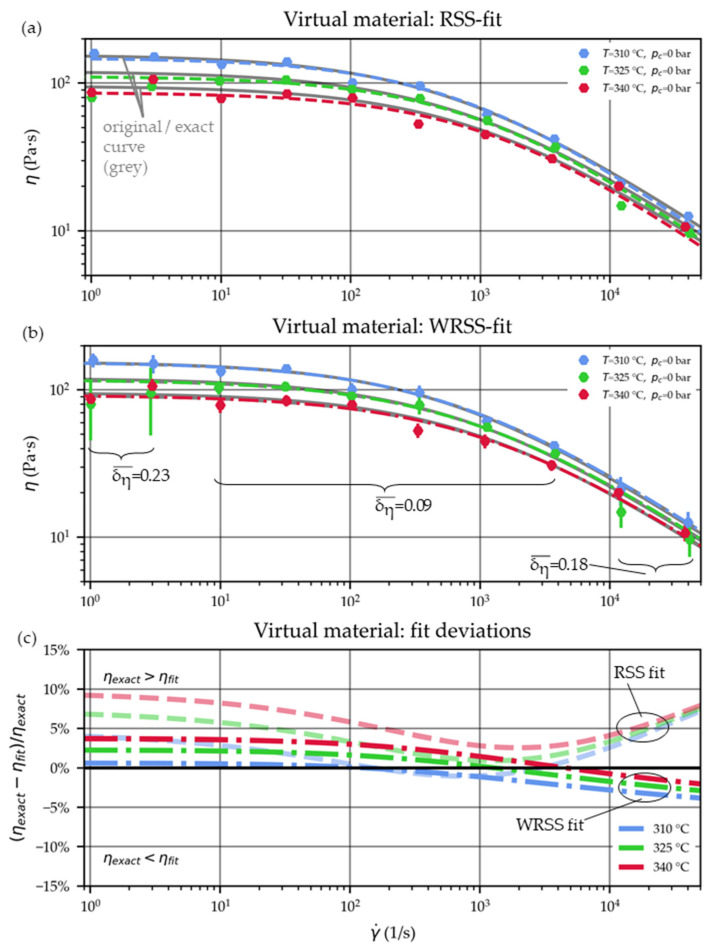
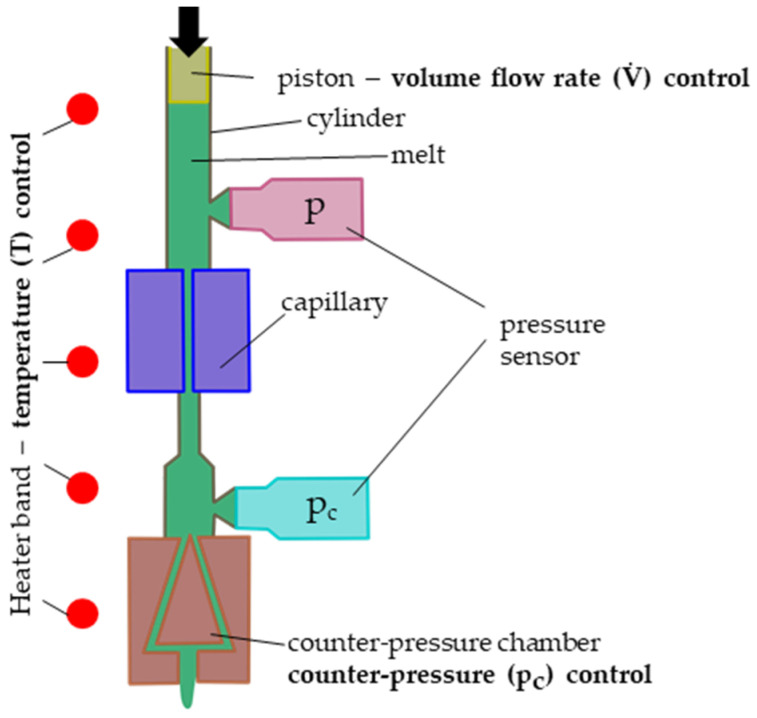
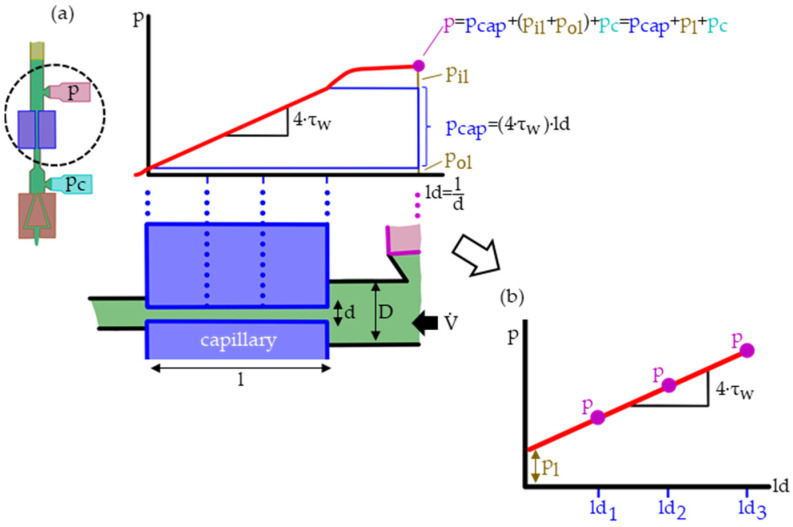
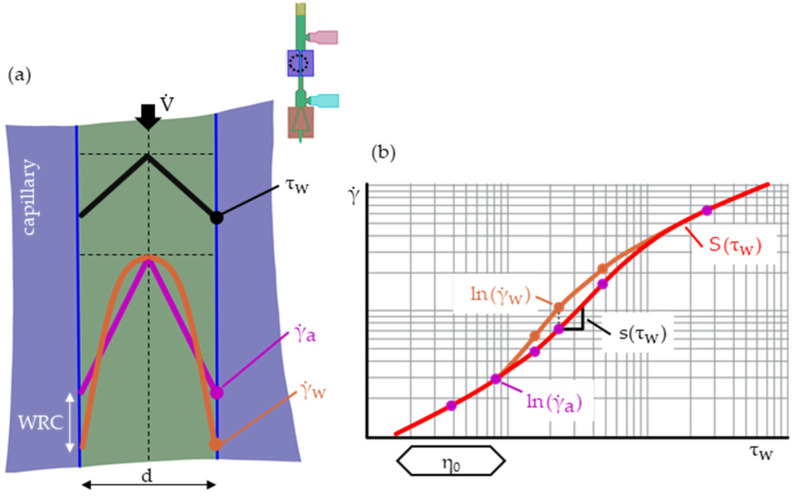
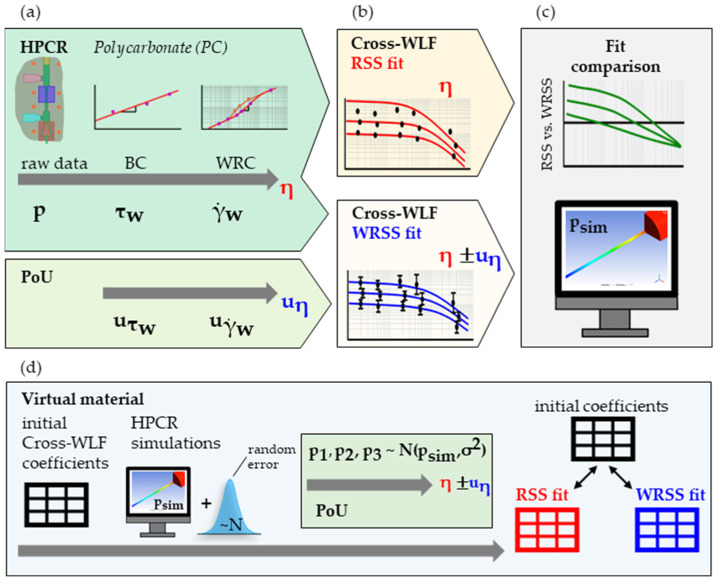
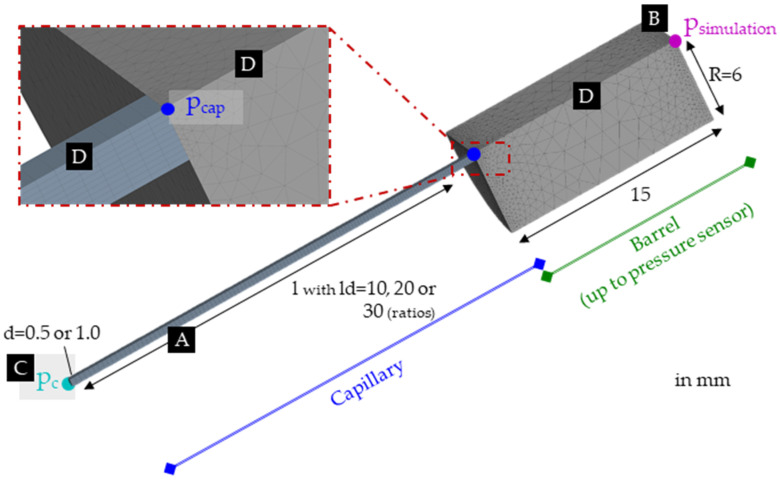
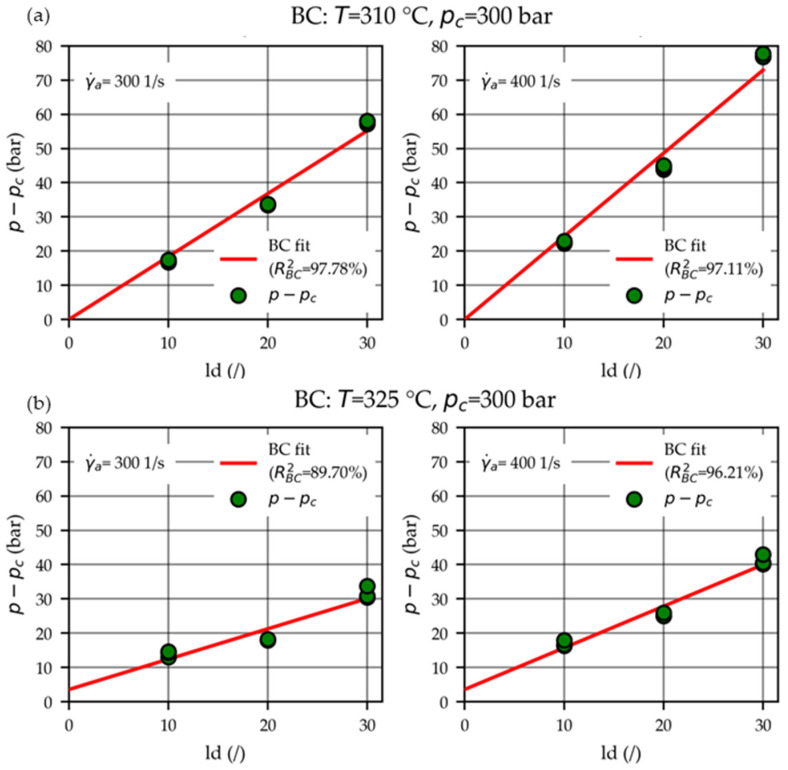
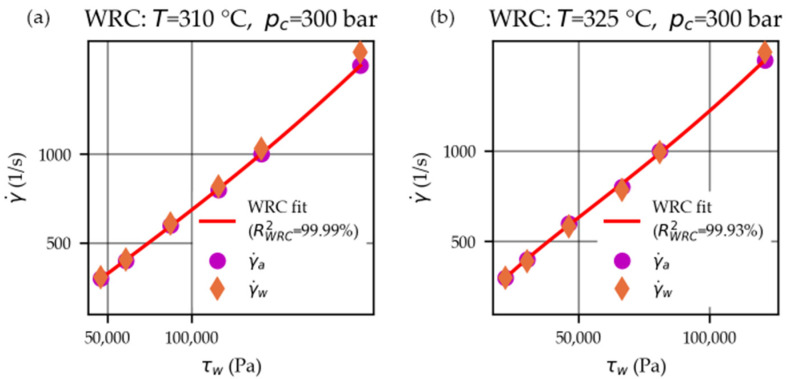
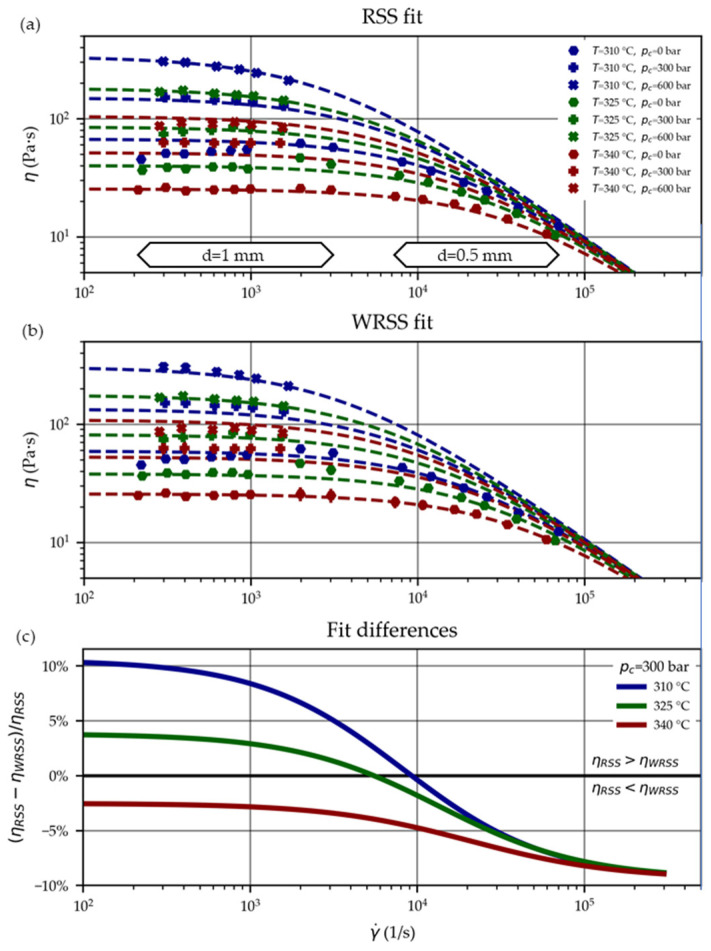
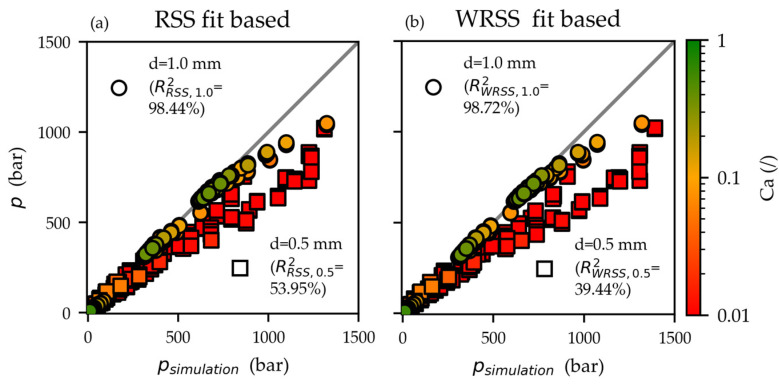
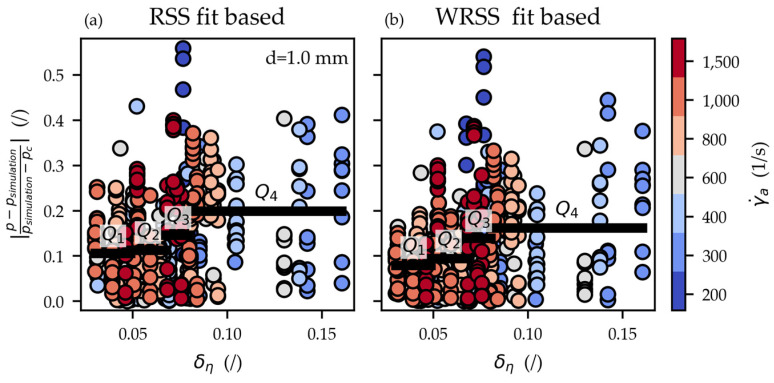
Measuring the shear viscosity of polymeric melts is an extensive effort frequently performed in high-pressure capillary rheometers, where the pressures required to push the melt through a capillary at various temperatures and volumetric flow rates are recorded. Then, the viscosity values are obtained through Bagley and Weissenberg-Rabinowitsch corrections involving parameter fitting. However, uncertainties in those conversions due to pressure variations and measurement inaccuracies (random errors) affect the accuracy of the consequently calculated viscosities. This paper proposes quantifying them through a propagation of uncertainties calculation. This has been experimentally demonstrated for a polycarbonate melt. In addition, the derived viscosity uncertainties were used for the weighted residual sum of squares parameter estimation of the Cross-WLF viscosity model and compared with the coefficients obtained using the standard residual sum of squares minimization approach. The motivation was that, by comparison, individual poorly measured viscosity values should have a less negative impact on the overall fit quality of the former. For validation, the rheometer measurements were numerically simulated with both fits. The simulations based on the Cross-WLF fit, including the derived viscosity uncertainties, matched the measured pressures ~16% more closely for shear rates below 1500 1/s. Considering the uncertainties led to more precise coefficients. However, both fits showed substantial deviations at higher shear rates, probably due to substantial non-isothermal flow conditions that prevailed during these measurements. A capillary rheometer experiment was also simulated using arbitrarily chosen Cross-WLF parameters to exclude such systematic errors. A normally distributed error was then applied to the simulated pressures before re-fitting the parameters. Again, taking advantage of the derived viscosity uncertainties, the fit could recover the initial parameters better.
测量聚合物熔体的剪切粘度是一项在高压毛细管流变仪中经常进行的广泛工作,在该仪器中,记录了在不同温度和体积流速下将熔体推过毛细管所需的压力。然后,通过涉及参数拟合的巴格利(Bagley)和魏森贝格-拉宾诺维奇(Weissenberg-Rabinowitsch)校正来获得粘度值。然而,由于压力变化和测量不准确(随机误差)导致的那些转换中的不确定性会影响最终计算出的粘度的准确性。本文提出通过不确定性传播计算来对它们进行量化。这已通过聚碳酸酯熔体的实验得到证明。此外,将导出的粘度不确定性用于Cross-WLF粘度模型的加权残差平方和参数估计,并与使用标准残差平方和最小化方法获得的系数进行比较。其动机在于,通过比较,个别测量不佳的粘度值对前者的整体拟合质量的负面影响应该较小。为了进行验证,对流变仪测量进行了两种拟合的数值模拟。基于Cross-WLF拟合的模拟,包括导出的粘度不确定性,对于低于1500 1/s的剪切速率,与测量压力的匹配度提高了约16%。考虑到不确定性会得到更精确的系数。然而,两种拟合在较高剪切速率下都显示出很大偏差,这可能是由于这些测量过程中普遍存在的大量非等温流动条件所致。还使用任意选择的Cross-WLF参数对毛细管流变仪实验进行了模拟,以排除此类系统误差。然后在重新拟合参数之前,对模拟压力应用正态分布误差。同样,利用导出的粘度不确定性,拟合能够更好地恢复初始参数。