Department of Nutrition, School of Public Health, Sun Yat-Sen University, Guangzhou, People's Republic of China.
Department of Molecular, Cellular and Developmental Biology, University of Colorado, Boulder, USA.
Redox Biol. 2023 Sep;65:102828. doi: 10.1016/j.redox.2023.102828. Epub 2023 Jul 25.
Vascular senescence, which is closely related to epigenetic regulation, is an early pathological condition in cardiovascular diseases including atherosclerosis. Inhibition of S-adenosylhomocysteine hydrolase (SAHH) and the consequent increase of S-adenosylhomocysteine (SAH), a potent inhibitor of DNA methyltransferase, has been associated with an elevated risk of cardiovascular diseases. This study aimed to investigate whether the inhibition of SAHH accelerates vascular senescence and the development of atherosclerosis.
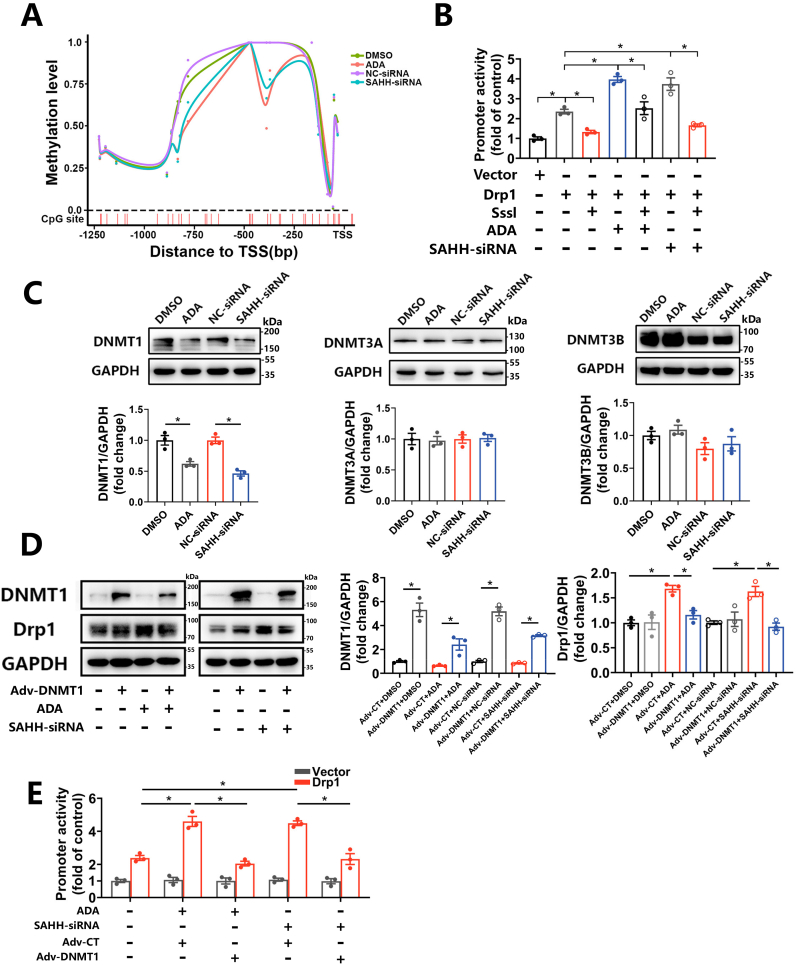
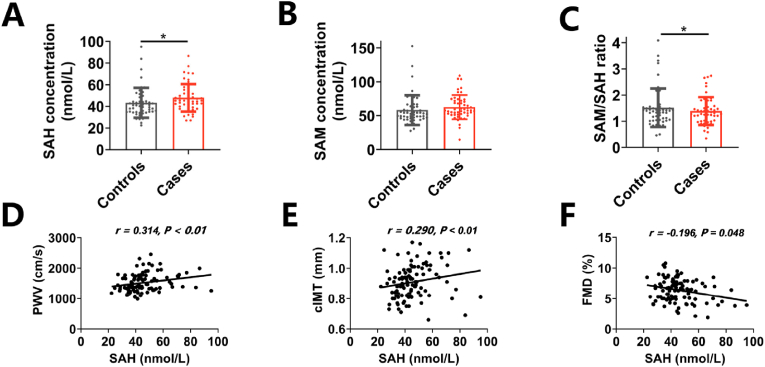
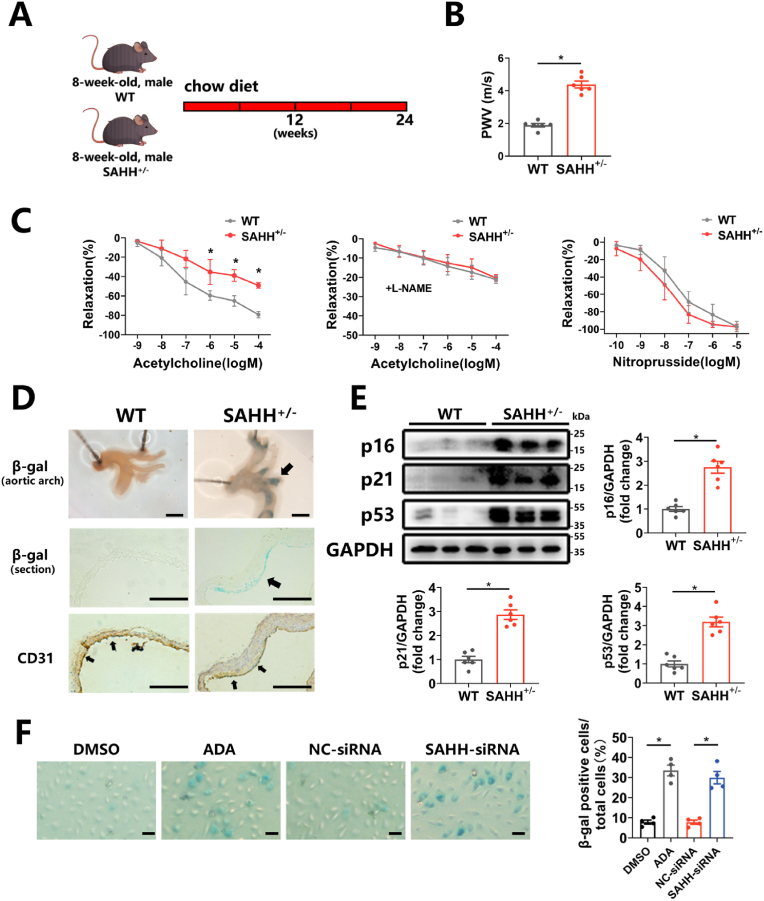
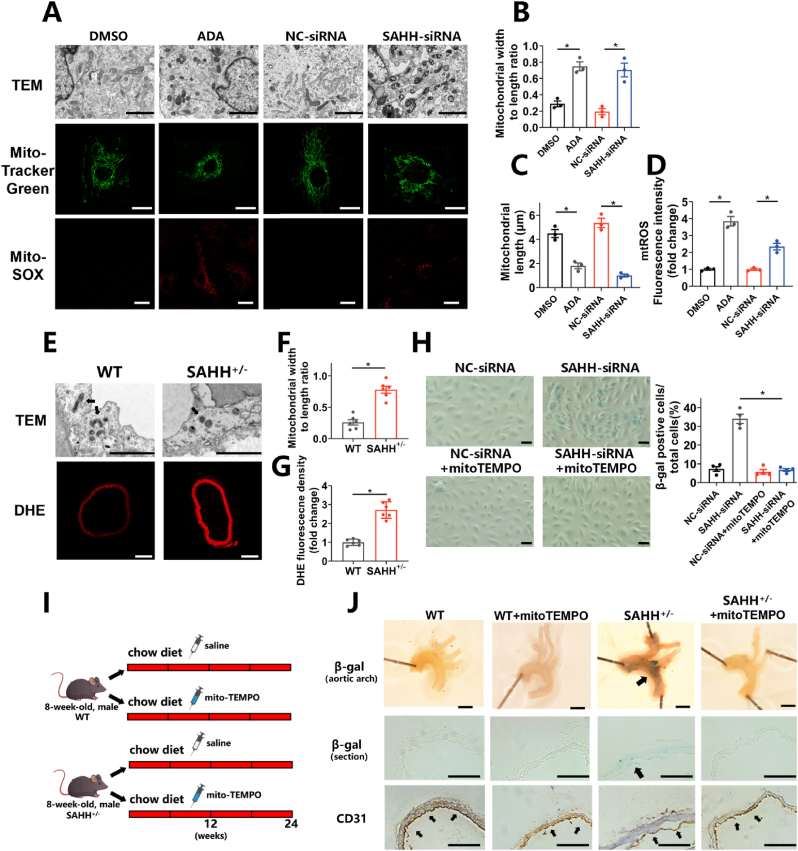
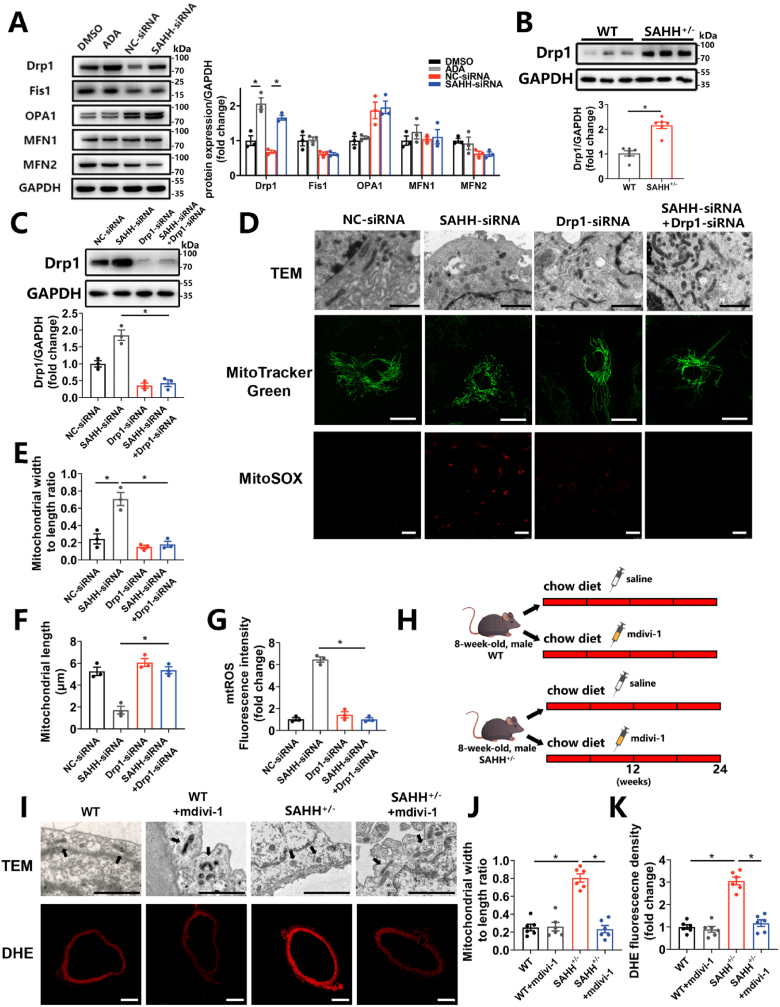
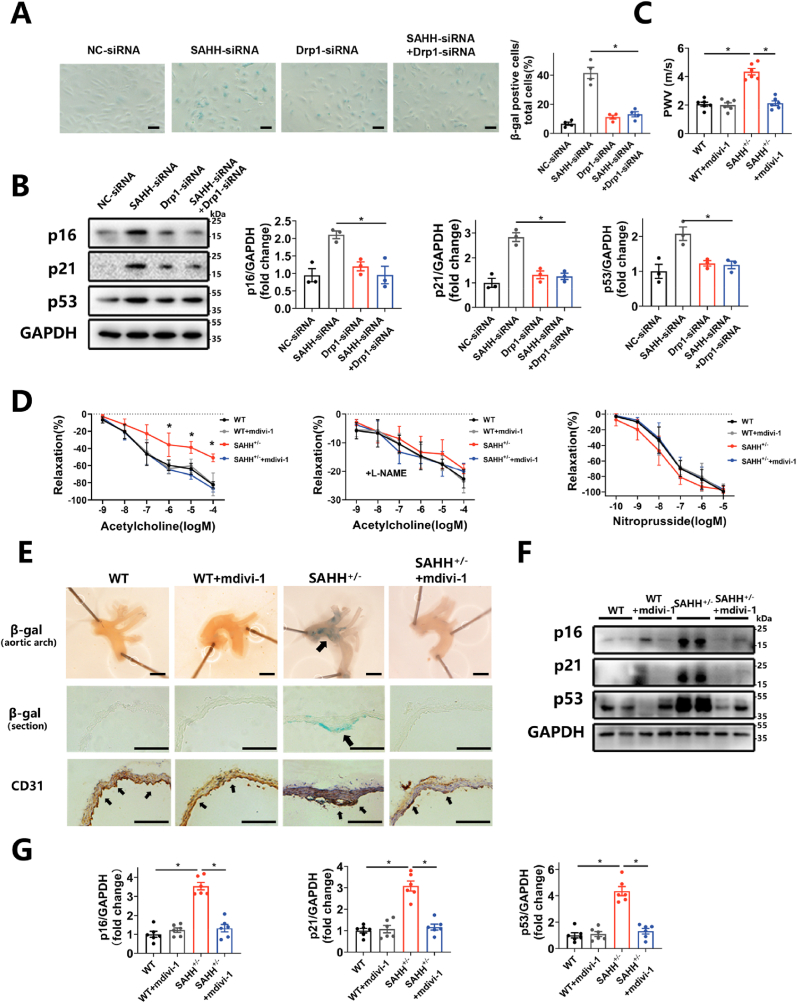
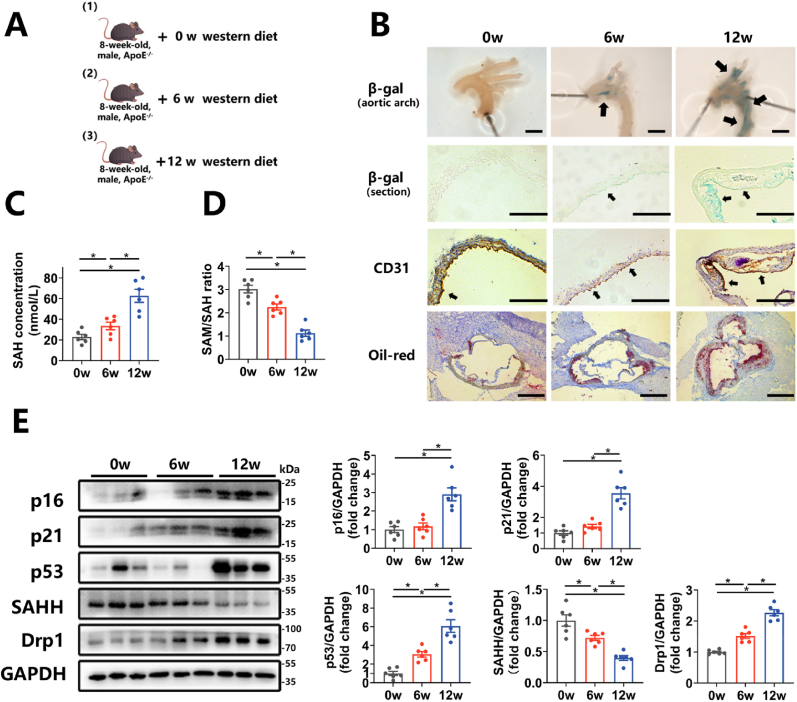
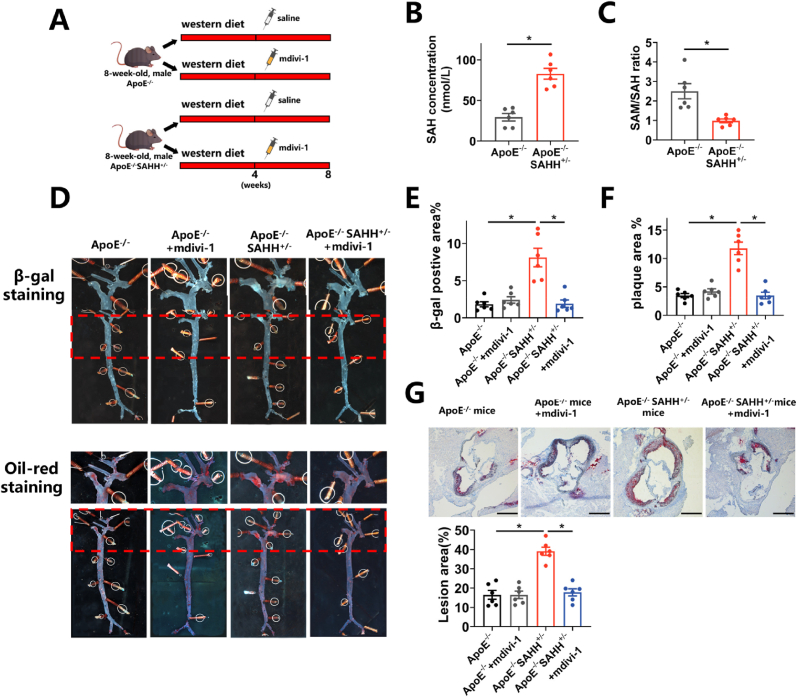
The case-control study related to vascular aging showed that increased levels of plasma SAH were positively associated with the risk of vascular aging, with an odds ratio (OR) of 3.90 (95% CI, 1.17-13.02). Elevated pulse wave velocity, impaired endothelium-dependent relaxation response, and increased senescence-associated β-galactosidase staining were observed in the artery of SAHH mice at 32 weeks of age. Additionally, elevated expression of p16, p21, and p53, fission morphology of mitochondria, and over-upregulated expression of Drp1 were observed in vascular endothelial cells with SAHH inhibition in vitro and in vivo. Further downregulation of Drp1 using siRNA or its specific inhibitor, mdivi-1, restored the abnormal mitochondrial morphology and rescued the phenotypes of vascular senescence. Furthermore, inhibition of SAHH in APOE mice promoted vascular senescence and atherosclerosis progression, which was attenuated by mdivi-1 treatment. Mechanistically, hypomethylation over the promoter region of DRP1 and downregulation of DNMT1 were demonstrated with SAHH inhibition in HUVECs.
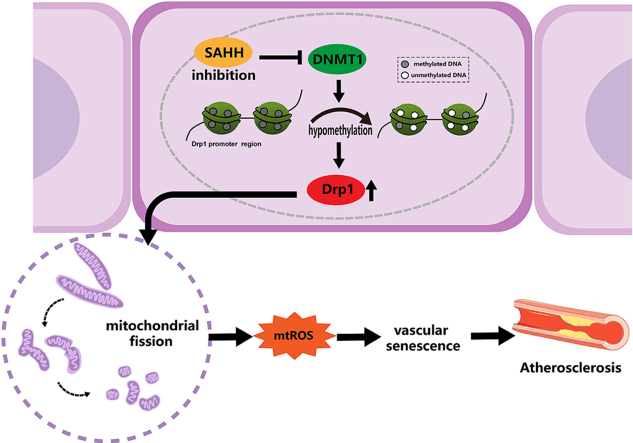
SAHH inhibition epigenetically upregulates Drp1 expression through repressing DNA methylation in endothelial cells, leading to vascular senescence and atherosclerosis. These results identify SAHH or SAH as a potential therapeutic target for vascular senescence and cardiovascular diseases.
血管衰老与表观遗传调控密切相关,是包括动脉粥样硬化在内的心血管疾病的早期病理状态。S-腺苷同型半胱氨酸水解酶(SAHH)的抑制以及随之而来的 S-腺苷同型半胱氨酸(SAH)的增加,SAH 是 DNA 甲基转移酶的有效抑制剂,与心血管疾病风险的增加有关。本研究旨在探讨 SAHH 的抑制是否会加速血管衰老和动脉粥样硬化的发展。
与血管老化相关的病例对照研究表明,血浆 SAH 水平升高与血管老化风险呈正相关,优势比(OR)为 3.90(95%可信区间,1.17-13.02)。在 32 周龄的 SAHH 小鼠动脉中观察到脉搏波速度升高、内皮依赖性舒张反应受损和衰老相关的β-半乳糖苷酶染色增加。此外,在体外和体内抑制 SAHH 时观察到血管内皮细胞中 p16、p21 和 p53 的表达上调,线粒体裂变形态以及 Drp1 的过度上调表达。使用 siRNA 或其特异性抑制剂 mdivi-1 进一步下调 Drp1 可恢复异常的线粒体形态并挽救血管衰老表型。此外,APOE 小鼠中 SAHH 的抑制促进了血管衰老和动脉粥样硬化的进展,而 mdivi-1 治疗可减轻这种进展。在机制上,在 HUVECs 中抑制 SAHH 可导致 DRP1 启动子区域的低甲基化和 DNMT1 的下调。
SAHH 抑制通过抑制内皮细胞中的 DNA 甲基化,在上调 Drp1 表达,导致血管衰老和动脉粥样硬化。这些结果表明 SAHH 或 SAH 可能是血管衰老和心血管疾病的潜在治疗靶点。