Cashman J S, Webster R E
Proc Natl Acad Sci U S A. 1979 Mar;76(3):1169-73. doi: 10.1073/pnas.76.3.1169.
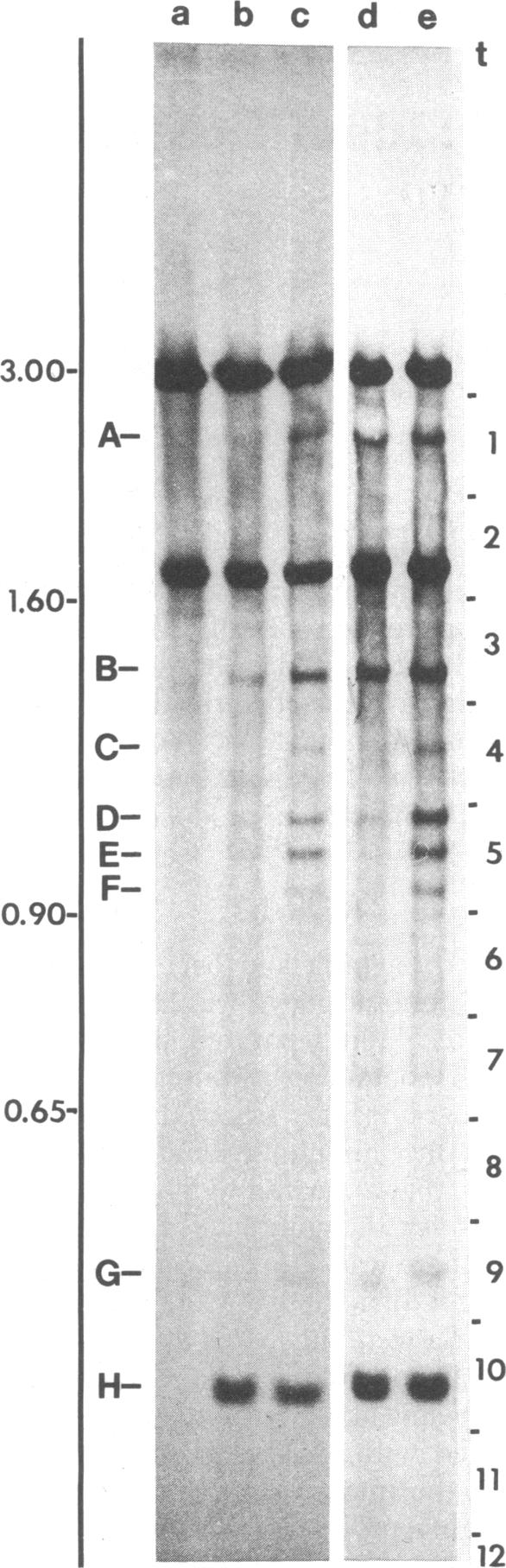
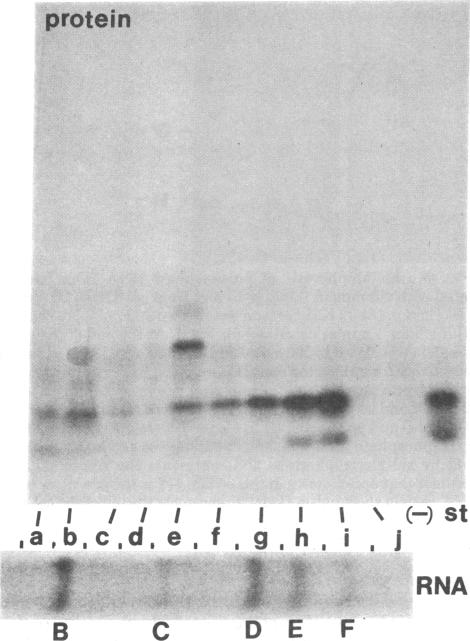
[3H]Uracil-pulse-labeled RNA from Escherichia coli infected with f1 bacteriophage was fractionated on polyacrylamide gels containing urea. Eight phage-specific RNA species were present with approximate lengths ranging from 2100 to 400 nucleotides. The amount of the seven largest species was increased when the infected bacteria were incubated at 41 degrees C. When the RNA was isolated and used as message in an in vitro protein-synthesizing system, most of the RNA species appeared to direct the synthesis of the phage gene VIII protein. The six largest species also directed the synthesis of the phage gene V protein. Some of the labeled smaller RNA species increased in amount after addition to rifampicin, suggesting that they may have resulted from cleavage of larger RNA species. These particular smaller RNA species also were present in infected bacteria containing a mutant RNase III. The data are discussed in terms of the regulation of synthesis of the phage-specific proteins.
用[3H]尿嘧啶脉冲标记感染f1噬菌体的大肠杆菌的RNA,在含尿素的聚丙烯酰胺凝胶上进行分级分离。存在8种噬菌体特异性RNA,其长度约在2100至400个核苷酸之间。当感染的细菌在41℃孵育时,7种最大的RNA种类的量增加。当分离RNA并在体外蛋白质合成系统中用作信使时,大多数RNA种类似乎指导噬菌体基因VIII蛋白的合成。6种最大的RNA种类也指导噬菌体基因V蛋白的合成。添加利福平后,一些标记的较小RNA种类的量增加,表明它们可能是较大RNA种类切割产生的。这些特定的较小RNA种类也存在于含有突变核糖核酸酶III的感染细菌中。根据噬菌体特异性蛋白质合成的调控对这些数据进行了讨论。