Rojas J Tomás, Rashid Mustafa S, Zumstein Matthias A
Shoulder, Elbow and Orthopaedic Sports Medicine, Orthopädie Sonnenhof, Bern, Switzerland.
Department of Orthopaedics and Trauma Surgery, Hospital San José - Clínica Santa María, Santiago, Chile.
EFORT Open Rev. 2023 Aug 1;8(8):651-661. doi: 10.1530/EOR-22-0118.
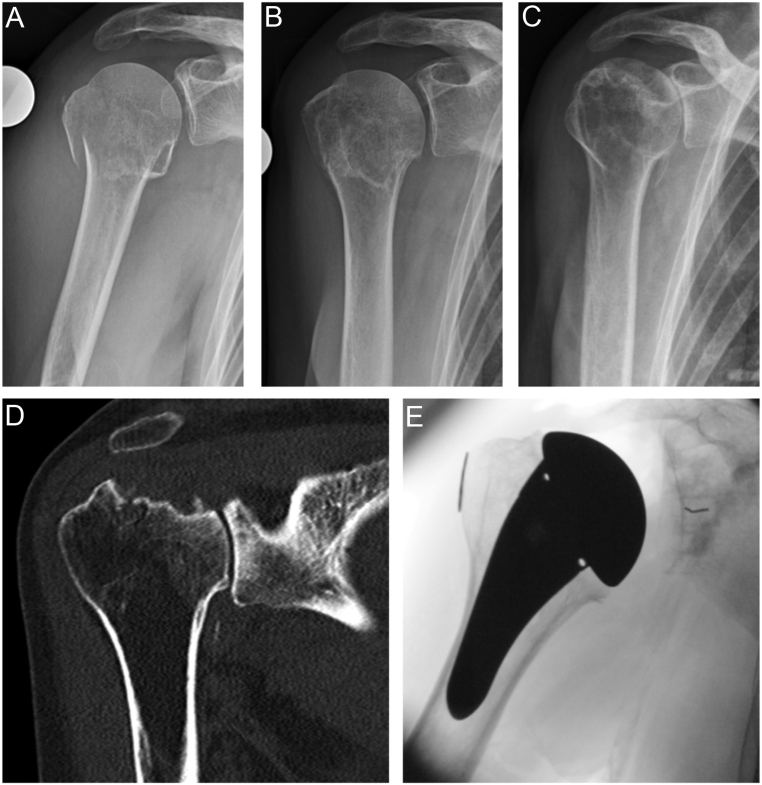
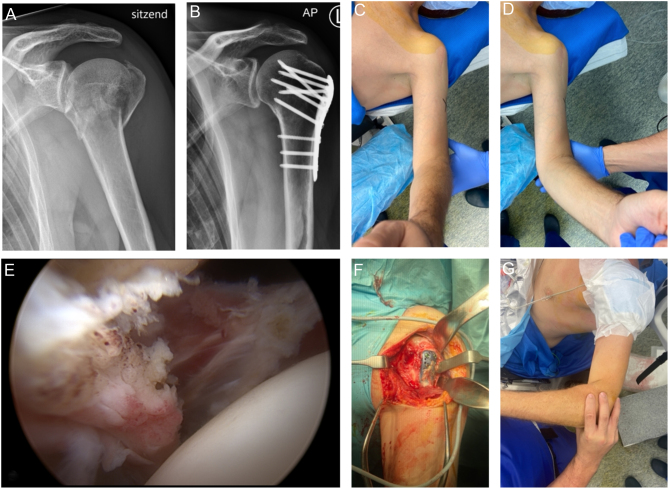
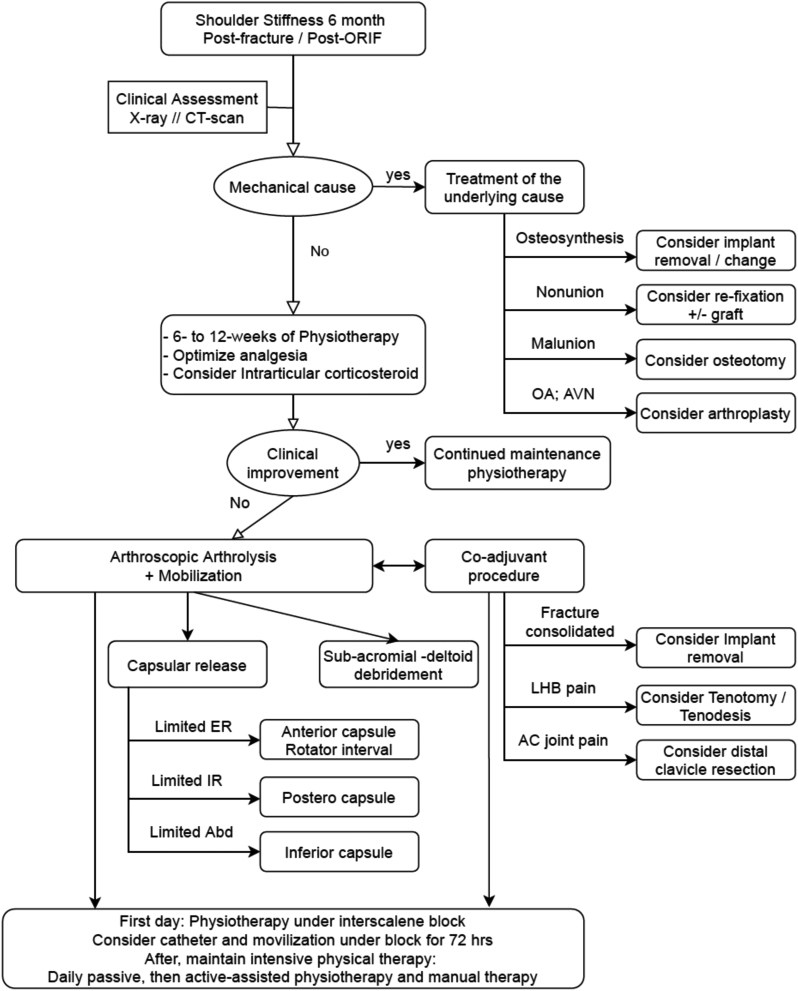
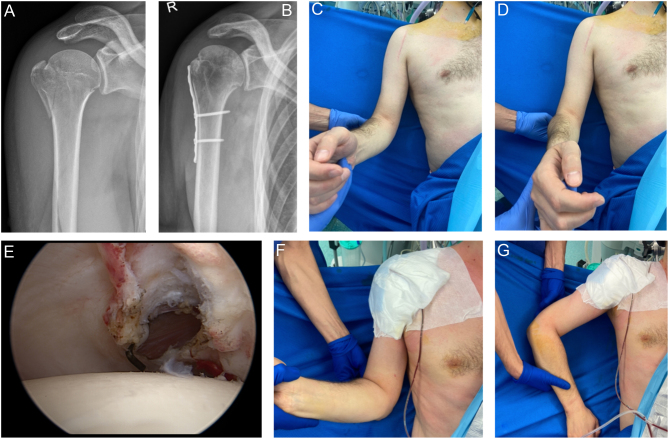
Shoulder stiffness is a frequent complication after proximal humeral fractures treated with or without surgery. Shoulder stiffness is associated with high rates of absence from work and a significant financial burden for the healthcare system. Secondary stiffness is characterized by additional extracapsular adhesions, including subacromial, subcoracoid, and subdeltoid spaces, usually derived from post-fracture or post-surgical extraarticular hematomas. Several secondary causes may coexist with capsular and extracapsular adhesions decreasing the shoulder motion, such as malunion, nonunion, metalwork failure, infection, and osteoarthritis, among others. Conservative treatment, usually prescribed for primary shoulder stiffness, has shown unfavorable results in secondary stiffness, and surgical intervention may be required. Surgical interventions need to be patient-specific. Usually, open or arthroscopic fibro-arthrolysis and subacromial release are performed, together with plate removal and biceps tenotomy/tenodesis. In severe osteoarthritis, shoulder replacement may be indicated. Ruling out infection is recommended in every case.
无论是否接受手术治疗,肩部僵硬都是肱骨近端骨折后常见的并发症。肩部僵硬与高缺勤率相关,给医疗系统带来巨大经济负担。继发性僵硬的特点是存在额外的关节囊外粘连,包括肩峰下、喙突下和三角肌下间隙,通常源于骨折后或手术后的关节外血肿。一些继发性原因可能与关节囊和关节囊外粘连并存,导致肩部活动度降低,如畸形愈合、骨不连、金属植入物失败、感染和骨关节炎等。通常用于原发性肩部僵硬的保守治疗,对继发性僵硬效果不佳,可能需要手术干预。手术干预需要根据患者具体情况而定。通常会进行开放或关节镜下纤维关节松解术和肩峰下减压术,同时取出钢板并进行肱二头肌肌腱切断术/肌腱固定术。在严重骨关节炎的情况下,可能需要进行肩关节置换术。建议在每种情况下都排除感染。