Department of Orthopedics, Jena University Hospital, Campus Eisenberg, Klosterlausnitzer Str. 81, 07607, Eisenberg, Germany.
Center for Orthopaedics, Trauma Surgery and Rehabilitation Medicine, University Medicine Greifswald, Ferdinand-Sauerbruch-Straße, 17475, Greifswald, Germany.
Arch Orthop Trauma Surg. 2024 Jan;144(1):433-438. doi: 10.1007/s00402-023-05014-6. Epub 2023 Aug 2.
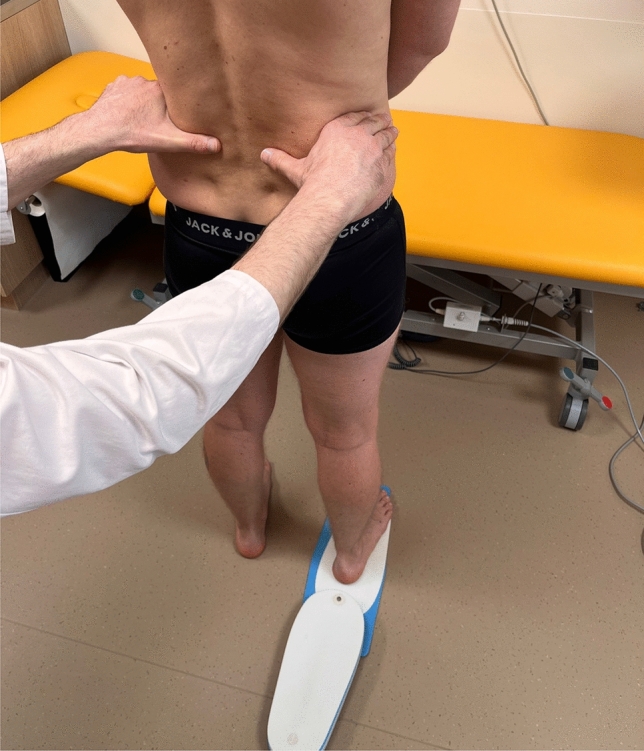
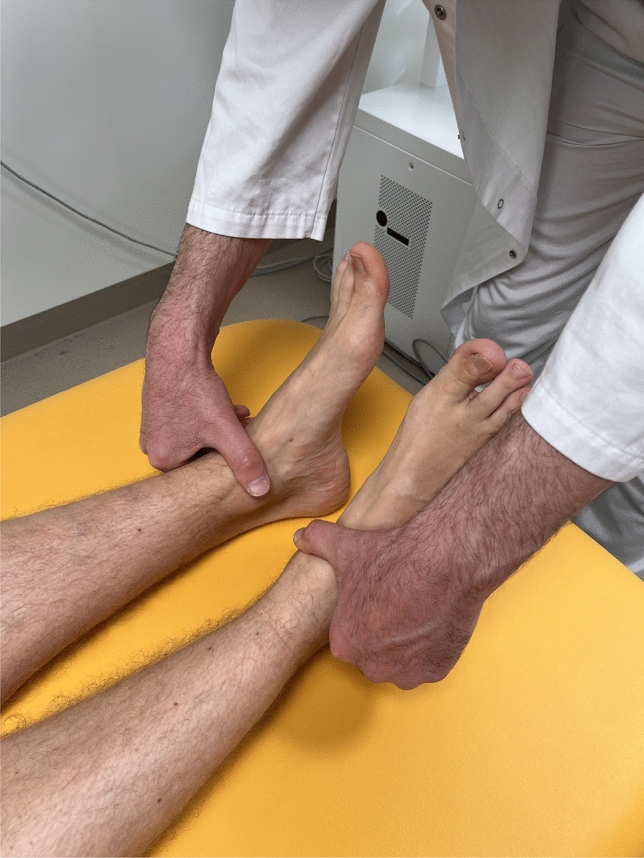
The correct adjustment of leg length is a major goal in the implantation of total hip replacements (THRs). Differences in leg length can lead to functional impairment and patient dissatisfaction. By determining leg length at an early stage, before the patient is discharged from hospital, compensatory measures such as the production of special insoles or orthopaedic footwear can be initiated promptly if there is a difference in leg length. Due to shortening of the period of time spent in hospital, the traditional measurement of leg length in a standing position may be increasingly subject to error. A protective posture immediately after surgery or the presence of a twisted pelvis, for example, due to scoliotic spinal misalignments, falsifies the measurement result in the standing position. Here, the measurement of leg length in the supine position may prove to be accurate immediately postoperatively, regardless of potential sources of error, and is to be compared with measurement in the standing position versus radiological measurement on the AP pelvic survey.
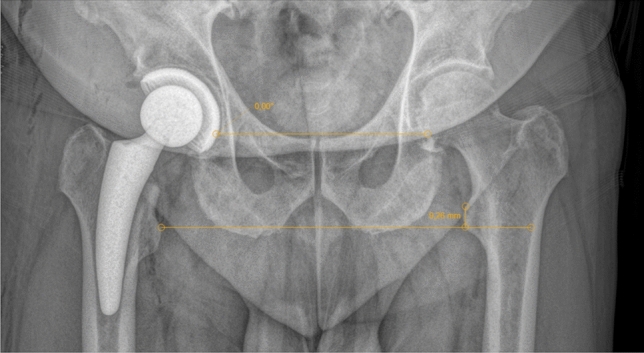
The present retrospective study included 190 patients who had undergone primary total hip arthroplasty. The leg length difference (LLD) of the patients was determined pre- and postoperatively both in the supine and standing position and compared with the postoperative radiological pelvic survey image.
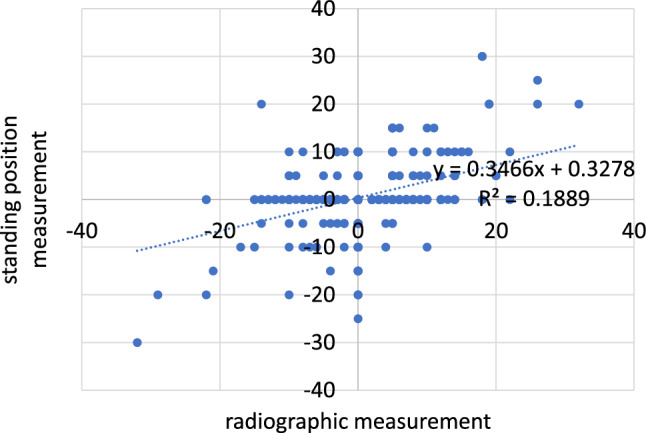
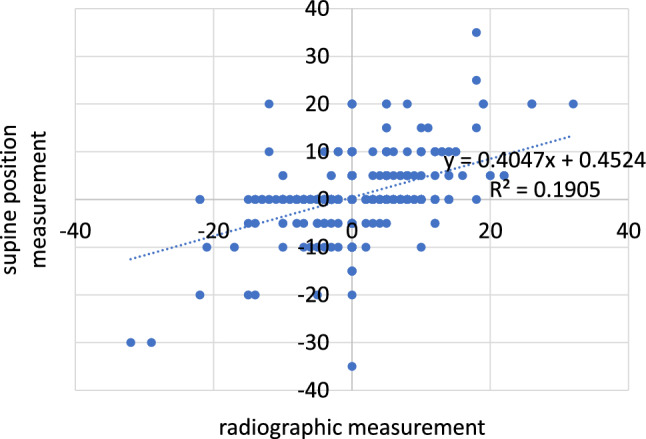
Postoperatively, it was shown that the mean length measured was 0.35 mm too long in the supine position and 0.68 mm too short in the standing position (p value < 0.001). Determination of the average absolute measurement error produces a deviation of 4.06 mm in the standing and 4.51 mm in the supine position (p value 0.126).
It is shown that the postoperative measurement of LLD in the supine and standing position is equally valid and sufficiently accurate, compared with the gold standard of measurement on a radiograph.
正确调整肢体长度是全髋关节置换术(THR)植入的主要目标。肢体长度的差异会导致功能障碍和患者不满。通过在患者出院前尽早确定肢体长度,如果存在肢体长度差异,可以及时采取特殊鞋垫或矫形鞋等补偿措施。由于住院时间缩短,传统的站立位肢体长度测量可能会越来越容易出现误差。例如,手术后的保护性姿势或由于脊柱侧弯导致的骨盆扭曲,会使站立位的测量结果失真。此时,无论潜在的误差来源如何,术后仰卧位的肢体长度测量可能立即变得准确,并与站立位测量和 AP 骨盆侧位片的放射学测量进行比较。
本回顾性研究纳入了 190 例行初次全髋关节置换术的患者。术前和术后分别在仰卧位和站立位测量患者的肢体长度差异(LLD),并与术后骨盆侧位片的放射学测量进行比较。
术后显示,仰卧位测量的平均值长 0.35 毫米,站立位短 0.68 毫米(p 值<0.001)。确定平均绝对测量误差会导致站立位偏差 4.06 毫米,仰卧位偏差 4.51 毫米(p 值 0.126)。
与放射学测量的金标准相比,术后仰卧位和站立位的 LLD 测量同样有效且足够准确。