Moore Brad T, Osika Tom, Satterly Steven, Shah Shreyansh, Thirion Tim, Hampton Spencer, Aylward Stephen, Montgomery Sean
Medical Computing, Kitware, Inc, Carrboro, NC, USA.
Surgical Critical Care, Duke University Health System, Durham, NC, USA.
Ultrasound J. 2023 Aug 2;15(1):33. doi: 10.1186/s13089-023-00331-8.
Measurement of the optic nerve sheath diameter (ONSD) via ultrasonography has been proposed as a non-invasive metric of intracranial pressure that may be employed during in-field patient triage. However, first responders are not typically trained to conduct sonographic exams and/or do not have access to an expensive ultrasound device. Therefore, for successful deployment of ONSD measurement in-field, we believe that first responders must have access to low-cost, portable ultrasound and be assisted by artificial intelligence (AI) systems that can automatically interpret the optic nerve sheath ultrasound scan. We examine the suitability of five commercially available, low-cost, portable ultrasound devices that can be combined with future artificial intelligence algorithms to reduce the training required for and cost of in-field optic nerve sheath diameter measurement. This paper is focused on the quality of the images generated by these low-cost probes. We report results of a clinician preference survey and compare with a lab analysis of three quantitative image quality metrics across devices. We also examine the suitability of the devices in a hypothetical far-forward deployment using operators unskilled in ultrasound, with the assumption of a future onboard AI video interpreter.
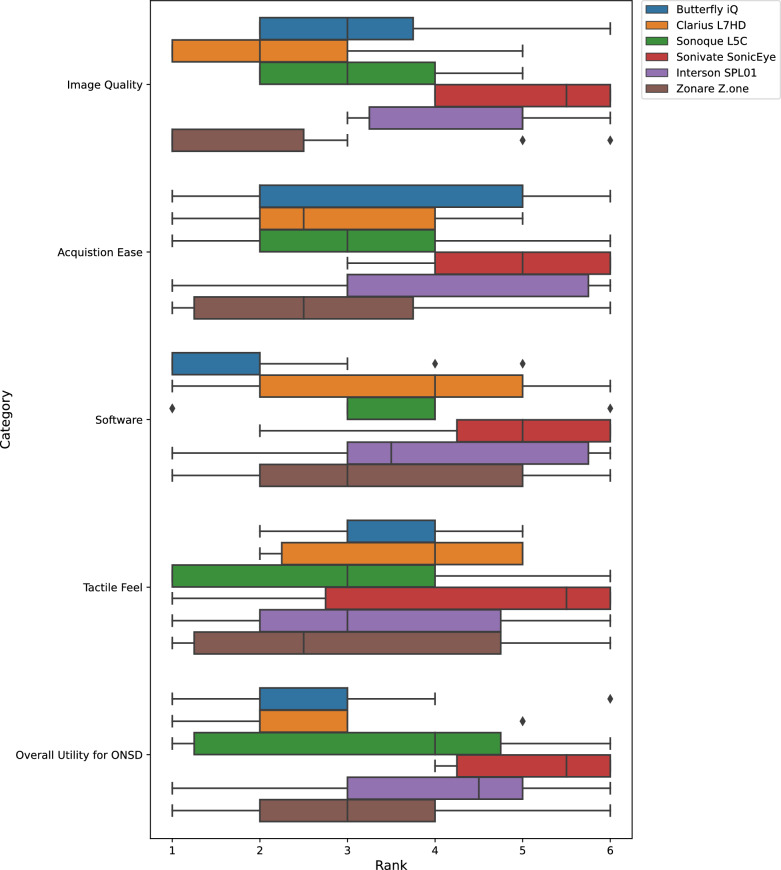
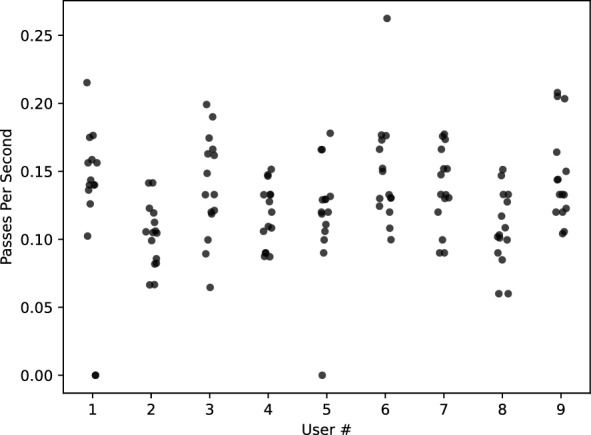
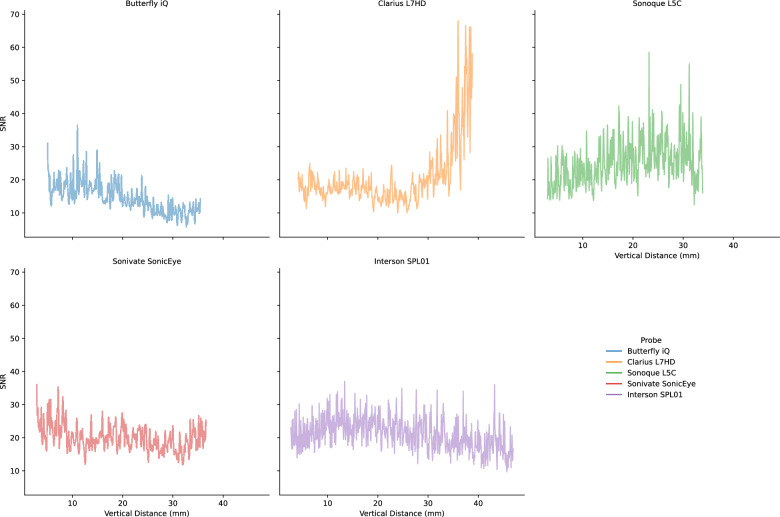
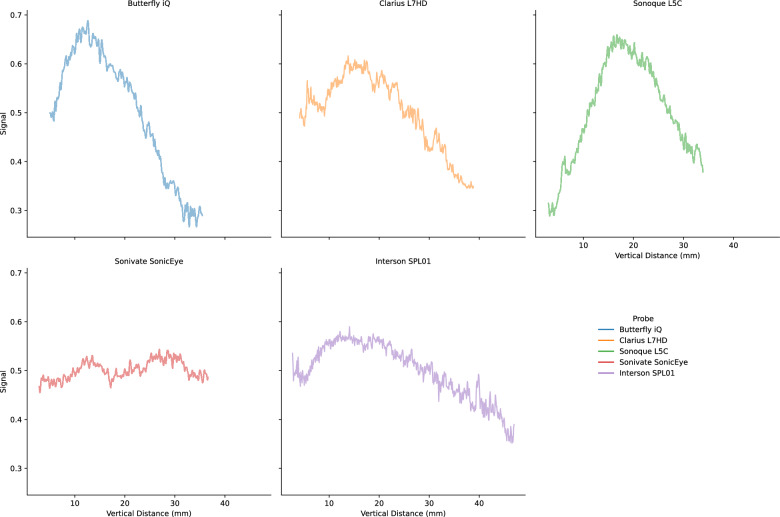
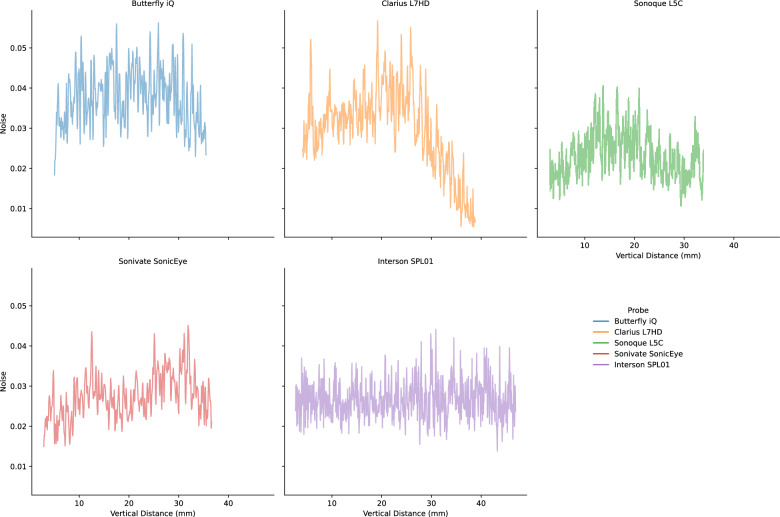
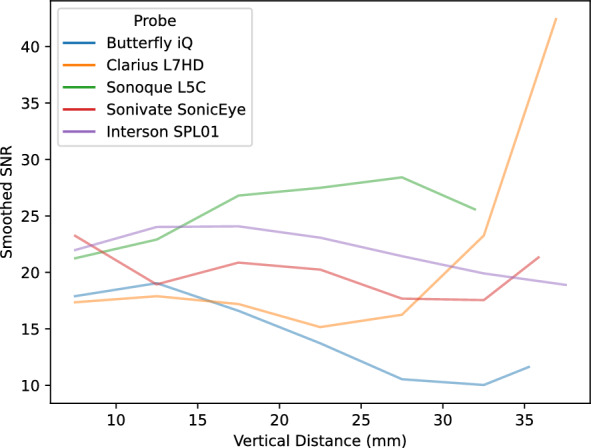
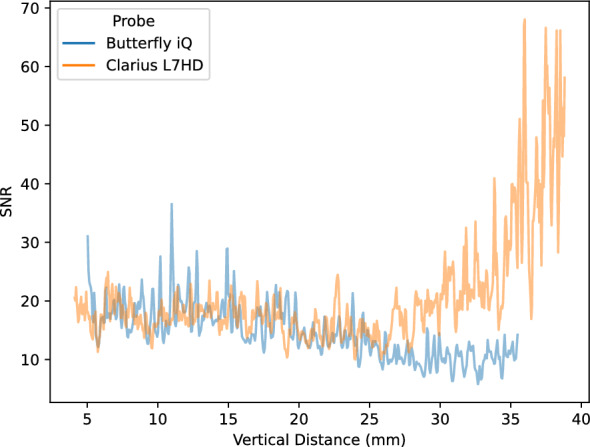
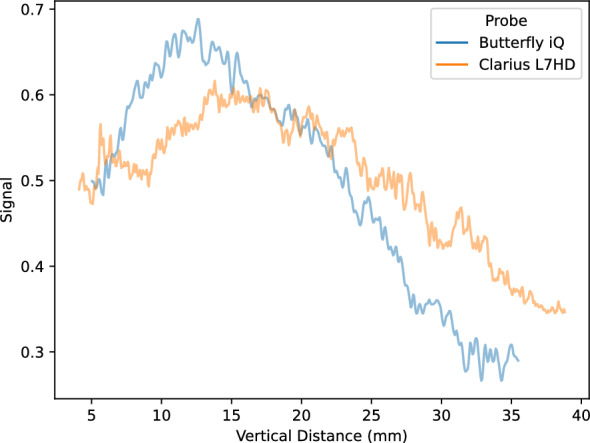
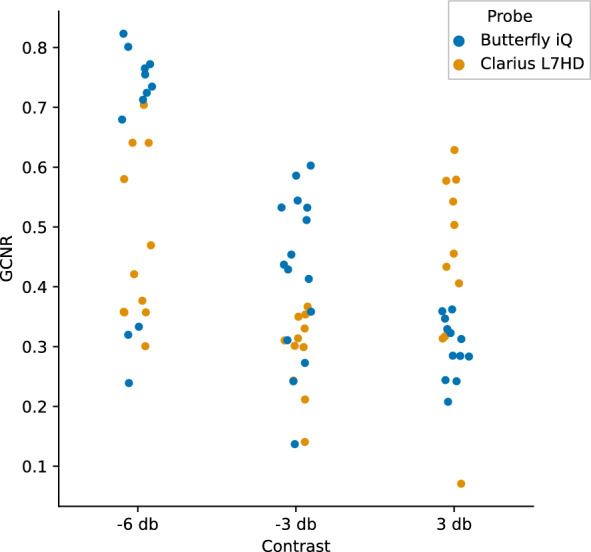
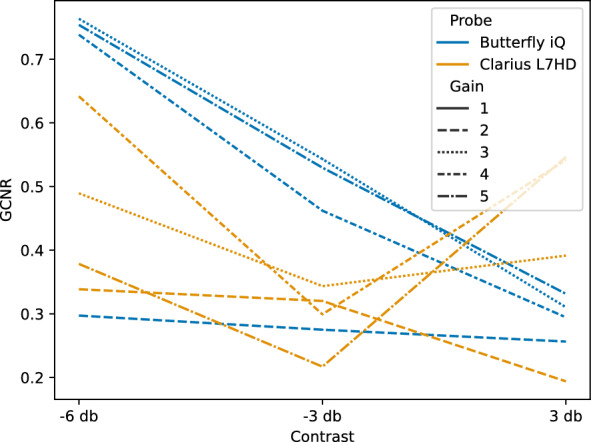
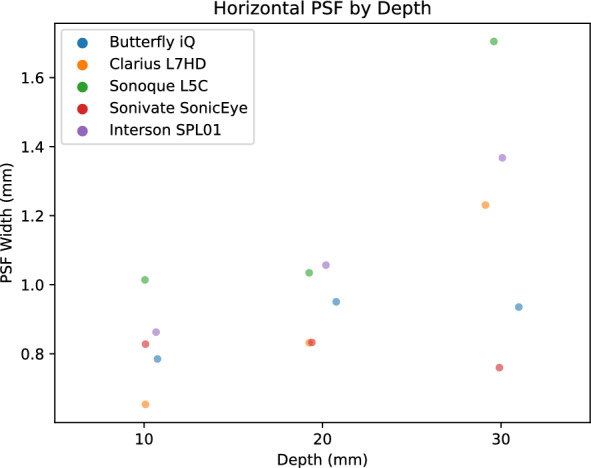
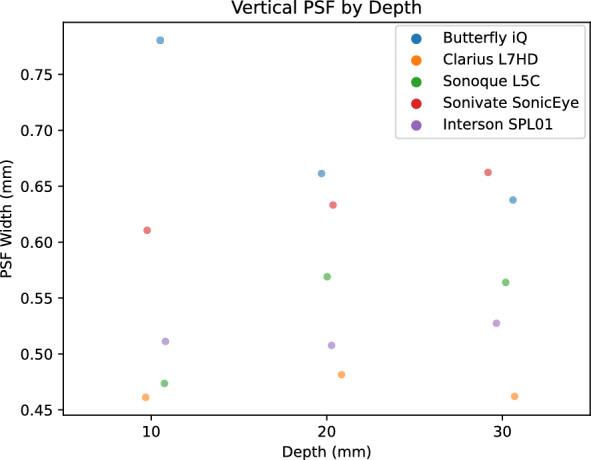
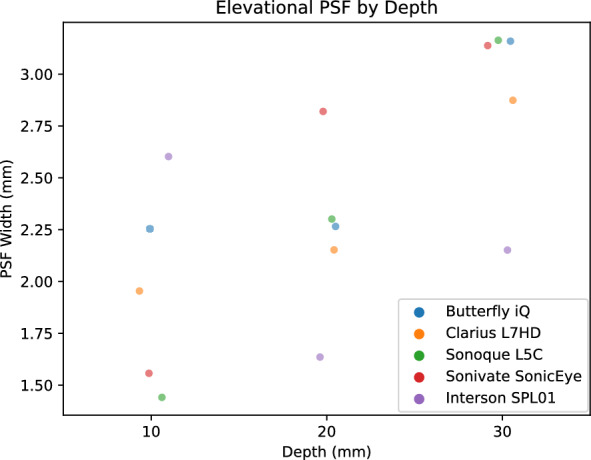
We find statistically significant differences in clinician ranking of the devices in the following categories: "Image Quality", "Ease of Acquisition", "Software", and "Overall ONSD". We show differences in signal-to-noise ratio, generalized contrast-to-noise ratio, point-spread function across the devices. These differences in image quality result in a statistically significant difference in manual ONSD measurement. Finally, we show that sufficiently wide transducers can capture the optic nerve sheath during blind (no visible B-mode) scans performed by operators unskilled in sonography.
Ultrasound of the optic nerve sheath has the potential to be a convenient, non-invasive, point-of-injury or triage measure for elevated intracranial pressure in cases of traumatic brain injury. When transducer width is sufficient, briefly trained operators may obtain video sequences of the optic nerve sheath without guidance. This data suggest that unskilled operators are able to achieve the images needed for AI interpretation. However, we also show that image quality differences between ultrasound probes may influence manual ONSD measurements.
通过超声测量视神经鞘直径(ONSD)已被提议作为一种颅内压的非侵入性指标,可用于现场患者分诊。然而,急救人员通常未接受过超声检查培训,和/或无法使用昂贵的超声设备。因此,为了在现场成功部署 ONSD 测量,我们认为急救人员必须能够使用低成本、便携式超声设备,并借助能够自动解读视神经鞘超声扫描结果的人工智能(AI)系统。我们研究了五种市售的低成本、便携式超声设备的适用性,这些设备可与未来的人工智能算法相结合,以降低现场测量视神经鞘直径所需的培训要求和成本。本文重点关注这些低成本探头生成的图像质量。我们报告了临床医生偏好调查的结果,并与对各设备的三个定量图像质量指标的实验室分析结果进行了比较。我们还在假设未来有车载人工智能视频解释器的情况下,研究了这些设备在假设的极前沿部署中对于不熟练超声操作的操作人员的适用性。
我们发现临床医生在以下类别中对设备的排名存在统计学上的显著差异:“图像质量”、“采集难易程度”、“软件”和“总体 ONSD”。我们展示了各设备在信噪比、广义对比噪声比、点扩散函数方面的差异。这些图像质量差异导致手动测量 ONSD 时存在统计学上的显著差异。最后,我们表明,足够宽的换能器能够在不熟练超声操作的操作人员进行盲扫(无可见 B 模式)时捕捉到视神经鞘。
视神经鞘超声有潜力成为创伤性脑损伤病例中颅内压升高的一种便捷、非侵入性的损伤点或分诊测量方法。当换能器宽度足够时,经过简短培训的操作人员无需指导即可获取视神经鞘的视频序列。这些数据表明,不熟练的操作人员能够获得人工智能解释所需图像。然而,我们也表明超声探头之间的图像质量差异可能会影响手动 ONSD 测量。