Department of Infectious Diseases, Cherokee Nation Outpatient Health Center, Cherokee Nation Health Services, 19600 East Ross St, Tahlequah, Ok, 74464, USA.
Cardea Services, 1809 7th Ave #600, Seattle, WA, 98101, USA.
J Community Health. 2023 Dec;48(6):982-993. doi: 10.1007/s10900-023-01264-y. Epub 2023 Aug 2.
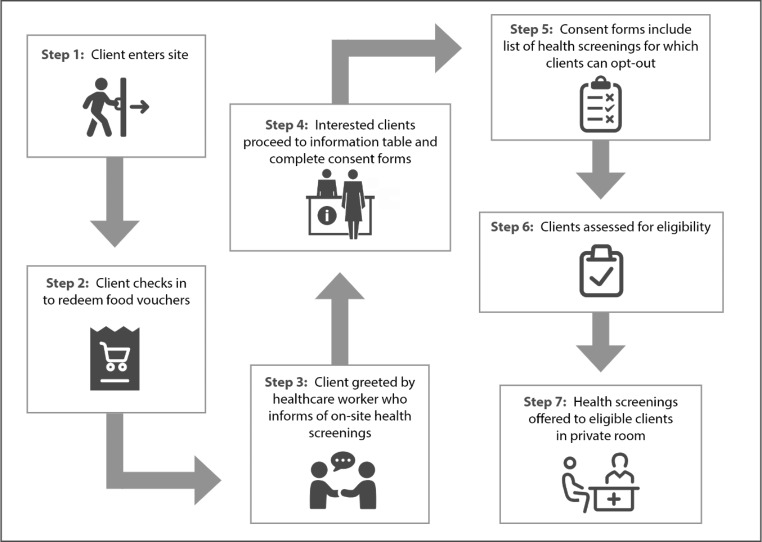
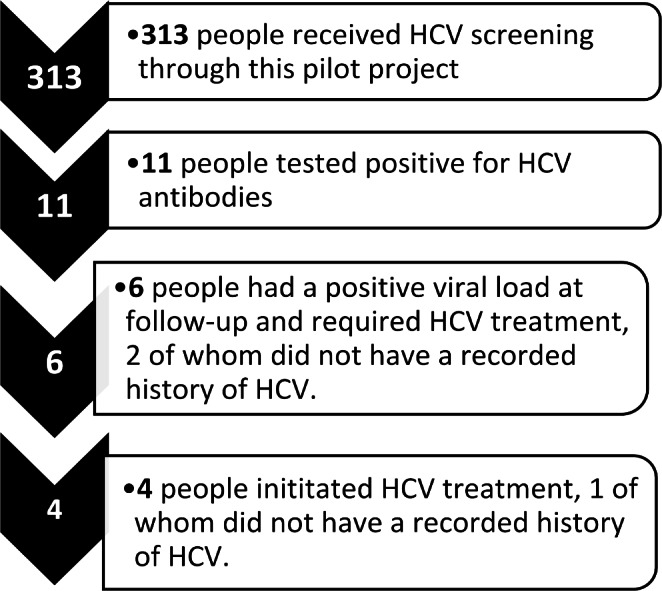
Compared with other racial and ethnic groups in the United States, American Indian and Alaska Native (AI/AN) people experience the highest incidence of acute hepatitis c (HCV). Cherokee Nation Health Services (CNHS) implemented a pilot health screening program from January through May 2019 to assess whether conducting HCV and other preventive health screenings at food distribution sites is a feasible, acceptable, and effective strategy to increase health screening among underserved community members. Data were collected among 340 eligible participants. Most (76%) participants reported being very comfortable receiving health screenings at food distribution sites and that getting screened at food distribution sites is very easy (75.4%). Most (92.1%, n = 313) participants received HCV screening, with 11 (3.5%) individuals testing positive for HCV antibodies. Of the 11 HCV seropositive individuals, six were confirmed to have active HCV infection of which four initiated treatment. Most (55.7%) participants exhibited a body mass index in the obese range, 33.1% exhibited high hemoglobin A1C (> 6.0), 24.5% exhibited high (> 200) cholesterol, 44.6% exhibited high blood pressure ( > = 140/90), and 54.8% did not have a current primary care provider. This project demonstrated that conducting HCV and other health screenings at food distribution sites within Cherokee Nation was an effective strategy to engage AI/AN people in preventive health screenings. Future programs are needed to scale-up preventive health screenings outside of traditional medical facilities as these types of screenings may help to decrease the HCV disparities among AI/AN people.
与美国其他种族和族裔群体相比,美国印第安人和阿拉斯加原住民 (AI/AN) 人群的急性丙型肝炎 (HCV) 发病率最高。切罗基民族卫生服务中心 (CNHS) 于 2019 年 1 月至 5 月实施了一项试点健康筛查计划,以评估在食品分发点进行 HCV 和其他预防性健康筛查是否是增加服务不足社区成员健康筛查的可行、可接受和有效的策略。数据是在 340 名符合条件的参与者中收集的。大多数(76%)参与者表示非常愿意在食品分发点接受健康筛查,并且在食品分发点接受筛查非常方便(75.4%)。大多数(92.1%,n=313)参与者接受了 HCV 筛查,其中 11 人(3.5%) HCV 抗体检测呈阳性。在 11 名 HCV 血清阳性个体中,有 6 人被确诊患有活动性 HCV 感染,其中 4 人开始接受治疗。大多数(55.7%)参与者的体重指数处于肥胖范围,33.1%的参与者血红蛋白 A1C 较高(>6.0),24.5%的参与者胆固醇较高(>200),44.6%的参与者血压较高( > = 140/90),54.8%的参与者没有当前的初级保健提供者。该项目表明,在切罗基民族内的食品分发点进行 HCV 和其他健康筛查是让 AI/AN 人群参与预防性健康筛查的有效策略。需要开展更多的未来项目,在传统医疗设施之外扩大预防性健康筛查范围,因为这些类型的筛查可能有助于减少 AI/AN 人群中的 HCV 差异。