Department of Molecular Diagnostics & Experimental Therapeutics, Beckman Research Institute of City of Hope, Duarte, CA, USA.
Department of Cancer Genetics and Epigenetics, Beckman Research Institute of City of Hope, Duarte, CA, USA.
Cell Chem Biol. 2023 Oct 19;30(10):1235-1247.e6. doi: 10.1016/j.chembiol.2023.07.001. Epub 2023 Aug 1.
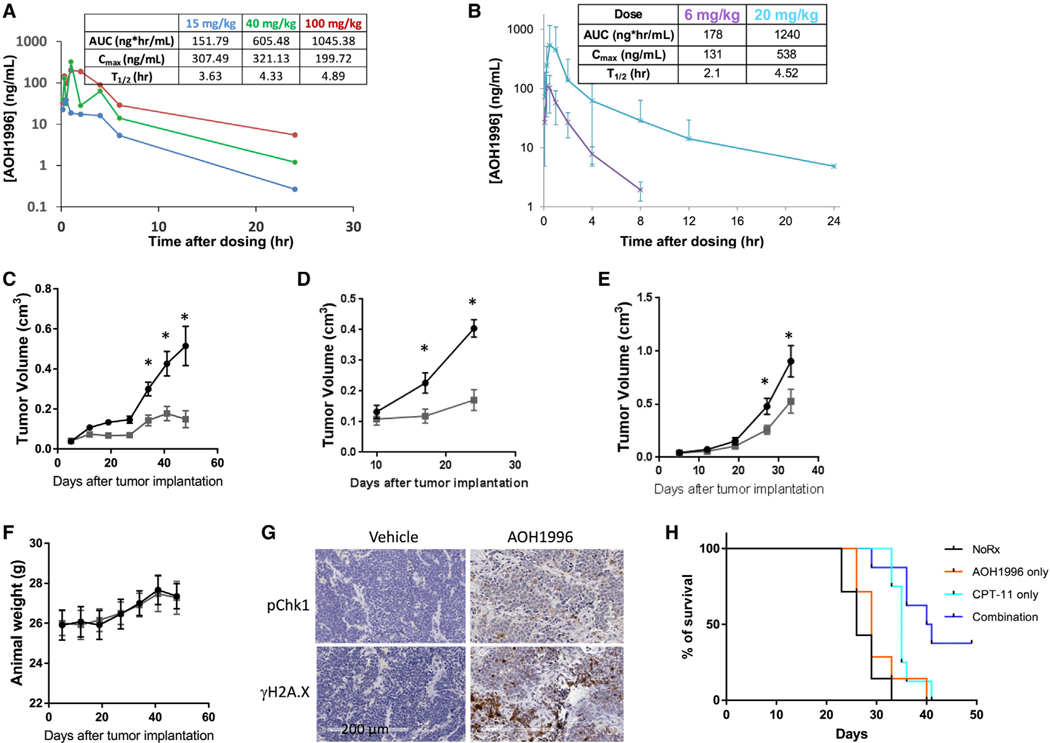
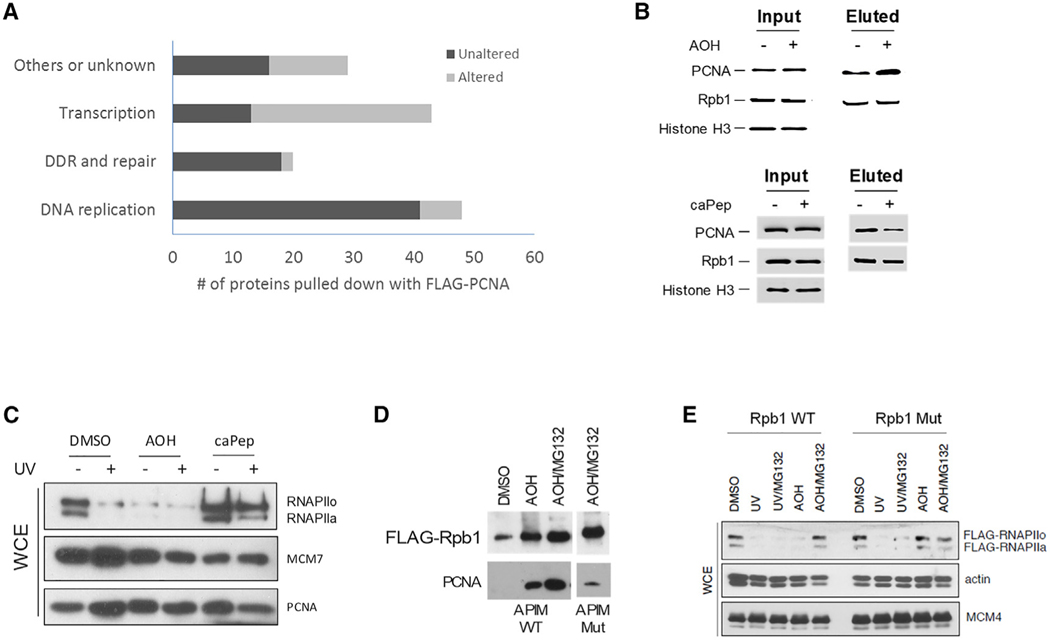
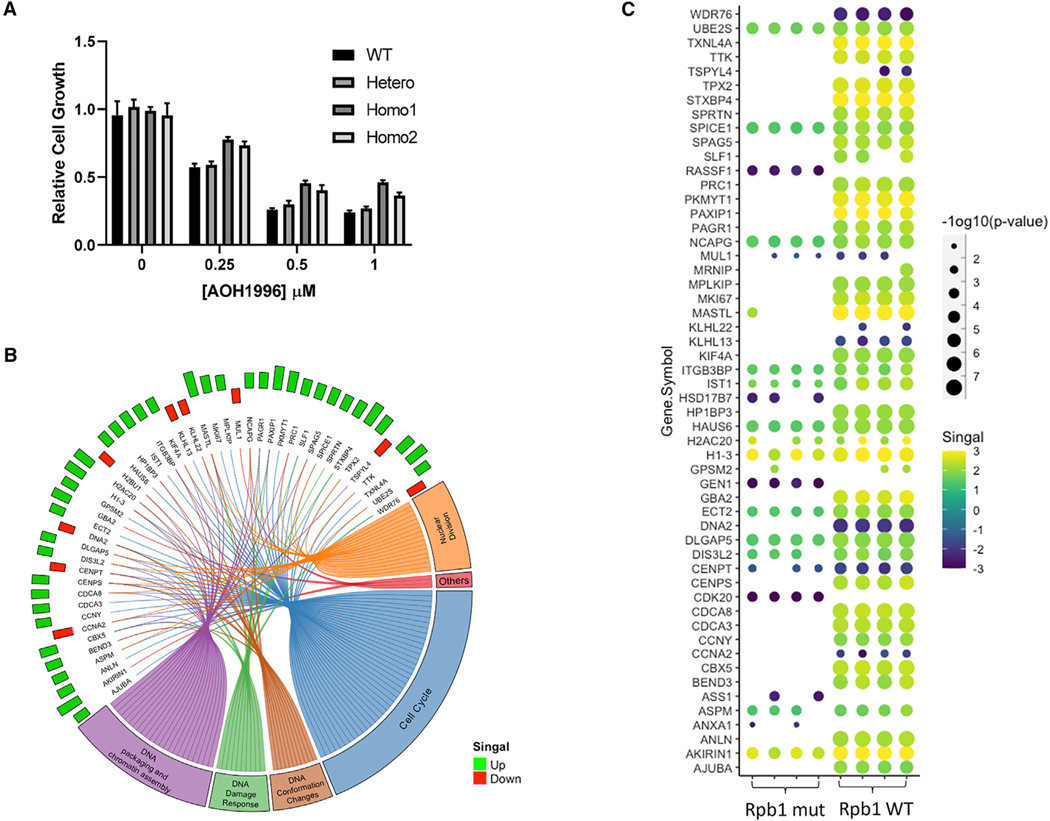
Targeting transcription replication conflicts, a major source of endogenous DNA double-stranded breaks and genomic instability could have important anticancer therapeutic implications. Proliferating cell nuclear antigen (PCNA) is critical to DNA replication and repair processes. Through a rational drug design approach, we identified a small molecule PCNA inhibitor, AOH1996, which selectively kills cancer cells. AOH1996 enhances the interaction between PCNA and the largest subunit of RNA polymerase II, RPB1, and dissociates PCNA from actively transcribed chromatin regions, while inducing DNA double-stranded breaks in a transcription-dependent manner. Attenuation of RPB1 interaction with PCNA, by a point mutation in RPB1's PCNA-binding region, confers resistance to AOH1996. Orally administrable and metabolically stable, AOH1996 suppresses tumor growth as a monotherapy or as a combination treatment but causes no discernable side effects. Inhibitors of transcription replication conflict resolution may provide a new and unique therapeutic avenue for exploiting this cancer-selective vulnerability.
靶向转录复制冲突,这是内源性 DNA 双链断裂和基因组不稳定性的主要来源,可能具有重要的抗癌治疗意义。增殖细胞核抗原 (PCNA) 对 DNA 复制和修复过程至关重要。通过合理的药物设计方法,我们鉴定出一种小分子 PCNA 抑制剂 AOH1996,它选择性地杀死癌细胞。AOH1996 增强了 PCNA 与 RNA 聚合酶 II 大亚基 RPB1 之间的相互作用,并将 PCNA 从活跃转录的染色质区域解离,同时以转录依赖性方式诱导 DNA 双链断裂。通过在 RPB1 的 PCNA 结合区域中的点突变来减弱 RPB1 与 PCNA 的相互作用,赋予对 AOH1996 的抗性。可口服和代谢稳定的 AOH1996 作为单一疗法或联合治疗可抑制肿瘤生长,但不会引起明显的副作用。转录复制冲突解决抑制剂可能为利用这种癌症选择性脆弱性提供新的独特治疗途径。