Faculty of Health Sciences, Beirut Arab University, Tarik El Jedidah, Riad El Solh, P.O. Box: 115020, Beirut, 1107 2809, Lebanon.
Department of Industrial Engineering and Engineering Management, Faculty of Engineering, Beirut Arab University, Riad El Solh, P.O. Box 11-5020, Beirut, Lebanon.
Sci Rep. 2023 Aug 2;13(1):12547. doi: 10.1038/s41598-023-38130-9.
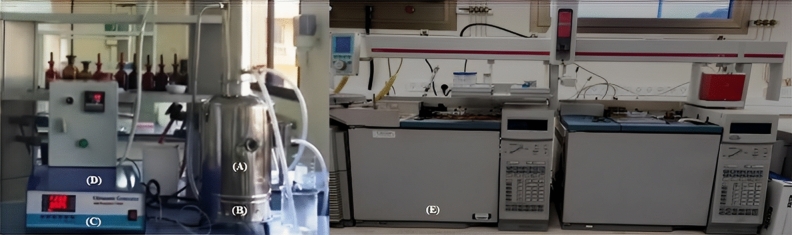
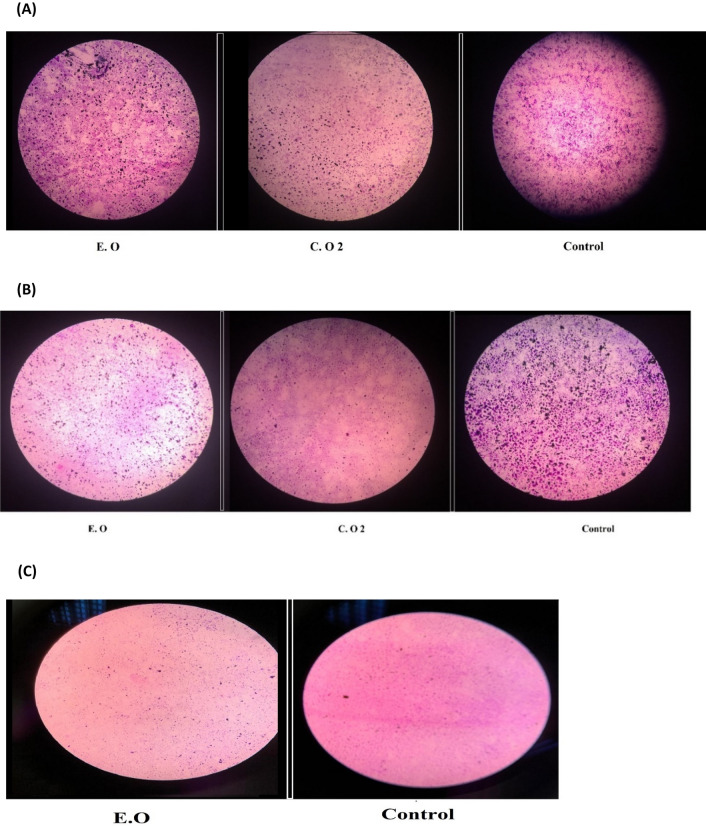
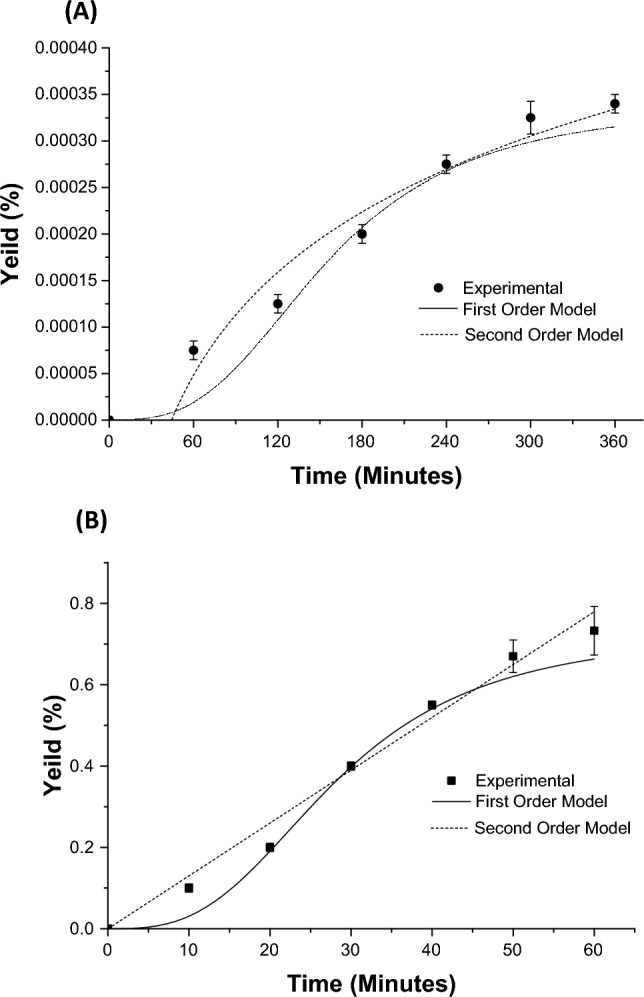
A huge-amount of citrus by-products is being wasted every-year. There is a high-need to utilize these by-products with high-efficiency. This study focuses on the essential oil (EO) isolation from the zest of Citrus sinensis (CS) by-products, using a novel dual-function gas-chromatography mass-spectrometry optimized ultrasound-assisted hydrodistillation-prototype (DF-GC/MS-HUS). The CS-EO was GC-analyzed by MS-detector (GC/MS) and optimized by flame-ionization detector (GC/FID). Ultrasound-assisted hydrodistillation (HUS) had a dual-function in CS-EO isolation by utilizing an adequate-energy to break-open the oil-containing glands, and by functioning-as a dispersing-agent to emulsify the organic-phase. The most effective DF-GC/MS-HUS optimized-conditions were isolation under 38 °C and 10 min of 28.9 Hz sonication. The main-components of CS-EO were limonene, β-myrcene, and α-pinene (81.32%, 7.55%, and 4.20%) in prototype, compared to (60.23%, 5.33%, and 2.10%) in the conventional-method, respectively. The prototype CS-EO showed natural antibacterial-potentials, and inhibited the bio-film formation by Staphylococcus aureus, Listeria monocytogenes, and E. coli more-potent than the conventional-method. Compared to conventional-method, the prototype-method decreased the isolation-time by 83.3%, lowered energy-consumption, without carbon-dioxide production, by reducing isolation-temperatures by more-than half, which protected the thermolabile-components, and increased the quantity by 2514-folds, and improved the quality of CE-EO composition and its antibacterial-potentials. Therefore, the DF-GC/MS-HUS prototype method is considered a novel green-technique that minimized the energy-utilization with higher-efficiency.
每年都有大量的柑橘副产品被浪费掉。因此,非常有必要高效利用这些副产品。本研究采用新型双功能气相色谱-质谱联用优化超声辅助水蒸馏原型(DF-GC/MS-HUS),从柑橘果皮副产物中提取其精油(EO)。采用 MS 检测器(GC/MS)和火焰离子化检测器(GC/FID)对 CS-EO 进行 GC 分析,并进行优化。超声辅助水蒸馏(HUS)具有双重功能,既能利用足够的能量打破含油腺,又能作为分散剂使有机相乳化,从而实现 CS-EO 的有效分离。DF-GC/MS-HUS 优化条件为 38°C 下分离 10 分钟,超声频率为 28.9Hz。与传统方法相比,原型 CS-EO 的主要成分是柠檬烯(81.32%)、β-月桂烯(7.55%)和α-蒎烯(4.20%),而传统方法的主要成分是柠檬烯(60.23%)、β-月桂烯(5.33%)和α-蒎烯(2.10%)。原型 CS-EO 表现出天然的抗菌潜力,对金黄色葡萄球菌、单核细胞增生李斯特菌和大肠杆菌的生物膜形成抑制作用明显强于传统方法。与传统方法相比,原型方法将分离时间缩短了 83.3%,降低了能耗,减少了二氧化碳的排放,分离温度降低了一半以上,保护了热敏成分,产量提高了 2514 倍,提高了 CE-EO 成分的质量和抗菌潜力。因此,DF-GC/MS-HUS 原型方法被认为是一种新型的绿色技术,它最大限度地减少了能源利用,提高了效率。