Department of Pharmacology, Physiology and Neuroscience, New Jersey Medical School, Rutgers, The State University of New Jersey, Newark, NJ 07103, USA.
Department of Animal Science, School of Environmental and Biological Sciences, Rutgers, The State University of New Jersey, New Brunswick, NJ 08901, USA.
Mol Metab. 2023 Oct;76:101788. doi: 10.1016/j.molmet.2023.101788. Epub 2023 Aug 2.
The present study tests the hypothesis that changes in the glucose sensitivity of lateral hypothalamus (LH) hypocretin/orexin glucose-inhibited (GI) neurons following weight loss leads to glutamate plasticity on ventral tegmental area (VTA) dopamine neurons and drives food seeking behavior.
C57BL/6J mice were calorie restricted to a 15% body weight loss and maintained at that body weight for 1 week. The glucose sensitivity of LH hypocretin/orexin GI and VTA dopamine neurons was measured using whole cell patch clamp recordings in brain slices. Food seeking behavior was assessed using conditioned place preference (CPP).
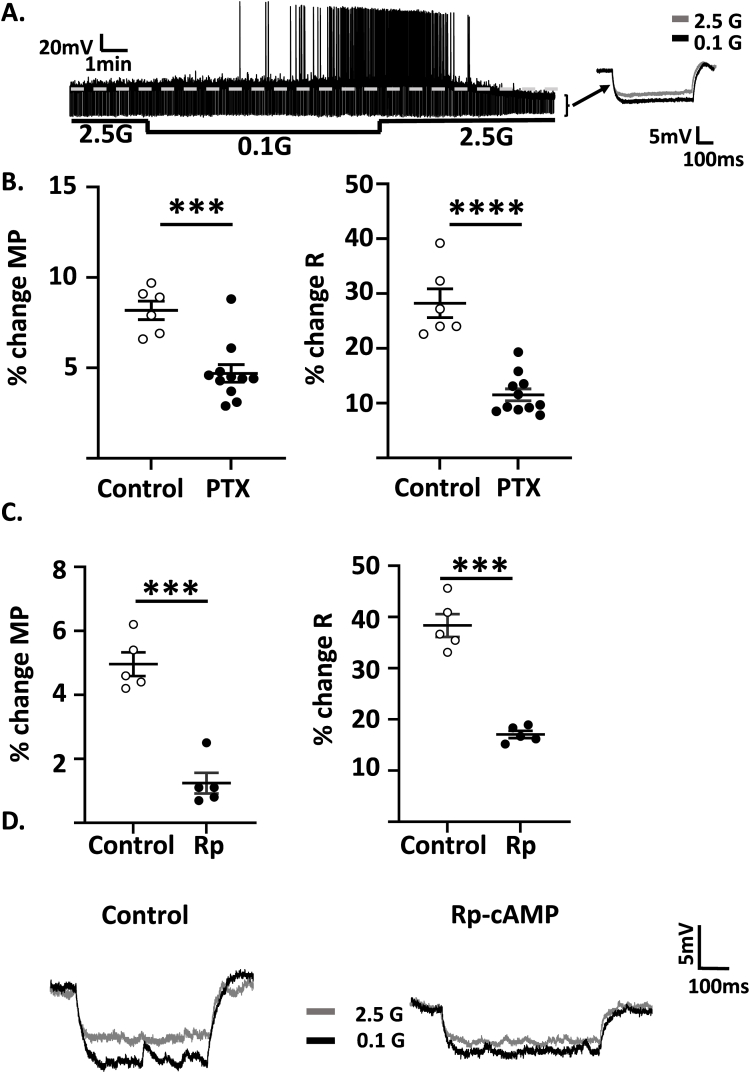
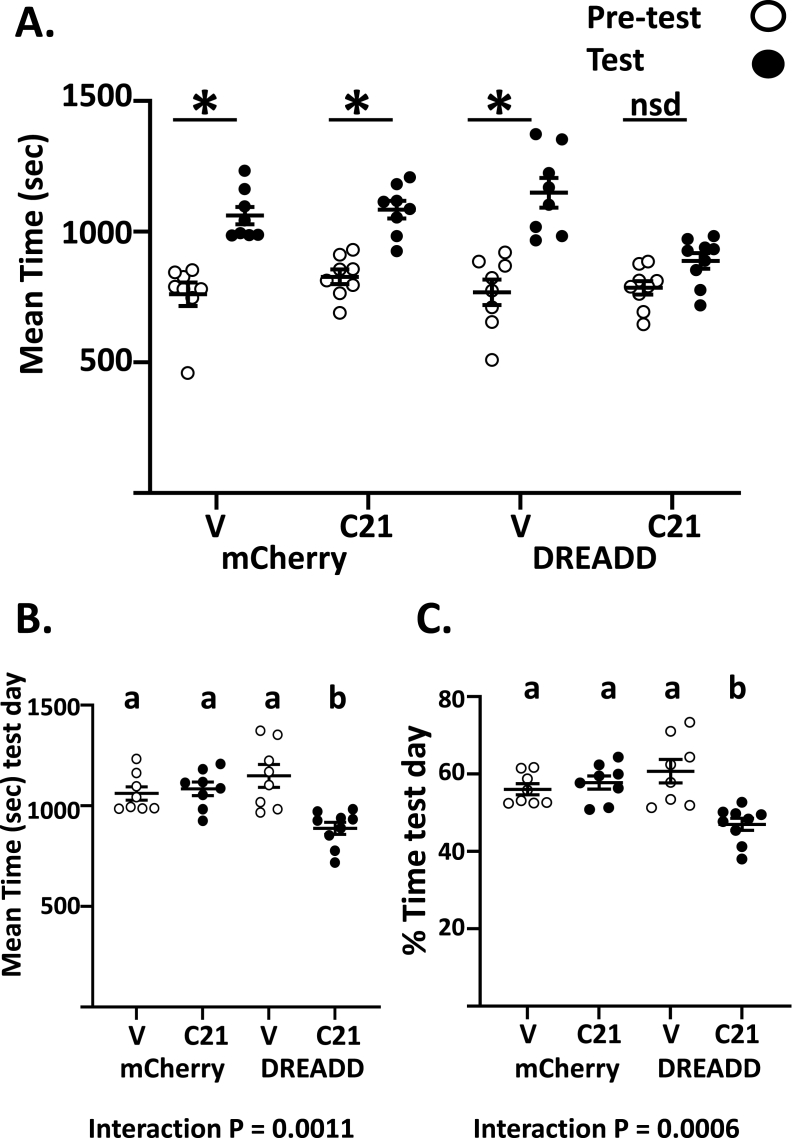
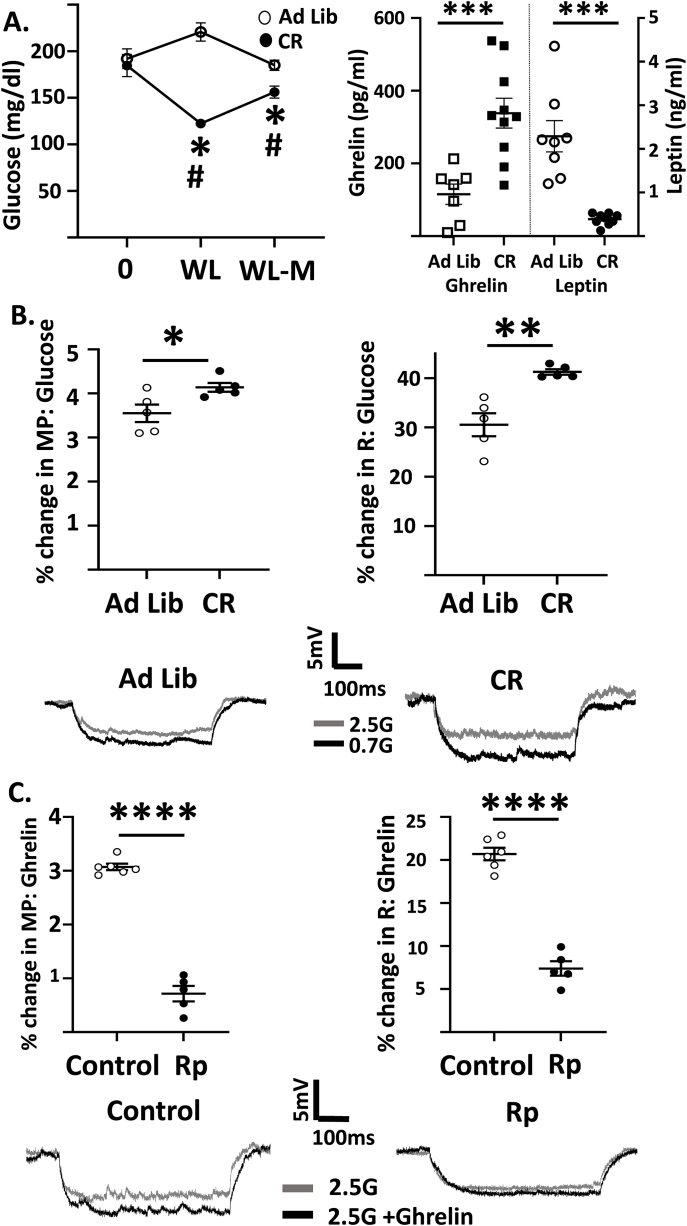
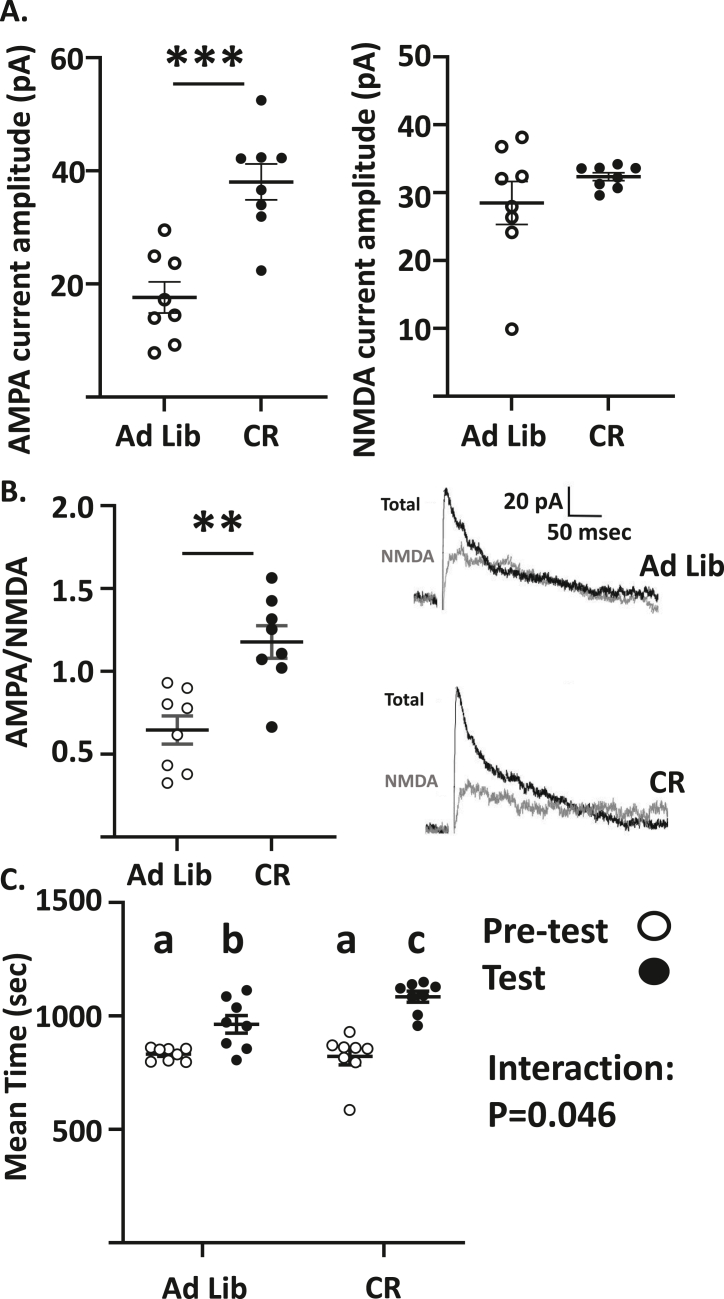
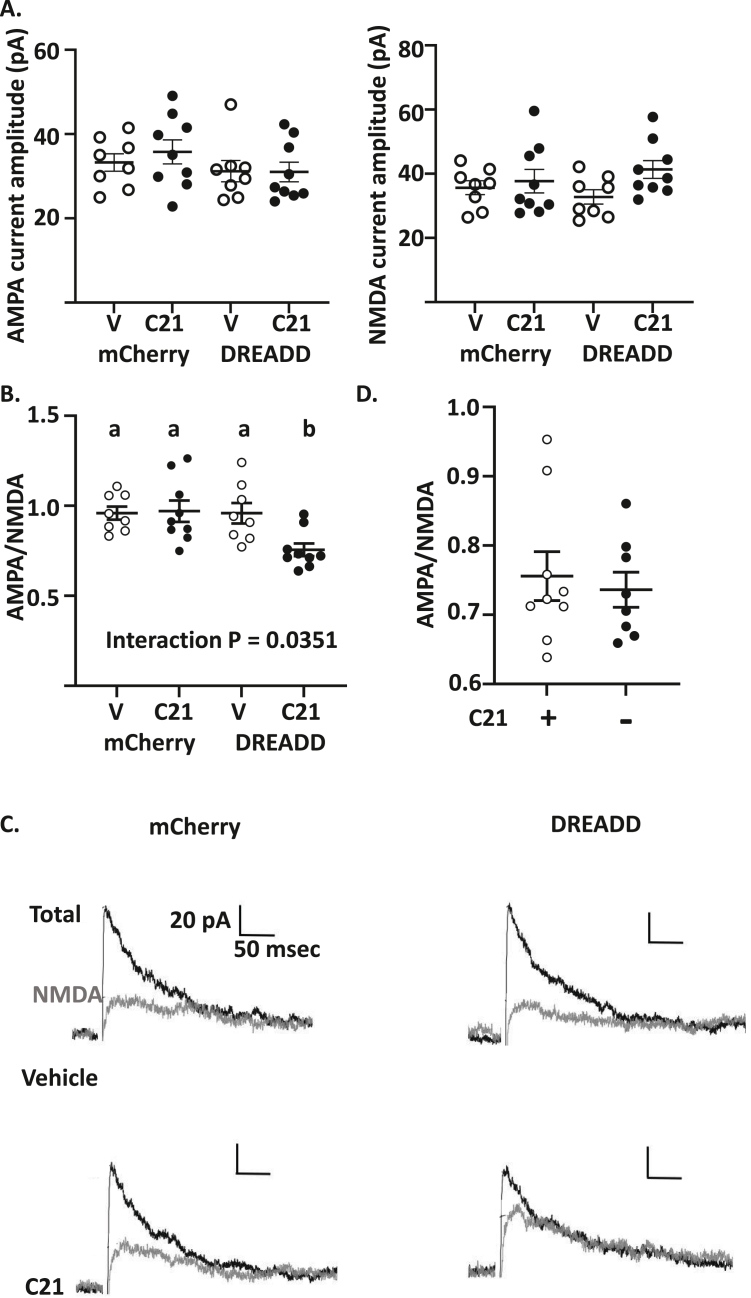
1-week maintenance of calorie restricted 15% body weight loss reduced glucose inhibition of hypocretin/orexin GI neurons resulting in increased neuronal activation with reduced glycemia. The effect of decreased glucose on hypocretin/orexin GI neuronal activation was blocked by pertussis toxin (inhibitor of G-protein coupled receptor subunit Gα) and Rp-cAMP (inhibitor of protein kinase A, PKA). This suggests that glucose sensitivity is mediated by the Gα-adenylyl cyclase-cAMP-PKA signaling pathway. The excitatory effect of the hunger hormone, ghrelin, on hcrt/ox neurons was also blocked by Rp-cAMP suggesting that hormonal signals of metabolic status may converge on the glucose sensing pathway. Food restriction and weight loss increased glutamate synaptic strength (indexed by increased AMPA/NMDA receptor current ratio) on VTA dopamine neurons and the motivation to seek food (indexed by CPP). Chemogenetic inhibition of hypocretin/orexin neurons during caloric restriction and weight loss prevented these changes in glutamate plasticity and food seeking behavior.
We hypothesize that this change in the glucose sensitivity of hypocretin/orexin GI neurons may drive, in part, food seeking behavior following caloric restriction.
本研究检验了以下假设,即体重减轻后外侧下丘脑(LH)食欲素/下丘脑分泌素葡萄糖抑制(GI)神经元的葡萄糖敏感性变化会导致腹侧被盖区(VTA)多巴胺神经元的谷氨酸可塑性,并驱动觅食行为。
采用热量限制法使 C57BL/6J 小鼠体重减轻 15%,并维持该体重 1 周。使用脑切片全细胞膜片钳记录法测量 LH 食欲素/下丘脑分泌素 GI 和 VTA 多巴胺神经元的葡萄糖敏感性。使用条件性位置偏好(CPP)评估觅食行为。
1 周的热量限制 15%体重减轻减少了食欲素/下丘脑分泌素 GI 神经元对葡萄糖的抑制作用,导致血糖降低时神经元激活增加。降低葡萄糖对食欲素/下丘脑分泌素 GI 神经元激活的影响被百日咳毒素(G 蛋白偶联受体亚单位 Gα抑制剂)和 Rp-cAMP(蛋白激酶 A,PKA 抑制剂)阻断。这表明葡萄糖敏感性是由 Gα-腺苷酸环化酶-cAMP-PKA 信号通路介导的。饥饿激素 ghrelin 对 hcrt/ox 神经元的兴奋作用也被 Rp-cAMP 阻断,这表明代谢状态的激素信号可能集中在葡萄糖感应途径上。食物限制和体重减轻增加了 VTA 多巴胺神经元上谷氨酸突触强度(以 AMPA/NMDA 受体电流比增加为指标)和觅食动机(以 CPP 为指标)。在热量限制和体重减轻期间化学遗传学抑制食欲素/下丘脑分泌素神经元可防止这些谷氨酸可塑性和觅食行为的变化。
我们假设,食欲素/下丘脑分泌素 GI 神经元的葡萄糖敏感性变化可能部分驱动了热量限制后的觅食行为。