Department of Biochemistry, University of Wisconsin-Madison, Madison, WI 53726, USA.
Department of Bacteriology, University of Wisconsin-Madison, WI 53726, USA.
Sci Adv. 2023 Aug 4;9(31):eadg5476. doi: 10.1126/sciadv.adg5476.
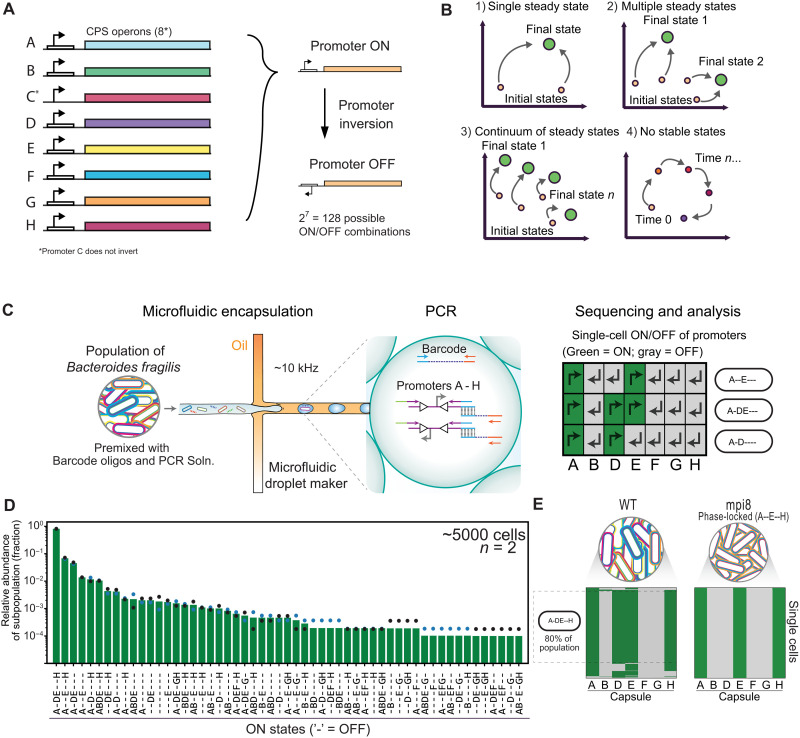
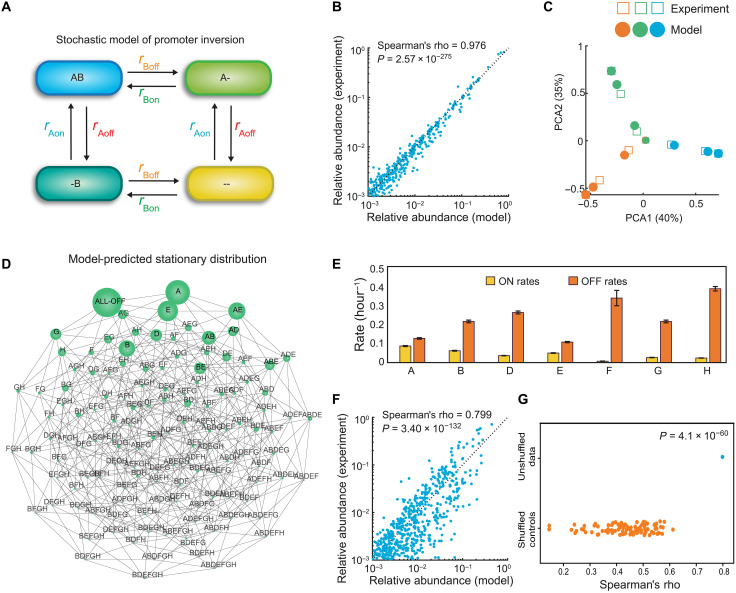
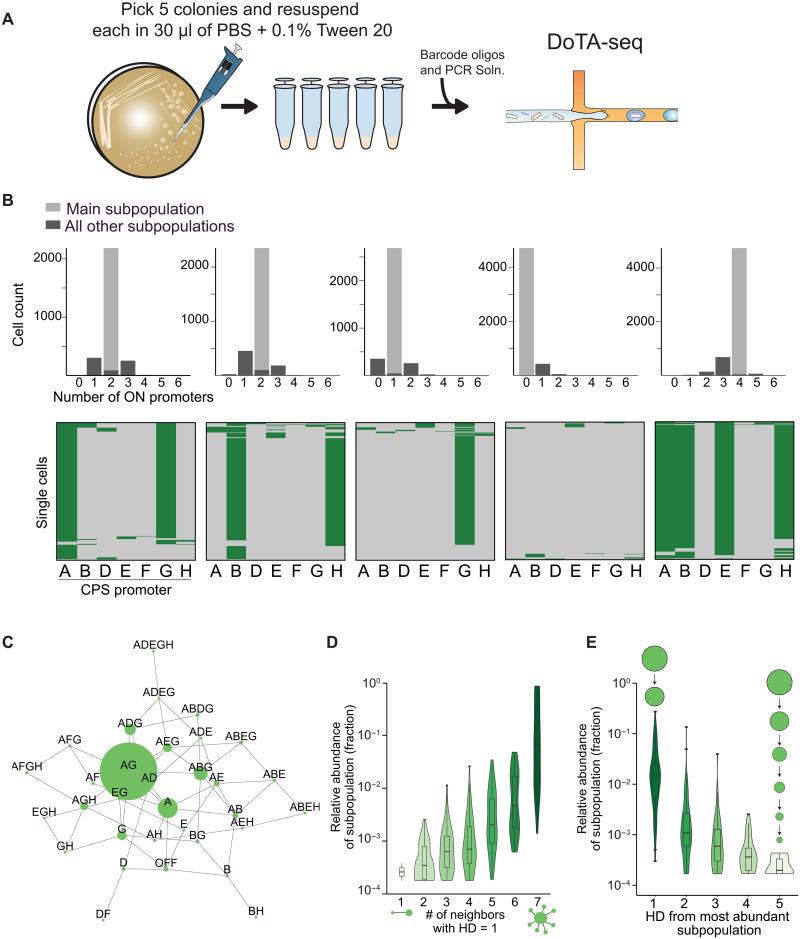
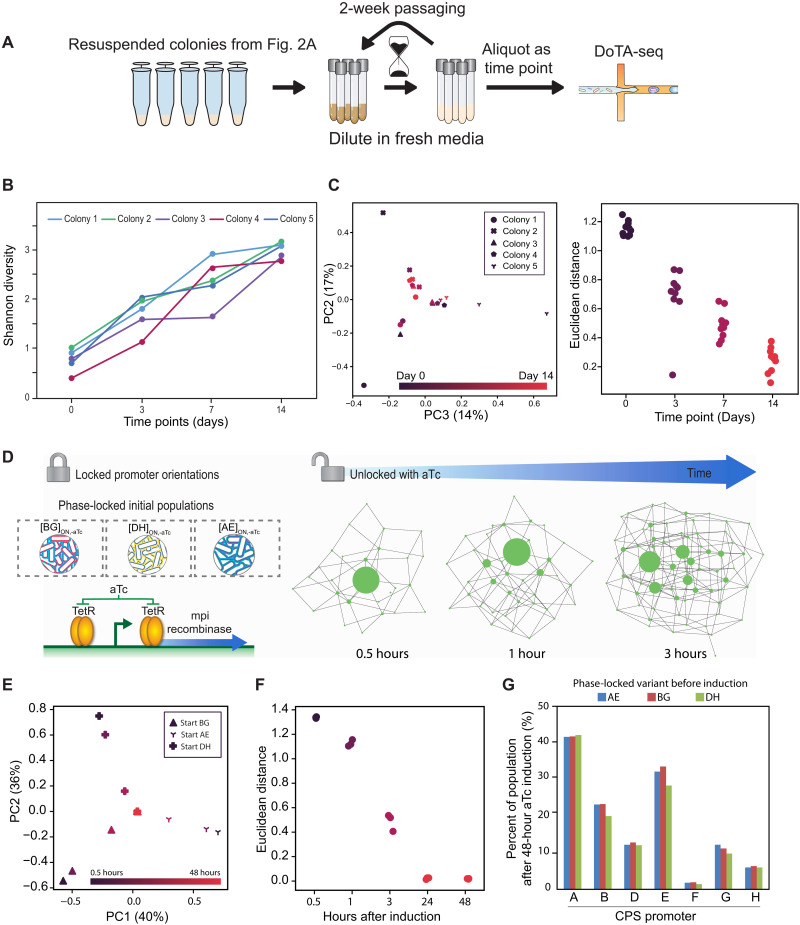
Population heterogeneity can promote bacterial fitness in response to unpredictable environmental conditions. A major mechanism of phenotypic variability in the human gut symbiont spp. involves the inversion of promoters that drive the expression of capsular polysaccharides, which determine the architecture of the cell surface. High-throughput single-cell sequencing reveals substantial population heterogeneity generated through combinatorial promoter inversion regulated by a broadly conserved serine recombinase. Exploiting control over population diversification, we show that populations with different initial compositions converge to a similar composition over time. Combining our data with stochastic computational modeling, we demonstrate that the differential rates of promoter inversion are a major mechanism shaping population dynamics. More broadly, our approach could be used to interrogate single-cell combinatorial phase variable states of diverse microbes including bacterial pathogens.
人口异质性可以促进细菌适应不可预测的环境条件。人体肠道共生菌 spp. 的表型可变性的一个主要机制涉及启动子的反转,该反转驱动荚膜多糖的表达,荚膜多糖决定细胞表面的结构。高通量单细胞测序揭示了通过广泛保守的丝氨酸重组酶调控的组合启动子反转产生的大量种群异质性。利用对种群多样化的控制,我们表明具有不同初始组成的种群随着时间的推移会收敛到相似的组成。将我们的数据与随机计算模型相结合,我们证明了启动子反转的不同速率是塑造种群动态的主要机制。更广泛地说,我们的方法可以用于研究包括细菌病原体在内的各种微生物的单细胞组合相变异构状态。