Liang Bo, Yang Qun, Zhang Xinping, Zhao Yukun, Liu Yunhui, Yang Jianming, Wang Zhaobao
Energy-rich Compounds Production by Photosynthetic Carbon Fixation Research Center, Qingdao Agricultural University, Qingdao, China.
Shandong Key Lab of Applied Mycology, College of Life Sciences, Qingdao Agricultural University, Qingdao, China.
Biotechnol Biofuels Bioprod. 2023 Aug 4;16(1):124. doi: 10.1186/s13068-023-02370-8.
Sesquiterpenes are designated as a large class of plant-derived natural active compounds, which have wide applications in industries of energy, food, cosmetics, medicine and agriculture. Neither plant extraction nor chemical synthesis can meet the massive market demands and sustainable development goals. Biosynthesis in microbial cell factories represents an eco-friendly and high-efficient way. Among several microorganisms, Saccharomyces cerevisiae exhibited the potential as a chassis for bioproduction of various sesquiterpenes due to its native mevalonate pathway. However, its inefficient nature limits biosynthesis of diverse sesquiterpenes at industrial grade.
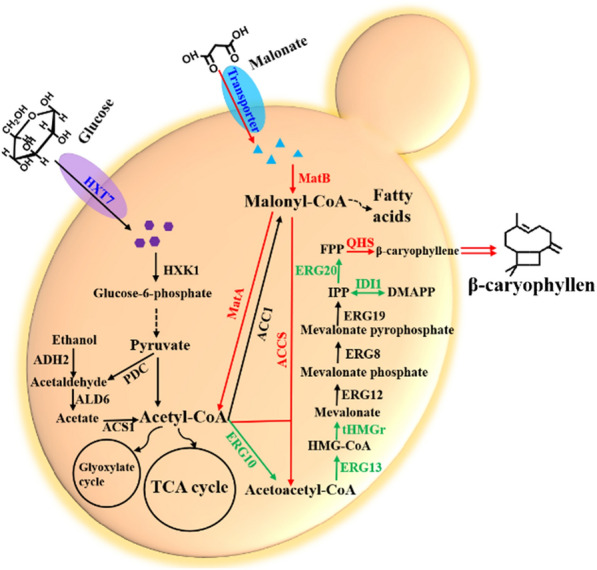
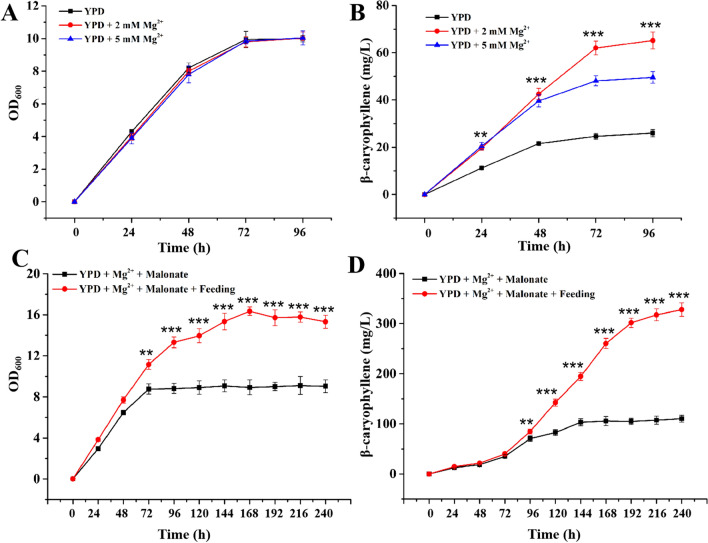
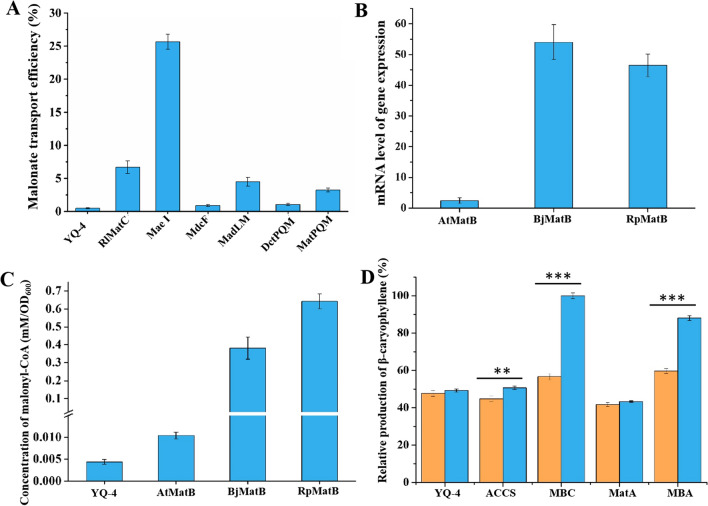
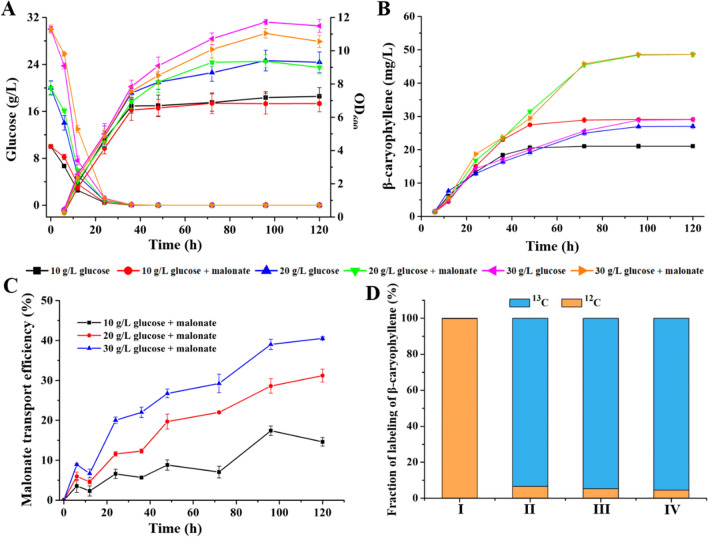
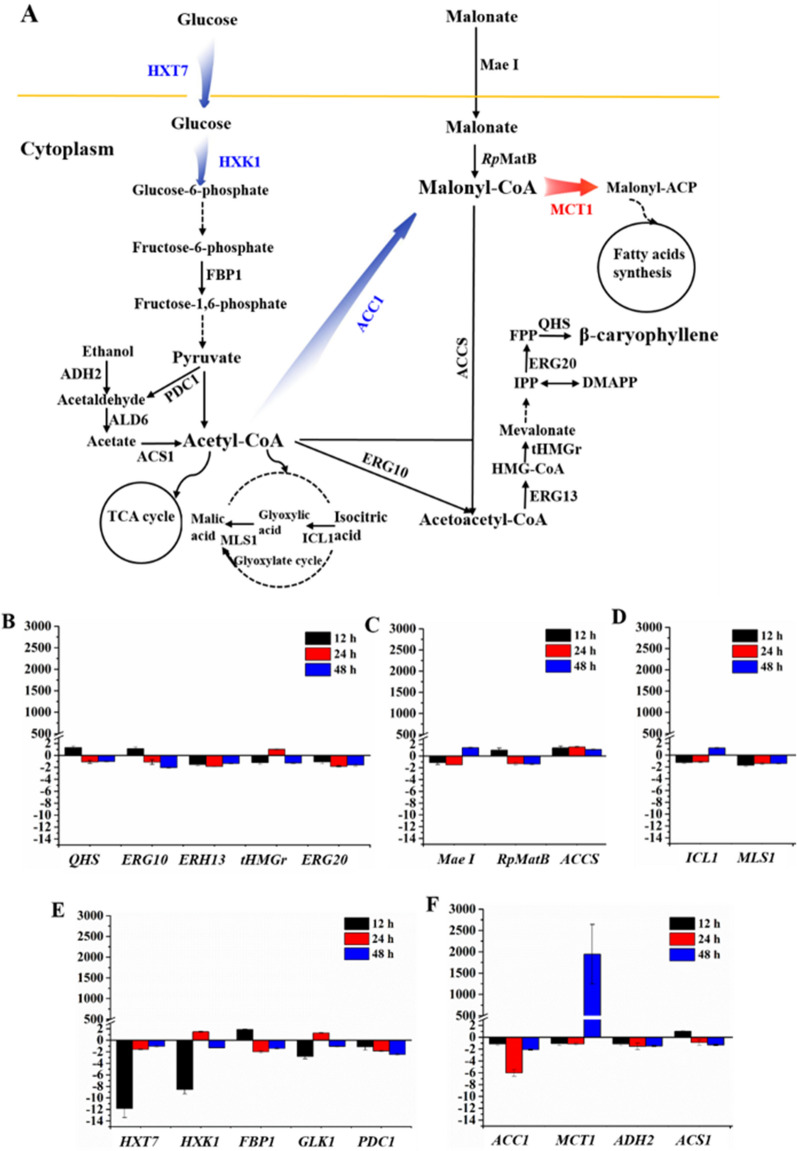
Herein, we exploited an artificial synthetic malonic acid-acetoacetyl-CoA (MAAC) metabolic pathway to switch central carbon metabolic flux for stable and efficient biosynthesis of sesquiterpene-based high-density biofuel precursor in S. cerevisiae. Through investigations at transcription and metabolism levels, we revealed that strains with rewired central metabolism can devote more sugars to β-caryophyllene production. By optimizing the MVA pathway, the yield of β-caryophyllene from YQ-4 was 25.8 mg/L, which was 3 times higher than that of the initial strain YQ-1. Strain YQ-7 was obtained by introducing malonic acid metabolic pathway. Combing the optimized flask fermentation process, the target production boosted by about 13-fold, to 328 mg/L compared to that in the strain YQ-4 without malonic acid metabolic pathway.
This designed MAAC pathway for sesquiterpene-based high-density biofuel precursor synthesis can provide an impressive cornerstone for achieving a sustainable production of renewable fuels.
倍半萜烯是一大类植物源天然活性化合物,在能源、食品、化妆品、医药和农业等行业有广泛应用。植物提取和化学合成均无法满足巨大的市场需求和可持续发展目标。在微生物细胞工厂中进行生物合成是一种环保且高效的方式。在几种微生物中,酿酒酵母因其天然的甲羟戊酸途径而展现出作为各种倍半萜烯生物生产底盘的潜力。然而,其效率低下限制了工业级多种倍半萜烯的生物合成。
在此,我们利用人工合成的丙二酸 - 乙酰乙酰辅酶A(MAAC)代谢途径来切换中心碳代谢通量,以在酿酒酵母中稳定高效地生物合成基于倍半萜烯的高密度生物燃料前体。通过在转录和代谢水平上的研究,我们发现中心代谢重布线的菌株能够将更多的糖类用于β - 石竹烯的生产。通过优化甲羟戊酸途径,YQ - 4菌株的β - 石竹烯产量为25.8 mg/L,比初始菌株YQ - 1高出3倍。通过引入丙二酸代谢途径获得了YQ - 7菌株。结合优化的摇瓶发酵工艺,与没有丙二酸代谢途径的YQ - 4菌株相比,目标产量提高了约13倍,达到328 mg/L。
这种为基于倍半萜烯的高密度生物燃料前体合成设计的MAAC途径可为实现可再生燃料的可持续生产提供一个令人瞩目的基石。