Department of Microbiology, Biochemistry and Molecular Genetics, Cancer Center, Rutgers- New Jersey Medical School, Newark, NJ, United States.
Department of Research and Development, Kymera Therapeutics, Watertown, MA, United States.
Front Immunol. 2023 Jul 20;14:1135373. doi: 10.3389/fimmu.2023.1135373. eCollection 2023.
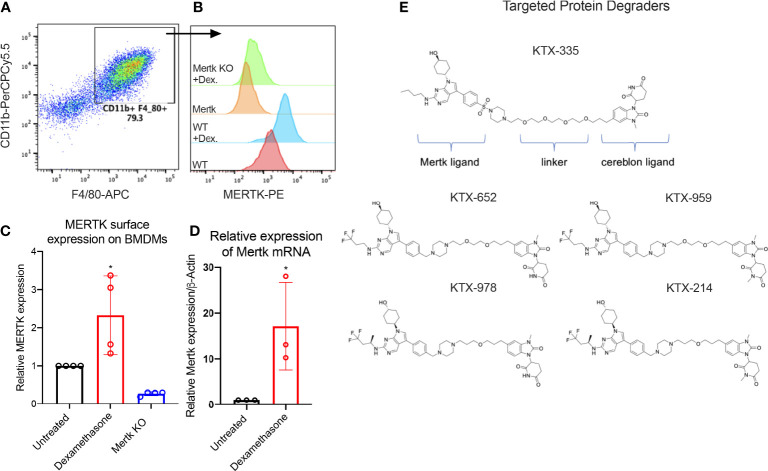
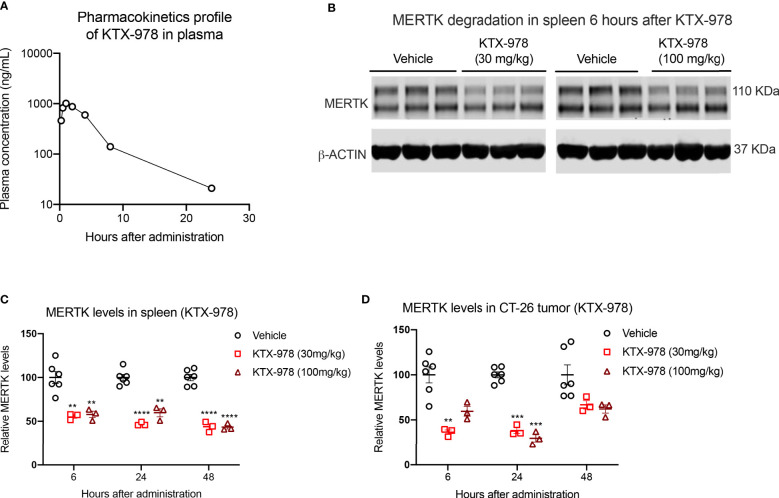
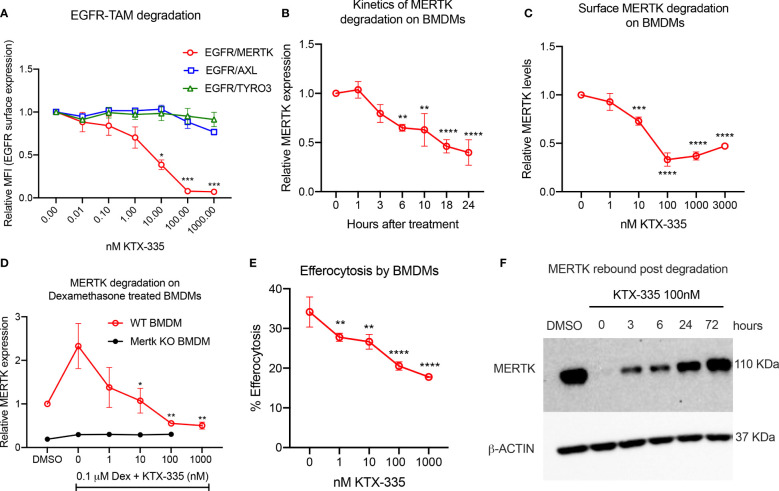
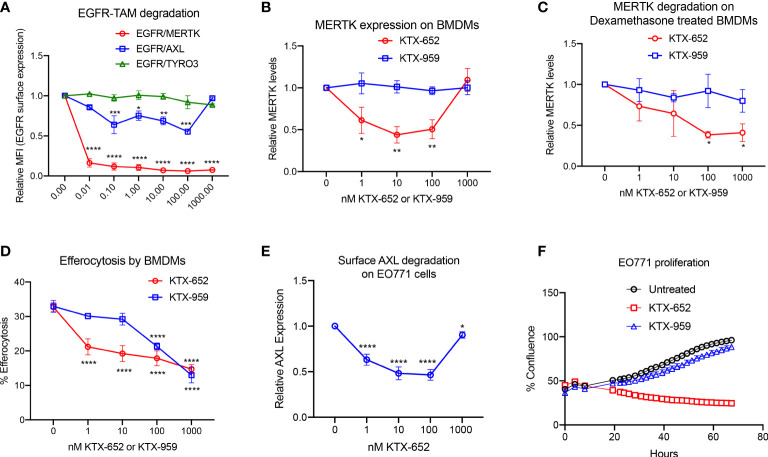
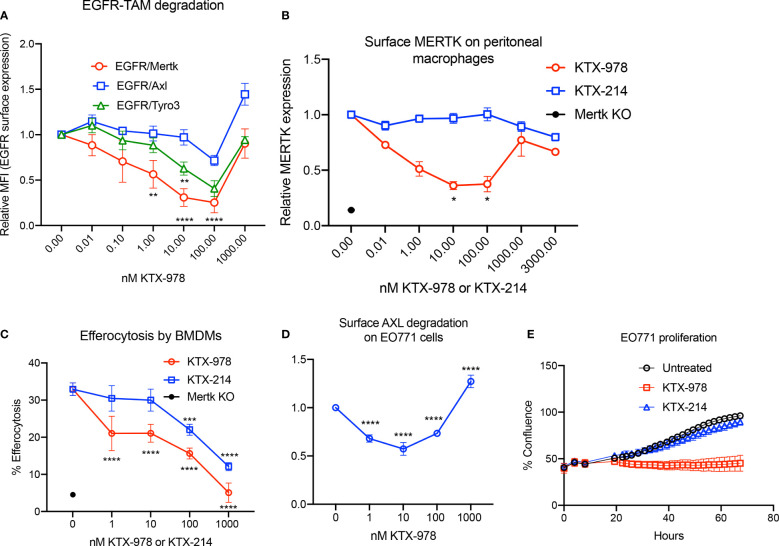
TAM receptors (TYRO3, AXL, and MERTK) comprise a family of homologous receptor tyrosine kinases (RTK) that are expressed across a range of liquid and solid tumors where they contribute to both oncogenic signaling to promote tumor proliferation and survival, as well as expressed on myeloid and immune cells where they function to suppress host anti-tumor immunity. In recent years, several strategies have been employed to inhibit TAM kinases, most notably small molecule tyrosine kinase inhibitors and inhibitory neutralizing monoclonal antibodies (mAbs) that block receptor dimerization. Targeted protein degraders (TPD) use the ubiquitin proteasome pathway to redirect E3 ubiquitin ligase activity and target specific proteins for degradation. Here we employ first-in-class TPDs specific for MERTK/TAMs that consist of a cereblon E3 ligase binder linked to a tyrosine kinase inhibitor targeting MERTK and/or AXL and TYRO3. A series of MERTK TPDs were designed and investigated for their capacity to selectively degrade MERTK chimeric receptors, reduce surface expression on primary efferocytic bone marrow-derived macrophages, and impact on functional reduction in efferocytosis (clearance of apoptotic cells). We demonstrate proof-of-concept and establish that TPDs can be tailored to either selectivity degrades MERTK or concurrently degrade multiple TAMs and modulate receptor expression and . This work demonstrates the utility of proteome editing, enabled by tool degraders developed here towards dissecting the therapeutically relevant pathway biology in preclinical models, and the ability for TPDs to degrade transmembrane proteins. These data also provide proof of concept that TPDs may serve as a viable therapeutic strategy for targeting MERTK and other TAMs and that this technology could be expanded to other therapeutically relevant transmembrane proteins.
TAM 受体(TYRO3、AXL 和 MERTK)构成同源受体酪氨酸激酶(RTK)家族,在多种液体和实体肿瘤中表达,它们有助于致癌信号的传递,促进肿瘤的增殖和存活,同时也在髓样细胞和免疫细胞上表达,在这些细胞中,它们抑制宿主抗肿瘤免疫。近年来,已经采用了几种策略来抑制 TAM 激酶,最显著的是小分子酪氨酸激酶抑制剂和抑制性中和单克隆抗体(mAb),它们阻断受体二聚化。靶向蛋白降解剂(TPD)利用泛素蛋白酶体途径重新定向 E3 泛素连接酶活性,并将特定蛋白质靶向降解。在这里,我们使用了针对 MERTK/TAMs 的首创 TPD,它们由一个 cereblon E3 连接酶结合物组成,连接到针对 MERTK 和/或 AXL 和 TYRO3 的酪氨酸激酶抑制剂。设计并研究了一系列 MERTK TPD,以评估它们选择性降解 MERTK 嵌合受体、减少初级吞噬骨髓源性巨噬细胞表面表达以及对吞噬作用(清除凋亡细胞)功能降低的影响。我们证明了概念验证,并确定 TPD 可以定制为选择性降解 MERTK 或同时降解多个 TAMs,并调节受体表达和功能。这项工作证明了蛋白质组编辑的实用性,这是由我们在这里开发的工具降解剂实现的,用于在临床前模型中剖析治疗相关途径生物学,以及 TPD 降解跨膜蛋白的能力。这些数据还提供了概念验证,即 TPD 可作为靶向 MERTK 和其他 TAMs 的可行治疗策略,并且该技术可扩展到其他治疗相关的跨膜蛋白。