Hinson Chandler, Bouillon Victoria, Brooks Ronald
From the Frederick P. Whiddon College of Medicine, University of South Alabama, Mobile, Ala.
Plastic and Reconstructive Surgery Clinic, University of South Alabama Health, Mobile, Ala.
Plast Reconstr Surg Glob Open. 2023 Aug 4;11(8):e5170. doi: 10.1097/GOX.0000000000005170. eCollection 2023 Aug.
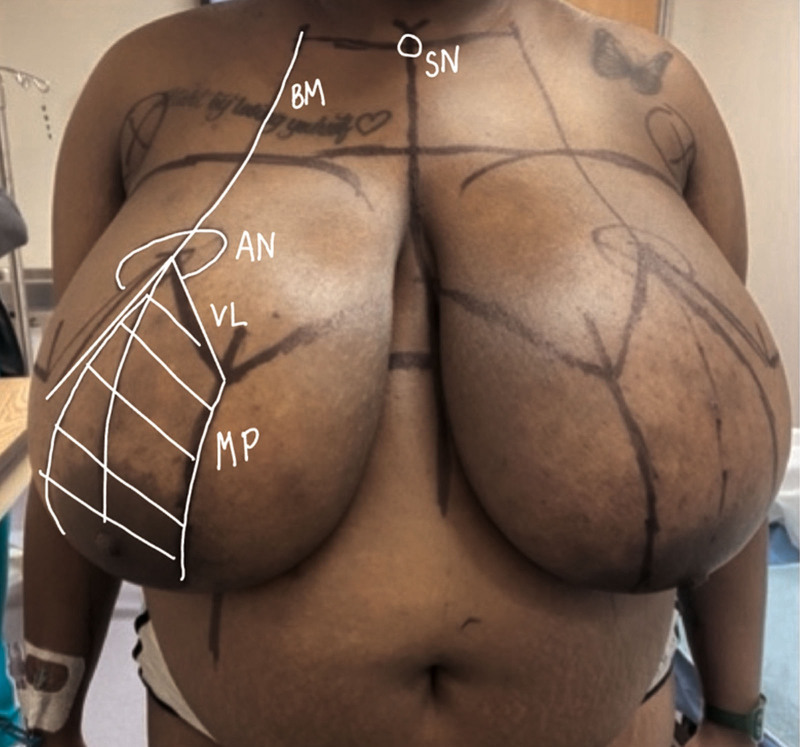
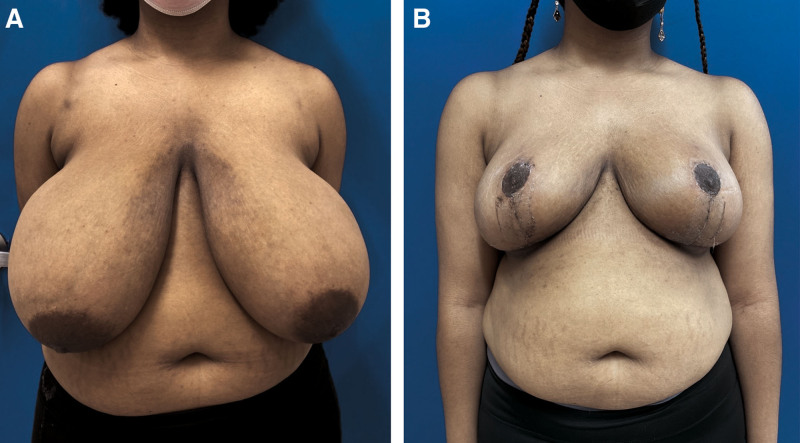
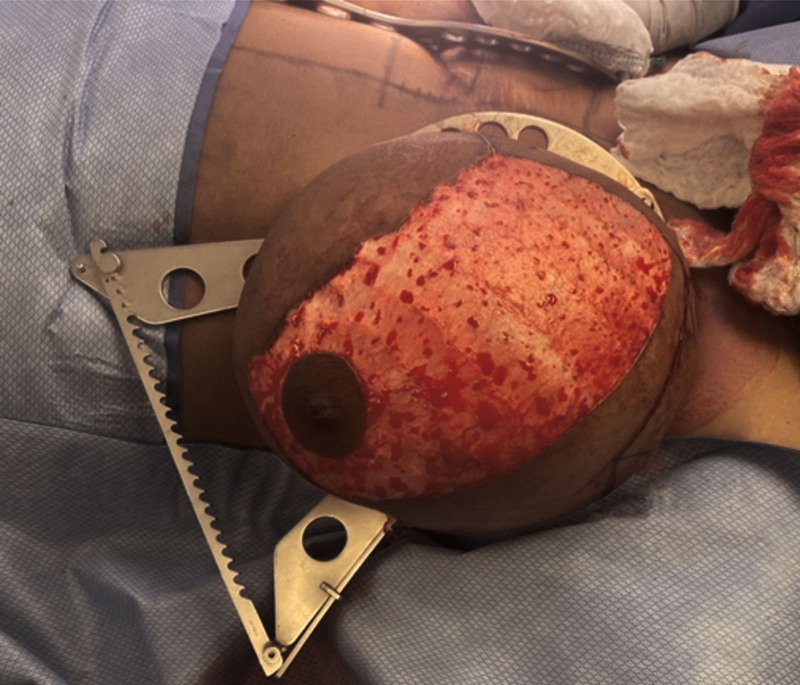
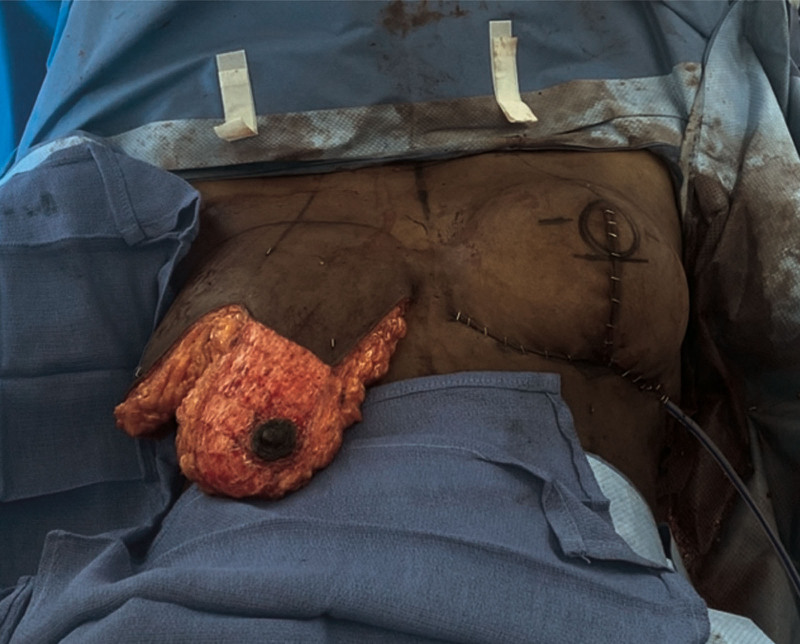
Gigantomastia causes severe back pain, postural imbalance, intertrigo, and psychosocial disablement. Multiple breast reduction techniques exist. Breast reduction with free nipple graft reconstruction is the preferred treatment. We found that the medial pedicle Wise-pattern (MPWP) technique is an equally safe and effective technique.
Review of our institution's electronic medical record between February 2020 and February 2023 identified women with gigantomastia who underwent bilateral reduction with more than 1500 g resected in at least one breast. Multinomial logistical regressions were used to identify associations between comorbidities, operative techniques, postoperative complications, and nipple areolar complex function.
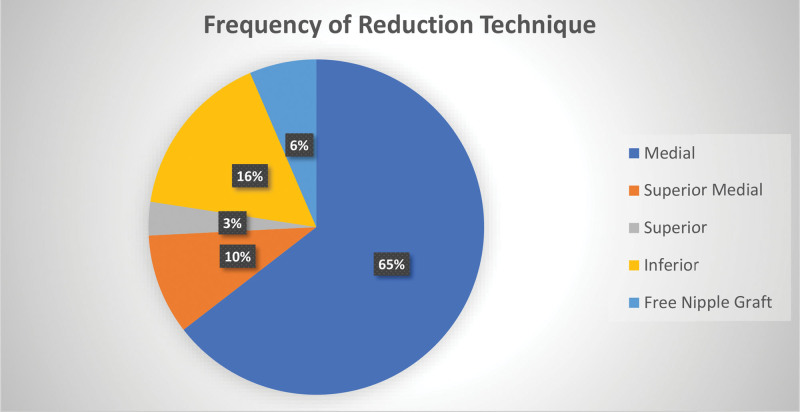
Thirty-one patients underwent bilateral reduction mammaplasty. Total bilateral resection weight and average body mass index (BMI) were 3828 g and 40 kg per m. Common comorbidities were hypertension (38%) and tobacco use (26%). MPWP was used predominantly (65%), followed by inferior pedicle (16%) and superior-medial pedicle (10%). Complications included loss of nipple areolar complex sensation (23%) and wound dehiscence (16%). Reduction technique was not associated with increased surgical complications (odds ratio = 0.75, = 0.273). Age, excision amount, use of postsurgical drains, and BMI were not associated with increased complications ( = 0.29, = 0.55, = 0.74, = 0.41). Rates of areolar sensation loss were higher in larger BMIs, but this was not statistically significant ( = 0.051).
The MPWP reduction technique is an equally safe and effective treatment of gigantomastia when compared with reduction with free nipple graft reconstruction. There is the added benefit of preserved nipple sensation without increased postoperative complications.
巨乳症会导致严重的背痛、姿势失衡、擦烂和心理社会功能障碍。存在多种乳房缩小技术。带游离乳头移植重建的乳房缩小术是首选治疗方法。我们发现内侧蒂 Wise 模式(MPWP)技术是一种同样安全有效的技术。
回顾我们机构在2020年2月至2023年2月期间的电子病历,确定接受双侧乳房缩小术且至少一侧乳房切除量超过1500克的巨乳症女性。使用多项逻辑回归来确定合并症、手术技术、术后并发症和乳头乳晕复合体功能之间的关联。
31例患者接受了双侧乳房缩小成形术。双侧总切除重量和平均体重指数(BMI)分别为3828克和每平方米40千克。常见合并症为高血压(38%)和吸烟(26%)。主要采用MPWP技术(65%),其次是下蒂技术(16%)和上内侧蒂技术(10%)。并发症包括乳头乳晕复合体感觉丧失(23%)和伤口裂开(16%)。缩小技术与手术并发症增加无关(优势比 = 0.75,P = 0.273)。年龄、切除量、术后引流管的使用和BMI与并发症增加无关(P = 0.29,P = 0.55,P = 0.74,P = 0.41)。BMI较高者乳晕感觉丧失率较高,但无统计学意义(P = 0.051)。
与带游离乳头移植重建的乳房缩小术相比,MPWP乳房缩小技术是治疗巨乳症同样安全有效的方法。其额外的好处是保留乳头感觉且不增加术后并发症。