Department of Cognitive Robotics, Delft University of Technology, Delft, The Netherlands.
Department of Biomechanical Engineering, Delft University of Technology, Delft, The Netherlands.
Behav Res Methods. 2024 Aug;56(5):4221-4238. doi: 10.3758/s13428-023-02173-7. Epub 2023 Aug 7.
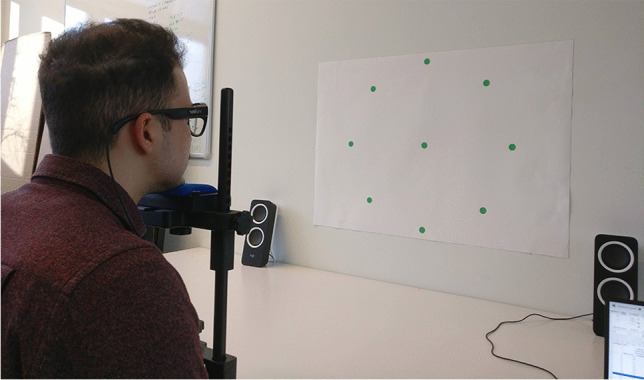
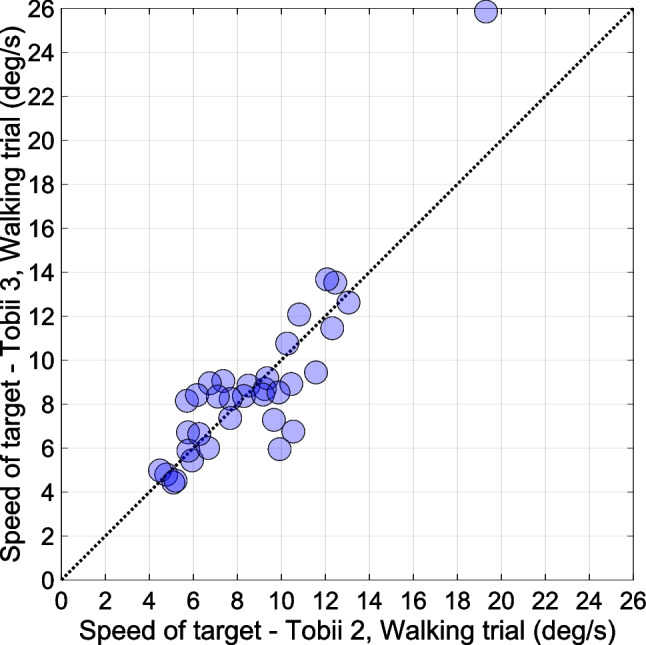
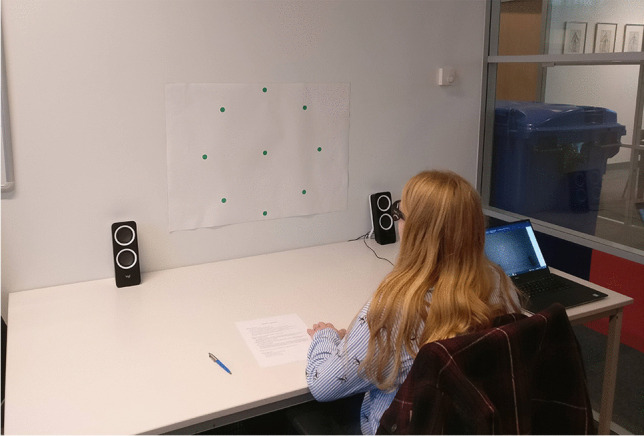
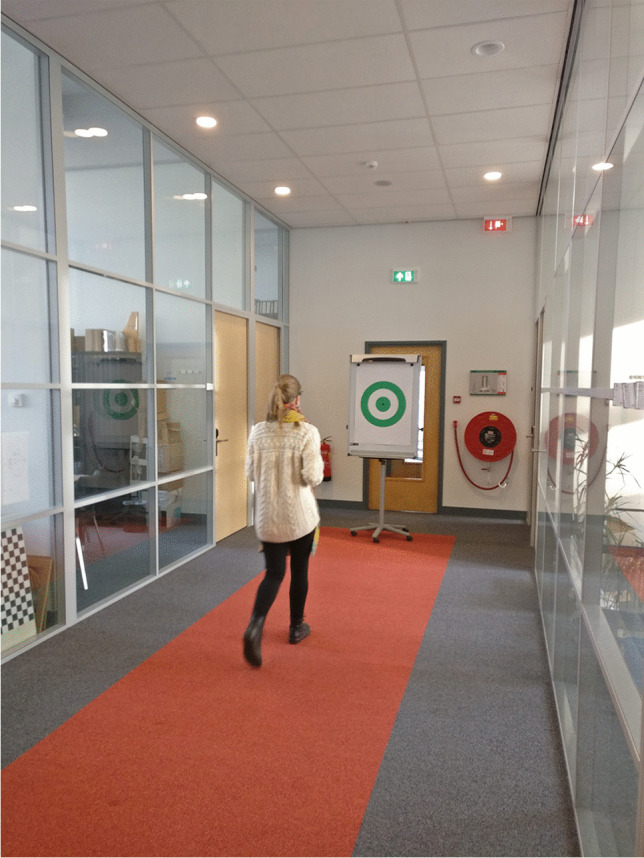
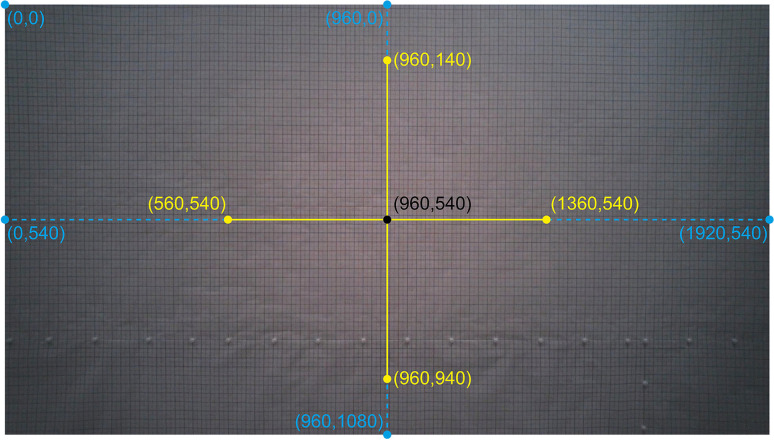
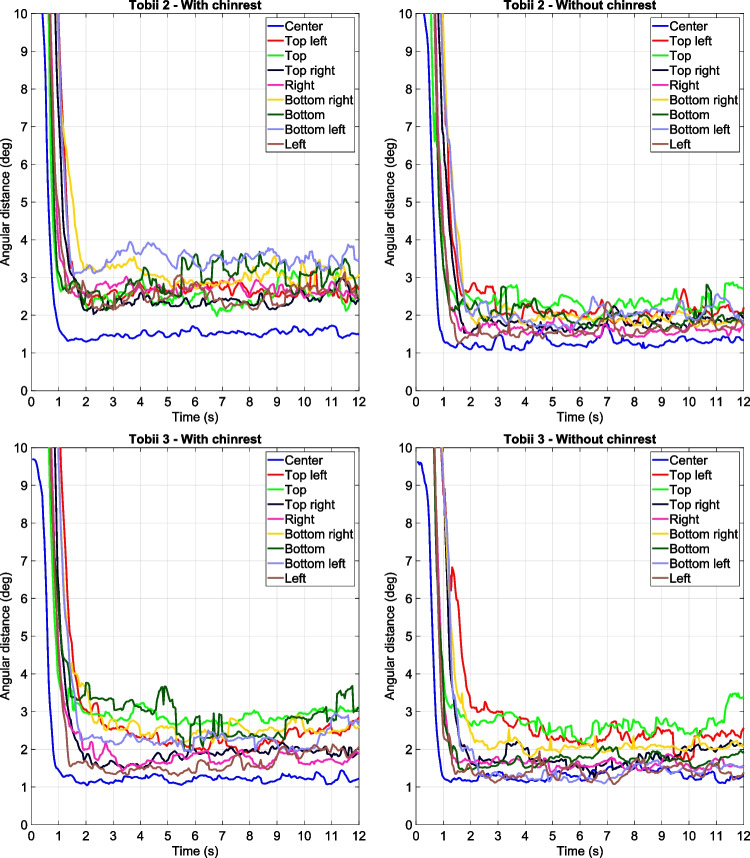
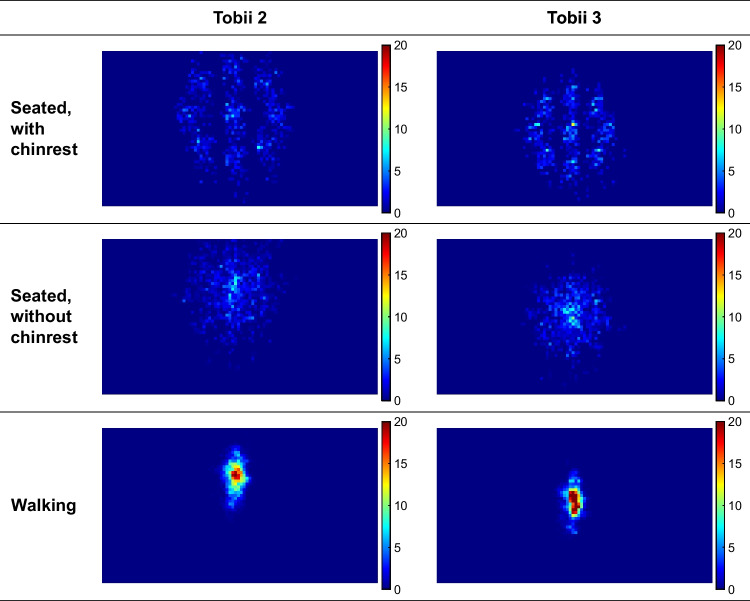
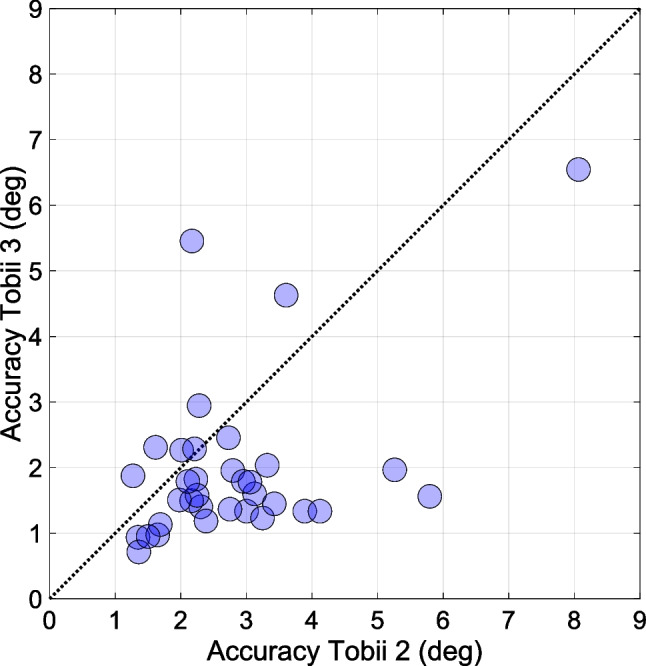
Over the past few decades, there have been significant developments in eye-tracking technology, particularly in the domain of mobile, head-mounted devices. Nevertheless, questions remain regarding the accuracy of these eye-trackers during static and dynamic tasks. In light of this, we evaluated the performance of two widely used devices: Tobii Pro Glasses 2 and Tobii Pro Glasses 3. A total of 36 participants engaged in tasks under three dynamicity conditions. In the "seated with a chinrest" trial, only the eyes could be moved; in the "seated without a chinrest" trial, both the head and the eyes were free to move; and during the walking trial, participants walked along a straight path. During the seated trials, participants' gaze was directed towards dots on a wall by means of audio instructions, whereas in the walking trial, participants maintained their gaze on a bullseye while walking towards it. Eye-tracker accuracy was determined using computer vision techniques to identify the target within the scene camera image. The findings showed that Tobii 3 outperformed Tobii 2 in terms of accuracy during the walking trials. Moreover, the results suggest that employing a chinrest in the case of head-mounted eye-trackers is counterproductive, as it necessitates larger eye eccentricities for target fixation, thereby compromising accuracy compared to not using a chinrest, which allows for head movement. Lastly, it was found that participants who reported higher workload demonstrated poorer eye-tracking accuracy. The current findings may be useful in the design of experiments that involve head-mounted eye-trackers.
在过去的几十年中,眼动追踪技术取得了重大进展,特别是在移动、头戴式设备领域。然而,这些眼动追踪器在静态和动态任务中的准确性仍存在问题。有鉴于此,我们评估了两种广泛使用的设备: Tobii Pro Glasses 2 和 Tobii Pro Glasses 3 的性能。共有 36 名参与者在三种动态性条件下进行了任务。在“坐姿,有下巴托”试验中,只能移动眼睛;在“坐姿,无下巴托”试验中,头和眼睛都可以自由移动;在行走试验中,参与者沿着直线行走。在坐姿试验中,参与者通过音频指令将目光投向墙上的点,而在行走试验中,参与者在走向目标时保持注视着靶心。眼动追踪器的准确性是通过计算机视觉技术来确定场景相机图像中的目标来确定的。研究结果表明,在行走试验中,Tobii 3 的准确性优于 Tobii 2。此外,结果表明,在头戴式眼动追踪器的情况下使用下巴托是适得其反的,因为它需要更大的眼睛偏心度来固定目标,从而降低了准确性,而不使用下巴托则允许头部移动。最后,研究发现,报告工作负荷较高的参与者的眼动追踪准确性较差。当前的研究结果可能对涉及头戴式眼动追踪器的实验设计有用。