Department of Biopathology and Laboratory Medicine, Eginition University Hospital, Athens, Greece.
Department of Psychiatry, University of California, San Diego (UCSD), La Jolla, CA, USA.
Curr Neuropharmacol. 2024;22(4):524-542. doi: 10.2174/1570159X21666230807152051.
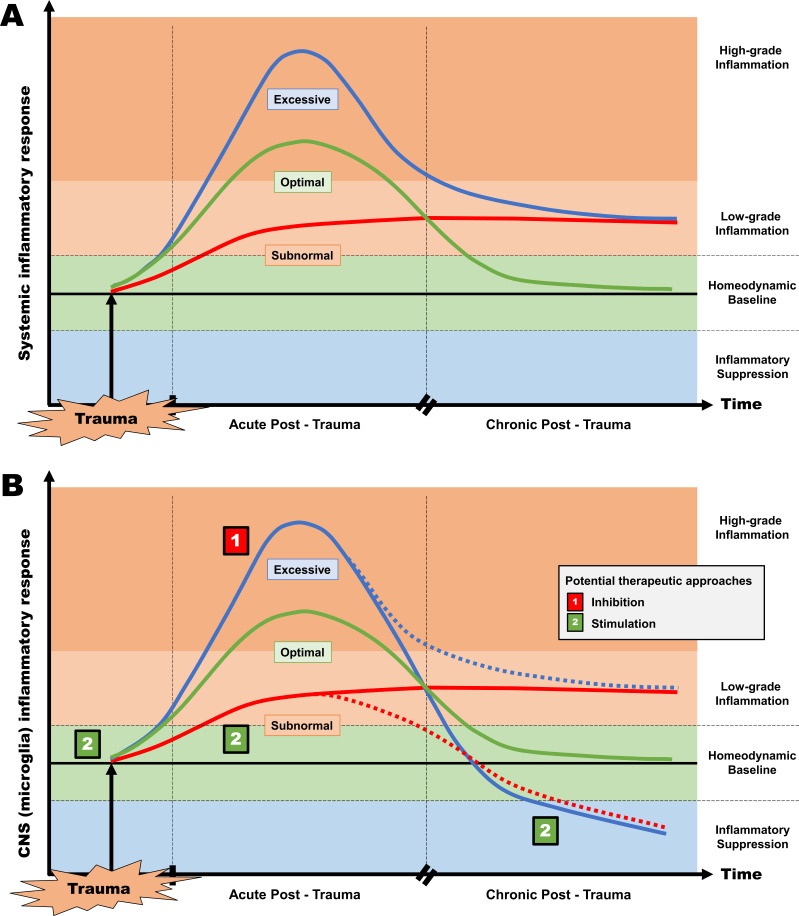
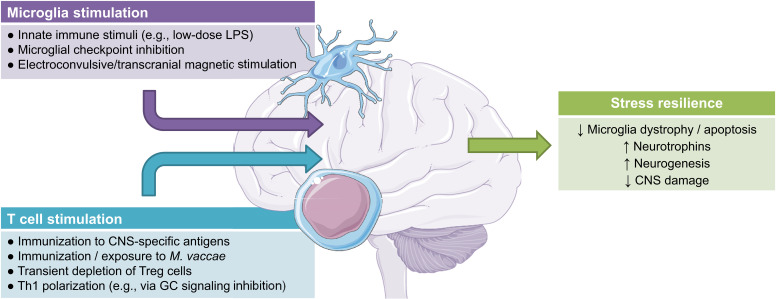
Despite ample experimental data indicating a role of inflammatory mediators in the behavioral and neurobiological manifestations elicited by exposure to physical and psychologic stressors, causative associations between systemic low-grade inflammation and central nervous system inflammatory processes in posttraumatic stress disorder (PTSD) patients remain largely conceptual. As in other stress-related disorders, pro-inflammatory activity may play an equivocal role in PTSD pathophysiology, one that renders indiscriminate employment of anti-inflammatory agents of questionable relevance. In fact, as several pieces of preclinical and clinical research convergingly suggest, timely and targeted potentiation rather than inhibition of inflammatory responses may actually be beneficial in patients who are characterized by suppressed microglia function in the face of systemic low-grade inflammation. The deleterious impact of chronic stress-associated inflammation on the systemic level may, thus, need to be held in context with the - often not readily apparent - adaptive payoffs of low-grade inflammation at the tissue level.
尽管有大量实验数据表明炎症介质在暴露于身心应激源后所引起的行为和神经生物学表现中起作用,但全身低度炎症与创伤后应激障碍(PTSD)患者中枢神经系统炎症过程之间的因果关系在很大程度上仍属概念性的。与其他应激相关障碍一样,促炎活性在 PTSD 病理生理学中可能起不确定的作用,即不加区分地使用抗炎剂可能没有相关性。事实上,正如一些临床前和临床研究都表明的那样,及时和有针对性地增强而不是抑制炎症反应实际上可能对那些在面对全身低度炎症时表现出小胶质细胞功能受抑制的患者有益。因此,慢性应激相关炎症对全身的有害影响需要与组织水平上低度炎症的适应性益处(通常不明显)联系起来考虑。