Max Planck Institute of Molecular Plant Physiology, Potsdam Science Park, 14476 Potsdam, Germany.
Computational Biology Unit, Department of Chemistry, University of Bergen, 5008 Bergen, Norway.
Plant Physiol. 2023 Oct 26;193(3):1970-1986. doi: 10.1093/plphys/kiad446.
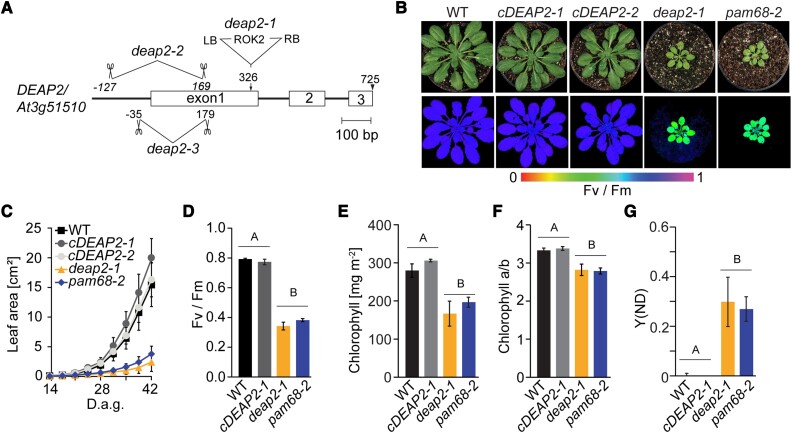
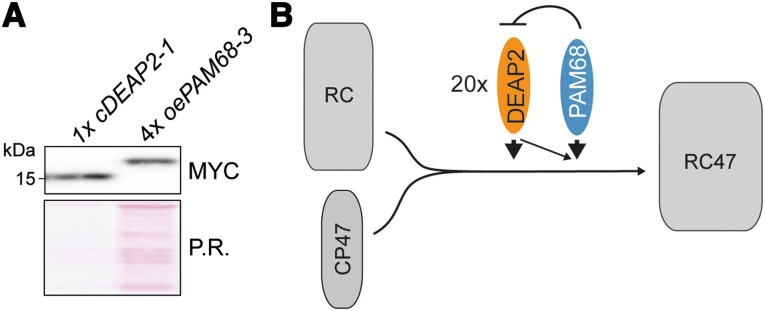
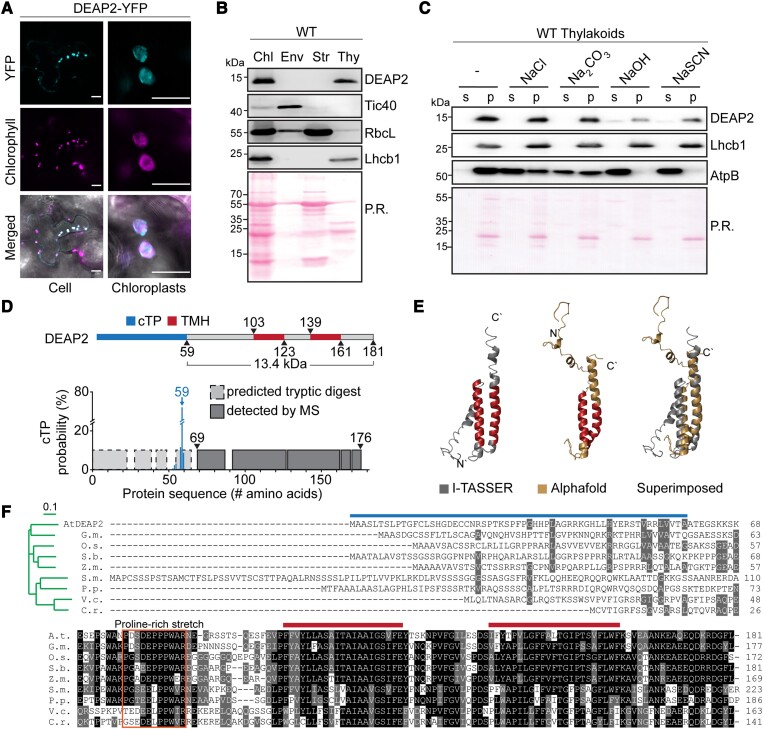
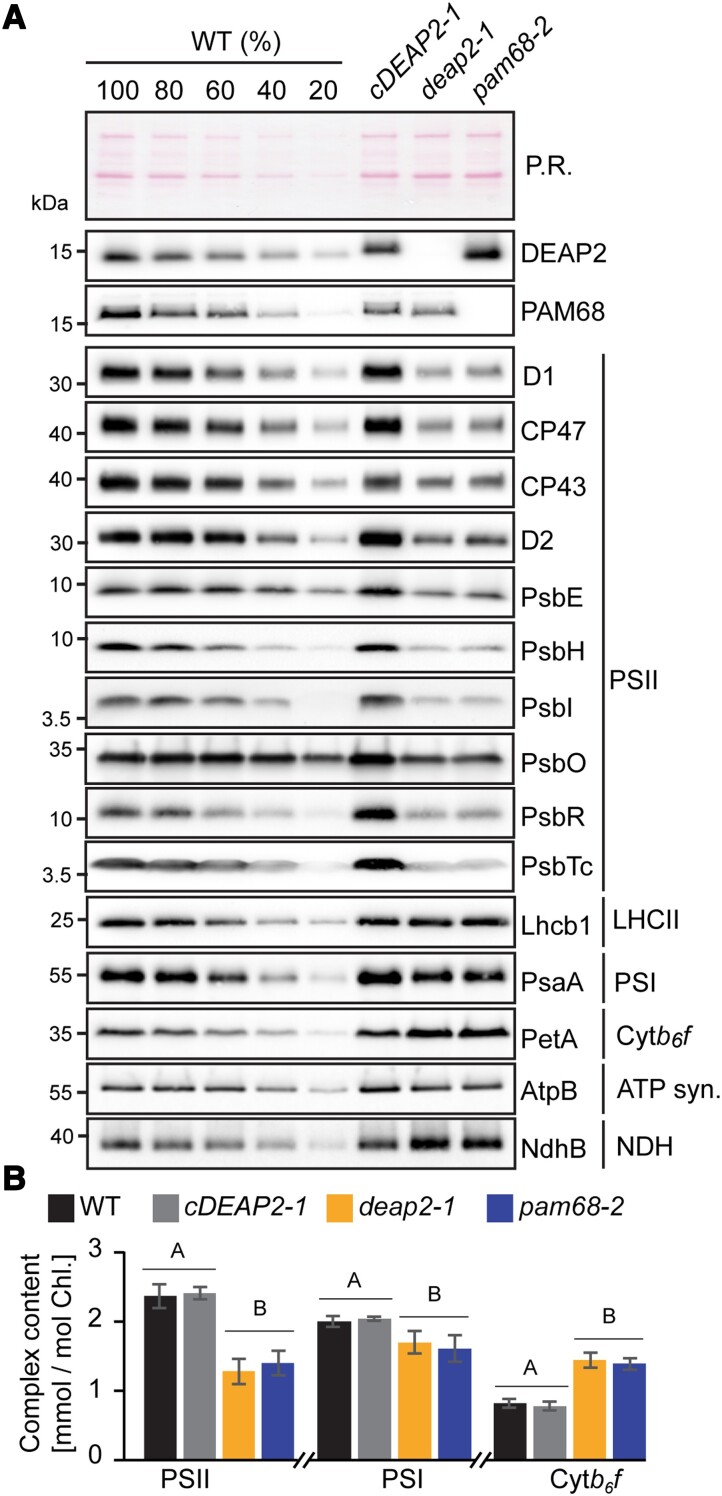
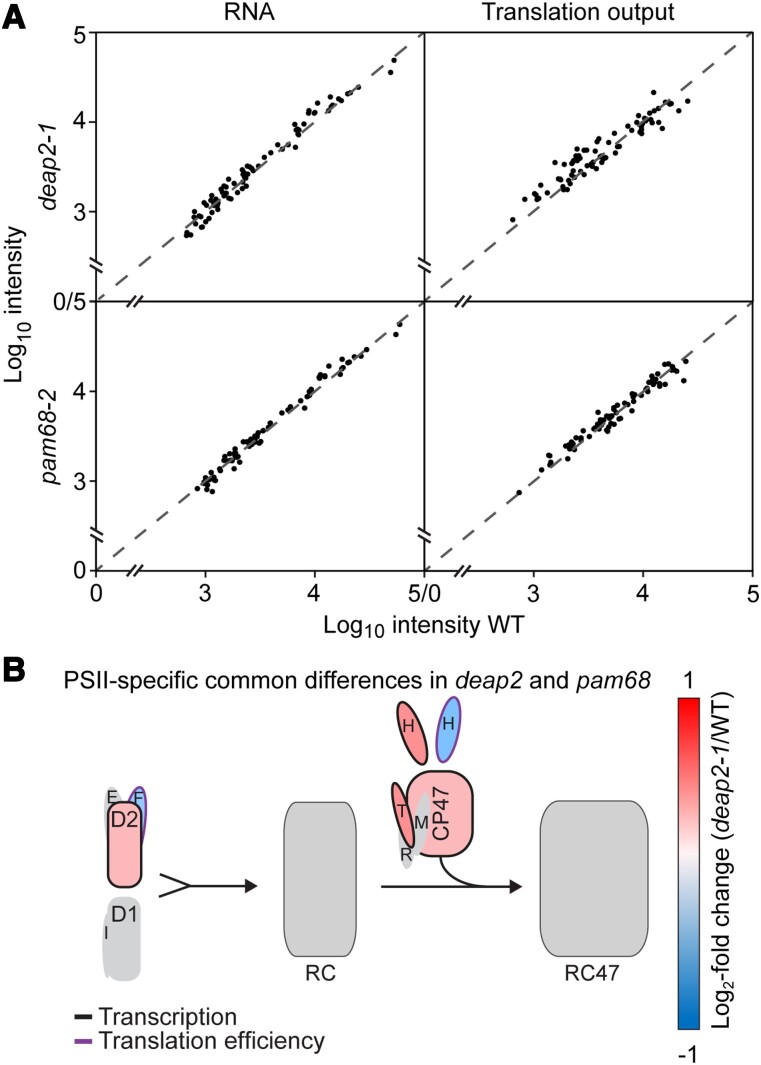
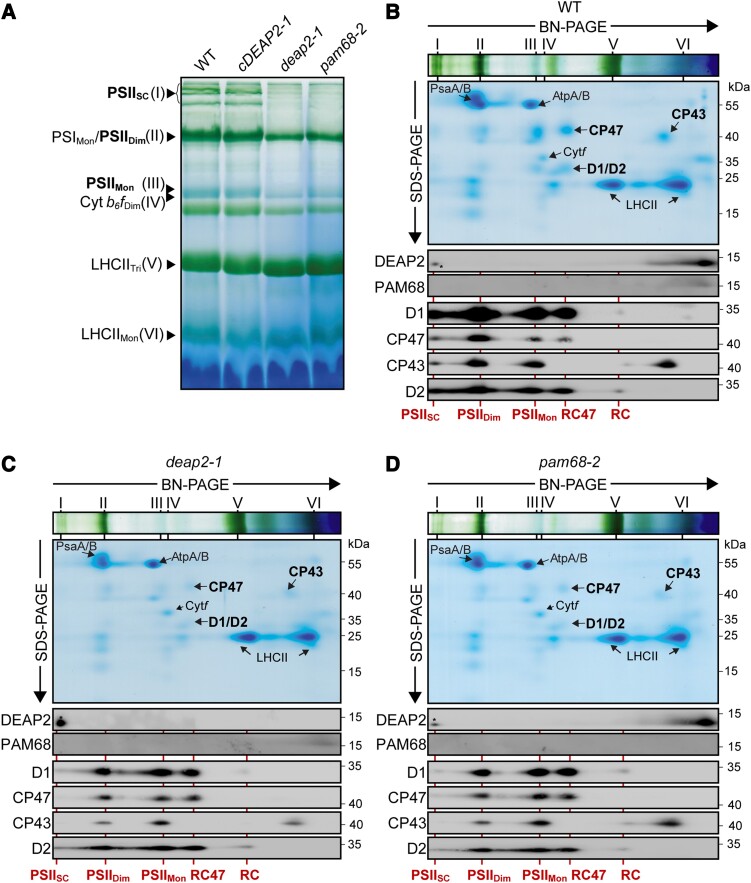
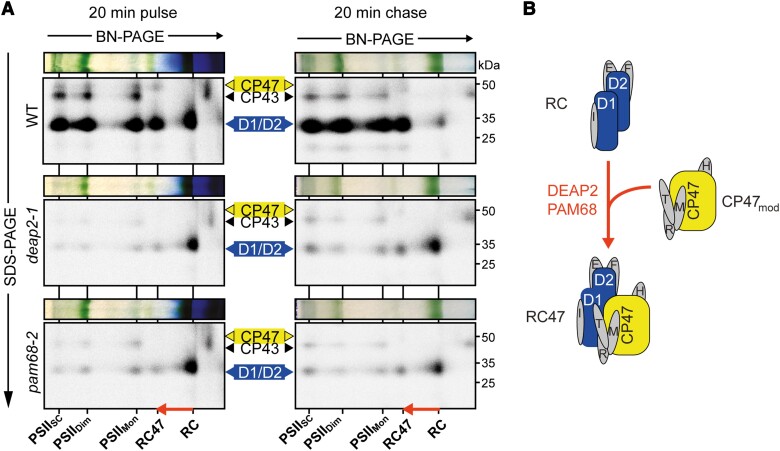
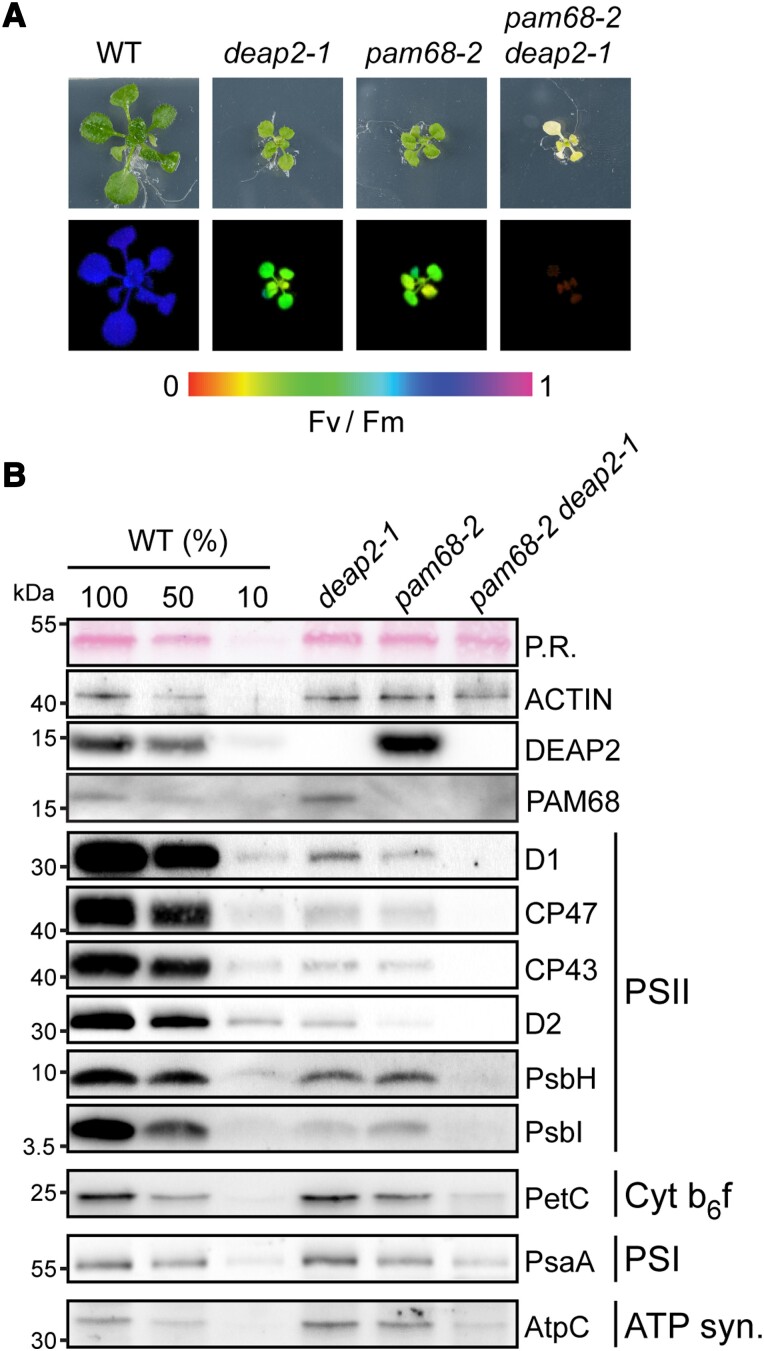
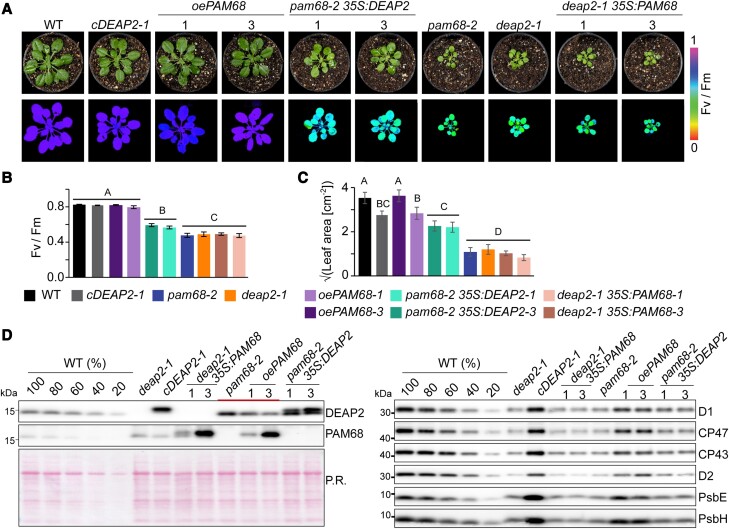
The initial step of oxygenic photosynthesis is the thermodynamically challenging extraction of electrons from water and the release of molecular oxygen. This light-driven process, which is the basis for most life on Earth, is catalyzed by photosystem II (PSII) within the thylakoid membrane of photosynthetic organisms. The biogenesis of PSII requires a controlled step-wise assembly process of which the early steps are considered to be highly conserved between plants and their cyanobacterial progenitors. This assembly process involves auxiliary proteins, which are likewise conserved. In the present work, we used Arabidopsis (Arabidopsis thaliana) as a model to show that in plants, a eukaryote-exclusive assembly factor facilitates the early assembly step, during which the intrinsic antenna protein CP47 becomes associated with the PSII reaction center (RC) to form the RC47 intermediate. This factor, which we named DECREASED ELECTRON TRANSPORT AT PSII (DEAP2), works in concert with the conserved PHOTOSYNTHESIS AFFECTED MUTANT 68 (PAM68) assembly factor. The deap2 and pam68 mutants showed similar defects in PSII accumulation and assembly of the RC47 intermediate. The combined lack of both proteins resulted in a loss of functional PSII and the inability of plants to grow photoautotrophically on the soil. While overexpression of DEAP2 partially rescued the pam68 PSII accumulation phenotype, this effect was not reciprocal. DEAP2 accumulated at 20-fold higher levels than PAM68, together suggesting that both proteins have distinct functions. In summary, our results uncover eukaryotic adjustments to the PSII assembly process, which involve the addition of DEAP2 for the rapid progression from RC to RC47.
氧光合作用的初始步骤是从水中提取电子并释放分子氧,这一过程在热力学上具有挑战性。这个由光驱动的过程是地球生命的基础,它是由光合生物类囊体膜中的光系统 II (PSII) 催化的。PSII 的生物发生需要一个受控的逐步组装过程,其中早期步骤在植物与其蓝藻祖先之间被认为是高度保守的。这个组装过程涉及辅助蛋白,它们同样是保守的。在本工作中,我们使用拟南芥 (Arabidopsis thaliana) 作为模型,表明在植物中,一种真核生物特有的组装因子促进了早期组装步骤,在此期间,内在天线蛋白 CP47 与 PSII 反应中心 (RC) 结合形成 RC47 中间体。我们将这个因子命名为 PSII 电子传递减少因子 (DEAP2),它与保守的光合作用影响突变体 68 (PAM68) 组装因子协同工作。deap2 和 pam68 突变体在 PSII 积累和 RC47 中间体组装方面表现出相似的缺陷。这两种蛋白质的共同缺乏导致功能性 PSII 的丧失,以及植物无法在土壤上进行光合作用自养生长。虽然 DEAP2 的过表达部分挽救了 pam68 PSII 积累表型,但这种效果不是相互的。DEAP2 的积累水平比 PAM68 高 20 倍,这表明这两种蛋白质具有不同的功能。总之,我们的结果揭示了真核生物对 PSII 组装过程的调整,其中包括添加 DEAP2 以快速从 RC 进展到 RC47。