Nicholls Micah, Ingvarsson Thorvaldur, Filbay Stephanie, Lohmander Stefan, Briem Kristin
Faculty of Medicine, Research Centre for Movement Sciences, The University of Iceland, Sæmundargata 2, Reykjavík, 102, Iceland.
Department of Orthopaedic Surgery, University of Akureyri, Akureyri, Iceland.
J Exp Orthop. 2023 Aug 9;10(1):79. doi: 10.1186/s40634-023-00638-4.
To identify potential prognostic factors for patient-reported outcomes in an Icelandic cohort of ACL injured subjects.
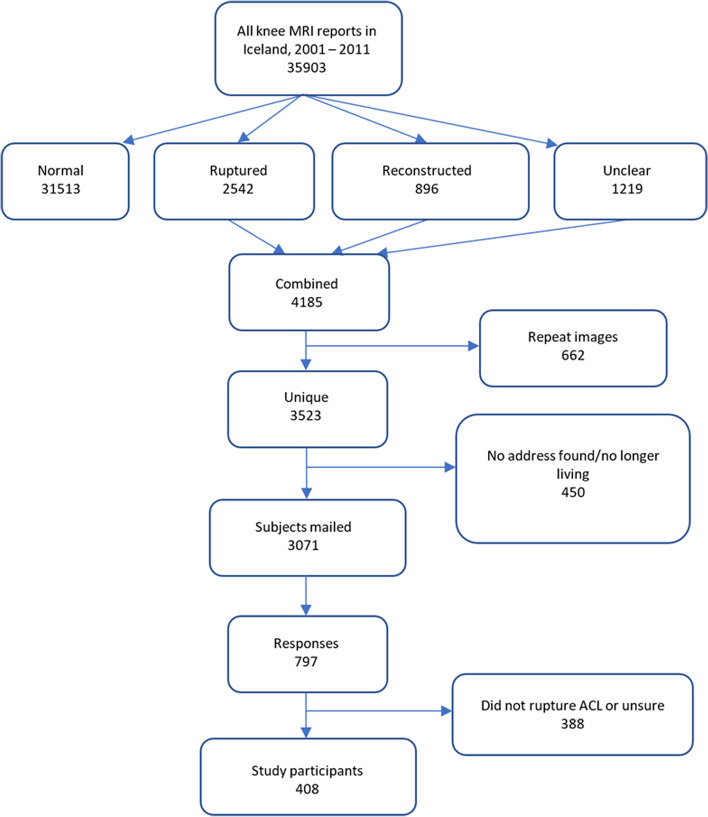
All knee MRI reports written in Iceland between the years 2001 to 2011 were read to identify individuals with a possible ACL injury. These individuals were contacted and asked to complete an online questionnaire regarding their injury and current knee related health. The questionnaire collected information on years since surgery, injury circumstance, brace use, physiotherapy, ACL surgery, second ACL injury and current smoking status. In addition, the baseline status of their meniscii were assessed from the original MRI report and medical records were used to identify any subsequent, non-ACL surgery. The patient-reported Knee Osteoarthritis and Injury Outcome Score (KOOS) was used assess current knee related health. A Bayesian proportional odds model was used to assess the effect of all potential prognostic factors above as well as age and sex on KOOS outcomes.
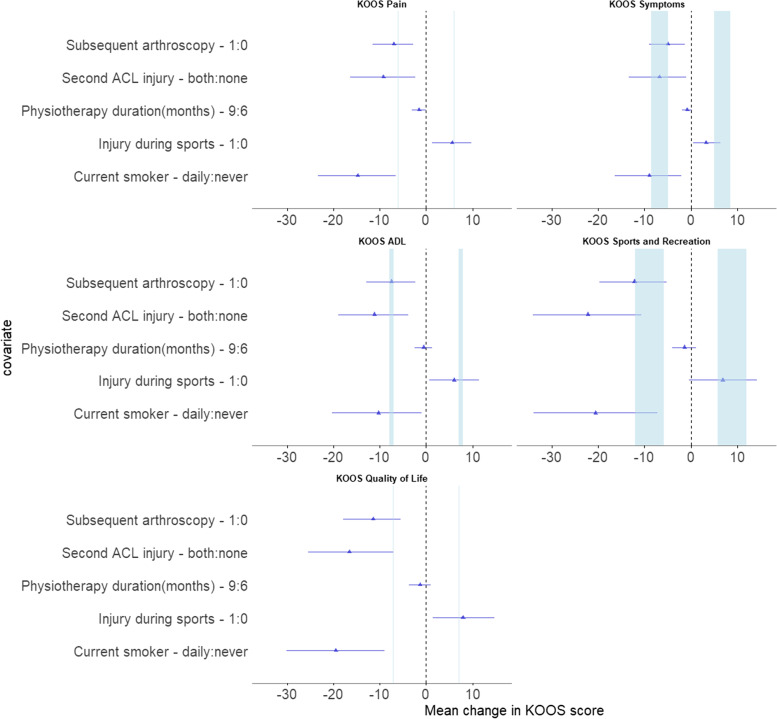
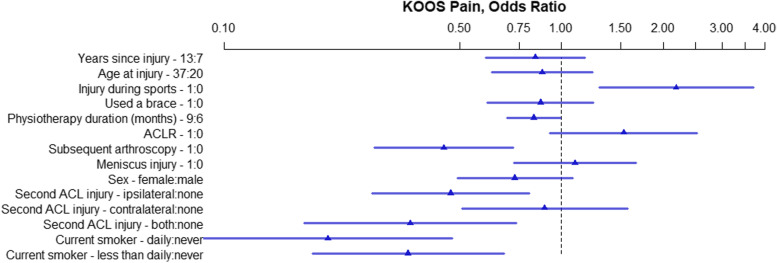
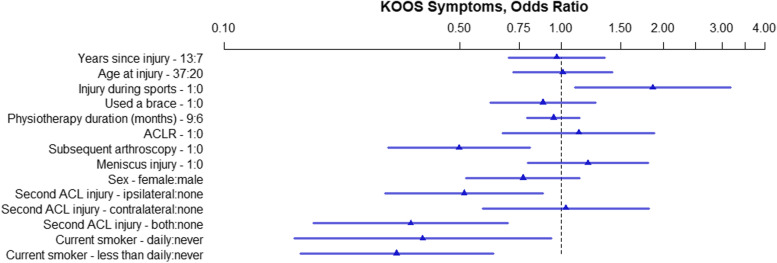
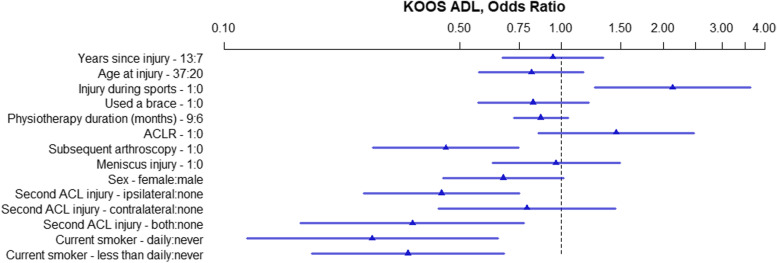
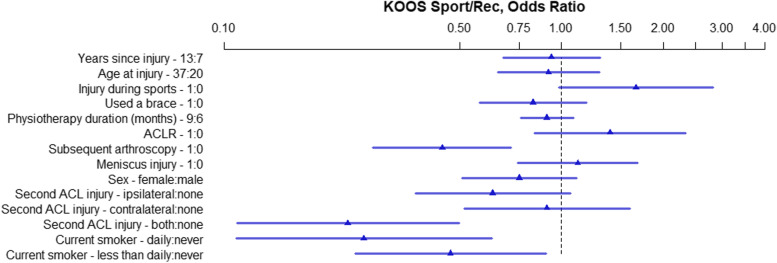
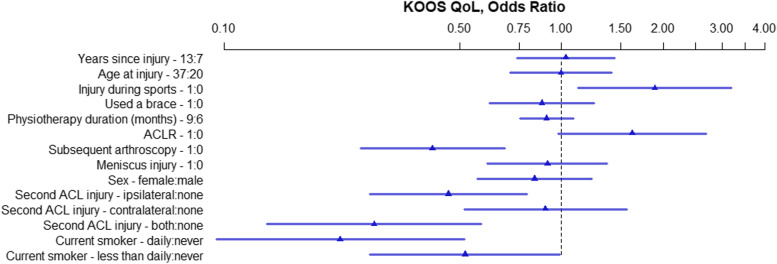
A total of 408 subjects completed the questionnaire indicating that they did rupture their ACL. The following variables were associated with worse outcomes across all KOOS subscales: having a subsequent arthroscopy, reinjury to your ACL, and smoking. Having physiotherapy for 9 months was associated with worse KOOS pain scores than having 6 months of physiotherapy. Conversely KOOS pain score tended to be higher if you injured your knee during sports.
Reinjuring your ACL, smoking and having subsequent (non-ACLR) surgery predict your knee related health following an ACL injury. Strategies should be implemented to reduce the risk of secondary ACL injury, and patients should be strongly advised not to smoke.
在冰岛一组前交叉韧带(ACL)损伤受试者队列中确定患者报告结局的潜在预后因素。
查阅2001年至2011年在冰岛撰写的所有膝关节磁共振成像(MRI)报告,以确定可能存在ACL损伤的个体。联系这些个体并要求他们完成一份关于其损伤及当前膝关节相关健康状况的在线问卷。该问卷收集了手术时间、损伤情况、支具使用情况、物理治疗、ACL手术、第二次ACL损伤及当前吸烟状况等信息。此外,根据原始MRI报告评估其半月板的基线状态,并利用医疗记录确定任何后续的非ACL手术。采用患者报告的膝关节骨关节炎和损伤结局评分(KOOS)来评估当前膝关节相关健康状况。使用贝叶斯比例优势模型评估上述所有潜在预后因素以及年龄和性别对KOOS结局的影响。
共有408名受试者完成问卷,表明他们确实发生了ACL断裂。在所有KOOS子量表中,以下变量与较差结局相关:进行后续关节镜检查、ACL再次损伤和吸烟。接受9个月物理治疗的患者,其KOOS疼痛评分比接受6个月物理治疗的患者更差。相反,如果在运动中受伤,KOOS疼痛评分往往更高。
ACL再次损伤(再受伤)、吸烟和进行后续(非ACL重建)手术可预测ACL损伤后膝关节相关健康状况。应实施相关策略以降低继发性ACL损伤的风险,并且应强烈建议患者不要吸烟。