Department of Biological Sciences, Rutgers University, Newark, New Jersey 07102.
Helen and Robert Appel Alzheimer's Disease Research Institute, Feil Family Brain and Mind Research Institute, Weill Cornell Medicine, New York, New York 10021.
eNeuro. 2023 Aug 29;10(8). doi: 10.1523/ENEURO.0067-23.2023. Print 2023 Aug.
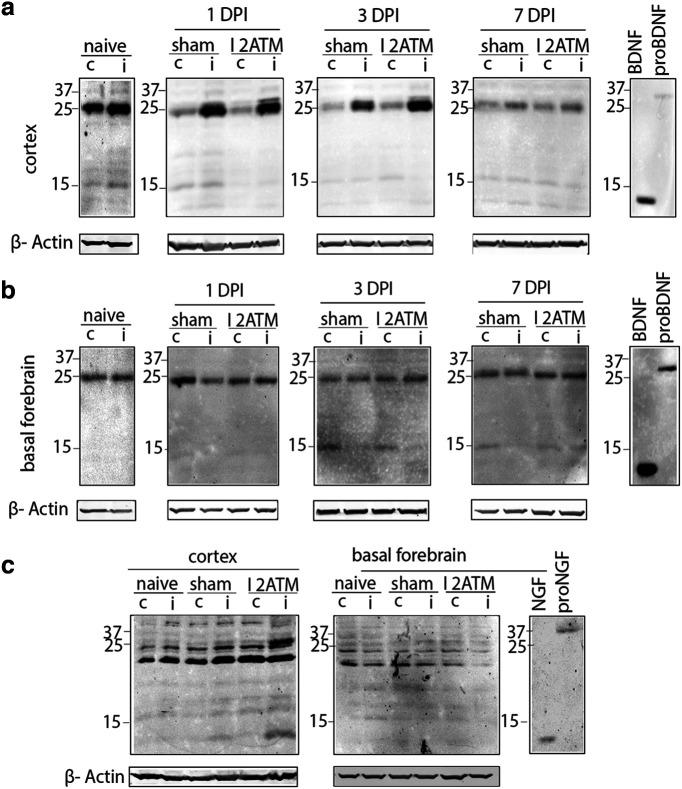
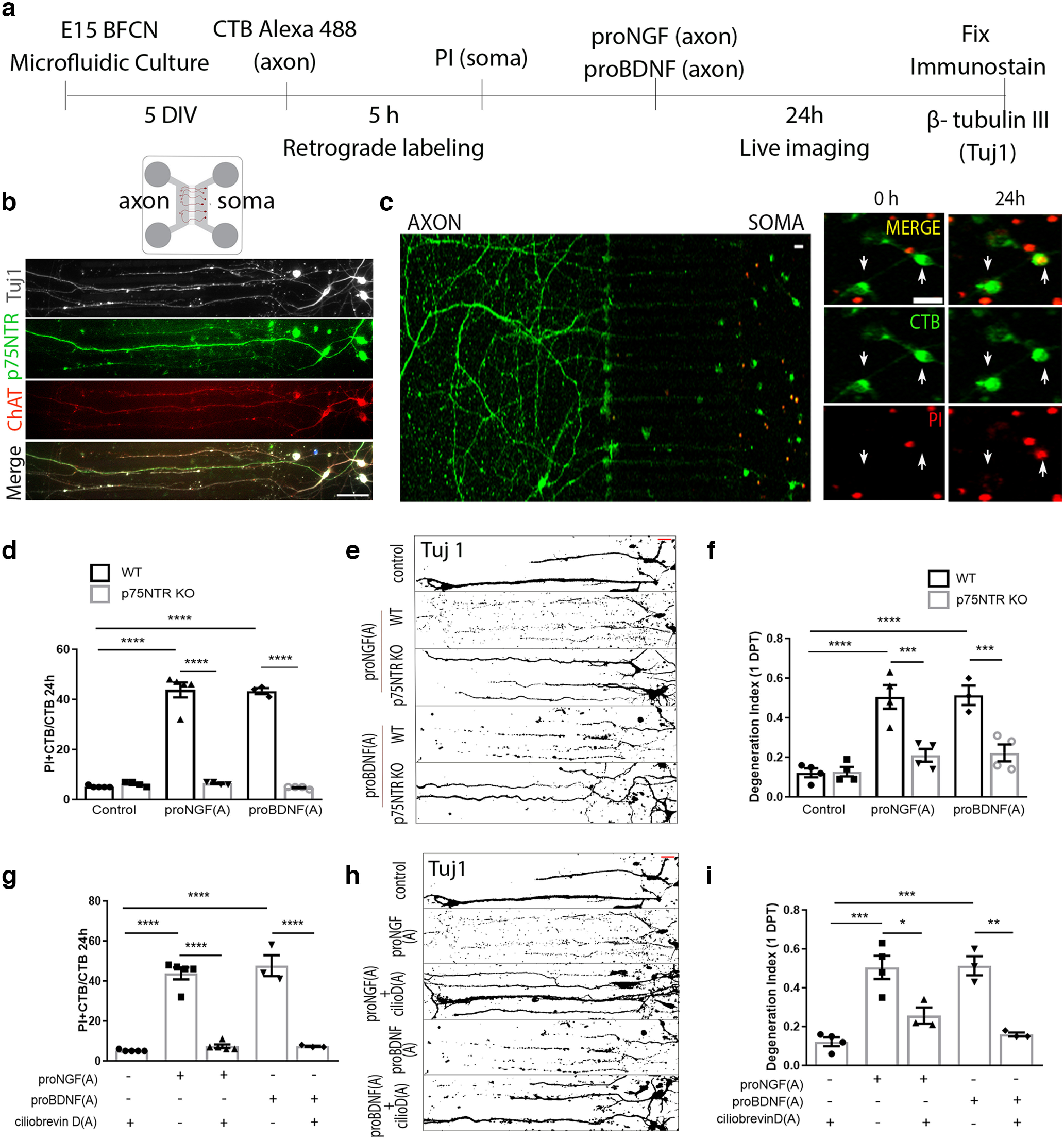
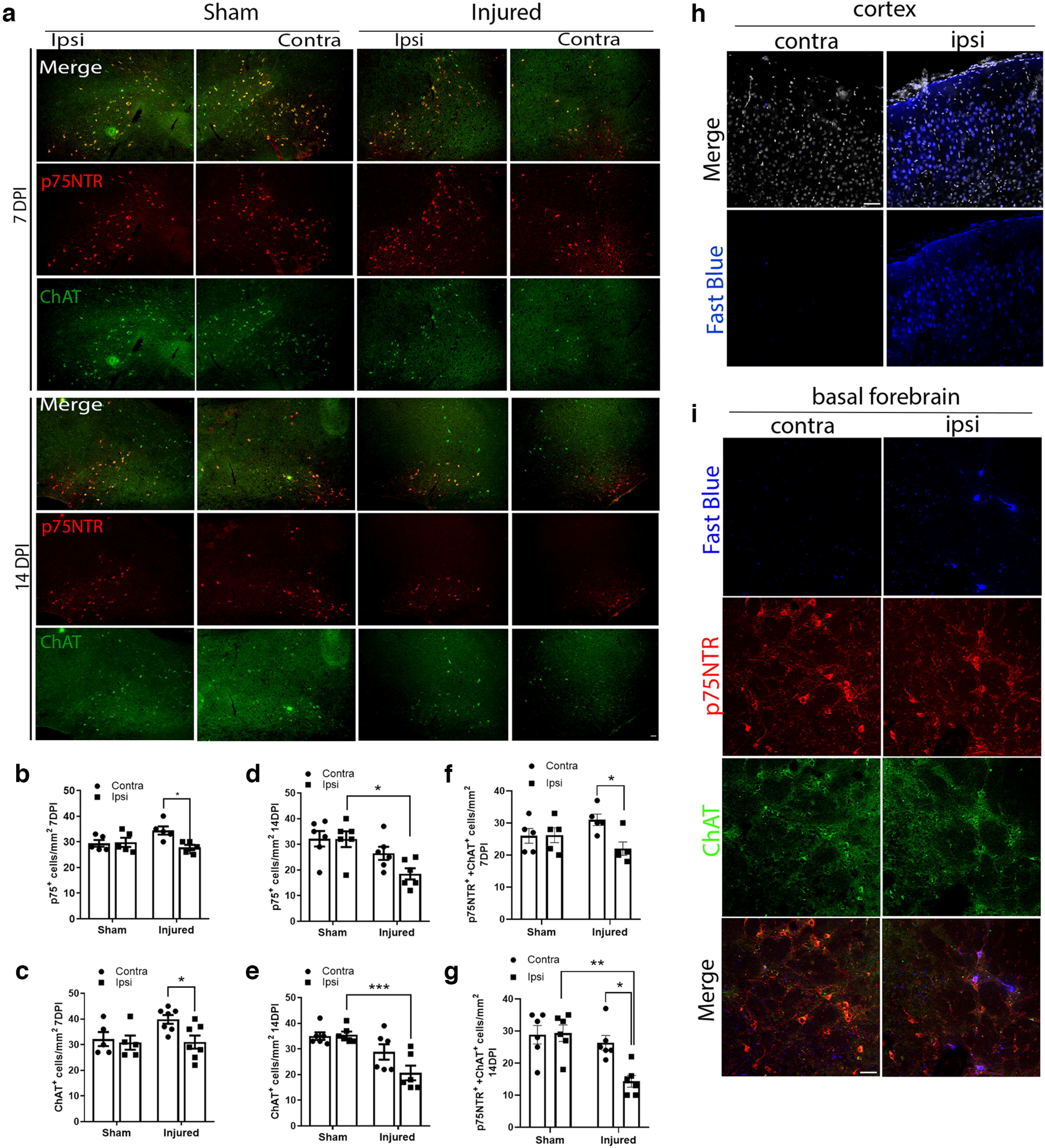
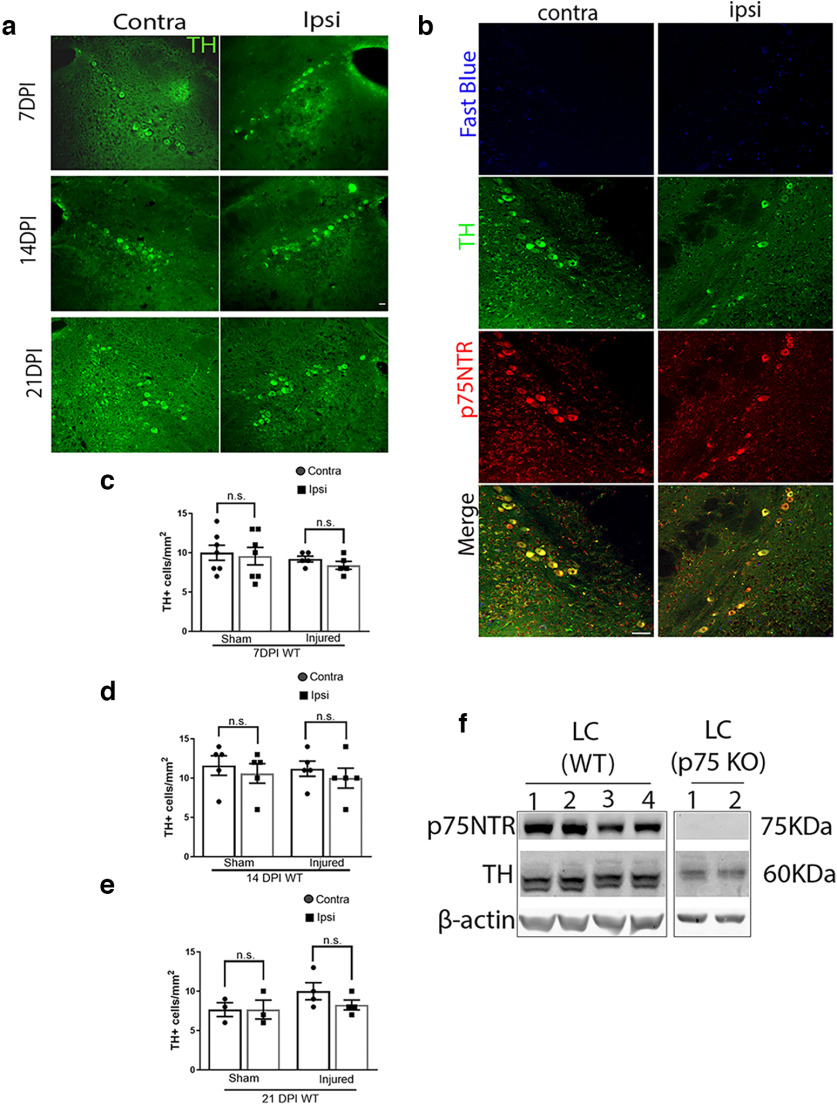
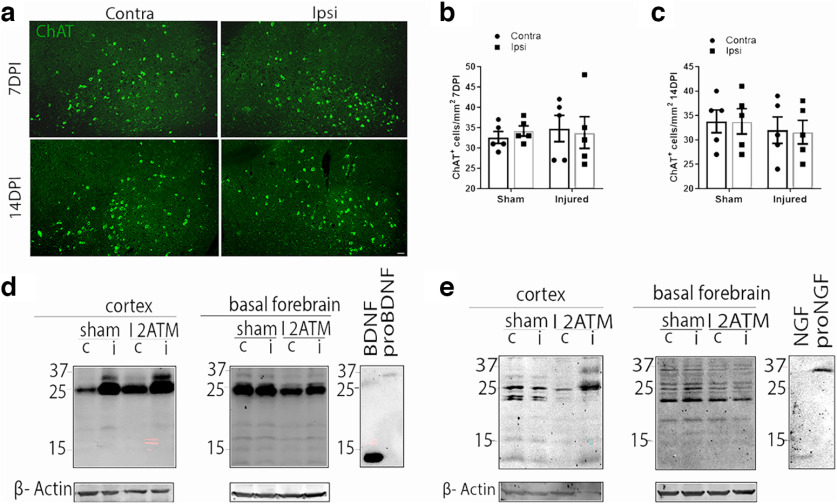
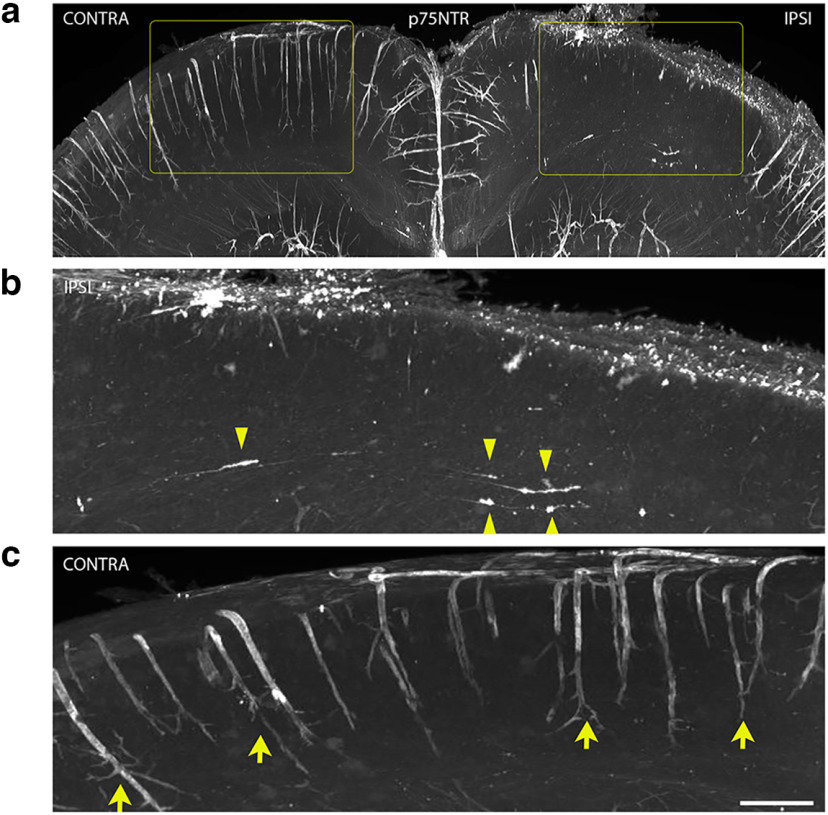
Traumatic brain injury (TBI) elicits neuronal loss at the site of injury and progressive neuronal loss in the penumbra. However, the consequences of TBI on afferent neurons projecting to the injured tissue from distal locations is unknown. Basal forebrain cholinergic neurons (BFCNs) extend long projections to multiple brain regions including the cortex, regulate many cognitive functions, and are compromised in numerous neurodegenerative disorders. To determine the consequence of cortical injury on these afferent neurons, we used the fluid percussion injury model of traumatic brain injury and assessed the effects on BFCN survival and axon integrity in male and female mice. Survival or death of BF neurons can be regulated by neurotrophins or proneurotrophins, respectively. The injury elicited an induction of proNGF and proBDNF in the cortex and a loss of BFCNs ipsilateral to the injury compared with sham uninjured mice. The p75NTR knock-out mice did not show loss of BFCN neurons, indicating a retrograde degenerative effect of the cortical injury on the afferent BFCNs mediated through p75NTR. In contrast, locus ceruleus neurons, which also project throughout the cortex, were unaffected by the injury, suggesting specificity in retrograde degeneration after cortical TBI. Proneurotrophins (proNTs) provided directly to basal forebrain axons in microfluidic cultures triggered retrograde axonal degeneration and cell death, which did not occur in the absence of p75NTR. This study shows that after traumatic brain injury, proNTs induced in the injured cortex promote BFCN axonal degeneration and retrograde neuron loss through p75NTR.
创伤性脑损伤(TBI)在损伤部位引起神经元丧失,并在半影区引起进行性神经元丧失。然而,TBI 对来自远端部位投射到损伤组织的传入神经元的后果尚不清楚。基底前脑胆碱能神经元(BFCN)向包括皮质在内的多个脑区延伸长投射,调节许多认知功能,并且在许多神经退行性疾病中受到损害。为了确定皮质损伤对这些传入神经元的后果,我们使用流体冲击损伤模型的创伤性脑损伤,并评估了对雄性和雌性小鼠 BFCN 存活和轴突完整性的影响。BF 神经元的存活或死亡可以分别由神经营养因子或前神经生长因子调节。与假手术未受伤的小鼠相比,损伤在皮质中诱导向神经生长因子和前脑源性神经营养因子(proBDNF)的诱导,并导致同侧 BFCN 丧失。p75NTR 敲除小鼠未显示 BFCN 神经元丧失,表明皮质损伤对传入 BFCN 的逆行退行性效应通过 p75NTR 介导。相比之下,蓝斑神经元也投射到整个皮质,但不受损伤影响,表明皮质 TBI 后逆行退行性具有特异性。前神经生长因子(proNTs)直接提供给微流控培养中的基底前脑轴突会引发逆行轴突变性和细胞死亡,如果没有 p75NTR,则不会发生这种情况。这项研究表明,在创伤性脑损伤后,损伤皮质中诱导的前神经生长因子通过 p75NTR 促进 BFCN 轴突变性和逆行神经元丧失。