Department of Biotechnology, Graduate School of Engineering, Osaka University, 2-1 Yamadaoka, Suita, Osaka, 565-0871, Japan.
Industrial Biotechnology Initiative Division, Institute for Open and Transdisciplinary Research Initiatives, Osaka University, 2-1 Yamadaoka, Suita, Osaka, 565-0871, Japan.
Sci Rep. 2023 Aug 9;13(1):12246. doi: 10.1038/s41598-023-38897-x.
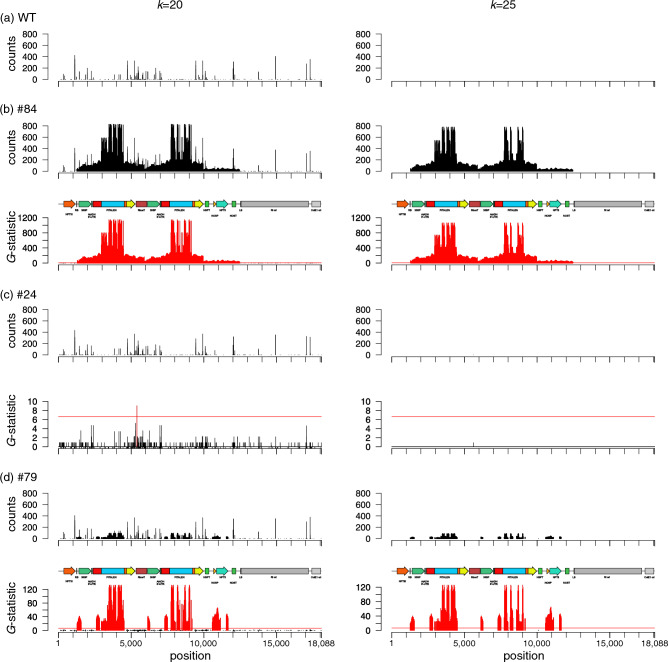
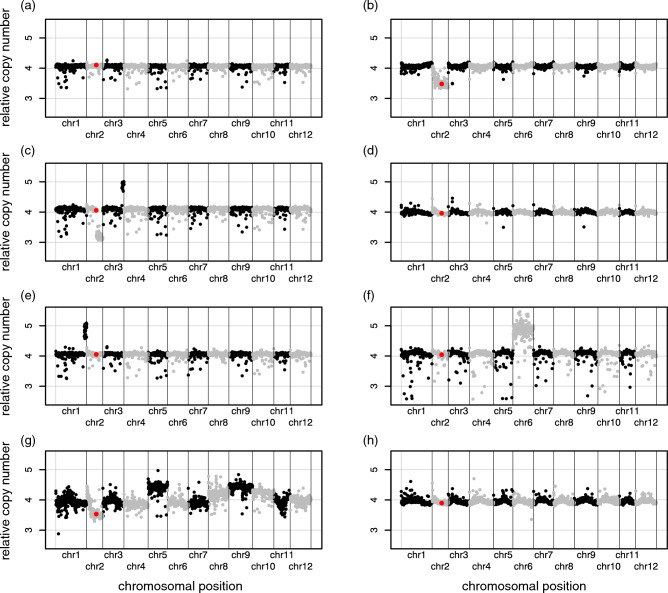
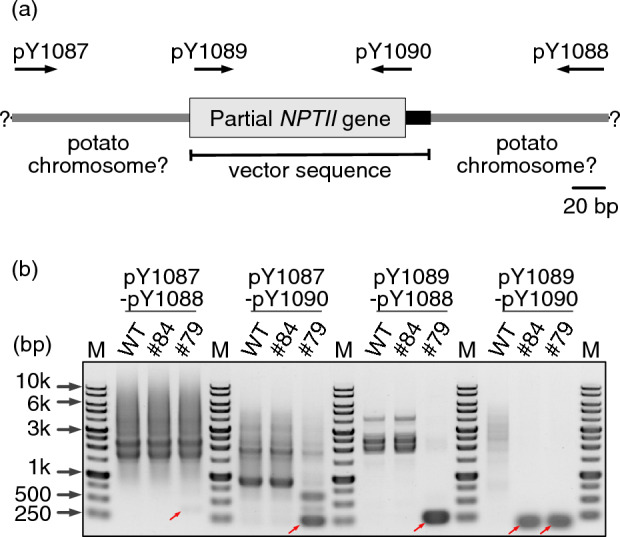
Genome editing is a powerful breeding technique that introduces mutations into specific gene sequences in genomes. For genome editing in higher plants, nucleotides for artificial nuclease (e.g. TALEN or CRISPR-Cas9) are transiently or stably introduced into the plant cells. After the introduction of mutations by artificial nucleases, it is necessary to select lines that do not contain the foreign nucleotides to overcome GMO regulation; however, there is still no widely legally authorized and approved method for detecting foreign genes in genome-edited crops. Recently, k-mer analysis based on next-generation sequencing (NGS) was proposed as a new method for detecting foreign DNA in genome-edited agricultural products. Compared to conventional methods, such as PCR and Southern hybridization, in principle, this method can detect short DNA fragments with high accuracy. However, this method has not yet been applied to genome-edited potatoes. In this study, we evaluated the feasibility of k-mer analysis in tetraploid potatoes by computer simulation, and also evaluated whether the k-mer method can detect foreign genes with high accuracy by analyzing samples of genome-edited potatoes. We show that when NGS data (at a depth of × 30 the genome size) are used, the k-mer method can correctly detect foreign genes in the potato genome even with the insertion of DNA fragments of 20 nt in length. Based on these findings, we expect that k-mer analysis will be one of the main methods for detecting foreign genes in genome-edited potatoes.
基因组编辑是一种强大的育种技术,可将突变引入基因组中的特定基因序列中。对于高等植物的基因组编辑,人工核酸酶(如 TALEN 或 CRISPR-Cas9)的核苷酸被瞬时或稳定地引入植物细胞。在人工核酸酶引入突变后,有必要选择不含有外源核苷酸的品系来克服 GMO 监管;然而,对于编辑作物中外源基因的检测,仍然没有被广泛合法授权和批准的方法。最近,基于下一代测序(NGS)的 k- -mer 分析被提出作为一种检测基因组编辑农产品中外源 DNA 的新方法。与传统方法(如 PCR 和 Southern 杂交)相比,该方法原则上可以高精度地检测短 DNA 片段。然而,该方法尚未应用于基因组编辑土豆。在这项研究中,我们通过计算机模拟评估了 k- -mer 分析在四倍体土豆中的可行性,还通过分析基因组编辑土豆的样本评估了 k- 方法是否可以高精度地检测外源基因。我们表明,当使用 NGS 数据(基因组大小的深度× 30)时,k- 方法即使在插入长度为 20 nt 的 DNA 片段的情况下,也可以正确检测土豆基因组中的外源基因。基于这些发现,我们期望 k- 分析将成为检测基因组编辑土豆中外源基因的主要方法之一。