Sun Yang, Li Dai, Su Yuqiang, Zhao Haikang, Pang Weiwei, Zhao Wei, Wu Shengjun
Department of Rehabilitation Medicine, The Second Affiliated Hospital of Xi'an Medical University, Xi'an, Shaanxi, China.
Department of Anesthesiology, Chang Hai Hospital, Naval Military Medical University, Shanghai, China.
Arch Med Sci. 2020 Feb 17;19(4):1124-1135. doi: 10.5114/aoms.2020.93121. eCollection 2023.
Derangements in monoaminergic transmission in the substantia nigra with disturbed signaling in the hypothalamic-pituitary-adrenal axis are the major characteristics of Parkinson's disease (PD). It has been reported that the administration of hydrogen sulfide (HS) is in practice to treat PD because of its redundant nature in regulating various neuronal signals. Hence, the current investigation was performed to evaluate the hypothesis that HS might exert protective action via the inhibition of epigenetic histone acetylation.
To test this notion, 6-hydroxydopamine (6-OHDA) was used to induce PD and sodium hydrogen sulfide (SHS) was used as a HS donor and tubastatin A (TSA) was tested in an rat model to delineate the signaling mechanism.
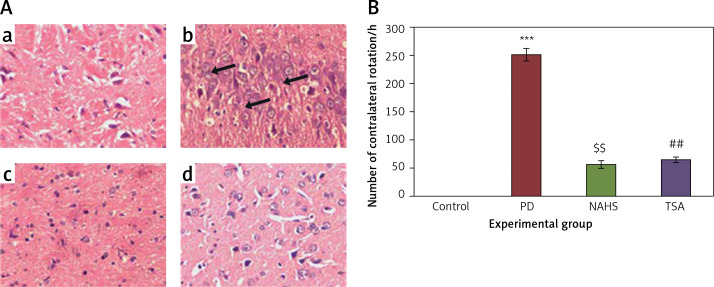
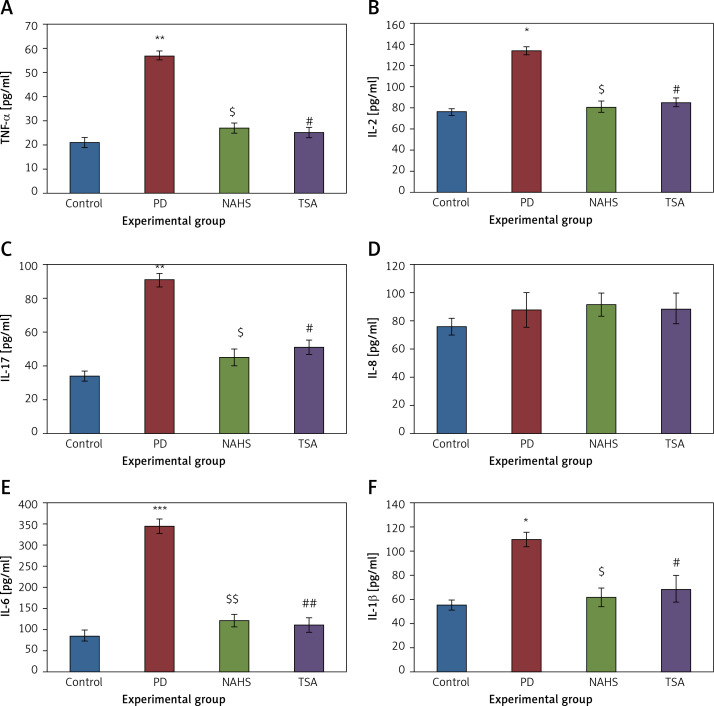
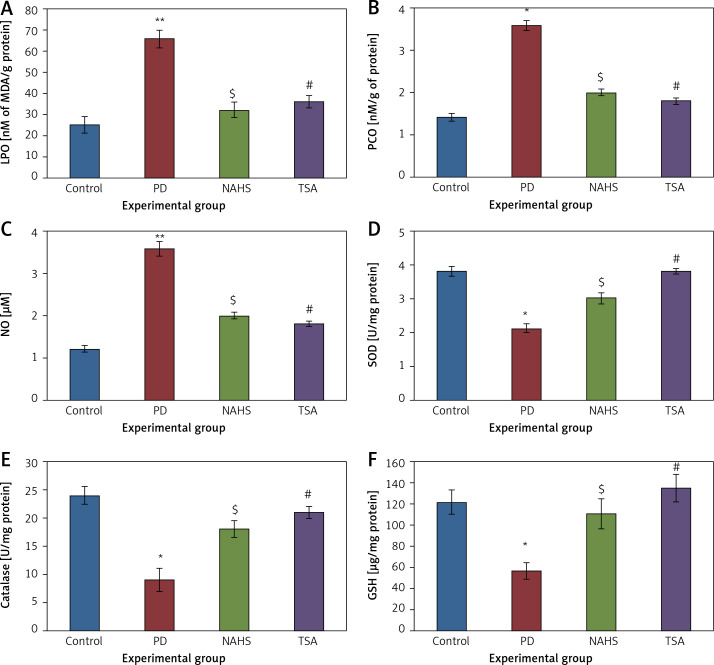
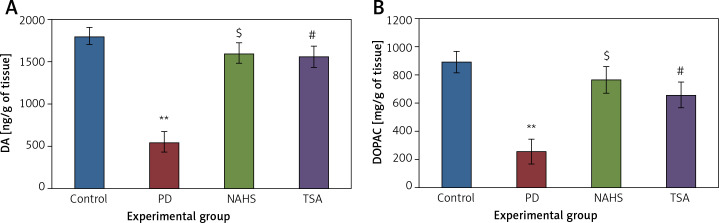
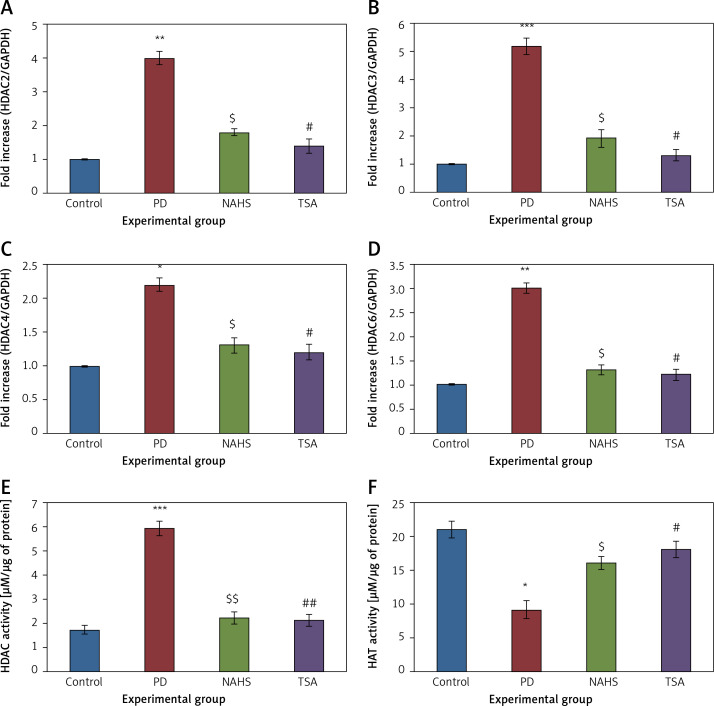
Induction of PD in rats demonstrated elevated oxidative stress with an evidenced decrease in antioxidant enzymes, while elevated pro-inflammatory cytokines and inflammatory mediators were observed in the striatum of PD rats compared to controls. On the other hand, elevated ( < 0.01) levels of dopamine, 3,4-dihydroxyphenylacetic acid (DOPAC), mRNA transcript of HDAC-2, -3, -4, -6 and total histone deacetylase (HDAC) were found with reduced levels of histone acetyltransferase (HAT) in the brain tissues of PD induced rats.
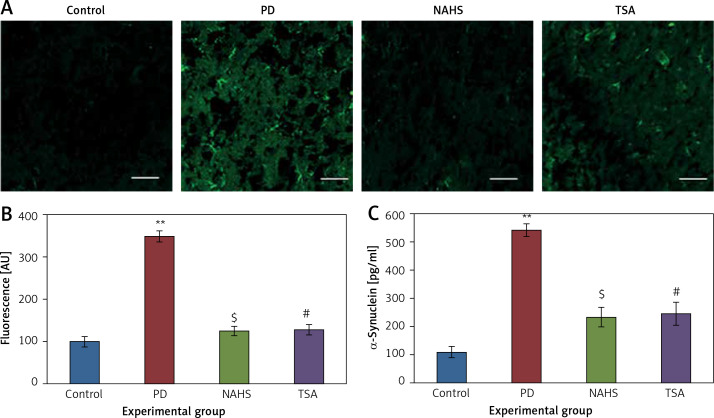
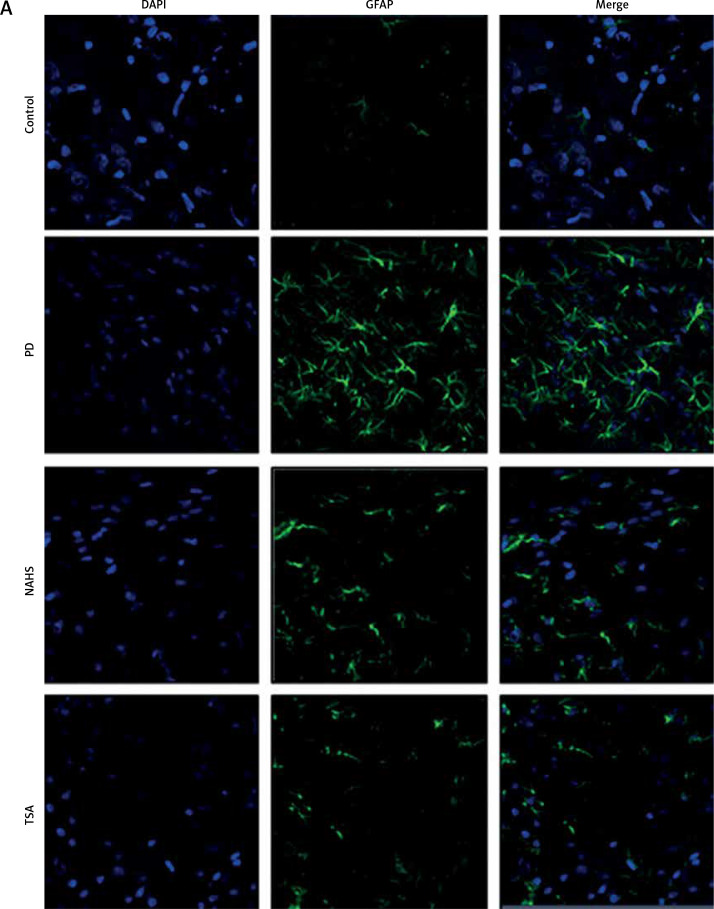
Diversely, HS exposure reversed these alterations with reduced HDAC activity. Further, PD rats treated with HDAC inhibitor showed a dramatic upsurge in the level of tyrosine hydroxylase, with a decreased level of glial fibrillary acidic protein, α-synuclein, tumor necrosis factor α, and other cytokines. Thus the results of the study suggest that HS exerts protection via inhibition of HDAC.
黑质单胺能传递紊乱以及下丘脑 - 垂体 - 肾上腺轴信号传导异常是帕金森病(PD)的主要特征。据报道,由于硫化氢(HS)在调节各种神经元信号方面具有多种作用,其在实际应用中可用于治疗PD。因此,进行了当前的研究以评估HS可能通过抑制表观遗传组蛋白乙酰化发挥保护作用这一假说。
为验证这一观点,使用6 - 羟基多巴胺(6 - OHDA)诱导PD,使用硫氢化钠(SHS)作为HS供体,并在大鼠模型中测试了tubastatin A(TSA)以阐明信号传导机制。
在大鼠中诱导PD显示氧化应激升高,抗氧化酶明显减少,而与对照组相比,PD大鼠纹状体中促炎细胞因子和炎症介质升高。另一方面,在诱导PD的大鼠脑组织中发现多巴胺、3,4 - 二羟基苯乙酸(DOPAC)、HDAC - 2、 - 3、 - 4、 - 6的mRNA转录本和总组蛋白脱乙酰酶(HDAC)水平升高(<0.01),而组蛋白乙酰转移酶(HAT)水平降低。
不同的是,HS暴露通过降低HDAC活性逆转了这些改变。此外,用HDAC抑制剂治疗的PD大鼠酪氨酸羟化酶水平显著升高,胶质纤维酸性蛋白、α - 突触核蛋白、肿瘤坏死因子α和其他细胞因子水平降低。因此,该研究结果表明HS通过抑制HDAC发挥保护作用。