Department of Biomolecular Health Sciences, Division Infectious Diseases and Immunology, Faculty of Veterinary Medicine, Utrecht University, Utrecht, The Netherlands.
Viroscience Department, Erasmus Medical Center, Rotterdam, The Netherlands.
PLoS Pathog. 2023 Aug 10;19(8):e1011571. doi: 10.1371/journal.ppat.1011571. eCollection 2023 Aug.
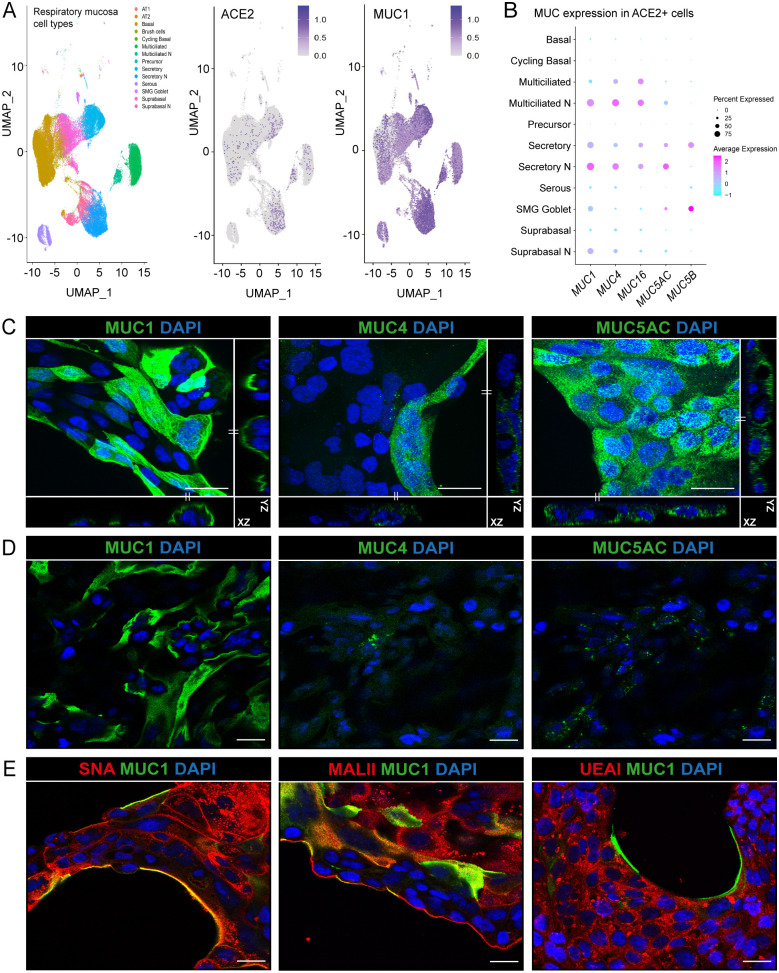
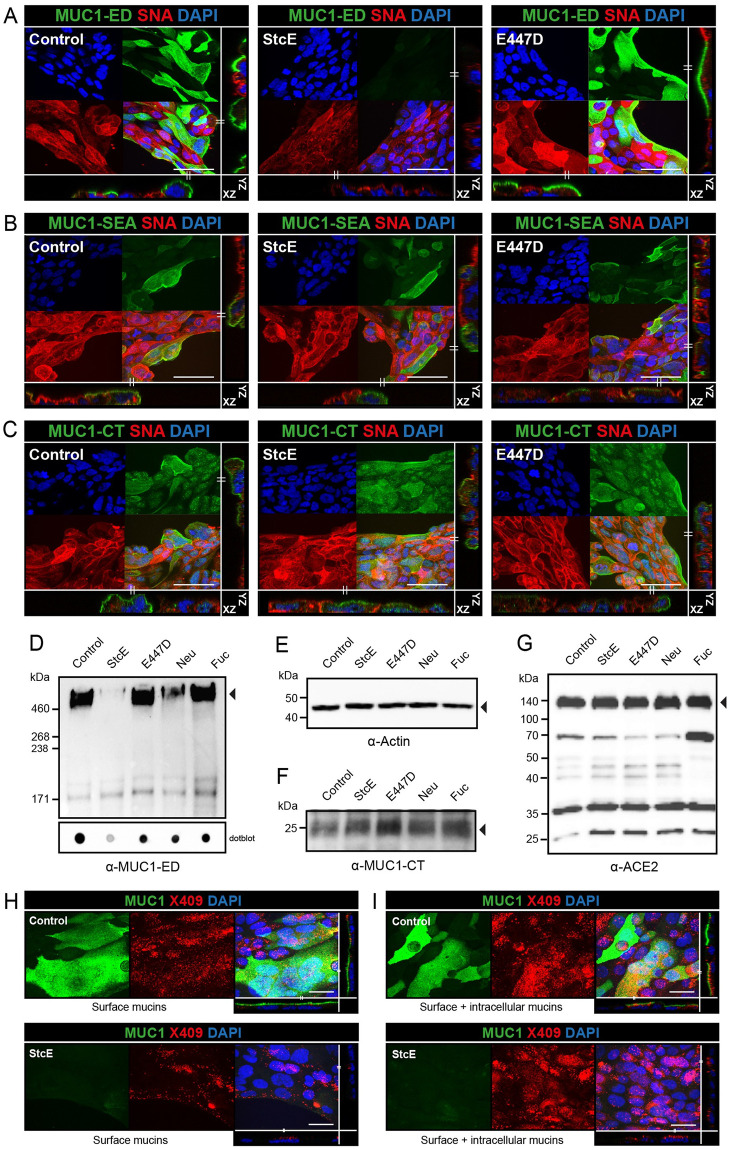
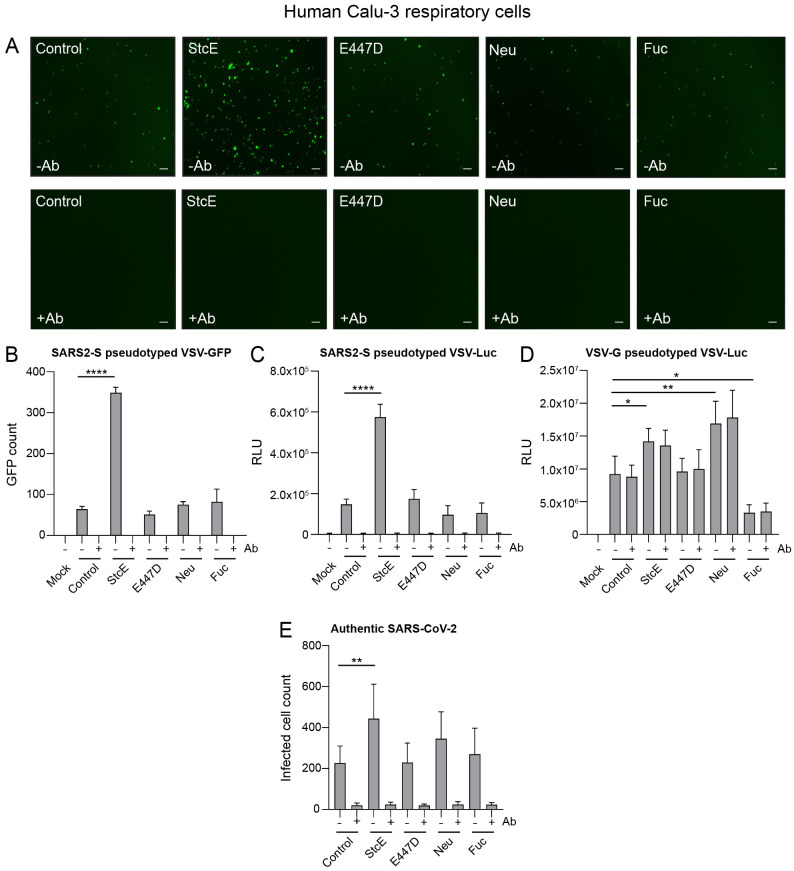
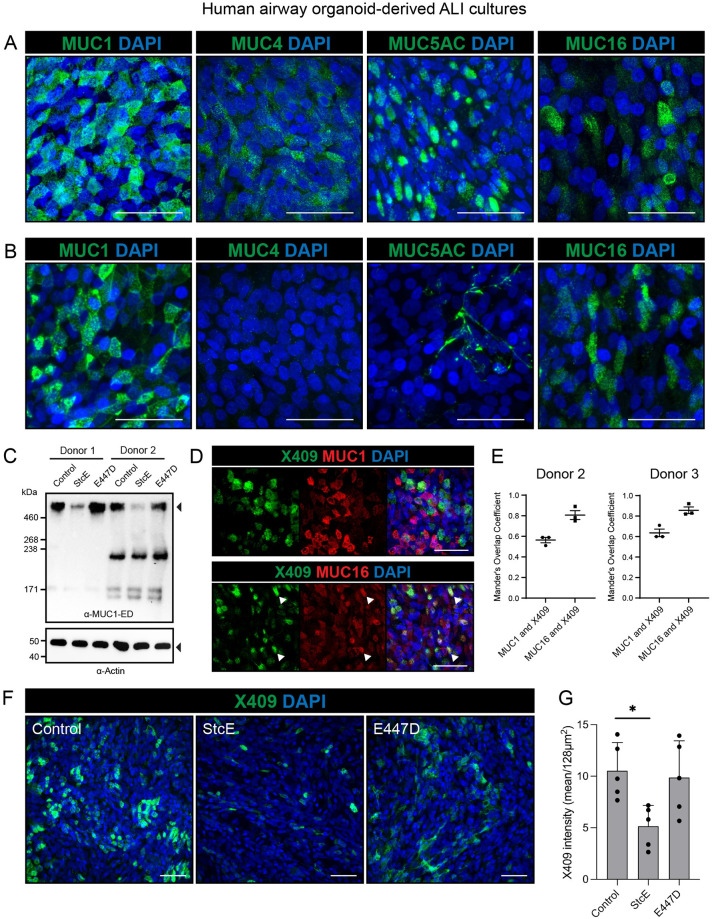
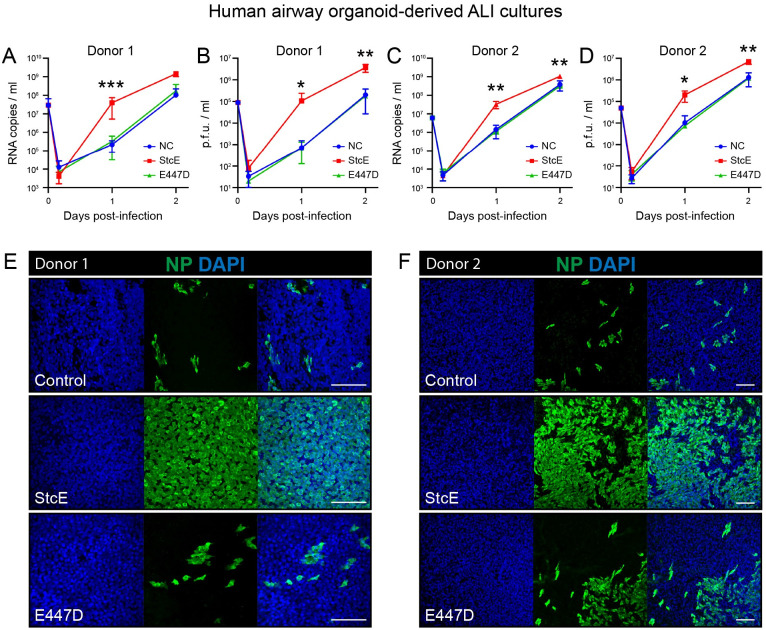
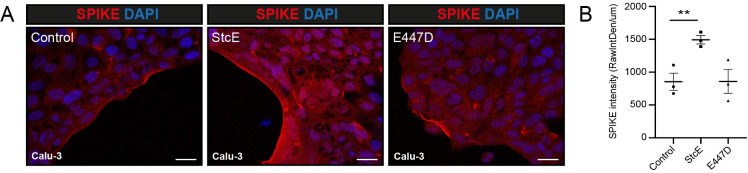
Mucins play an essential role in protecting the respiratory tract against microbial infections while also acting as binding sites for bacterial and viral adhesins. The heavily O-glycosylated gel-forming mucins MUC5AC and MUC5B eliminate pathogens by mucociliary clearance. Transmembrane mucins MUC1, MUC4, and MUC16 can restrict microbial invasion at the apical surface of the epithelium. In this study, we determined the impact of host mucins and mucin glycans on epithelial entry of SARS-CoV-2. Human lung epithelial Calu-3 cells express the SARS-CoV-2 entry receptor ACE2 and high levels of glycosylated MUC1, but not MUC4 and MUC16, on their cell surface. The O-glycan-specific mucinase StcE specifically removed the glycosylated part of the MUC1 extracellular domain while leaving the underlying SEA domain and cytoplasmic tail intact. StcE treatment of Calu-3 cells significantly enhanced infection with SARS-CoV-2 pseudovirus and authentic virus, while removal of terminal mucin glycans sialic acid and fucose from the epithelial surface did not impact viral entry. In Calu-3 cells, the transmembrane mucin MUC1 and ACE2 are located to the apical surface in close proximity and StcE treatment results in enhanced binding of purified spike protein. Both MUC1 and MUC16 are expressed on the surface of human organoid-derived air-liquid interface (ALI) differentiated airway cultures and StcE treatment led to mucin removal and increased levels of SARS-CoV-2 replication. In these cultures, MUC1 was highly expressed in non-ciliated cells while MUC16 was enriched in goblet cells. In conclusion, the glycosylated extracellular domains of different transmembrane mucins might have similar protective functions in different respiratory cell types by restricting SARS-CoV-2 binding and entry.
黏蛋白在保护呼吸道免受微生物感染方面发挥着重要作用,同时也是细菌和病毒黏附素的结合位点。高度 O-糖基化的凝胶形成黏蛋白 MUC5AC 和 MUC5B 通过黏液纤毛清除作用消除病原体。跨膜黏蛋白 MUC1、MUC4 和 MUC16 可以限制微生物在上皮细胞顶表面的入侵。在这项研究中,我们确定了宿主黏蛋白和黏蛋白聚糖对 SARS-CoV-2 上皮细胞进入的影响。人肺上皮细胞 Calu-3 表达 SARS-CoV-2 进入受体 ACE2 和高水平的糖基化 MUC1,但细胞表面不表达 MUC4 和 MUC16。O-聚糖特异性黏蛋白酶 StcE 特异性去除 MUC1 细胞外结构域的糖基化部分,而不影响其下的 SEA 结构域和细胞质尾部。StcE 处理 Calu-3 细胞显著增强了 SARS-CoV-2 假病毒和真实病毒的感染,而去除上皮表面末端黏蛋白糖基唾液酸和岩藻糖并不影响病毒进入。在 Calu-3 细胞中,跨膜黏蛋白 MUC1 和 ACE2 位于接近顶表面的位置,StcE 处理导致纯化的刺突蛋白结合增强。MUC1 和 MUC16 都表达在人类类器官衍生的气液界面 (ALI) 分化气道培养物的表面,StcE 处理导致黏蛋白去除和 SARS-CoV-2 复制水平增加。在这些培养物中,MUC1 在非纤毛细胞中高度表达,而 MUC16 在杯状细胞中富集。总之,不同跨膜黏蛋白的糖基化细胞外结构域可能通过限制 SARS-CoV-2 的结合和进入,在不同的呼吸道细胞类型中具有相似的保护功能。