Key Laboratory of Livestock Infectious Diseases, Ministry of Education, Key Laboratory of Zoonosis, College of Animal Science and Veterinary Medicine, Shenyang Agricultural University, 120 Dongling Road, Shenyang, 110866, China.
Research Unit for Pathogenic Mechanisms of Zoonotic Parasites, Chinese Academy of Medical Sciences, 120 Dongling Road, Shenyang, 110866, China.
Parasit Vectors. 2023 Aug 10;16(1):277. doi: 10.1186/s13071-023-05896-w.
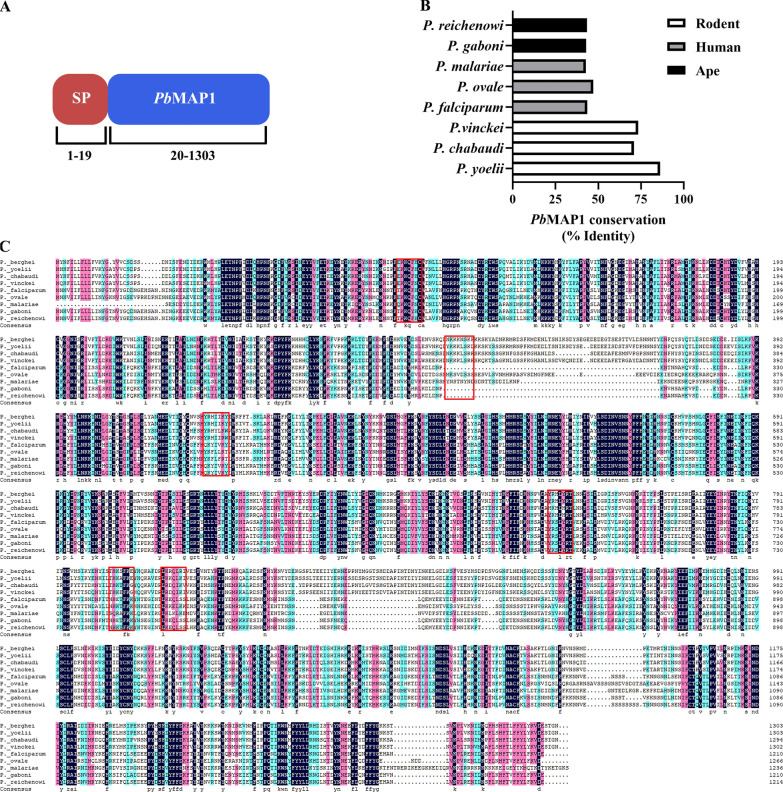
Malaria caused by Plasmodium species is a prominent public health concern worldwide, and the infection of a malarial parasite is transmitted to humans through the saliva of female Anopheles mosquitoes. Plasmodium invasion is a rapid and complex process. A critical step in the blood-stage infection of malarial parasites is the adhesion of merozoites to red blood cells (RBCs), which involves interactions between parasite ligands and receptors. The present study aimed to investigate a previously uncharacterized protein, PbMAP1 (encoded by PBANKA_1425900), which facilitates Plasmodium berghei ANKA (PbANKA) merozoite attachment and invasion via the heparan sulfate receptor.
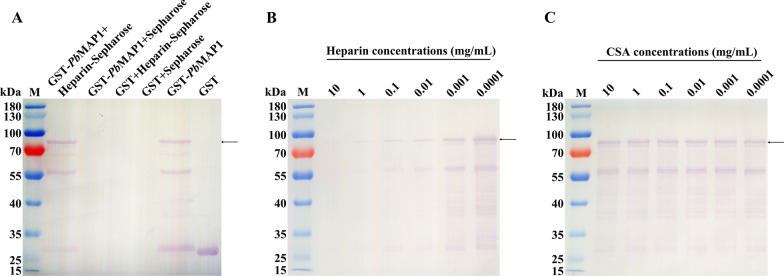
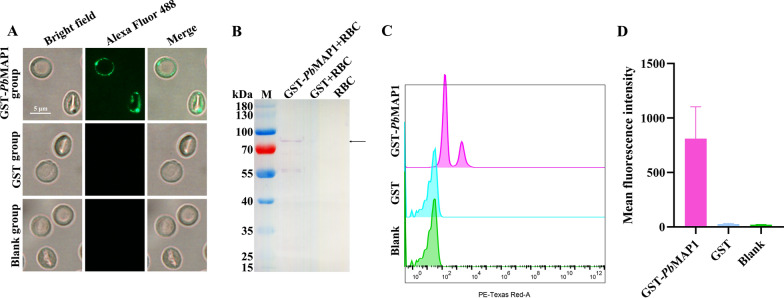
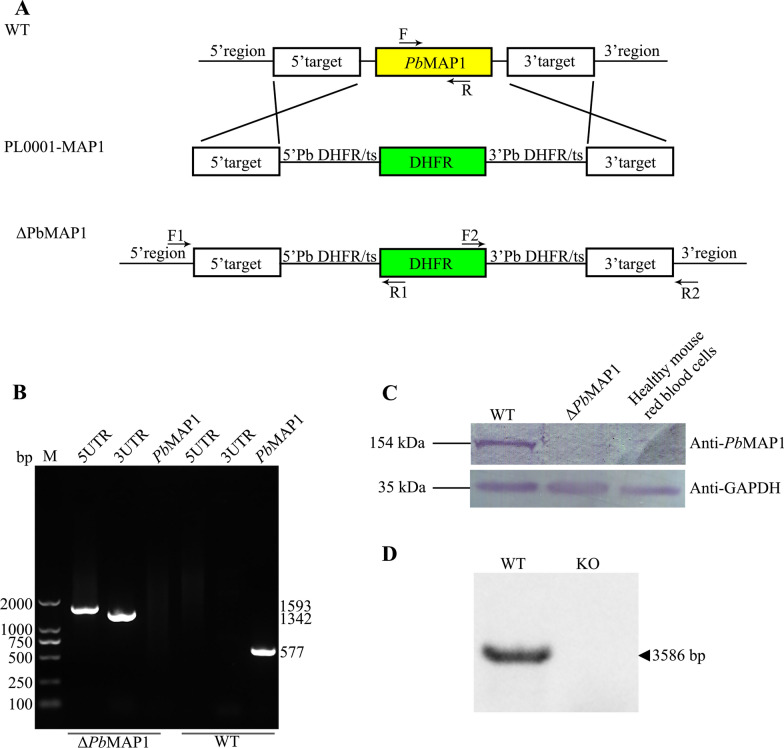
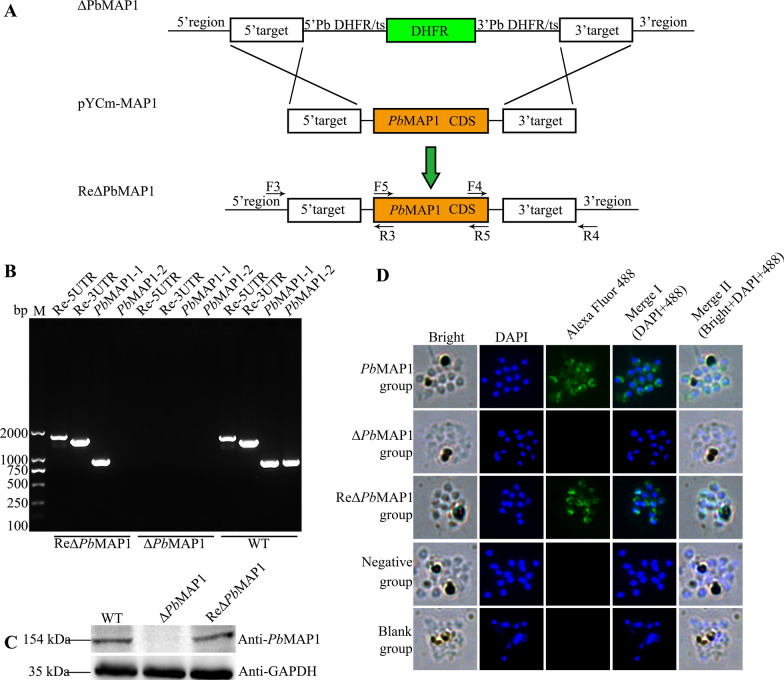
PbMAP1 protein expression was investigated at the asexual blood stage, and its specific binding activity to both heparan sulfate and RBCs was analyzed using western blotting, immunofluorescence, and flow cytometry. Furthermore, a PbMAP1-knockout parasitic strain was established using the double-crossover method to investigate its pathogenicity in mice.
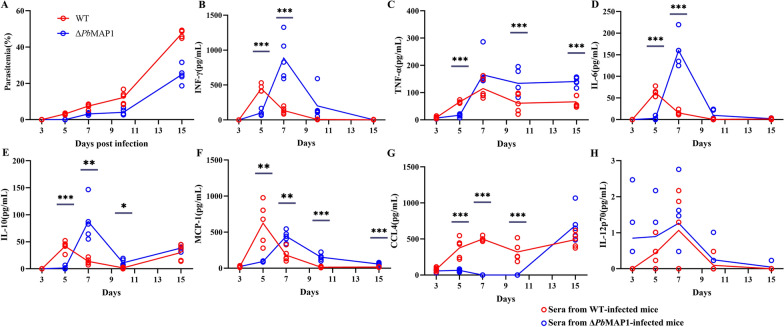
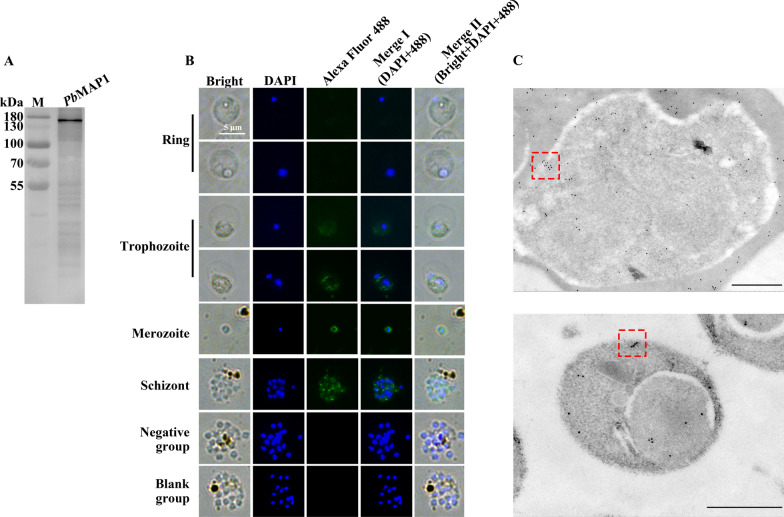
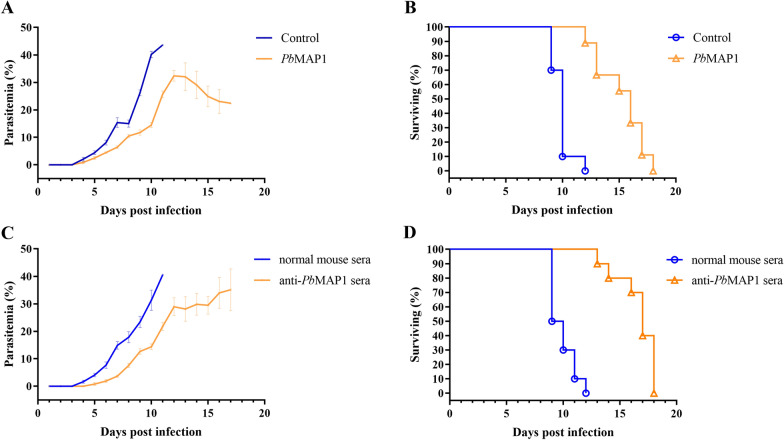
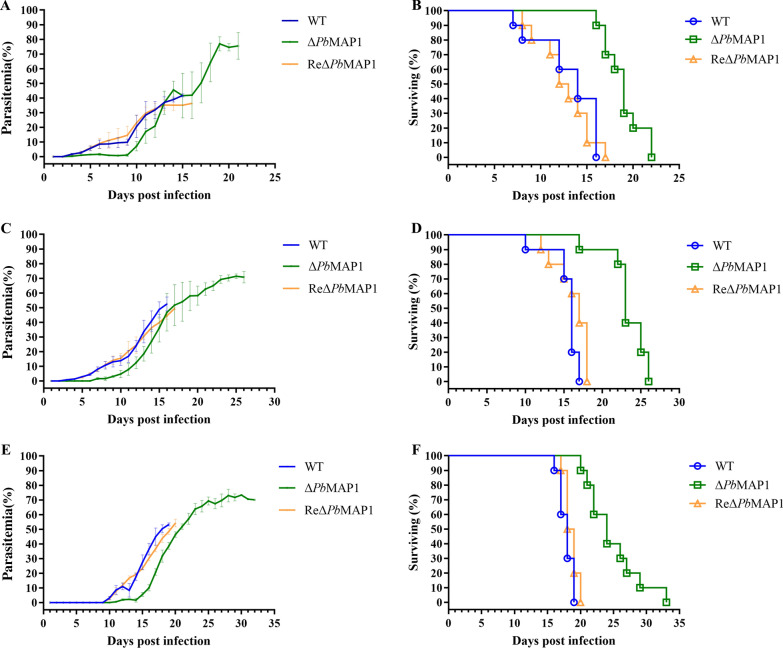
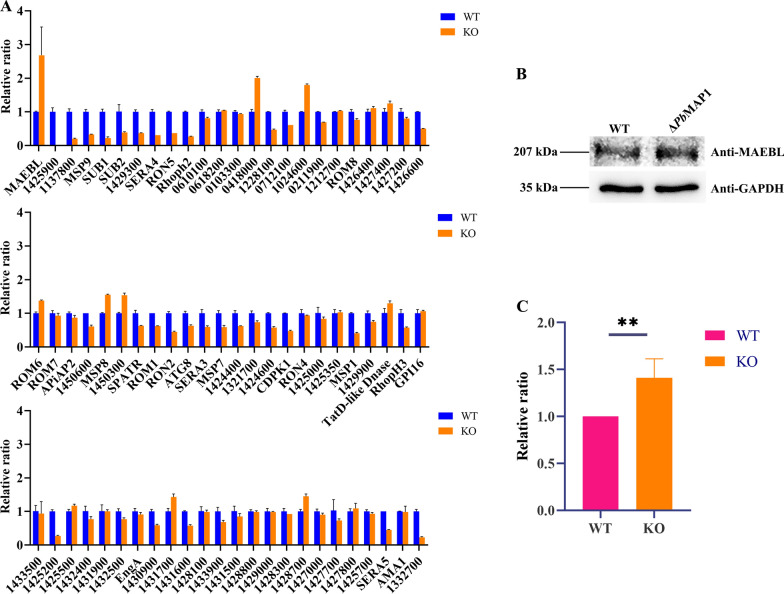
The PbMAP1 protein, primarily localized to the P. berghei membrane at the merozoite stage, is involved in binding to heparan sulfate-like receptor on RBC surface of during merozoite invasion. Furthermore, mice immunized with the PbMAP1 protein or passively immunized with sera from PbMAP1-immunized mice exhibited increased immunity against lethal challenge. The PbMAP1-knockout parasite exhibited reduced pathogenicity.
PbMAP1 is involved in the binding of P. berghei to heparan sulfate-like receptors on RBC surface during merozoite invasion.
由疟原虫属引起的疟疾是全球公共卫生的一个重要关注点,疟原虫的感染是通过雌性按蚊的唾液传播给人类的。疟原虫的入侵是一个快速而复杂的过程。疟原虫血期感染的一个关键步骤是裂殖子与红细胞(RBC)的黏附,这涉及到寄生虫配体和受体之间的相互作用。本研究旨在研究一种以前未被描述的蛋白,PbMAP1(由 PBANKA_1425900 编码),它通过硫酸乙酰肝素受体促进恶性疟原虫伯氏疟原虫(PbANKA)裂殖子的附着和入侵。
在无性血期研究 PbMAP1 蛋白的表达,并通过 Western blot、免疫荧光和流式细胞术分析其与硫酸乙酰肝素和 RBC 的特异性结合活性。此外,采用双交换方法建立 PbMAP1 敲除寄生虫株,以研究其在小鼠中的致病性。
PbMAP1 蛋白主要定位于裂殖子阶段的恶性疟原虫膜上,在裂殖子入侵过程中与 RBC 表面的硫酸乙酰肝素样受体结合。此外,用 PbMAP1 蛋白免疫或被动免疫用 PbMAP1 免疫小鼠的血清处理的小鼠对致死性挑战表现出增强的免疫力。PbMAP1 敲除寄生虫的致病性降低。
PbMAP1 参与恶性疟原虫裂殖子与 RBC 表面硫酸乙酰肝素样受体的结合,在裂殖子入侵过程中。