
南非约翰内斯堡极低出生体重儿晚发性败血症中的多重耐药细菌感染
Multidrug-Resistant Bacterial Infections Among Very Low Birthweight Infants With Late-Onset Sepsis in Johannesburg, South Africa.
作者信息
Licona Genesis, Ballot Daynia, Moon Troy D, Banerjee Ritu, Amorim Gustavo, Agthe Alexander G, Weitkamp Jörn-Hendrik
机构信息
Division of Neonatology, Department of Pediatrics, Vanderbilt University Medical Center, Nashville, Tennessee, USA.
Division of Neonatology, Department of Pediatrics, Charlotte Maxeke Academic Hospital, Faculty of Health Sciences, University of the Witwatersrand, Johannesburg, South Africa.
出版信息
Open Forum Infect Dis. 2023 Jul 12;10(8):ofad362. doi: 10.1093/ofid/ofad362. eCollection 2023 Aug.
BACKGROUND
An estimated 2.4 million babies died within the first 28 days of life in 2020. The third leading cause of neonatal death continues to be neonatal sepsis. Sepsis-causing bacterial pathogens vary temporally and geographically and, with a rise in multidrug-resistant organisms (MDROs), pose a threat to the neonatal population.
METHODS
This was a single-center, retrospective study of very low birth weight (VLBW) infants with late-onset sepsis (LOS) admitted to a neonatal unit in South Africa. We aimed to calculate the prevalence of multidrug-resistant (MDR) infections in this population. The data collected included demographic and clinical characteristics, length of hospital stay, risk factors for MDRO and mortality, and microbiology results. Logistic regression was used to assess the association between prespecified risk factors with MDR infections and mortality.
RESULTS
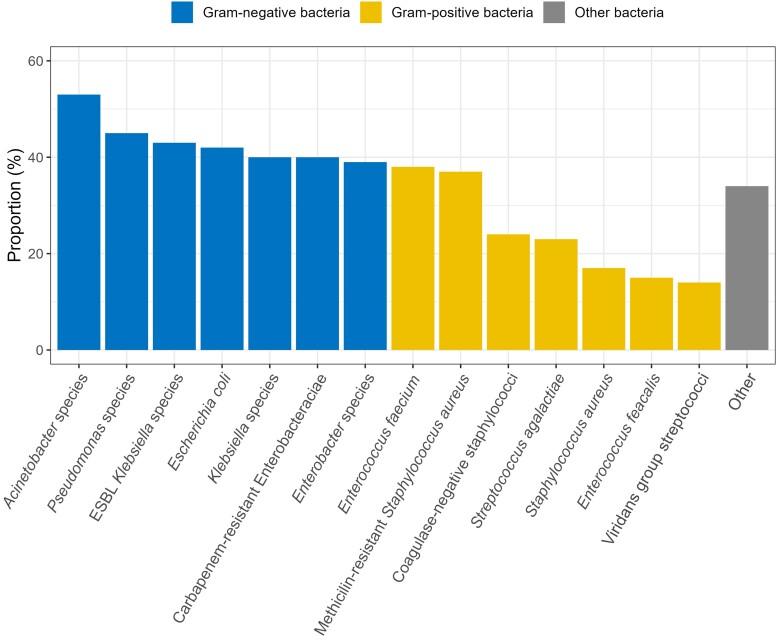
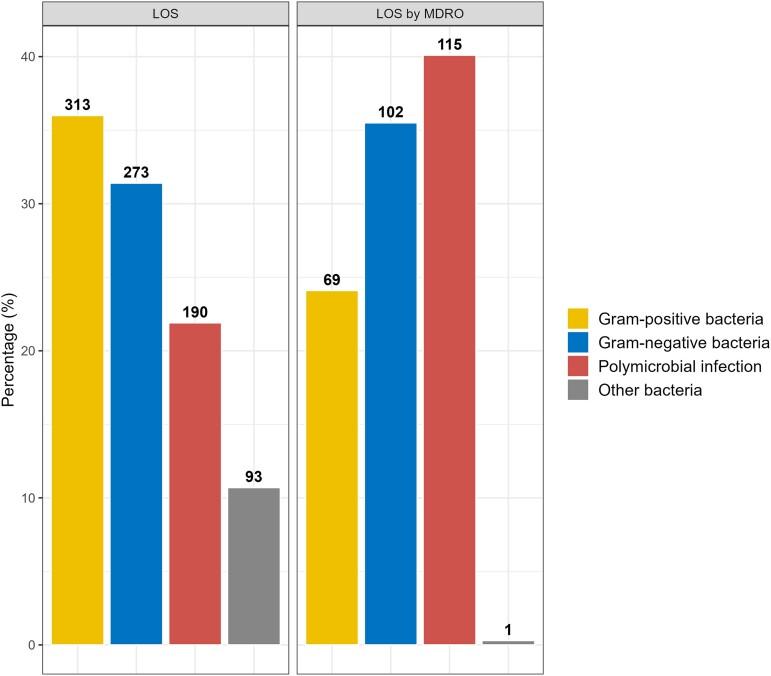
Of 2570 VLBW infants admitted, 34% had LOS, of which 33% was caused by MDROs. Infection with spp., spp., extended-spectrum beta-lactamase spp., or was associated with the highest mortality in the LOS cohort. Infants with congenital infections (adjusted odds ratio [aOR], 5.13; 95% CI, 1.19-22.02; = .028) or a history of necrotizing enterocolitis (aOR, 2.17; 95% CI, 1.05-4.49; = .037) were at significantly higher risk for MDR infections.
CONCLUSIONS
More than one-third of LOS cases in VLBW infants were caused by MDROs in this study. MDR infections cause substantial neonatal mortality. Antimicrobial stewardship programs, infection control protocols, and ongoing surveillance are needed to prevent further emergence and spread of MDR infections worldwide.
背景
2020年估计有240万婴儿在出生后的头28天内死亡。新生儿败血症仍然是新生儿死亡的第三大主要原因。导致败血症的细菌病原体随时间和地理位置而变化,并且随着多重耐药菌(MDROs)的增加,对新生儿群体构成威胁。
方法
这是一项对入住南非一家新生儿病房的极低出生体重(VLBW)晚期败血症(LOS)婴儿的单中心回顾性研究。我们旨在计算该人群中多重耐药(MDR)感染的患病率。收集的数据包括人口统计学和临床特征、住院时间、MDRO的危险因素和死亡率以及微生物学结果。使用逻辑回归评估预先设定的危险因素与MDR感染和死亡率之间的关联。
结果
在2570名入住的VLBW婴儿中,34%患有LOS,其中33%由MDROs引起。感染 菌属、 菌属、产超广谱β-内酰胺酶 菌属或 菌属与LOS队列中的最高死亡率相关。患有先天性感染(调整优势比[aOR],5.13;95%置信区间,1.19 - 22.02; = 0.028)或有坏死性小肠结肠炎病史(aOR,2.17;95%置信区间,1.05 - 4.49; = 0.037)的婴儿发生MDR感染的风险显著更高。
结论
在本研究中,VLBW婴儿中超过三分之一的LOS病例由MDROs引起。MDR感染导致大量新生儿死亡。需要抗菌药物管理计划、感染控制方案和持续监测,以防止MDR感染在全球范围内进一步出现和传播。
 Zotero 插件