Department of Laboratory Animal Science, School of Basic Medical Sciences, Xi'an Jiaotong University Health Science Center, Xi'an, China.
Department of Cardiology, First Affiliated Hospital of Xi'an Jiaotong University, Xi'an, China.
Animal Model Exp Med. 2023 Aug;6(4):317-328. doi: 10.1002/ame2.12338. Epub 2023 Aug 11.
Nonalcoholic fatty liver disease (NAFLD) is the main reason for cirrhosis and hepatocellular carcinoma. As a starting point for NAFLD, the treatment of nonalcoholic fatty liver (NAFL) is receiving increasing attention. Mice fed a high-fat diet (HFD) and hereditary leptin deficiency (ob/ob) mice are important NAFL animal models. However, the comparison of these mouse models with human NAFL is still unclear.
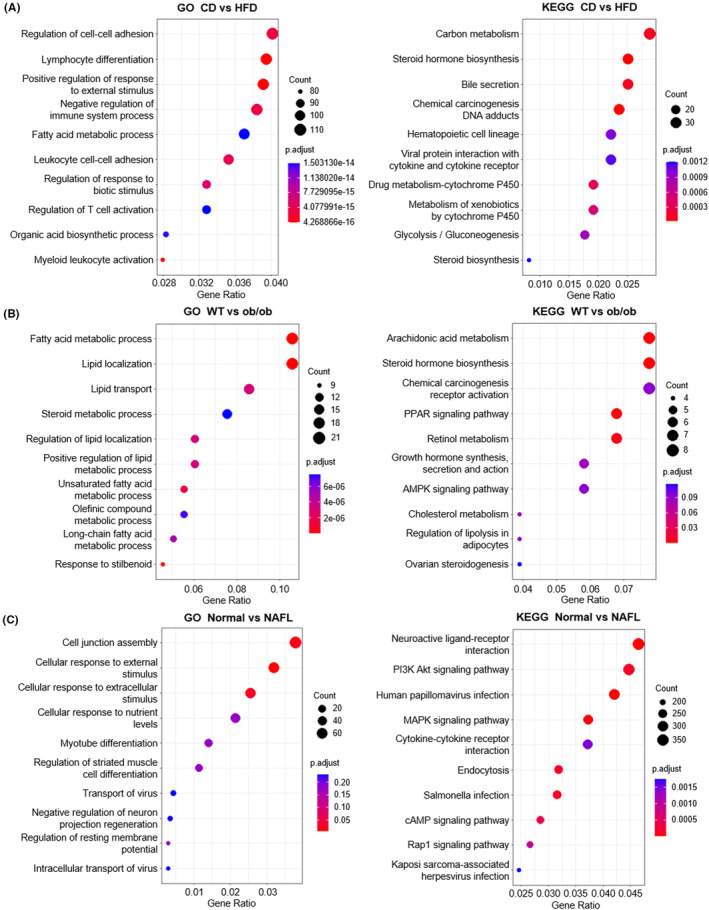
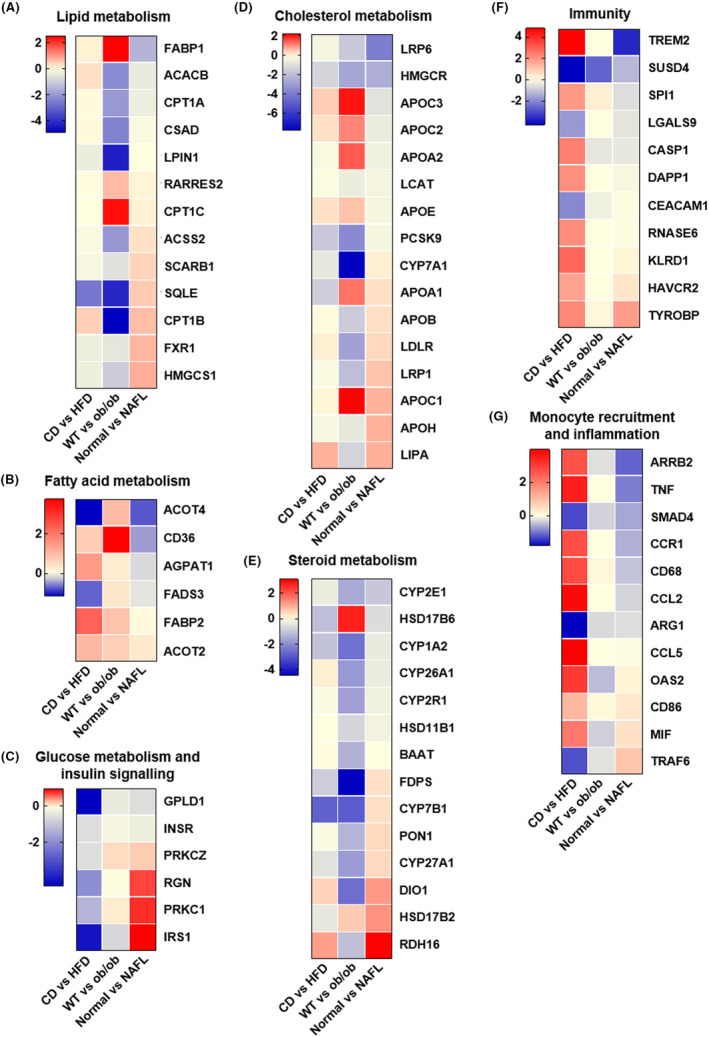
In this study, HFD-fed mice and ob/ob mice were used as NAFL animal models. Liver histopathological characteristics were compared, and liver transcriptome from both mouse models was performed using RNA sequencing (RNA-seq). RNA-seq data obtained from the livers of NAFL patients was downloaded from the GEO database. Global gene expression profiles in the livers were further analyzed using functional enrichment analysis and the Kyoto Encyclopedia of Genes and Genomes (KEGG) pathway.
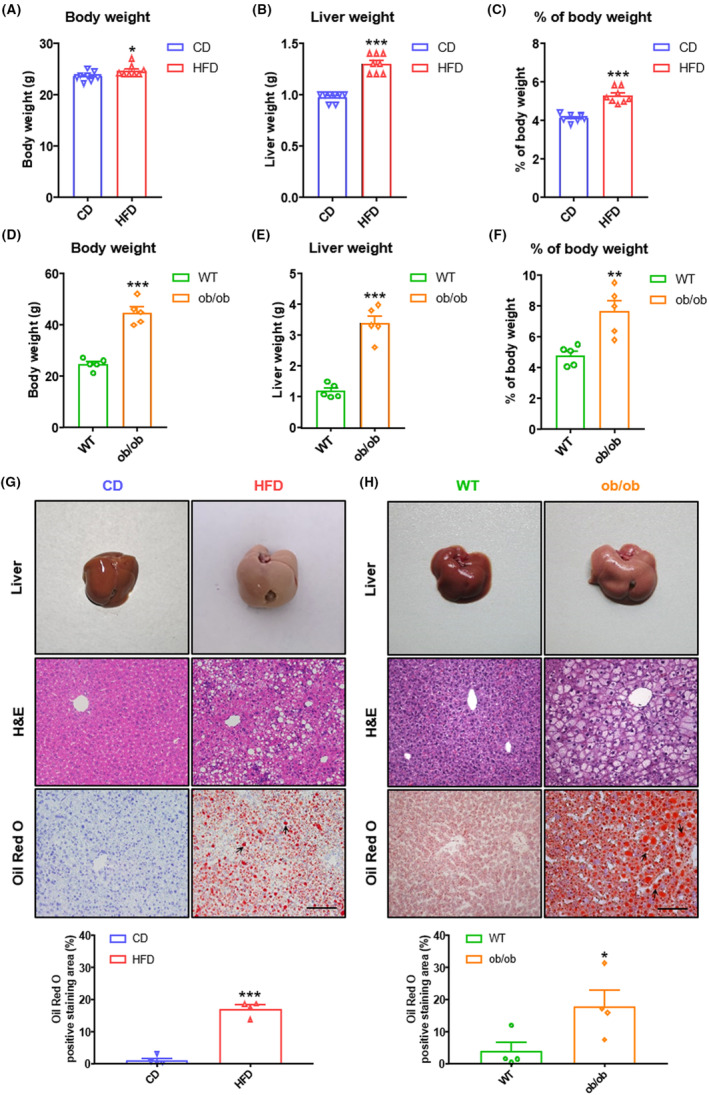
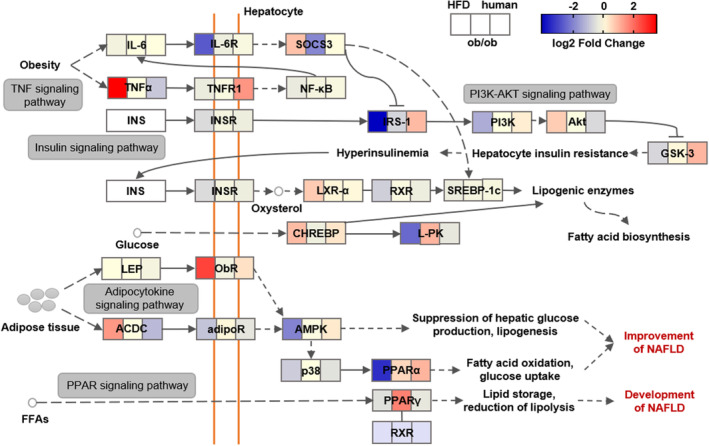
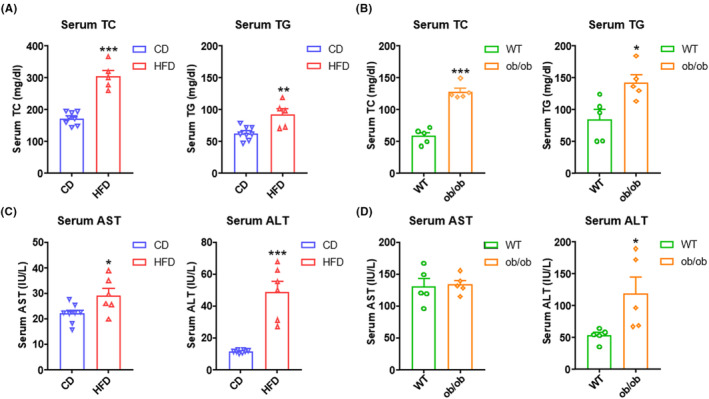
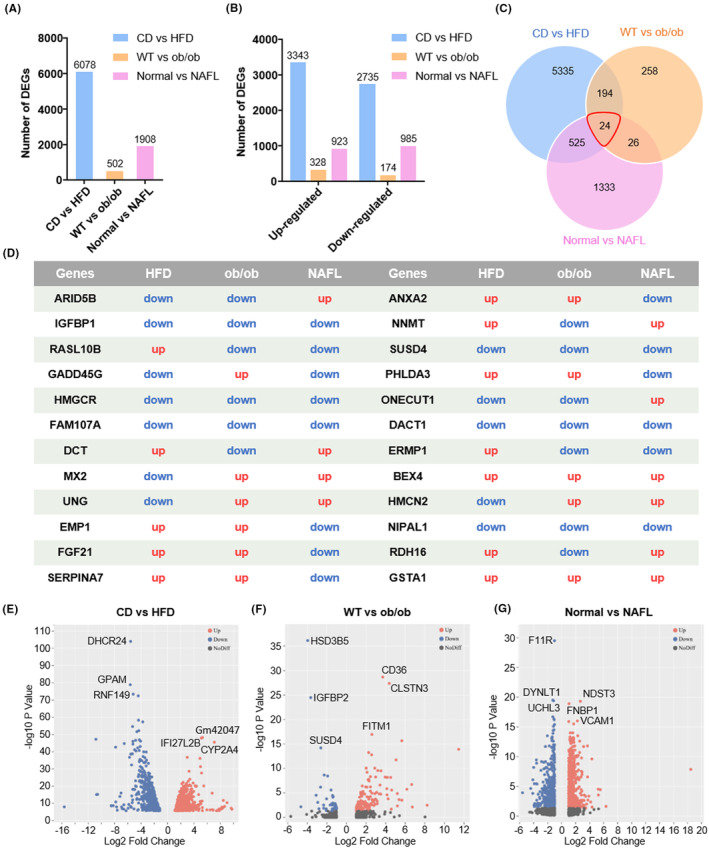
Our results showed that the biochemical parameters of both mouse models and human NAFL were similar. Compared with HFD-fed mice, ob/ob mice were more similar in histologic appearance to NAFL patients. The liver transcriptome characteristics partly overlapped in mice and humans. Furthermore, in the NAFL pathway, most genes showed similar trends in mice and humans, thus demonstrating that both types of mice can be used as models for basic research on NAFL, considering the differences.
Our findings show that HFD-fed mice and ob/ob mice can mimic human NAFL partly in pathophysiological process. The comparative analysis of liver transcriptome profile in mouse models and human NAFL presented here provides insights into the molecular characteristics across these NAFL models.
非酒精性脂肪性肝病(NAFLD)是肝硬化和肝细胞癌的主要原因。作为 NAFLD 的起点,非酒精性脂肪肝(NAFL)的治疗受到越来越多的关注。高脂肪饮食(HFD)喂养的小鼠和遗传性瘦素缺乏(ob/ob)小鼠是重要的 NAFL 动物模型。然而,这些小鼠模型与人类 NAFL 的比较仍不清楚。
本研究以 HFD 喂养的小鼠和 ob/ob 小鼠作为 NAFL 动物模型。比较肝脏组织病理学特征,并对两种模型的肝脏转录组进行 RNA 测序(RNA-seq)。从 GEO 数据库下载来自 NAFL 患者肝脏的 RNA-seq 数据。使用功能富集分析和京都基因与基因组百科全书(KEGG)途径对肝脏中的全基因表达谱进行进一步分析。
我们的结果表明,两种小鼠模型和人类 NAFL 的生化参数相似。与 HFD 喂养的小鼠相比,ob/ob 小鼠在组织学外观上与 NAFL 患者更相似。小鼠和人类的肝脏转录组特征部分重叠。此外,在 NAFL 途径中,大多数基因在小鼠和人类中表现出相似的趋势,因此表明这两种类型的小鼠都可以作为 NAFL 基础研究的模型,同时考虑到它们之间的差异。
我们的研究结果表明,HFD 喂养的小鼠和 ob/ob 小鼠在病理生理过程中可以部分模拟人类的 NAFL。本文对小鼠模型和人类 NAFL 的肝脏转录组谱进行的比较分析为这些 NAFL 模型的分子特征提供了新的见解。