Medical Research Council Centre for Global Infectious Disease Analysis, School of Public Health, Imperial College London, London, United Kingdom.
Center for Health Emergencies, Fondazione Bruno Kessler, Trento, Italy; Department of Mathematics, University of Trento, Trento, Italy.
EBioMedicine. 2023 Sep;95:104745. doi: 10.1016/j.ebiom.2023.104745. Epub 2023 Aug 9.
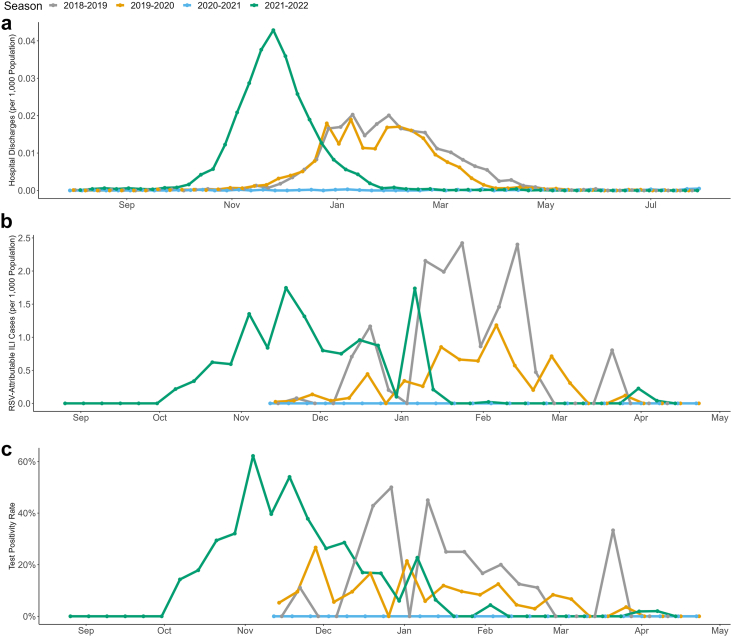
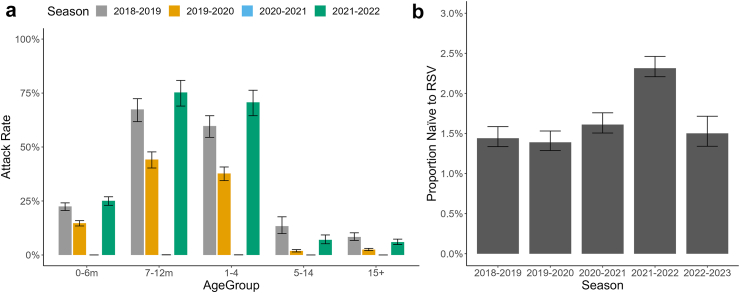
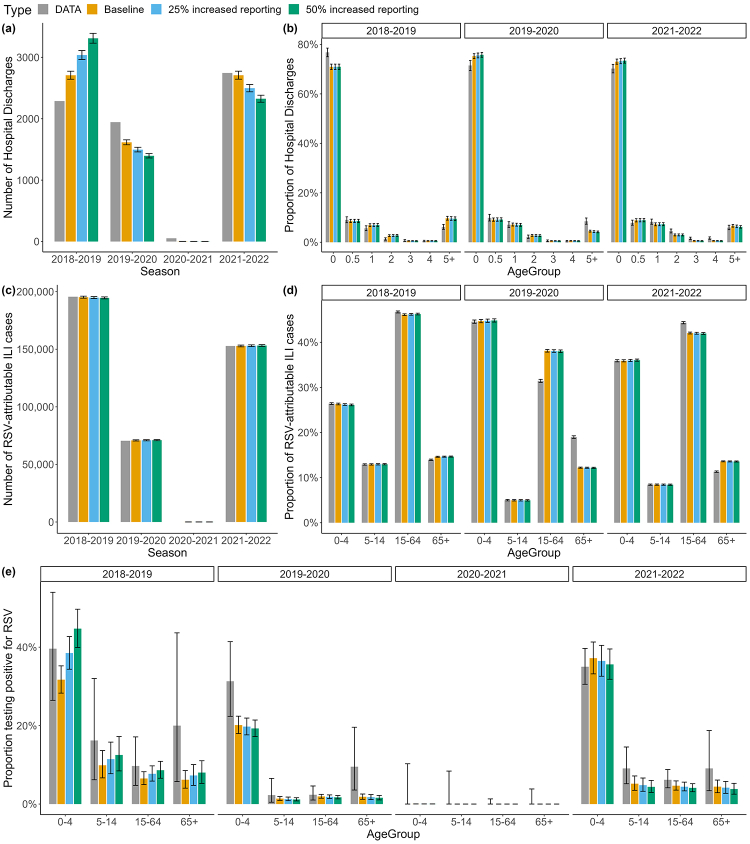
Respiratory syncytial virus (RSV) is a leading cause of hospitalisation and mortality in young children globally. The social distancing measures implemented against COVID-19 in Lombardy (Italy) disrupted the typically seasonal RSV circulation during 2019-2021 and caused substantially more hospitalisations during 2021-2022. The primary aim of this study is to quantify the immunity gap-defined as the increased proportion of the population naïve to RSV infection following the relaxation of COVID-19 restrictions in Lombardy, which has been hypothesised to be a potential cause of the increased RSV burden in 2021-2022.
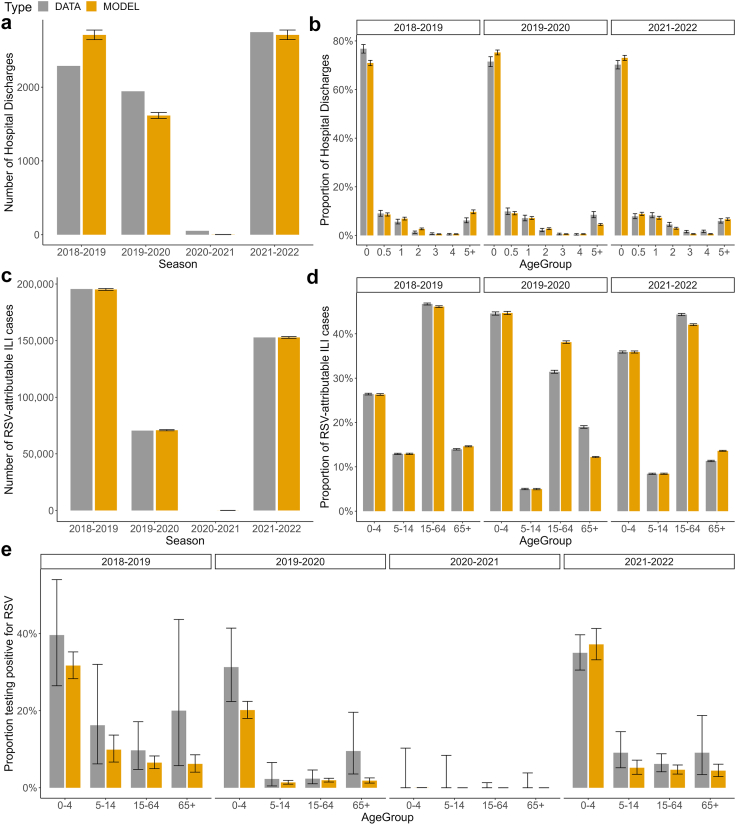
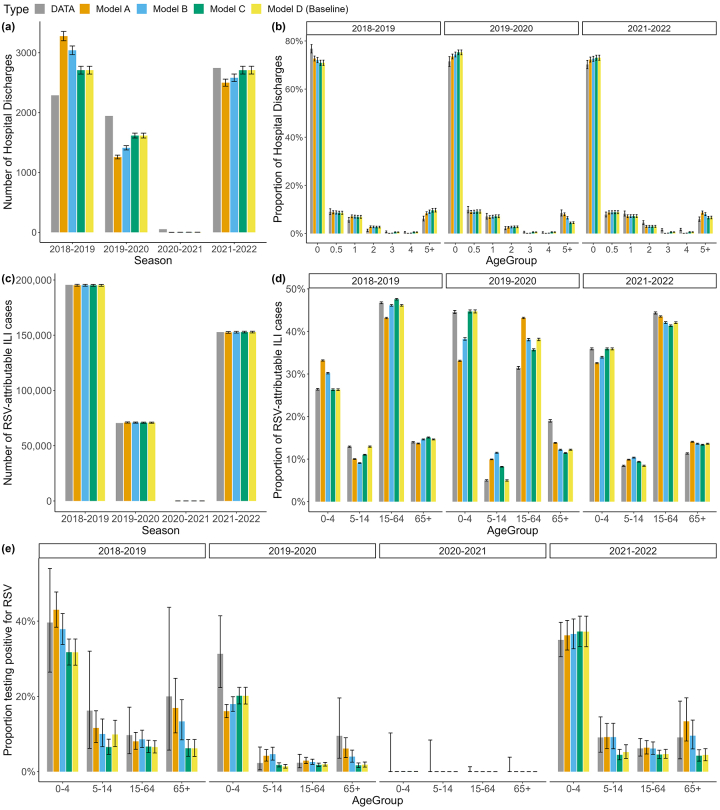
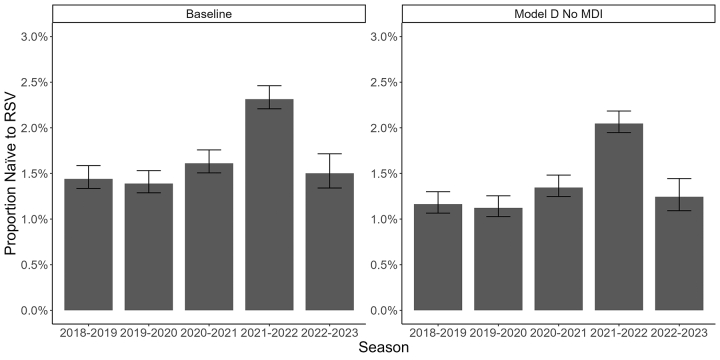
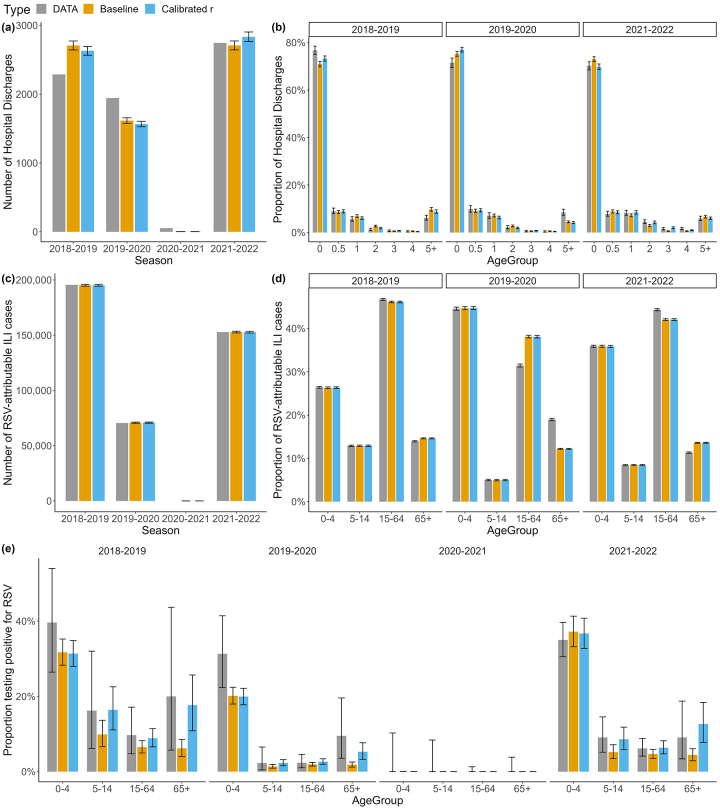
We developed a catalytic model to reconstruct changes in the age-dependent susceptibility profile of the Lombardy population throughout the COVID-19 pandemic. The model is calibrated to routinely collected hospitalisation, syndromic, and virological surveillance data and tested for alternative assumptions on age-dependencies in the risk of RSV infection throughout the pandemic.
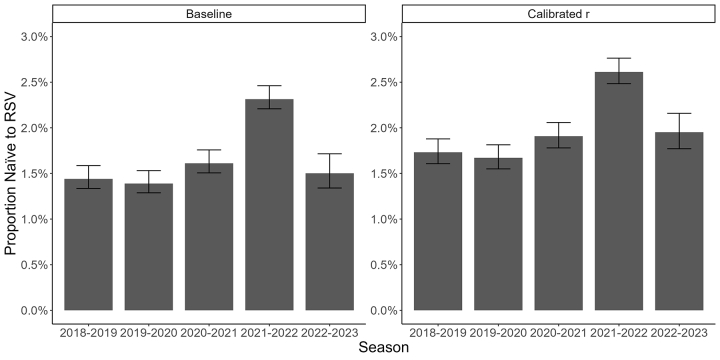
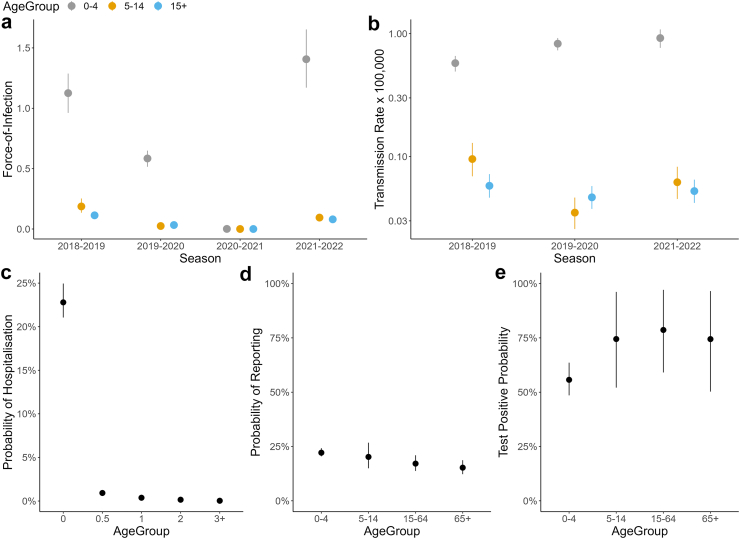
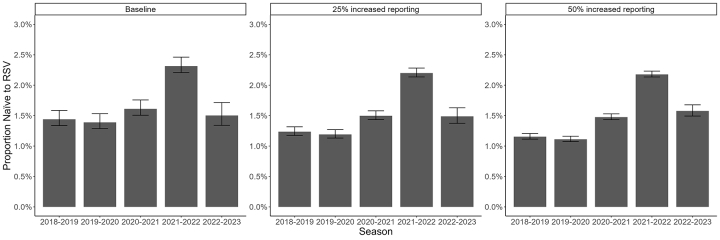
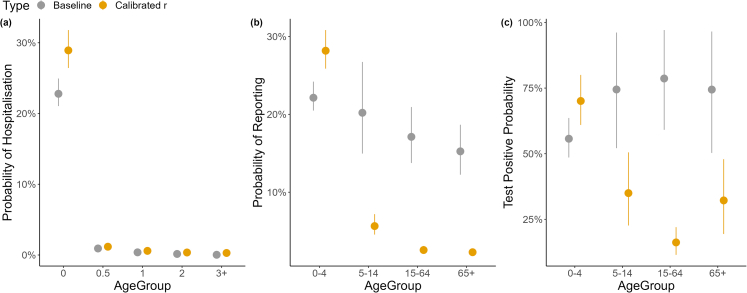
We estimate that the proportion of the Lombardy population naïve to RSV infection increased by 60.8% (95% CrI: 55.2-65.4%) during the COVID-19 pandemic: from 1.4% (95% CrI: 1.3-1.6%) in 2018-2019 to 2.3% (95% CrI: 2.2-2.5%) before the 2021-2022 season, corresponding to an immunity gap of 0.87% (95% CrI: 0.87-0.88%). We found evidence of heterogeneity in RSV transmission by age, suggesting that the COVID-19 restrictions had variable impact on the contact patterns and risk of RSV infection across ages.
We estimate a substantial increase in the population-level susceptibility to RSV in Lombardy during 2019-2021, which contributed to an increase in primary RSV infections in 2021-2022.
UK Medical Research Council (MRC), UK Foreign, Commonwealth & Development Office (FCDO), EDCTP2 programme, European Union, Wellcome Trust, Royal Society, EU-MUR PNRR INF-ACT.
呼吸道合胞病毒(RSV)是导致全球幼儿住院和死亡的主要原因。在伦巴第(意大利)实施的 COVID-19 社交距离措施破坏了 2019-2021 年期间 RSV 的典型季节性传播,并导致 2021-2022 年期间住院人数大幅增加。本研究的主要目的是量化免疫差距-定义为 COVID-19 限制放松后对 RSV 感染缺乏免疫力的人群比例增加,这被假设是 2021-2022 年 RSV 负担增加的潜在原因。
我们开发了一个催化模型,以重建 COVID-19 大流行期间伦巴第人口年龄相关易感性特征的变化。该模型经过常规收集的住院、综合征和病毒学监测数据进行校准,并针对大流行期间 RSV 感染风险的年龄相关性的替代假设进行了测试。
我们估计,在 COVID-19 大流行期间,伦巴第人口对 RSV 感染缺乏免疫力的比例增加了 60.8%(95%置信区间:55.2-65.4%):从 2018-2019 年的 1.4%(95%置信区间:1.3-1.6%)增加到 2021-2022 年赛季前的 2.3%(95%置信区间:2.2-2.5%),对应于 0.87%(95%置信区间:0.87-0.88%)的免疫差距。我们发现年龄与 RSV 传播之间存在异质性的证据,表明 COVID-19 限制对不同年龄组的接触模式和 RSV 感染风险产生了不同的影响。
我们估计,在 2019-2021 年期间,伦巴第的人群对 RSV 的易感性大幅增加,这导致了 2021-2022 年原发性 RSV 感染的增加。
英国医学研究理事会(MRC)、英国外交、联邦和发展办公室(FCDO)、EDCTP2 计划、欧盟、惠康信托基金会、英国皇家学会、欧盟-MUR PNRR INF-ACT。