Capuano Paolo, Hileman Bethany, Tigano Stefano, Magro Bianca, Lo Re Vincenzina, Liotta Rosa, Sciveres Marco, Ranucci Giusy, Provenzani Alessio, Burgio Gaetano, Scardulla Cesare, Arcadipane Antonio, Martucci Gennaro
Department of Anesthesia and Intensive Care, IRCCS-ISMETT (Istituto Mediterraneo per i Trapianti e Terapie ad Alta Specializzazione), 90133 Palermo, Italy.
University of Pittsburgh Medical Center (UPMC), 90133 Palermo, Italy.
J Clin Med. 2023 Aug 4;12(15):5128. doi: 10.3390/jcm12155128.
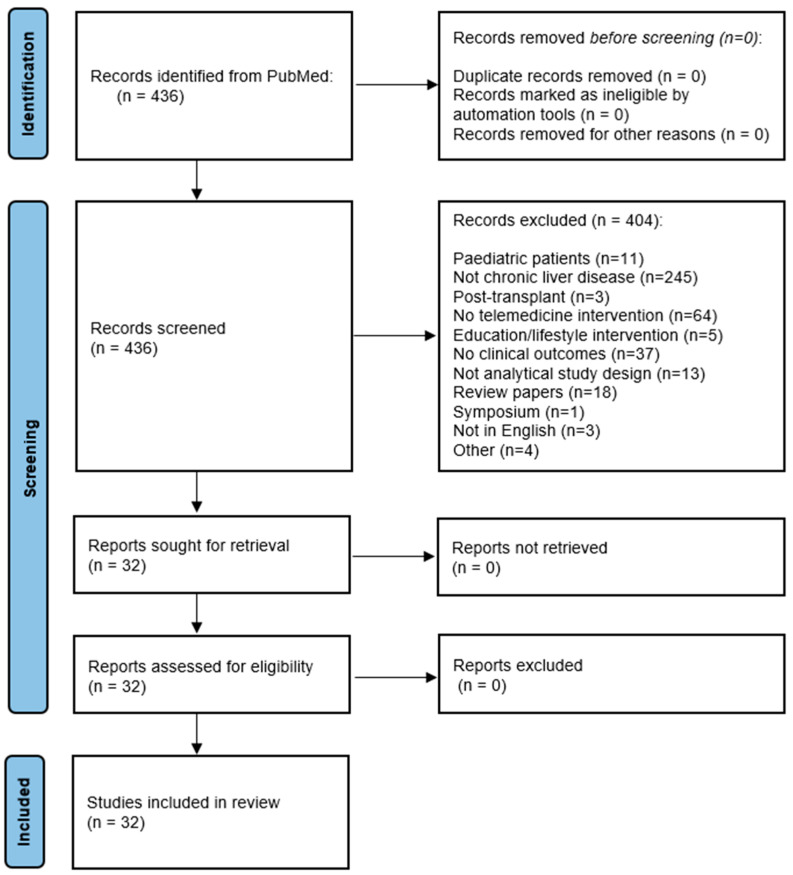
For patients with chronic liver disease (CLD), telemedicine is emerging as a useful tool to prevent liver decompensation or hospitalization, allowing access to and the decentralization of care, even for patients with limited resources. However, research and attendant evidence are still lacking; thus, this review aims to systematically explore the topic of telemonitoring for CLD to describe the currently used tools and clinical outcomes. The review was conducted by using key terms on PubMed/EMBASE and searching for observational studies or clinical trials (according to PRISMA recommendations) that were published between 6 April 2013 and 6 April 2023 to keep the technological framework limited to the last 10 years. The studies were described and grouped according to the aim of telemonitoring, the underlying disease, and the tools adopted to achieve remote monitoring. A total of 32 articles met the inclusion criteria. Of these, 11 articles report the successful use of a telehealth program to support and improve access to care in the management of HCV-related cirrhosis, eight articles examine the efficacy of telemedicine for remote monitoring interventions to prevent or decrease the risk of decompensation in high-risk patients, and five articles examine improvements in the physical performance and quality of life of cirrhotic patients through telehealth rehabilitation programs. Four studies were completed during the recent COVID-19 pandemic. Telehealth has the potential to provide and expand treatment access and reduce barriers to care for the most disadvantaged patients and might be able to reduce the need for hospital readmission for CLD, though most practice to test feasibility is still in the pilot stage.
对于慢性肝病(CLD)患者而言,远程医疗正逐渐成为预防肝脏失代偿或住院的有用工具,即使对于资源有限的患者,也能实现医疗服务的可及性和去中心化。然而,相关研究及证据仍较为匮乏;因此,本综述旨在系统地探讨CLD远程监测这一主题,以描述当前使用的工具及临床结果。本综述通过在PubMed/EMBASE上使用关键词,并检索2013年4月6日至2023年4月6日期间发表的观察性研究或临床试验(根据PRISMA指南)来进行,以使技术框架限定在过去10年。根据远程监测的目的、基础疾病以及用于实现远程监测的工具对这些研究进行了描述和分组。共有32篇文章符合纳入标准。其中,11篇文章报告了远程医疗项目在支持和改善丙型肝炎相关肝硬化管理中的医疗服务可及性方面的成功应用,8篇文章探讨了远程医疗在远程监测干预以预防或降低高危患者失代偿风险方面的疗效,5篇文章研究了通过远程医疗康复项目对肝硬化患者身体机能和生活质量的改善情况。4项研究是在近期的新冠疫情期间完成的。远程医疗有潜力为最弱势患者提供并扩大治疗机会,减少医疗障碍,并且可能能够减少CLD患者的再次住院需求,不过大多数测试可行性的实践仍处于试点阶段。