Shang Junxin, Feng Mingyou, Wang Xingzhi, Zhang Benjian, Xu Liang, Liu Xiaohong
School of Geoscience and Technology, Southwest Petroleum University, Chengdu, 610500, China.
Research Institute of Exploration and Development, PetroChina Southwest Oil and Gas Filed Company, Chengdu, 610041, China.
Sci Rep. 2023 Aug 12;13(1):13128. doi: 10.1038/s41598-023-40334-y.
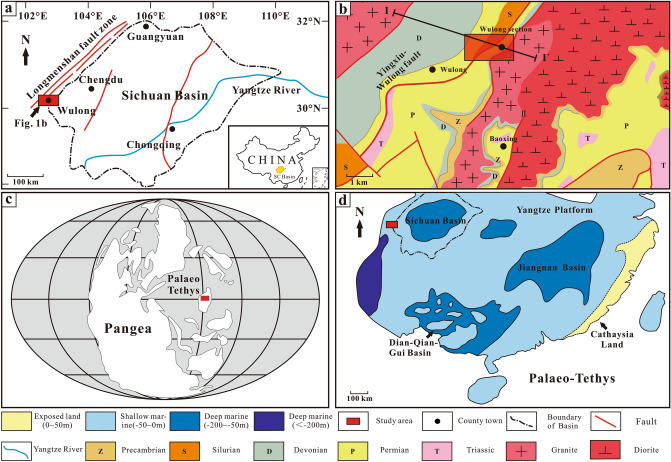
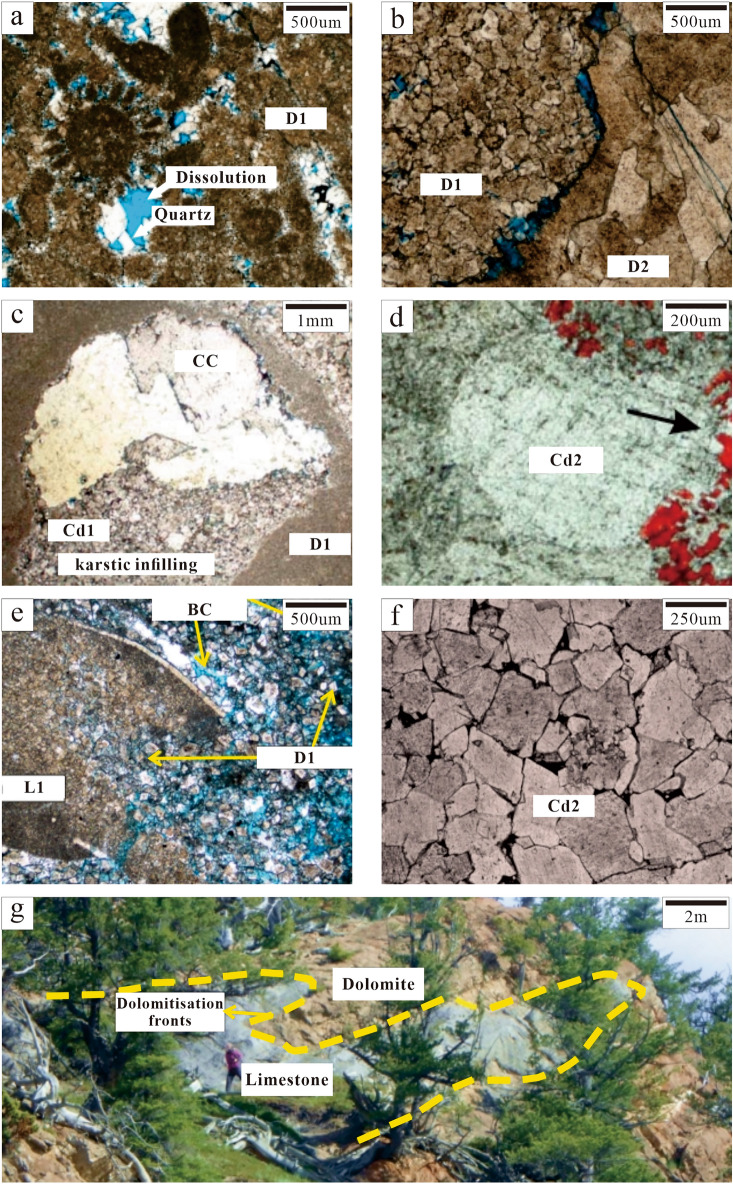
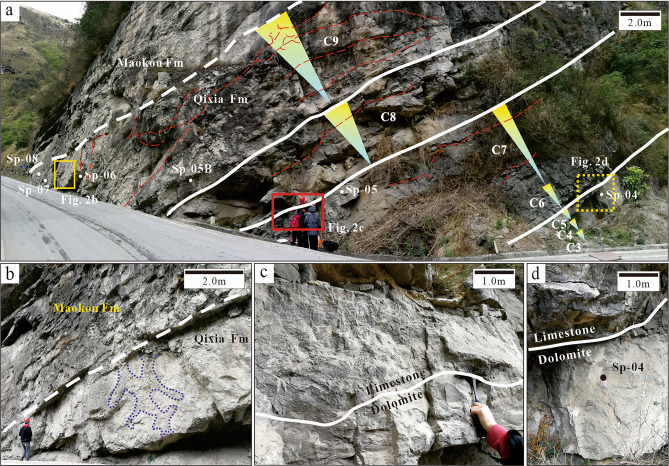
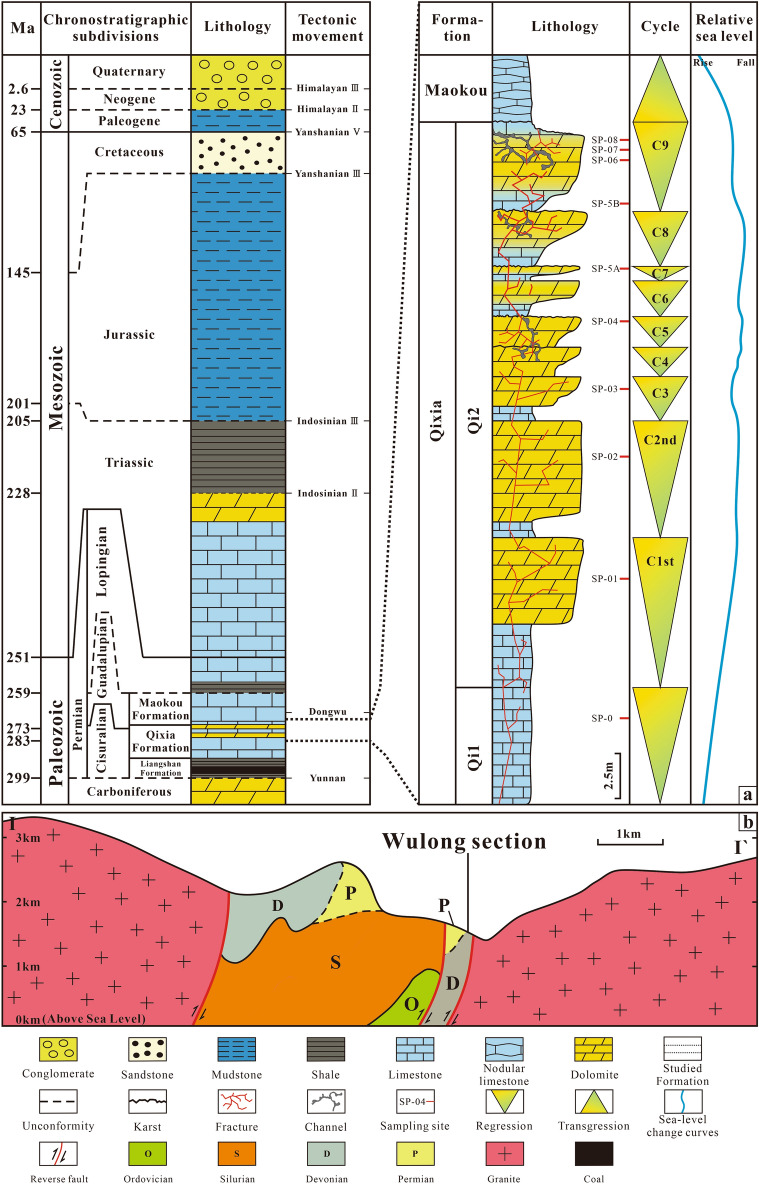
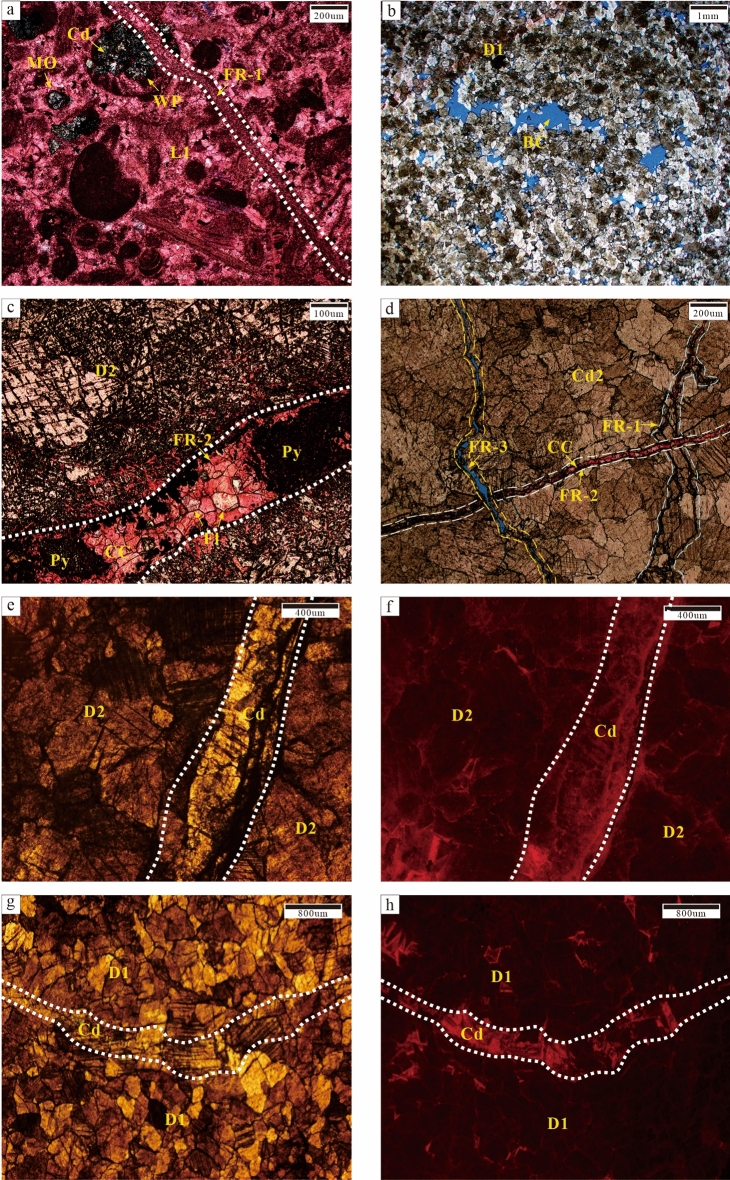
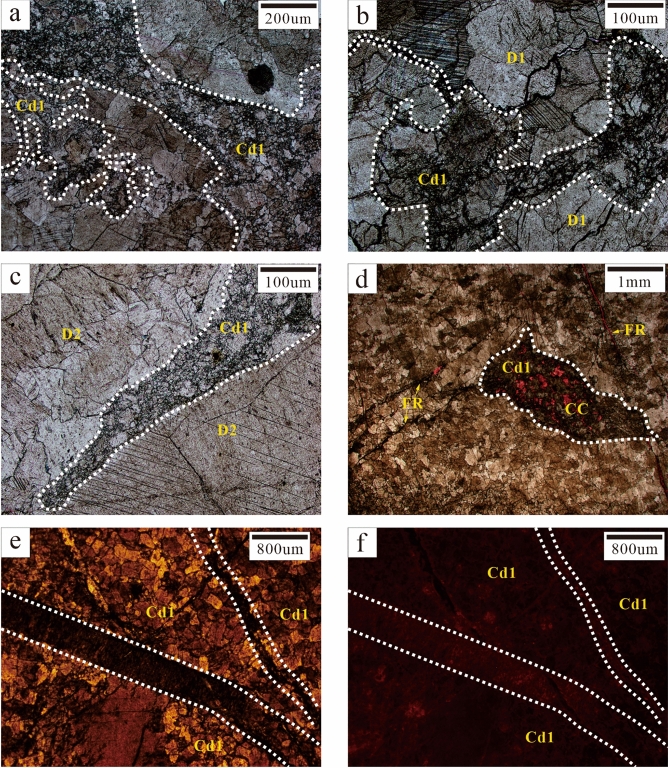
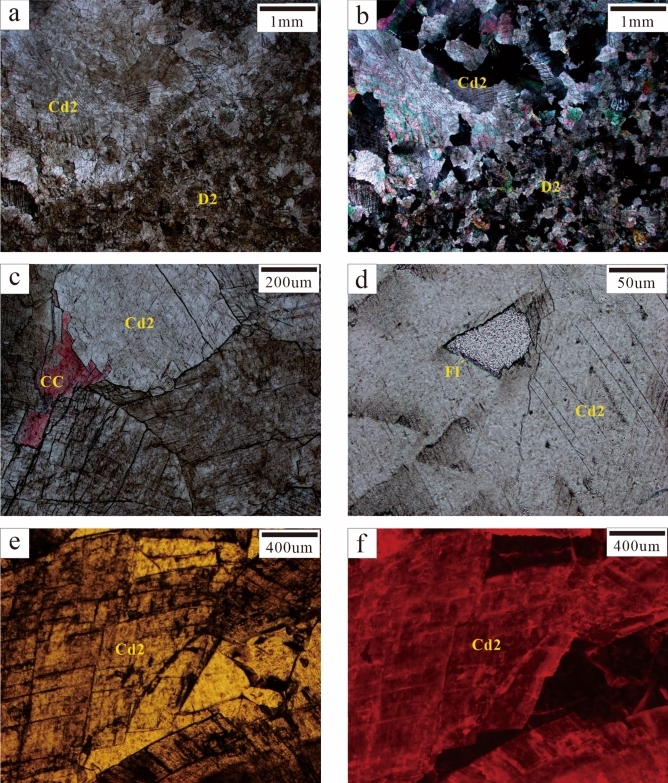
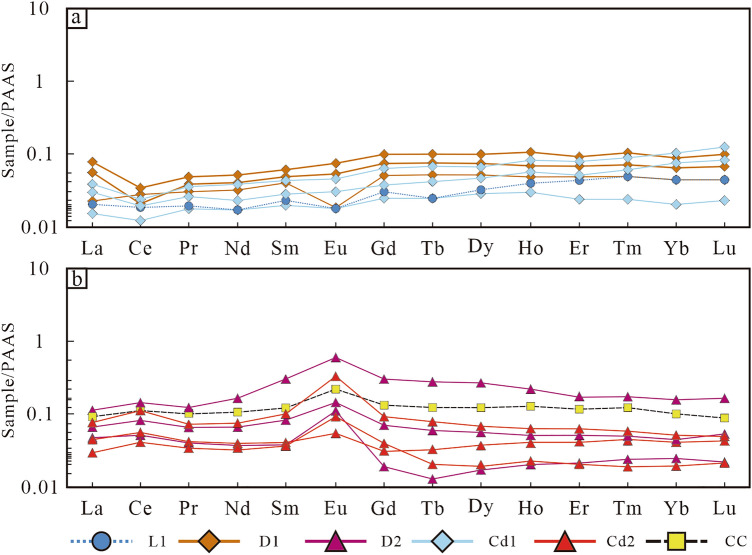
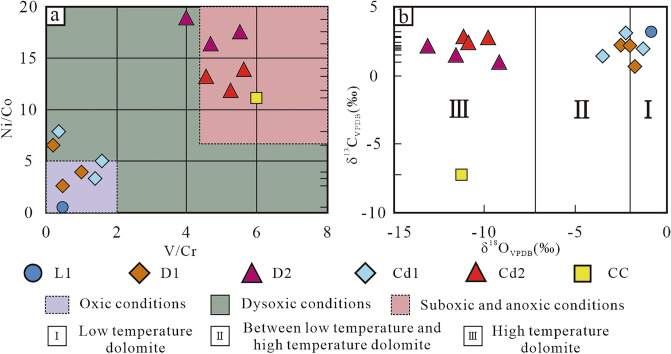
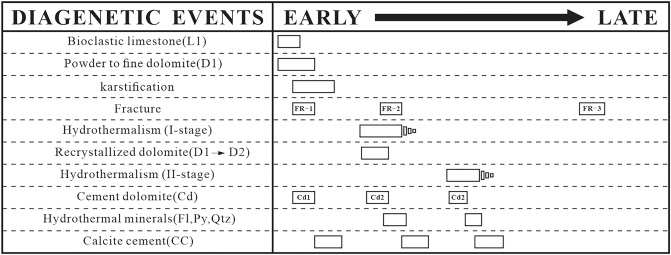
Middle Permian Qixia Formation in the southwestern region of Sichuan (SW China) has experienced multiphase fluidisation, resulting in an unclear understanding of the reservoir reconstruction effect. In this study, a systematic analysis of the Qi2 member in Wulong Town was carried out by combining field outcrop petrology and geochemistry. The results demonstrated that multiple sets of crystalline dolomite-bioclastic limestone cycles were stacked vertically in the Qi2 member, accompanied by the development of fractures and karst channels. The dolomite was mainly composed of silty-fine dolomite (D1) and recrystallised dolomite (D2). Furthermore, obvious multiphase dolomitic cements (Cd1-Cd2) were present in the fractures and pores. Early karst is known to have lithologic mutation surface development and karst channel development at the top of several secondary cycles. The vadose silt dolomites (Cd1) having karst channels developed dull luminescence under cathode luminescence (CL). Both the geochemical indicators of elements and rare earth element (REE) content indicated dysoxic-oxic environmental conditions. The hydrothermal solution displayed tectonic carniole characteristics in the strata burial stage. Fractures and pores were filled with hydrothermal minerals such as coarse dolomites-saddle dolomites (Cd2, with some caused by recrystallisation of the Cd1 hydrothermal solution) and fluorites. Coarse dolomites-saddle dolomites developed dull-red luminescence with a bright-red rim under CL and their δO values were more negative than those of middle Permian limestone samples. Both the geochemical indicators of elements and REE content indicated the suboxic-anoxic environmental conditions. Karstification had minor constructive impact on the reservoir of the Qi2 member in Baoxing in southwestern Sichuan. Most products of karstification were distributed as fillings in channels. Aside from creating certain networked fractures, the hydrothermal solution was mainly filled with hydrothermal minerals along the fractures, pores and early karst channels. Karst and the hydrothermal solution mainly damaged the middle and upper parts of the middle Permian Qixia Formation in Southwest Sichuan. The impact of episodic fluid on the restoration of the carbonate reservoir was mainly restricted by channels for fluid migration and thickness differences among the reservoir. However, certain thick-layered and massive crystalline dolomite may hold promise for exploration.
四川西南部中二叠统栖霞组经历了多期流体作用,导致对储层改造效果认识不清。本研究通过野外露头岩石学与地球化学相结合的方法,对五通镇栖二段进行了系统分析。结果表明,栖二段垂向上发育多套结晶白云岩—生物碎屑灰岩旋回,伴有裂缝和岩溶通道发育。白云岩主要由粉细晶白云岩(D1)和重结晶白云岩(D2)组成。此外,裂缝和孔隙中存在明显的多期白云石胶结物(Cd1 - Cd2)。早期岩溶在几个次级旋回顶部有岩性突变面发育和岩溶通道发育。具有岩溶通道的渗流粉砂白云岩(Cd1)在阴极发光(CL)下呈暗淡发光。元素地球化学指标和稀土元素(REE)含量均指示了缺氧 - 氧化环境条件。热液在地层埋藏阶段表现出构造角砾岩化特征。裂缝和孔隙中充填有粗晶白云石—鞍状白云石(Cd2,部分由Cd1热液重结晶形成)和萤石等热液矿物。粗晶白云石—鞍状白云石在CL下呈暗红色发光且边缘为亮红色,其δO值比中二叠统灰岩样品更负。元素地球化学指标和REE含量均指示了次缺氧 - 缺氧环境条件。岩溶作用对四川西南部宝兴栖二段储层的建设性影响较小。岩溶产物大多以充填物形式分布于通道中。热液除形成一定的网络状裂缝外,主要沿裂缝、孔隙和早期岩溶通道充填热液矿物。岩溶作用和热液主要破坏了四川西南部中二叠统栖霞组的中上部。幕式流体对碳酸盐岩储层恢复的影响主要受流体运移通道和储层厚度差异制约。然而,某些厚层块状结晶白云岩可能具有勘探潜力。