Tang Ziyang, Liu Xiang, Li Zuotian, Zhang Tonglin, Yang Baijian, Su Jing, Song Qianqian
Department of Computer and Information Technology, Purdue University, Indiana, USA.
Department of Biostatistics and Health Data Science, Indiana University School of Medicine, Indiana, USA.
bioRxiv. 2023 Aug 6:2023.08.03.551911. doi: 10.1101/2023.08.03.551911.
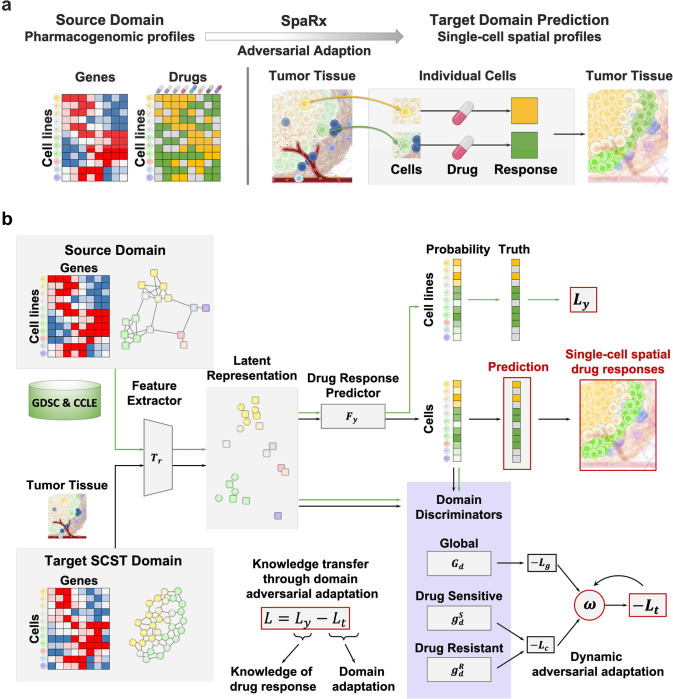
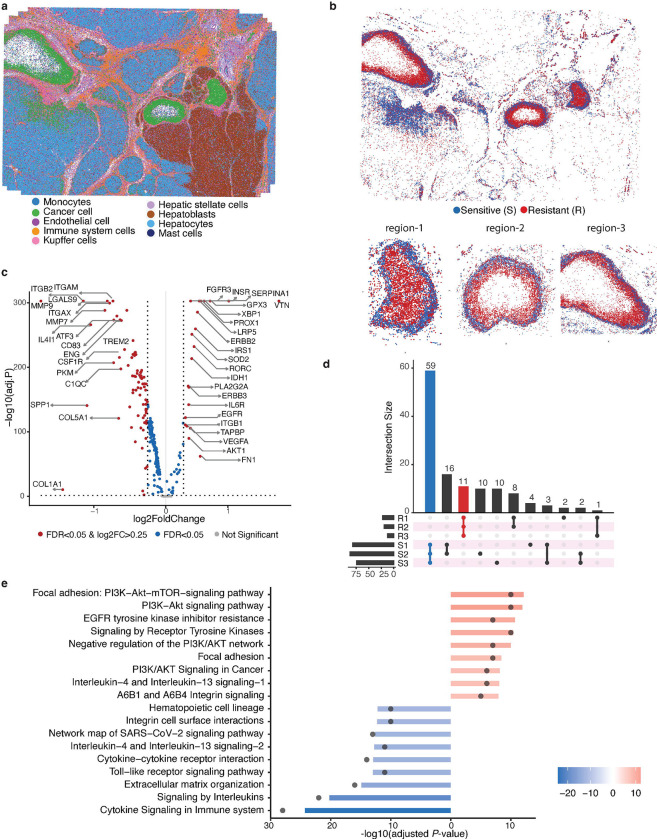
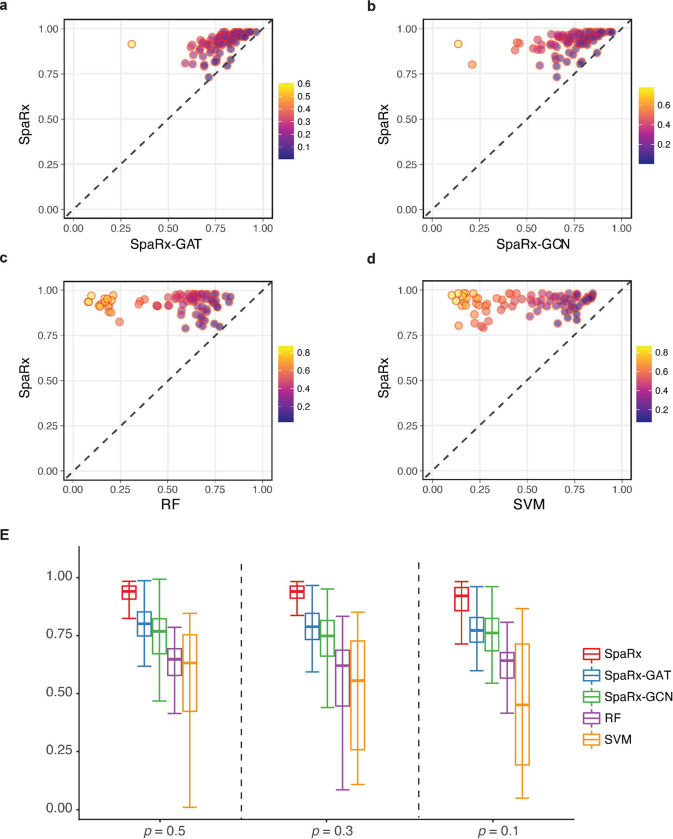
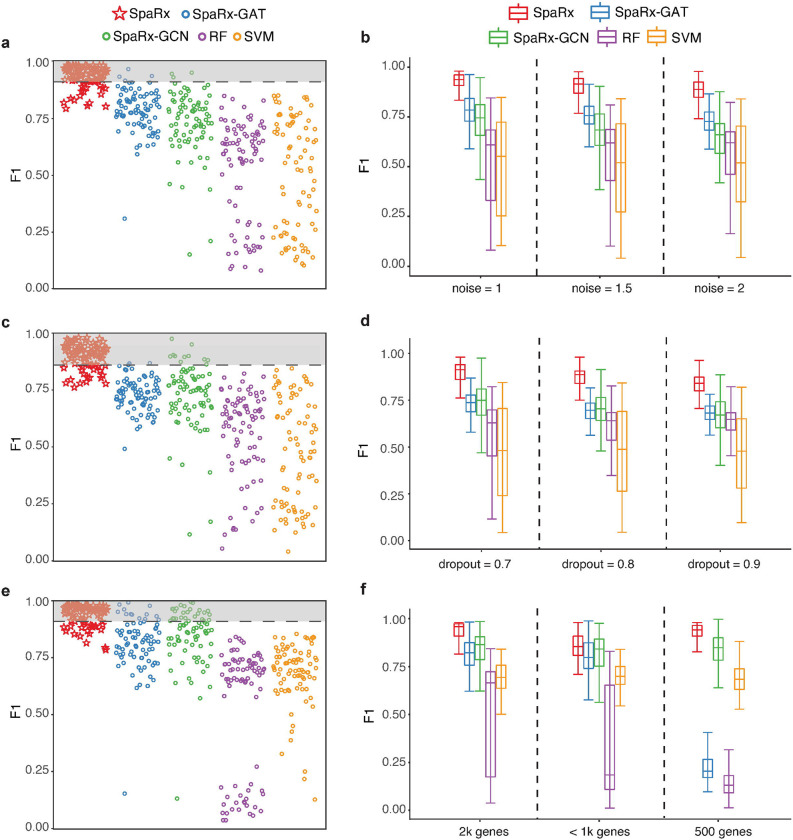
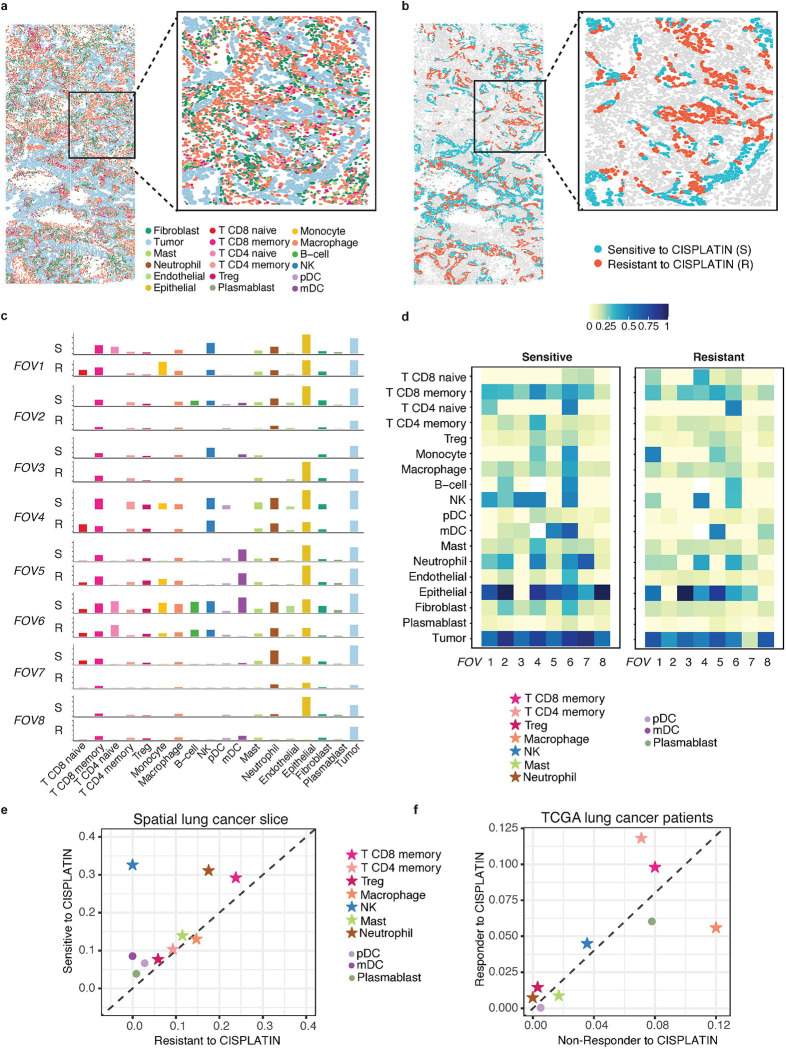
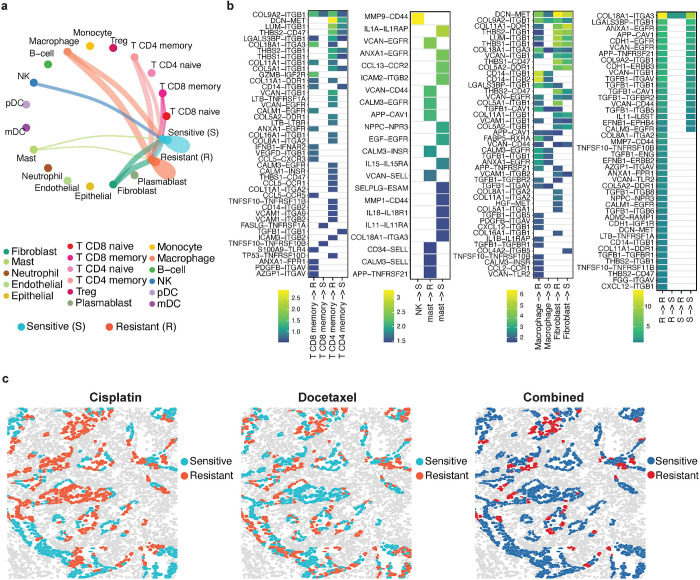
Spatial cellular heterogeneity contributes to differential drug responses in a tumor lesion and potential therapeutic resistance. Recent emerging spatial technologies such as CosMx SMI, MERSCOPE, and Xenium delineate the spatial gene expression patterns at the single cell resolution. This provides unprecedented opportunities to identify spatially localized cellular resistance and to optimize the treatment for individual patients. In this work, we present a graph-based domain adaptation model, SpaRx, to reveal the heterogeneity of spatial cellular response to drugs. SpaRx transfers the knowledge from pharmacogenomics profiles to single-cell spatial transcriptomics data, through hybrid learning with dynamic adversarial adaption. Comprehensive benchmarking demonstrates the superior and robust performance of SpaRx at different dropout rates, noise levels, and transcriptomics coverage. Further application of SpaRx to the state-of-art single-cell spatial transcriptomics data reveals that tumor cells in different locations of a tumor lesion present heterogenous sensitivity or resistance to drugs. Moreover, resistant tumor cells interact with themselves or the surrounding constituents to form an ecosystem for drug resistance. Collectively, SpaRx characterizes the spatial therapeutic variability, unveils the molecular mechanisms underpinning drug resistance, and identifies personalized drug targets and effective drug combinations.
We have developed a novel graph-based domain adaption model named SpaRx, to reveal the heterogeneity of spatial cellular response to different types of drugs, which bridges the gap between pharmacogenomics knowledgebase and single-cell spatial transcriptomics data.SpaRx is developed tailored for single-cell spatial transcriptomics data and is provided available as a ready-to-use open-source software, which demonstrates high accuracy and robust performance.SpaRx uncovers that tumor cells located in different areas within tumor lesion exhibit varying levels of sensitivity or resistance to drugs. Moreover, SpaRx reveals that tumor cells interact with themselves and the surrounding microenvironment to form an ecosystem capable of drug resistance.
空间细胞异质性导致肿瘤病灶中不同的药物反应和潜在的治疗抗性。最近出现的空间技术,如CosMx SMI、MERSCOPE和Xenium,可在单细胞分辨率下描绘空间基因表达模式。这为识别空间定位的细胞抗性和优化个体患者的治疗提供了前所未有的机会。在这项工作中,我们提出了一种基于图的域适应模型SpaRx,以揭示药物的空间细胞反应异质性。SpaRx通过动态对抗适应的混合学习,将药物基因组学概况中的知识转移到单细胞空间转录组学数据中。全面的基准测试证明了SpaRx在不同的缺失率、噪声水平和转录组学覆盖率下具有卓越且稳健的性能。将SpaRx进一步应用于最先进的单细胞空间转录组学数据表明,肿瘤病灶不同位置的肿瘤细胞对药物表现出异质性的敏感性或抗性。此外,耐药肿瘤细胞与自身或周围成分相互作用,形成一个耐药生态系统。总体而言,SpaRx表征了空间治疗变异性,揭示了耐药性的分子机制,并识别出个性化的药物靶点和有效的药物组合。
我们开发了一种名为SpaRx的新型基于图的域适应模型,以揭示对不同类型药物的空间细胞反应异质性,它弥合了药物基因组学知识库与单细胞空间转录组学数据之间的差距。SpaRx是专门为单细胞空间转录组学数据开发的,并作为一个即用型开源软件提供,其表现出高精度和稳健的性能。SpaRx发现,位于肿瘤病灶不同区域的肿瘤细胞对药物表现出不同程度的敏感性或抗性。此外,SpaRx揭示肿瘤细胞与自身及周围微环境相互作用,形成一个具有耐药性的生态系统。