• 文献检索
  • 文档翻译
  • 深度研究
  • 学术资讯
  • Suppr Zotero 插件Zotero 插件
  • 邀请有礼
  • 套餐&价格
  • 历史记录
应用&插件
Suppr Zotero 插件Zotero 插件浏览器插件Mac 客户端Windows 客户端微信小程序
定价
高级版会员购买积分包购买API积分包
服务
文献检索文档翻译深度研究API 文档MCP 服务
关于我们
关于 Suppr公司介绍联系我们用户协议隐私条款
关注我们

Suppr 超能文献

核心技术专利:CN118964589B侵权必究
粤ICP备2023148730 号-1Suppr @ 2026

文献检索

告别复杂PubMed语法,用中文像聊天一样搜索,搜遍4000万医学文献。AI智能推荐,让科研检索更轻松。

立即免费搜索

文件翻译

保留排版,准确专业,支持PDF/Word/PPT等文件格式,支持 12+语言互译。

免费翻译文档

深度研究

AI帮你快速写综述,25分钟生成高质量综述,智能提取关键信息,辅助科研写作。

立即免费体验

多中心验证 ROP.AI 深度学习算法在早产儿视网膜病变(ROP)中对 Plus 病的自动诊断。

Multicenter Validation of Deep Learning Algorithm ROP.AI for the Automated Diagnosis of Plus Disease in ROP.

机构信息

Department of Ophthalmology, Queensland Children's Hospital, South Brisbane, Queensland, Australia.

Centre for Children's Health Research, South Brisbane, Queensland, Australia.

出版信息

Transl Vis Sci Technol. 2023 Aug 1;12(8):13. doi: 10.1167/tvst.12.8.13.

DOI:10.1167/tvst.12.8.13
PMID:37578427
原文链接:https://pmc.ncbi.nlm.nih.gov/articles/PMC10431208/
Abstract

PURPOSE

Retinopathy of prematurity (ROP) is a sight-threatening vasoproliferative retinal disease affecting premature infants. The detection of plus disease, a severe form of ROP requiring treatment, remains challenging owing to subjectivity, frequency, and time intensity of retinal examinations. Recent artificial intelligence (AI) algorithms developed to detect plus disease aims to alleviate these challenges; however, they have not been tested against a diverse neonatal population. Our study aims to validate ROP.AI, an AI algorithm developed from a single cohort, against a multicenter Australian cohort to determine its performance in detecting plus disease.

METHODS

Retinal images captured during routine ROP screening from May 2021 to February 2022 across five major tertiary centers throughout Australia were collected and uploaded to ROP.AI. AI diagnostic output was compared with one of five ROP experts. Sensitivity, specificity, negative predictive value, and area under the receiver operator curve were determined.

RESULTS

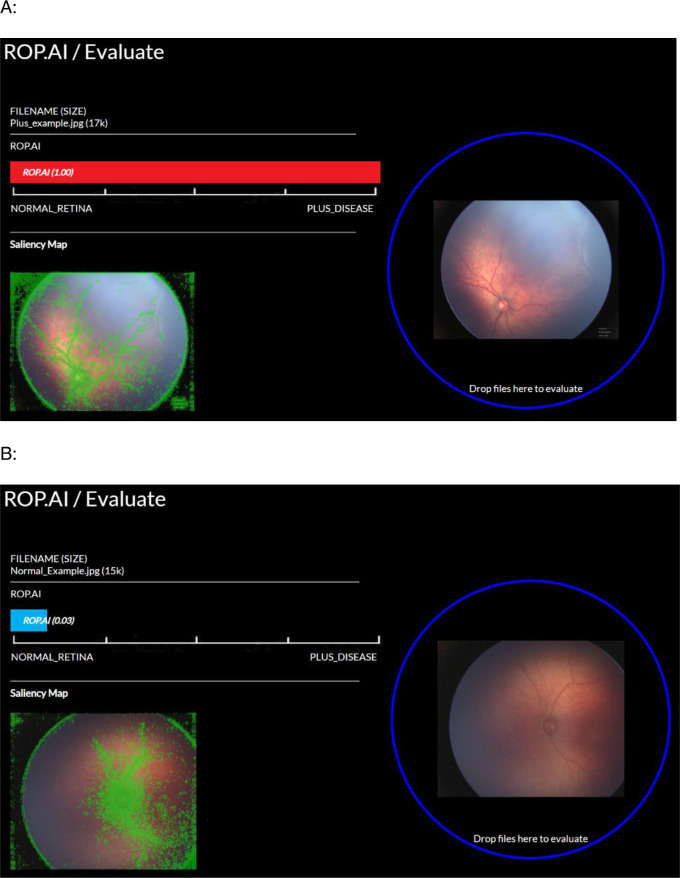
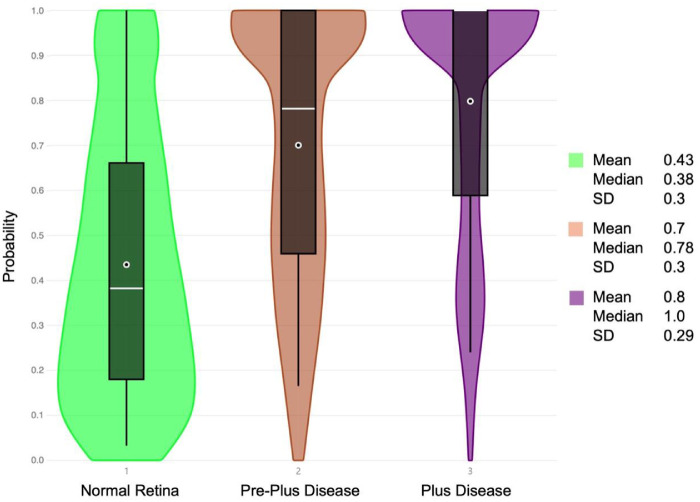
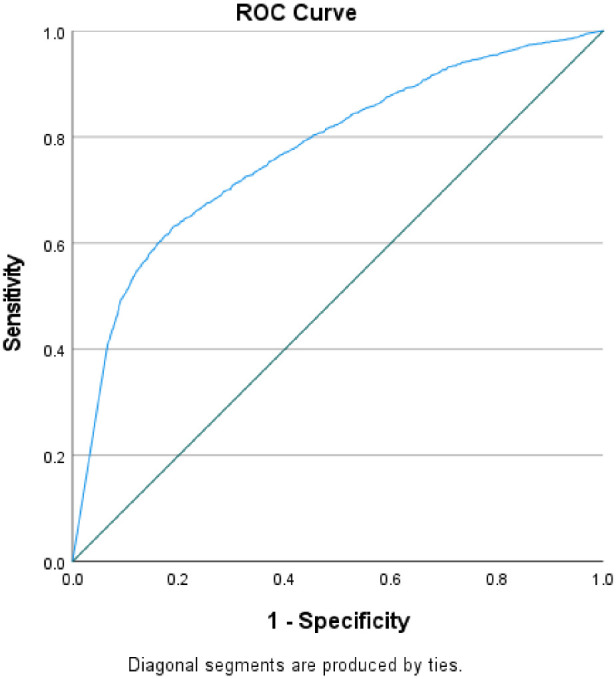
We collected 8052 images. The area under the receiver operator curve for the diagnosis of plus disease was 0.75. ROP.AI achieved 84% sensitivity, 43% specificity, and 96% negative predictive value for the detection of plus disease after operating point optimization.

CONCLUSIONS

ROP.AI was able to detect plus disease in an external, multicenter cohort despite being trained from a single center. Algorithm performance was demonstrated without preprocessing or augmentation, simulating real-world clinical applicability. Further training may improve generalizability for clinical implementation.

TRANSLATIONAL RELEVANCE

These results demonstrate ROP.AI's potential as a screening tool for the detection of plus disease in future clinical practice and provides a solution to overcome current diagnostic challenges.

摘要

目的

早产儿视网膜病变(ROP)是一种威胁视力的血管增生性视网膜疾病,影响早产儿。由于视网膜检查的主观性、频率和时间强度,加上疾病(ROP 的一种严重形式,需要治疗)的检测仍然具有挑战性。最近开发的用于检测加病的人工智能(AI)算法旨在缓解这些挑战;然而,它们尚未针对多样化的新生儿人群进行测试。我们的研究旨在验证 ROP.AI,这是一种从单一队列开发的 AI 算法,以确定其在检测加病方面的性能。

方法

从 2021 年 5 月至 2022 年 2 月,从澳大利亚五个主要三级中心的常规 ROP 筛查中收集视网膜图像,并上传到 ROP.AI。将 AI 诊断结果与五位 ROP 专家之一进行比较。确定了敏感性、特异性、阴性预测值和接收者操作特征曲线下的面积。

结果

我们收集了 8052 张图像。诊断加病的接收者操作特征曲线下的面积为 0.75。ROPAI 在经过操作点优化后,对加病的检测达到了 84%的敏感性、43%的特异性和 96%的阴性预测值。

结论

尽管 ROP.AI 是从单一中心训练的,但它能够在外部多中心队列中检测到加病。在没有预处理或增强的情况下,该算法的性能得到了证明,模拟了实际的临床适用性。进一步的培训可能会提高临床实施的通用性。

翻译

医学

https://cdn.ncbi.nlm.nih.gov/pmc/blobs/3174/10431208/49b50c176e8f/tvst-12-8-13-f004.jpg
https://cdn.ncbi.nlm.nih.gov/pmc/blobs/3174/10431208/8179ffa2e581/tvst-12-8-13-f001.jpg
https://cdn.ncbi.nlm.nih.gov/pmc/blobs/3174/10431208/3c23c5862950/tvst-12-8-13-f002.jpg
https://cdn.ncbi.nlm.nih.gov/pmc/blobs/3174/10431208/b944a2c69d40/tvst-12-8-13-f003.jpg
https://cdn.ncbi.nlm.nih.gov/pmc/blobs/3174/10431208/49b50c176e8f/tvst-12-8-13-f004.jpg
https://cdn.ncbi.nlm.nih.gov/pmc/blobs/3174/10431208/8179ffa2e581/tvst-12-8-13-f001.jpg
https://cdn.ncbi.nlm.nih.gov/pmc/blobs/3174/10431208/3c23c5862950/tvst-12-8-13-f002.jpg
https://cdn.ncbi.nlm.nih.gov/pmc/blobs/3174/10431208/b944a2c69d40/tvst-12-8-13-f003.jpg
https://cdn.ncbi.nlm.nih.gov/pmc/blobs/3174/10431208/49b50c176e8f/tvst-12-8-13-f004.jpg

相似文献

1
Multicenter Validation of Deep Learning Algorithm ROP.AI for the Automated Diagnosis of Plus Disease in ROP.多中心验证 ROP.AI 深度学习算法在早产儿视网膜病变(ROP)中对 Plus 病的自动诊断。
Transl Vis Sci Technol. 2023 Aug 1;12(8):13. doi: 10.1167/tvst.12.8.13.
2
Automated Diagnosis of Plus Disease in Retinopathy of Prematurity Using Deep Convolutional Neural Networks.使用深度卷积神经网络自动诊断早产儿视网膜病变中的 Plus 病。
JAMA Ophthalmol. 2018 Jul 1;136(7):803-810. doi: 10.1001/jamaophthalmol.2018.1934.
3
Automated Explainable Multidimensional Deep Learning Platform of Retinal Images for Retinopathy of Prematurity Screening.用于早产儿视网膜病变筛查的多维深度学习的可解释自动化平台。
JAMA Netw Open. 2021 May 3;4(5):e218758. doi: 10.1001/jamanetworkopen.2021.8758.
4
Deep Learning Algorithm for Automated Diagnosis of Retinopathy of Prematurity Plus Disease.用于早产儿视网膜病变加疾病自动诊断的深度学习算法
Transl Vis Sci Technol. 2019 Dec 2;8(6):23. doi: 10.1167/tvst.8.6.23. eCollection 2019 Nov.
5
Efficacy of Smartphone-Based Telescreening for Retinopathy of Prematurity With and Without Artificial Intelligence in India.印度基于智能手机的远程筛查早产儿视网膜病变(ROP)的效果,有无人工智能。
JAMA Ophthalmol. 2023 Jun 1;141(6):582-588. doi: 10.1001/jamaophthalmol.2023.1466.
6
EVALUATION OF ARTIFICIAL INTELLIGENCE-BASED QUANTITATIVE ANALYSIS TO IDENTIFY CLINICALLY SIGNIFICANT SEVERE RETINOPATHY OF PREMATURITY.基于人工智能的定量分析评估以识别早产儿临床显著重度视网膜病变。
Retina. 2022 Jan 1;42(1):195-203. doi: 10.1097/IAE.0000000000003284.
7
External Validation of a Retinopathy of Prematurity Screening Model Using Artificial Intelligence in 3 Low- and Middle-Income Populations.人工智能在 3 个中低收入人群中对早产儿视网膜病变筛查模型的外部验证。
JAMA Ophthalmol. 2022 Aug 1;140(8):791-798. doi: 10.1001/jamaophthalmol.2022.2135.
8
Applications of Artificial Intelligence for Retinopathy of Prematurity Screening.人工智能在早产儿视网膜病变筛查中的应用。
Pediatrics. 2021 Mar;147(3). doi: 10.1542/peds.2020-016618.
9
Multinational External Validation of Autonomous Retinopathy of Prematurity Screening.多国早产儿视网膜病变自主筛查的外部验证。
JAMA Ophthalmol. 2024 Apr 1;142(4):327-335. doi: 10.1001/jamaophthalmol.2024.0045.
10
An Artificial Intelligence System for Screening and Recommending the Treatment Modalities for Retinopathy of Prematurity.一种用于筛查和推荐早产儿视网膜病变治疗方式的人工智能系统。
Asia Pac J Ophthalmol (Phila). 2023;12(5):468-476. doi: 10.1097/APO.0000000000000638. Epub 2023 Sep 22.

引用本文的文献

1
Retinopathy of Prematurity (ROP): An Overview of Biomarkers in Various Samples for Prediction, Diagnosis, and Prognosis.早产儿视网膜病变(ROP):用于预测、诊断和预后的各种样本中生物标志物概述
Clin Ophthalmol. 2025 May 7;19:1515-1530. doi: 10.2147/OPTH.S519292. eCollection 2025.
2
AI models in clinical neonatology: a review of modeling approaches and a consensus proposal for standardized reporting of model performance.临床新生儿学中的人工智能模型:建模方法综述及模型性能标准化报告的共识建议。
Pediatr Res. 2024 Dec 17. doi: 10.1038/s41390-024-03774-4.
3
Novel Approaches for Early Detection of Retinal Diseases Using Artificial Intelligence.

本文引用的文献

1
Performance of deep-learning artificial intelligence algorithms in detecting retinopathy of prematurity: A systematic review.深度学习人工智能算法在检测早产儿视网膜病变中的性能:一项系统综述。
Saudi J Ophthalmol. 2022 Oct 14;36(3):296-307. doi: 10.4103/sjopt.sjopt_219_21. eCollection 2022 Jul-Sep.
2
International Classification of Retinopathy of Prematurity, Third Edition.国际早产儿视网膜病变分类,第三版。
Ophthalmology. 2021 Oct;128(10):e51-e68. doi: 10.1016/j.ophtha.2021.05.031. Epub 2021 Jul 8.
3
Automated detection of early-stage ROP using a deep convolutional neural network.
利用人工智能早期检测视网膜疾病的新方法
J Pers Med. 2024 Jun 26;14(7):690. doi: 10.3390/jpm14070690.
4
The scope of artificial intelligence in retinopathy of prematurity (ROP) management.人工智能在早产儿视网膜病变(ROP)管理中的应用范围。
Indian J Ophthalmol. 2024 Jul 1;72(7):931-934. doi: 10.4103/IJO.IJO_2544_23. Epub 2024 Mar 8.
5
OCT angiography 2023 update: focus on diabetic retinopathy.OCT 血管造影 2023 更新:关注糖尿病视网膜病变。
Acta Diabetol. 2024 May;61(5):533-541. doi: 10.1007/s00592-024-02238-9. Epub 2024 Feb 20.
利用深度卷积神经网络自动检测早期 ROP。
Br J Ophthalmol. 2021 Aug;105(8):1099-1103. doi: 10.1136/bjophthalmol-2020-316526. Epub 2020 Aug 23.
4
Automated identification of retinopathy of prematurity by image-based deep learning.基于图像的深度学习自动识别早产儿视网膜病变
Eye Vis (Lond). 2020 Aug 1;7:40. doi: 10.1186/s40662-020-00206-2. eCollection 2020.
5
Plus Disease in Retinopathy of Prematurity: Convolutional Neural Network Performance Using a Combined Neural Network and Feature Extraction Approach.早产儿视网膜病变中的 Plus 病:使用联合神经网络和特征提取方法的卷积神经网络性能。
Transl Vis Sci Technol. 2020 Feb 14;9(2):10. doi: 10.1167/tvst.9.2.10.
6
Deep Learning Algorithm for Automated Diagnosis of Retinopathy of Prematurity Plus Disease.用于早产儿视网膜病变加疾病自动诊断的深度学习算法
Transl Vis Sci Technol. 2019 Dec 2;8(6):23. doi: 10.1167/tvst.8.6.23. eCollection 2019 Nov.
7
Evaluation of a deep learning image assessment system for detecting severe retinopathy of prematurity.用于检测早产儿严重视网膜病变的深度学习图像评估系统的评估
Br J Ophthalmol. 2018 Nov 23. doi: 10.1136/bjophthalmol-2018-313156.
8
Automated retinopathy of prematurity screening using deep neural networks.基于深度学习的早产儿视网膜病变自动筛查。
EBioMedicine. 2018 Sep;35:361-368. doi: 10.1016/j.ebiom.2018.08.033. Epub 2018 Aug 27.
9
Automated Diagnosis of Plus Disease in Retinopathy of Prematurity Using Deep Convolutional Neural Networks.使用深度卷积神经网络自动诊断早产儿视网膜病变中的 Plus 病。
JAMA Ophthalmol. 2018 Jul 1;136(7):803-810. doi: 10.1001/jamaophthalmol.2018.1934.
10
Retinopathy of prematurity: the high cost of screening regional and remote infants.早产儿视网膜病变:筛查区域性和偏远地区婴儿的高成本。
Clin Exp Ophthalmol. 2018 Aug;46(6):645-651. doi: 10.1111/ceo.13160. Epub 2018 Mar 4.