Department of Oncology, the First Affiliated Hospital of Jinzhou Medical University, Liaoning, Jinzhou, China.
Anticancer Drugs. 2024 Jan 1;35(1):109-115. doi: 10.1097/CAD.0000000000001537. Epub 2023 Aug 15.
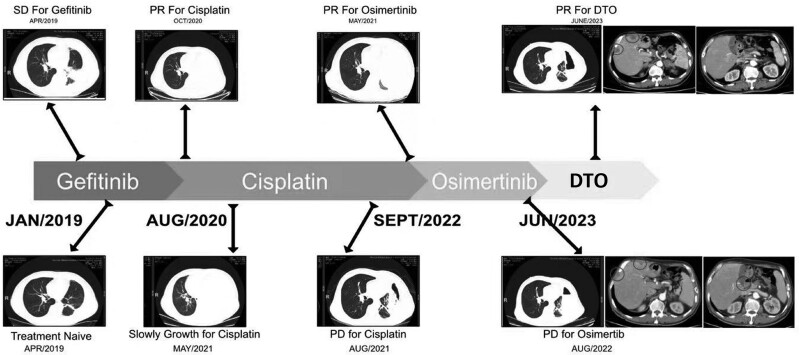
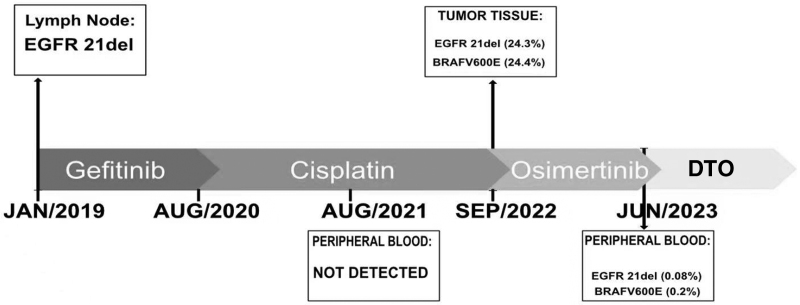
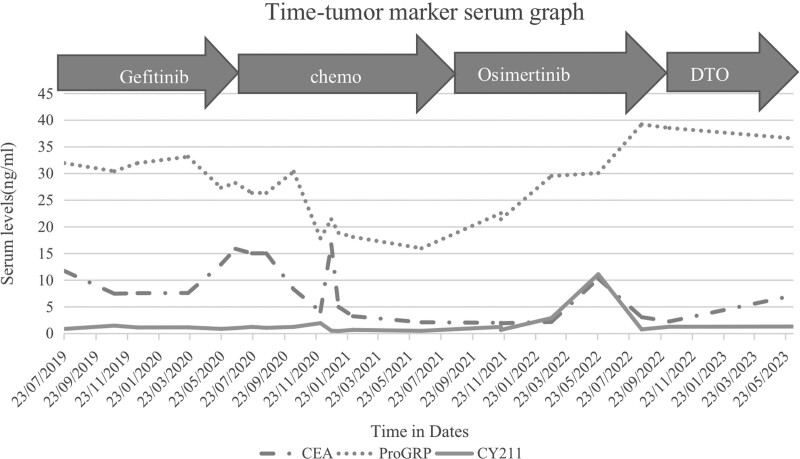
Despite the initial promise of epidermal growth factor receptor-tyrosine kinase inhibitors (EGFR-TKIs) in effectively combating tumor growth, the majority of patients with advanced non-small cell lung cancers (NSCLCs) inevitably develop resistance to these treatments. An infrequent genetic mutation known as BRAFV600E has been identified as a contributing factor to the emergence of acquired resistance to EGFR-TKIs. Genetic alterations in BRAF, particularly V600E, contribute to resistance to osimertinib. However, a combination therapy involving osimertinib, dabrafenib (a BRAF inhibitor), and trametinib has shown effectiveness in overcoming BRAF V600E-mediated resistance in advanced lung adenocarcinoma. This treatment regimen holds promise for similar cases. In our case report, the combination of osimertinib, dabrafenib, and trametinib effectively overcame osimertinib resistance and resulted in sustained partial remission.
尽管表皮生长因子受体酪氨酸激酶抑制剂(EGFR-TKIs)在有效抑制肿瘤生长方面表现出了初步的疗效,但大多数晚期非小细胞肺癌(NSCLC)患者最终仍会对这些治疗产生耐药性。一种罕见的基因突变为 BRAFV600E,该突变被认为是导致 EGFR-TKIs 获得性耐药的原因之一。BRAF 基因的改变,特别是 V600E 突变,会导致对奥希替尼的耐药性。然而,奥希替尼联合达拉非尼(一种 BRAF 抑制剂)和曲美替尼的联合治疗方案已被证明可有效克服晚期肺腺癌中 BRAF V600E 介导的耐药性。这种治疗方案有望适用于类似病例。在我们的病例报告中,奥希替尼、达拉非尼和曲美替尼的联合治疗方案有效地克服了奥希替尼耐药性,并导致持续的部分缓解。