Department of Anatomy, Harbin Medical University, Harbin, China.
Department of Humanities Foundation, Heilongjiang Nursing College, Harbin, China.
Cell Commun Signal. 2023 Aug 14;21(1):203. doi: 10.1186/s12964-023-01193-2.
Diabetes mellitus (DM) is considered to be a risk factor in carcinogenesis and progression, although the biological mechanisms are not well understood. Here we demonstrate that platelet-endothelial cell adhesion molecule 1 (PECAM-1) internalization drives β-catenin-mediated endothelial-mesenchymal transition (EndMT) to link DM to cancer.
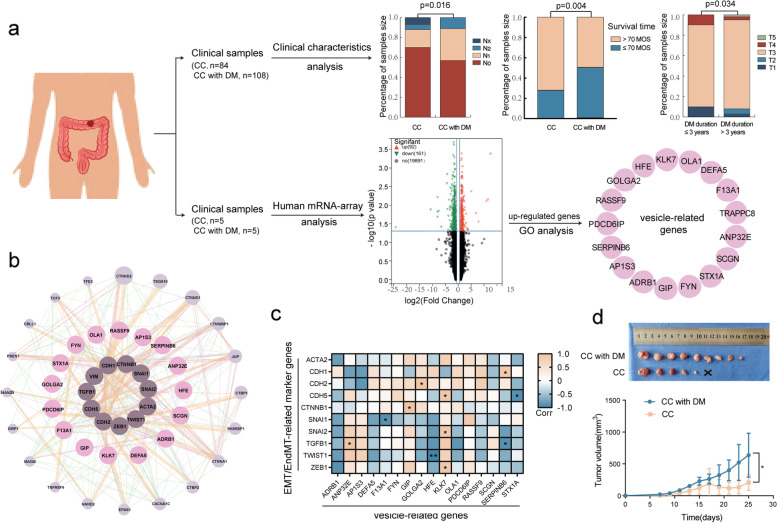
The tumor microenvironment (TME) was investigated for differences between colon cancer with and without DM by mRNA-microarray analysis. The effect of DM on colon cancer was determined in clinical patients and animal models. Furthermore, EndMT, PECAM-1 and Akt/GSK-3β/β-catenin signaling were analyzed under high glucose (HG) and human colon cancer cell (HCCC) supernatant (SN) or coculture conditions by western and immunofluorescence tests.
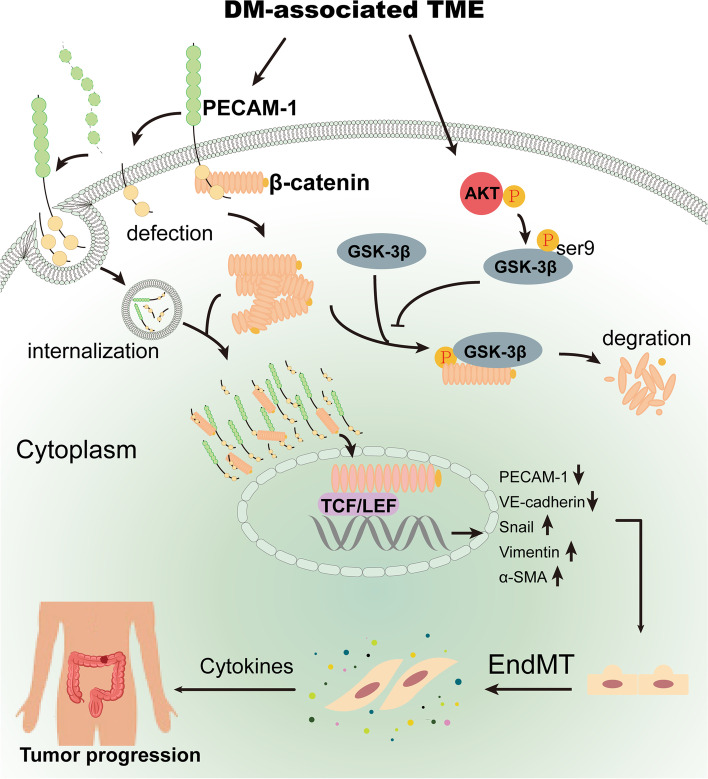
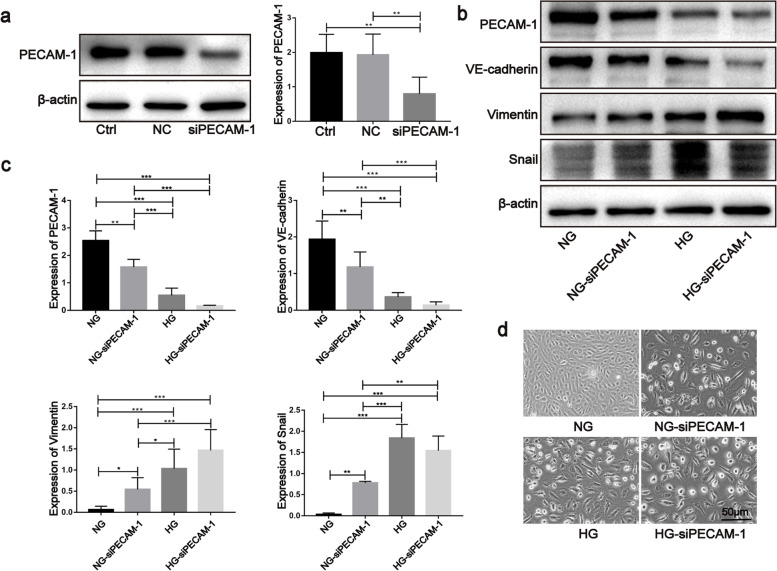
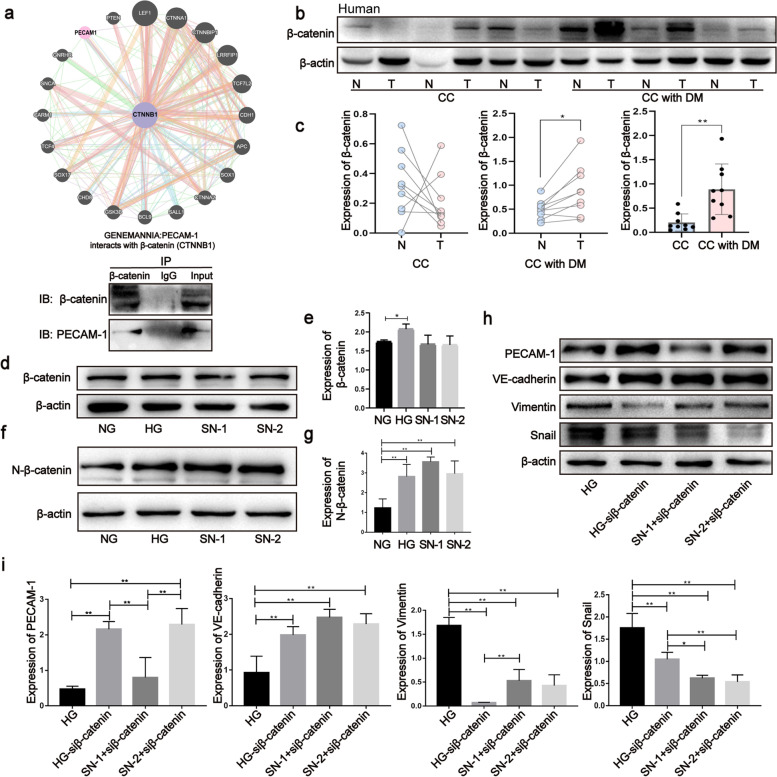
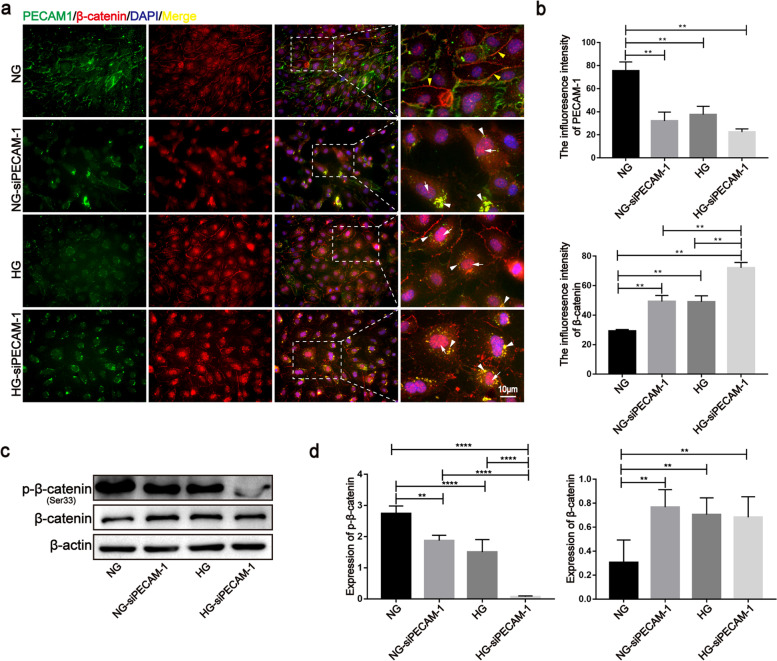
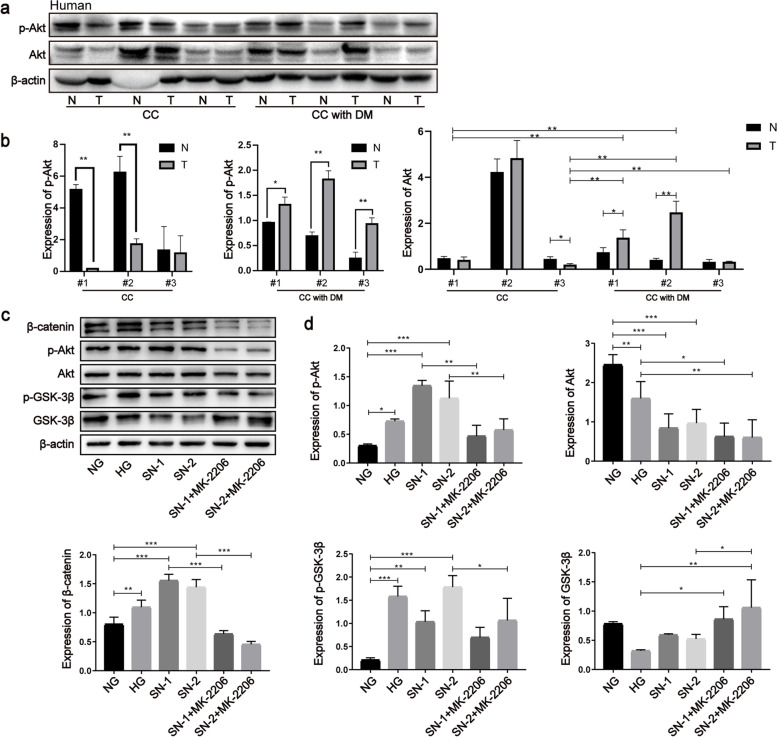
DM promoted the progression and EndMT occurrence of colon cancer (CC). Regarding the mechanism, DM induced PECAM-1 defection from the cytomembrane, internalization and subsequent accumulation around the cell nucleus in endothelial cells, which promoted β-catenin entry into the nucleus, leading to EndMT occurrence in CC with DM. Additionally, Akt/GSK-3β signaling was enhanced to inhibit the degradation of β-catenin, which regulates the process of EndMT.
PECAM-1 defects and/or internalization are key events for β-catenin-mediated EndMT, which is significantly boosted by enhanced Akt/GSK-3β signaling in the DM-associated TME. This contributes to the mechanism by which DM promotes the carcinogenesis and progression of CC. Video Abstract.
糖尿病(DM)被认为是致癌和进展的危险因素,尽管其生物学机制尚不清楚。在这里,我们证明血小板内皮细胞黏附分子 1(PECAM-1)内化驱动β-连环蛋白介导的内皮间质转化(EndMT)将 DM 与癌症联系起来。
通过 mRNA 微阵列分析研究结肠癌伴或不伴 DM 的肿瘤微环境(TME)之间的差异。在临床患者和动物模型中确定 DM 对结肠癌的影响。此外,通过 Western 和免疫荧光试验分析高糖(HG)和人结肠癌细胞(HCCC)上清液(SN)或共培养条件下的 EndMT、PECAM-1 和 Akt/GSK-3β/β-连环蛋白信号。
DM 促进了结肠癌(CC)的进展和 EndMT 的发生。就其机制而言,DM 诱导内皮细胞中 PECAM-1 从细胞质缺陷、内化和随后在细胞核周围积聚,从而促进 DM 相关 TME 中β-连环蛋白进入细胞核,导致 CC 中发生 EndMT。此外,Akt/GSK-3β 信号增强,抑制β-连环蛋白的降解,调节 EndMT 过程。
PECAM-1 缺陷和/或内化是β-连环蛋白介导的 EndMT 的关键事件,在 DM 相关 TME 中增强的 Akt/GSK-3β 信号显著促进了这一过程。这有助于 DM 促进 CC 发生和进展的机制。