Department of Cardiology, Faculty of Medicine University of Tsukuba Tsukuba Japan.
Department of Cardiology Nagoya City University Graduate School of Medical Sciences Nagoya Japan.
J Am Heart Assoc. 2023 Aug 15;12(16):e029717. doi: 10.1161/JAHA.123.029717. Epub 2023 Aug 10.
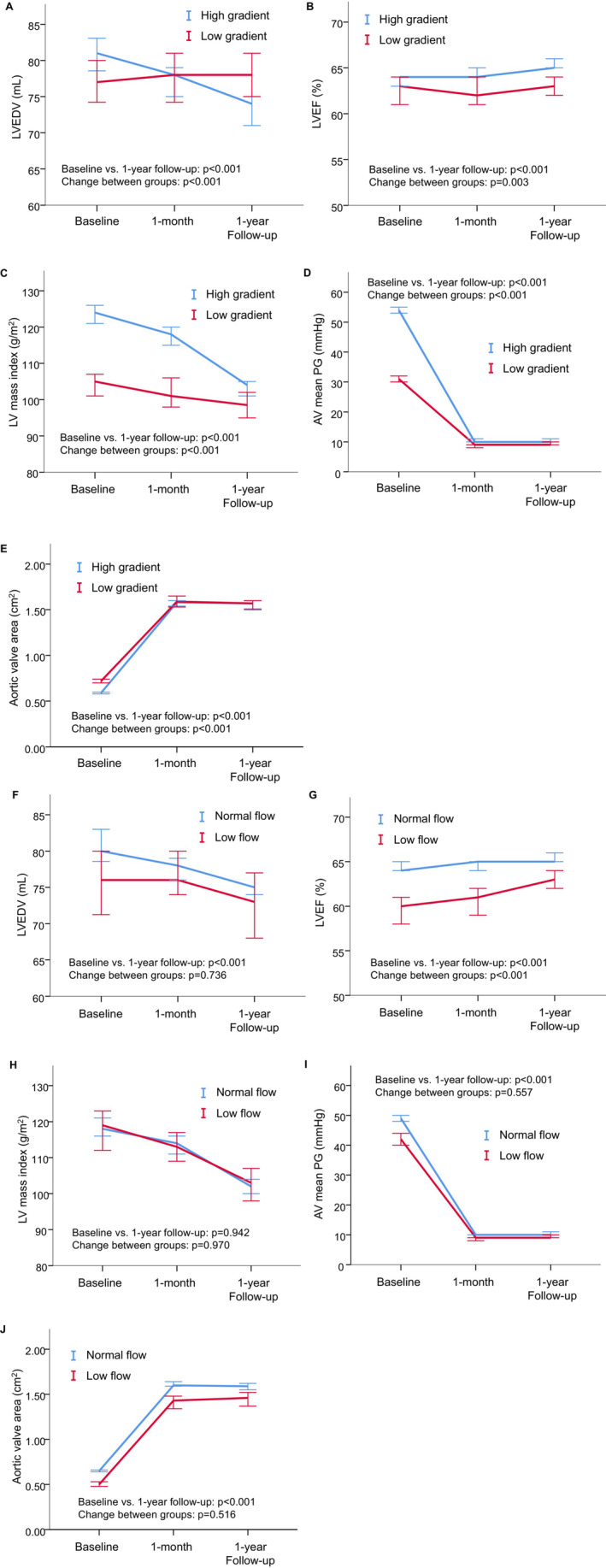
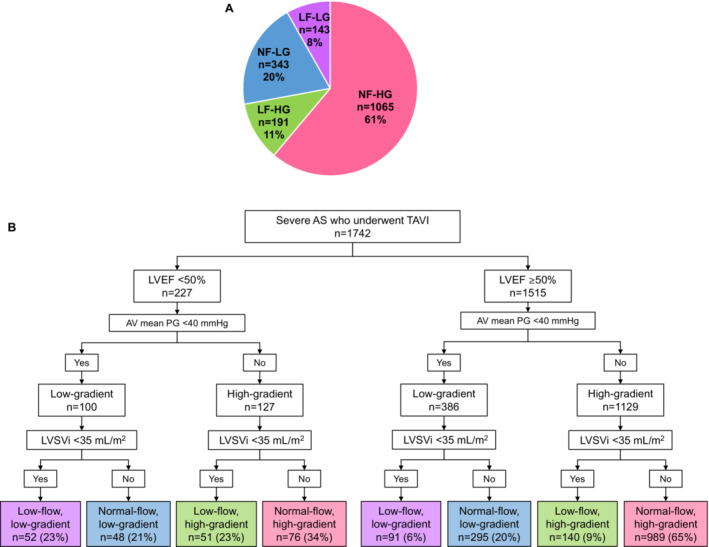
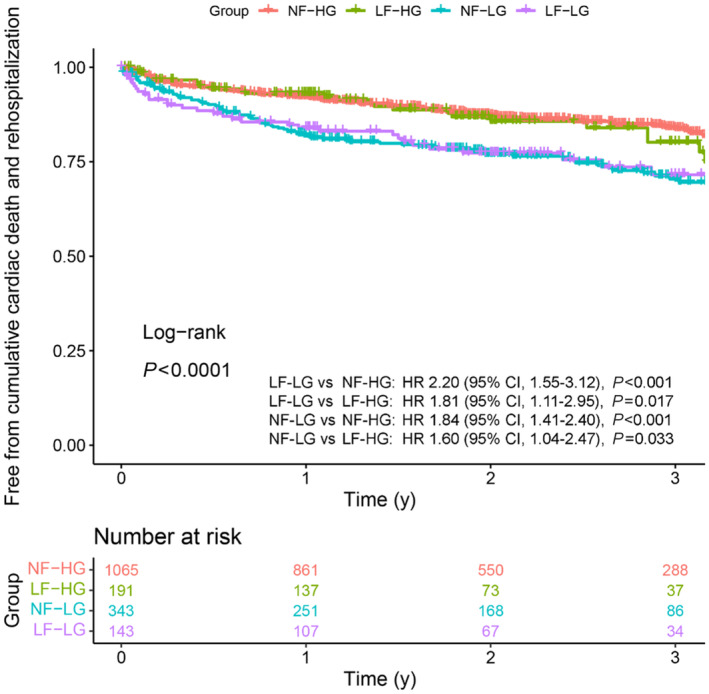
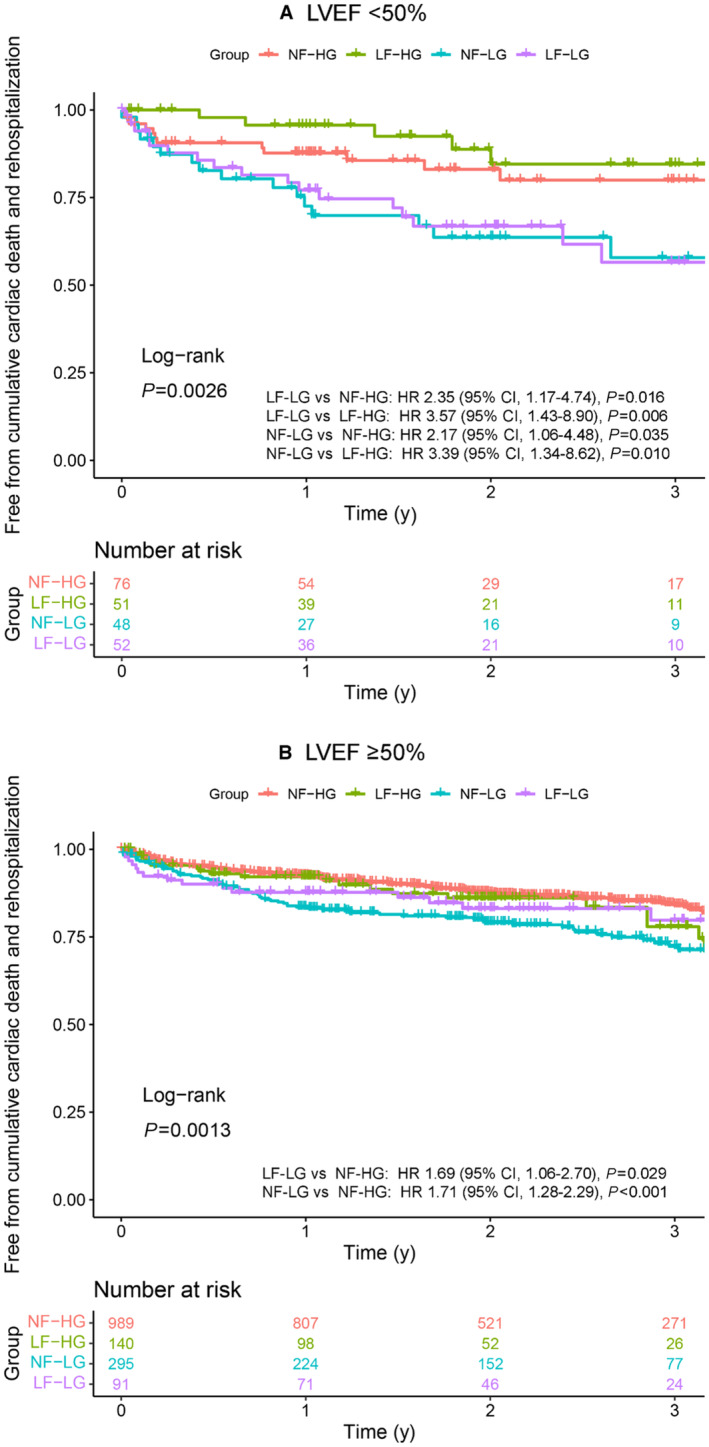
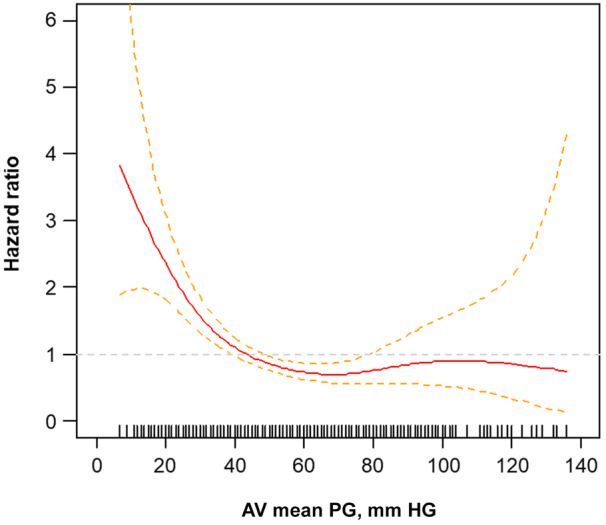
Background Prognostic implications of transcatheter aortic valve implantation (TAVI) in low-gradient (LG) aortic stenosis (AS) remain controversial. The authors hypothesized that differences in cardiac functional recovery may solve this ongoing controversy. The aim was to evaluate clinical outcomes and the response of left ventricular (LV) function following TAVI in patients with LG AS. Methods and Results This multicenter retrospective study included 1742 patients with severe AS undergoing TAVI between January 2015 and March 2019. Patients were subdivided into low-flow (LF) LG, normal-flow (NF) LG, LF high-gradient, and NF high-gradient AS groups according to the mean gradient of the aortic valve (LG <40 mm Hg) and LV stroke volume index (LF <35 mL/m). Outcomes and changes in echocardiographic parameters after TAVI were compared between the groups. A total of 227 patients (13%) had reduced ejection fraction, and 486 patients (28%) had LG AS (LF-LG 143 [8%]; NF-LG 343 [20%]). During a median follow-up period of 747 days, 301 patients experienced a composite end point of cardiovascular death and rehospitalization for cardiovascular events, which was higher in the LF-LG and NF-LG groups than in the high-gradient groups. LG AS was independently associated with the primary outcome (hazard ratio, 1.69; <0.001). Among 1239 patients with follow-up echocardiography, LG AS showed less improvement in the LV mass index and LV end-diastolic volume compared with high-gradient AS after 1 year, while LV recovery was similar between the LF AS and NF AS groups. Conclusions LG AS was associated with poorer outcomes and LV recovery, regardless of flow status after TAVI. Careful evaluation of AS severity may be required in LG AS to provide TAVI within the appropriate time and advanced care afterward.
经导管主动脉瓣植入术(TAVI)在低梯度(LG)主动脉瓣狭窄(AS)中的预后意义仍存在争议。作者假设心脏功能恢复的差异可能解决这一持续存在的争议。目的是评估 LG AS 患者接受 TAVI 后的临床结局和左心室(LV)功能的反应。
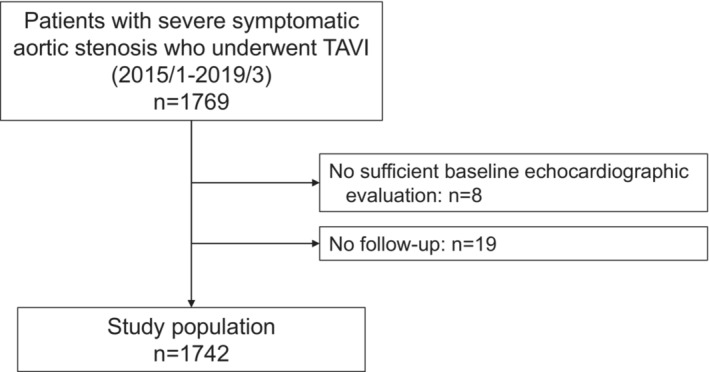
这项多中心回顾性研究纳入了 1742 例 2015 年 1 月至 2019 年 3 月期间接受 TAVI 的重度 AS 患者。根据主动脉瓣平均梯度(LG<40mmHg)和 LV 每搏量指数(LF<35mL/m),患者被分为低流量(LF)LG、正常流量(NF)LG、LF 高梯度和 NF 高梯度 AS 组。比较了各组 TAVI 后的结局和超声心动图参数变化。共有 227 例(13%)患者射血分数降低,486 例(28%)患者患有 LG AS(LF-LG 143 例[8%];NF-LG 343 例[20%])。在中位数为 747 天的随访期间,301 例患者发生心血管死亡和因心血管事件再次住院的复合终点事件,LF-LG 和 NF-LG 组高于高梯度组。LG AS 与主要结局独立相关(风险比,1.69;<0.001)。在 1239 例有随访超声心动图的患者中,与高梯度 AS 相比,LG AS 在 1 年后 LV 质量指数和 LV 舒张末期容积的改善较少,而 LF AS 和 NF AS 组之间的 LV 恢复相似。
无论 TAVI 后的血流状态如何,LG AS 与预后较差和 LV 恢复较差相关。在 LG AS 中,可能需要仔细评估 AS 严重程度,以便在适当的时间内进行 TAVI,并在之后提供先进的护理。