Parasite & Host Biology Group, ICMR-National Institute of Malaria Research, Dwarka, Sector 8, New Delhi, 110077, India.
Malar J. 2023 Aug 15;22(1):236. doi: 10.1186/s12936-023-04651-x.
Drug resistance is a serious impediment to efficient control and elimination of malaria in endemic areas.
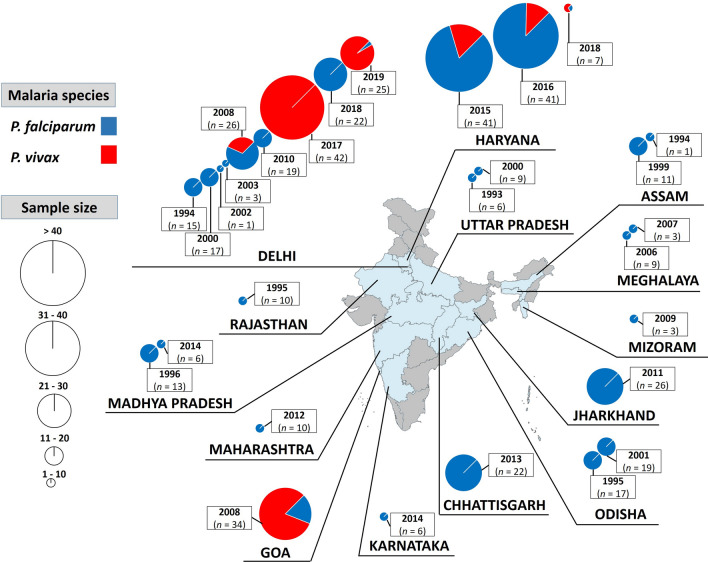
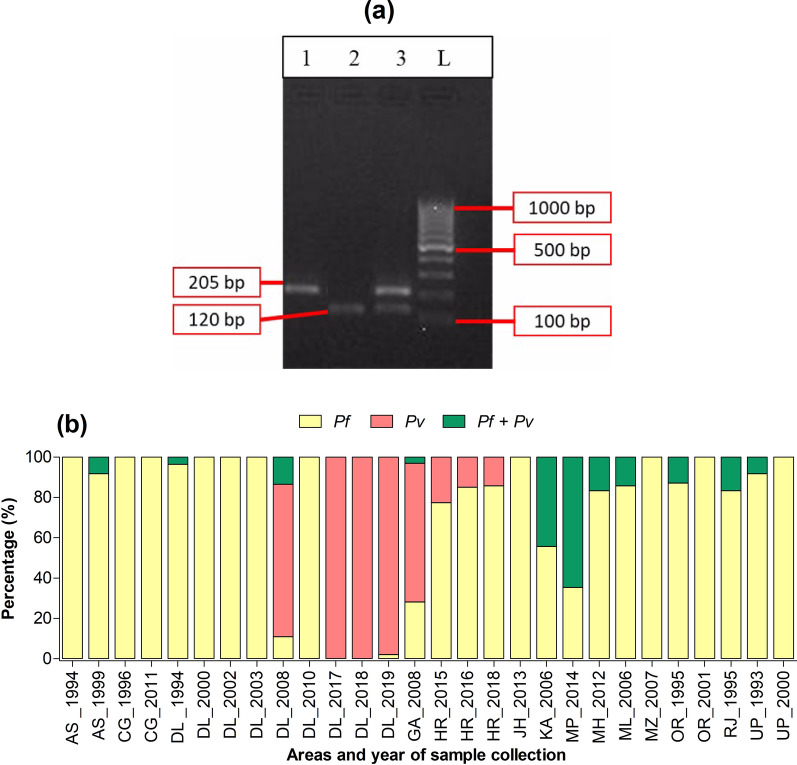
This study aimed at analysing the genetic profile of molecular drug resistance in Plasmodium falciparum and Plasmodium vivax parasites from India over a ~ 30-year period (1993-2019). Blood samples of P. falciparum and/or P. vivax-infected patients were collected from 14 regions across India. Plasmodial genome was extracted and used for PCR amplification and sequencing of drug resistance genes in P. falciparum (crt, dhps, dhfr, mdr1, k13) and P. vivax (crt-o, dhps, dhfr, mdr1, k12) field isolates.
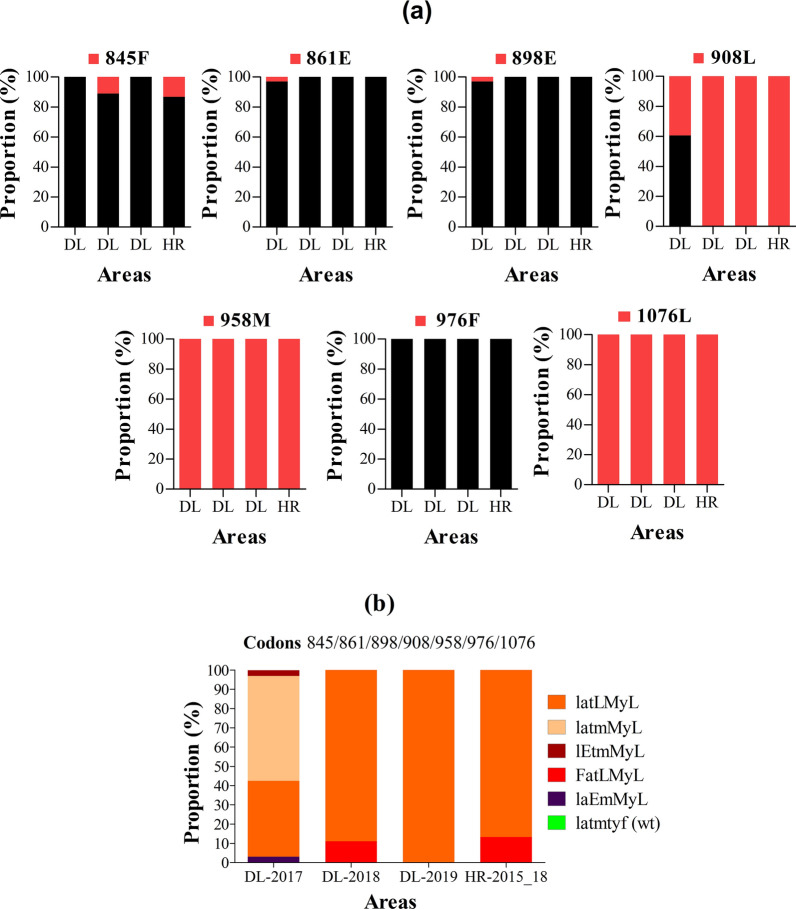
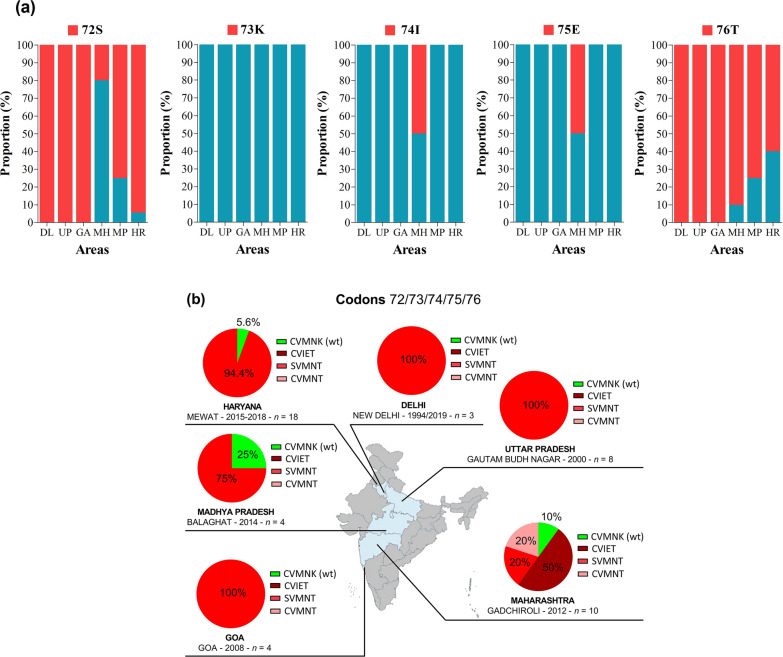
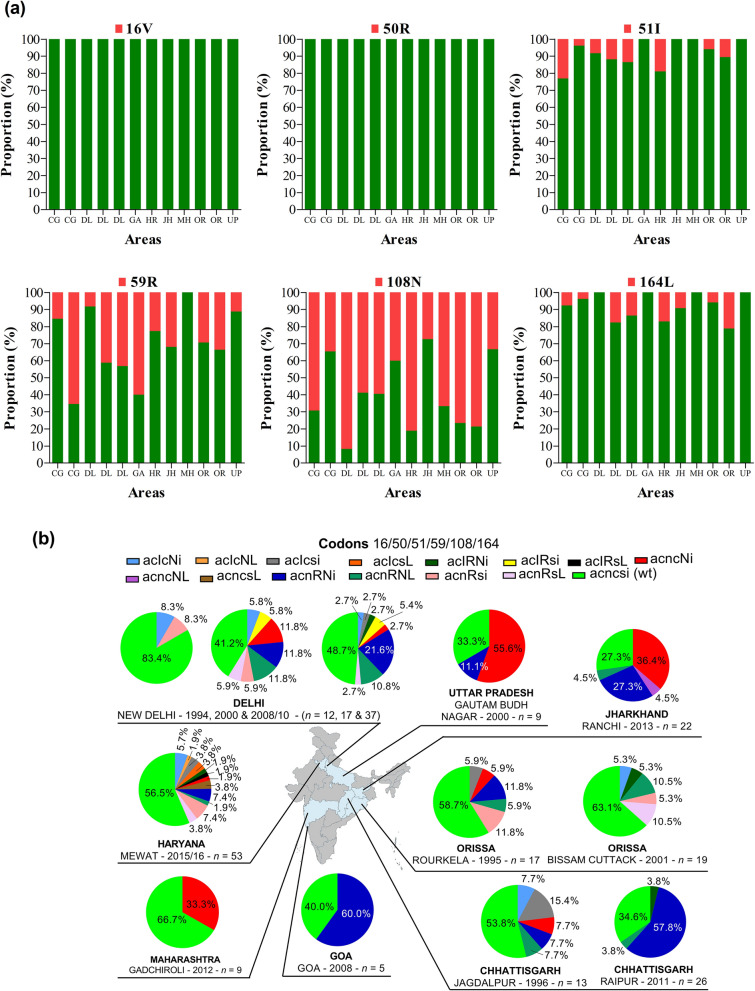
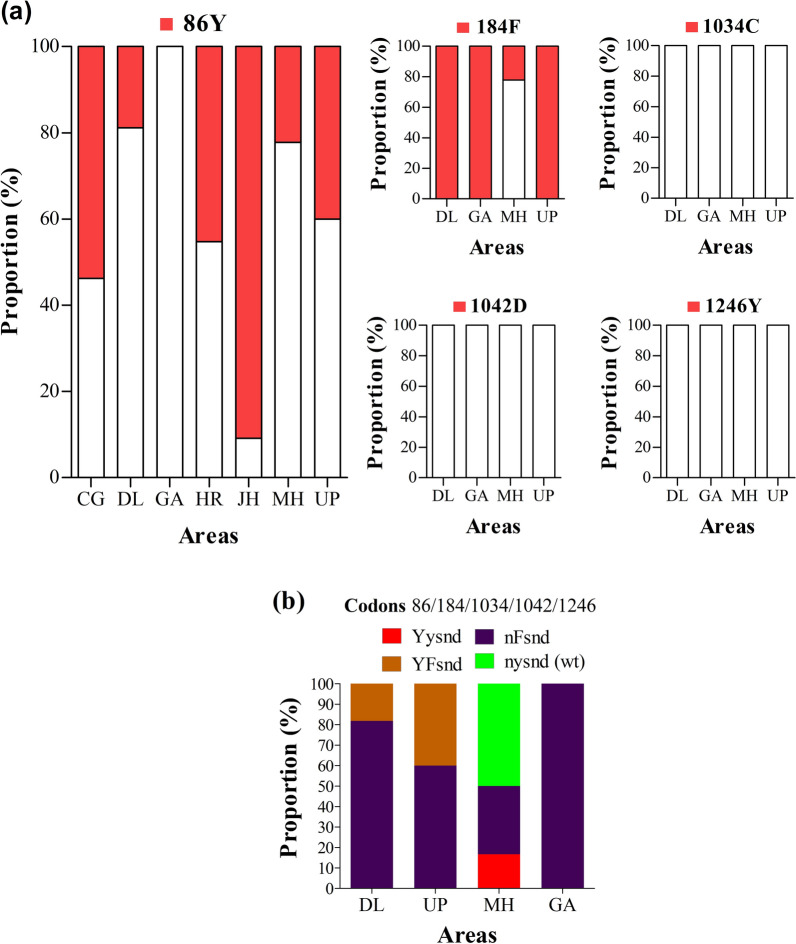
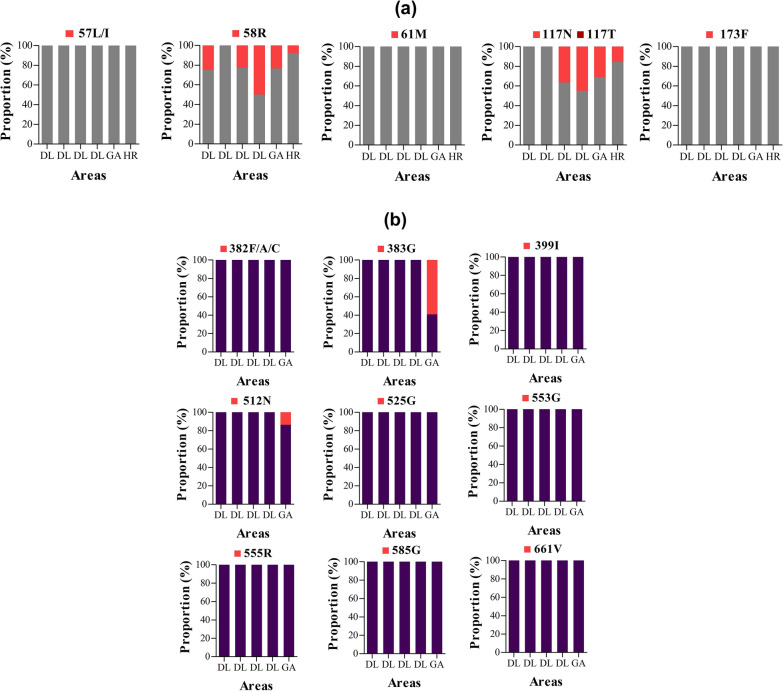
The double mutant pfcrt SVMNT was highly predominant across the country over three decades, with restricted presence of triple mutant CVIET from Maharashtra in 2012. High rates of pfdhfr-pfdhps quadruple mutants were observed with marginal presence of "fully resistant" quintuple mutant ACIRNI-ISGEAA. Also, resistant pfdhfr and pfdhps haplotype has significantly increased in Delhi between 1994 and 2010. For pfmdr1, only 86Y and 184F mutations were present while no pfk13 mutations associated with artemisinin resistance were observed. Regarding P. vivax isolates, the pvcrt-o K10 "AAG" insertion was absent in all samples collected from Delhi in 2017. Pvdhps double mutant SGNAV was found only in Goa samples of year 2008 for the first time. The pvmdr1 908L, 958M and 1076L mutations were highly prevalent in Delhi and Haryana between 2015 and 2019 at complete fixation. One nonsynonymous novel pvk12 polymorphism was identified (K264R) in Goa.
These findings support continuous surveillance and characterization of P. falciparum and P. vivax populations as proxy for effectiveness of anti-malarial drugs in India, especially for independent emergence of artemisinin drug resistance as recently seen in Africa.
耐药性是在流行地区有效控制和消除疟疾的严重障碍。
本研究旨在分析印度 30 年来(1993-2019 年)恶性疟原虫和间日疟原虫寄生虫分子药物耐药性的遗传特征。从印度 14 个地区采集恶性疟原虫和/或间日疟原虫感染患者的血液样本。提取疟原虫基因组,用于 PCR 扩增和耐药基因测序,包括恶性疟原虫(crt、dhps、dhfr、mdr1、k13)和间日疟原虫(crt-o、dhps、dhfr、mdr1、k12)的现场分离株。
在过去的三十年中,全国各地都高度存在双重突变 pfcrt SVMNT,2012 年马哈拉施特拉邦出现了三重突变 CVIET。观察到高比例的 pfdhfr-pfdhps 四重突变,而“完全耐药”的五重突变 ACIRNI-ISGEAA 的存在率较低。此外,在 1994 年至 2010 年间,德里的 pfdhfr 和 pfdhps 单倍型显著增加。对于 pfmdr1,仅存在 86Y 和 184F 突变,未观察到与青蒿素耐药相关的 pfk13 突变。关于间日疟原虫分离株,2017 年从德里采集的所有样本中均未发现 pvcrt-o K10“AAG”插入。首次在 2008 年的果阿样本中发现 pvdhps 双突变 SGNAV。2015 年至 2019 年间,德里和哈里亚纳邦 pvmdr1 908L、958M 和 1076L 突变高度流行,完全固定。在果阿发现了一个非同义的新型 pvk12 多态性(K264R)。
这些发现支持对恶性疟原虫和间日疟原虫群体进行持续监测和特征描述,作为印度抗疟药物有效性的替代指标,特别是最近在非洲独立出现青蒿素耐药性的情况。