Poggiali Brando, Ponzetti Agostino, Malerba Marica, Landuzzi Fabio, Furia Federica, Charrance Debora, Trova Sara, Perseghin Vittoria, Falcone Patrizia A, Alliod Valentina, Malossi Alessandra, Carassai Pierpaolo, Familiari Ubaldo, Vecchi Manuela, Gustincich Stefano, Schena Marina, Cavalli Andrea, Coppe Alessandro
CComputational and Chemical Biology, Italian Institute of Technology (IIT), CMP3VdA, Aosta, Italy.
Oncologia e Ematologia oncologica, Ospedale Umberto Parini, Aosta, Italy.
Front Oncol. 2023 Jul 31;13:1240865. doi: 10.3389/fonc.2023.1240865. eCollection 2023.
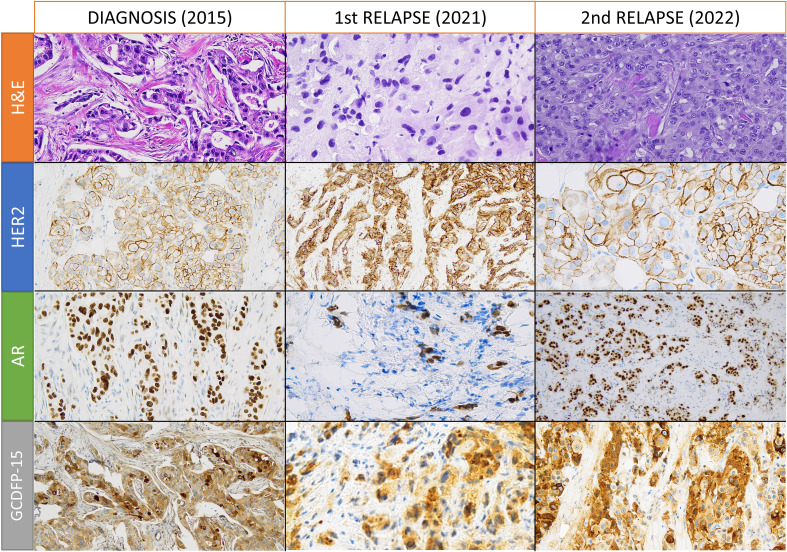
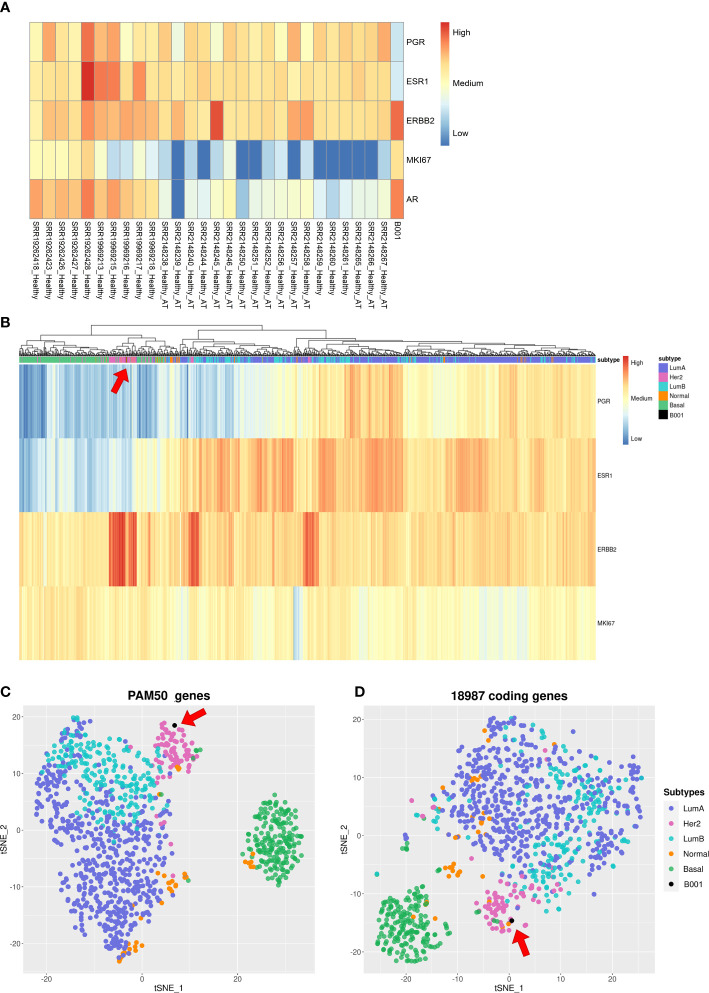
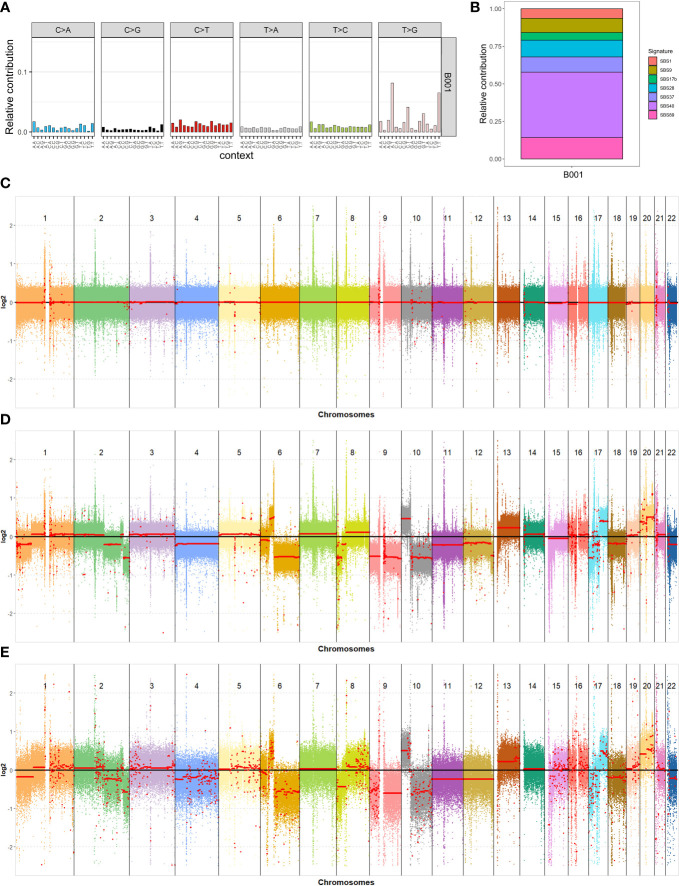
Breast carcinoma is the most prevalent cancer among women globally. It has variable clinical courses depending on the stage and clinical-biological features. This case report describes a 56-year-old female with invasive breast cancer without estrogen or progesterone receptor expression, with apocrine differentiation, and with no germline variants in the BRCA1 and BRCA2 genes. Throughout the clinical course, the patient exhibited discordant results for HER2 in immunohistochemistry and hybridization. During the second relapse, the disease displayed apocrine microscopic features. The tumor underwent analysis for the androgen receptor, GCDFP-15, RNA-seq, and whole-genome sequencing (WGS) to identify the breast cancer subtype and to characterize the cancer genome. Our bioinformatic analysis revealed 20,323 somatic SNV/Indels, including five mutations in cancer-related genes that are believed to be responsible for the tumor's development. Two of these mutations were found in the and genes. Furthermore, the tumor tissue exhibited large copy number alterations to the chromosomes, which could impact gene expression through complex mechanisms and contribute to the tumor phenotype. Clustering algorithms applied on RNA-sequencing data categorized this cancer as a HER2+ subtype. The second-line capecitabine chemotherapy treatment is ongoing, and the patient is responding well. Bioinformatic results support the current treatment decision and open the way to further treatments.
乳腺癌是全球女性中最常见的癌症。其临床病程因分期和临床生物学特征而异。本病例报告描述了一名56岁女性,患有浸润性乳腺癌,无雌激素或孕激素受体表达,具有大汗腺分化,且BRCA1和BRCA2基因无胚系变异。在整个临床过程中,患者在免疫组织化学和杂交检测中HER2结果不一致。在第二次复发时,疾病表现出大汗腺微观特征。对肿瘤进行了雄激素受体、GCDFP-15、RNA测序和全基因组测序(WGS)分析,以确定乳腺癌亚型并表征癌症基因组。我们的生物信息学分析揭示了20323个体细胞单核苷酸变异/插入缺失,包括癌症相关基因中的五个突变,据信这些突变与肿瘤的发生发展有关。其中两个突变位于 和 基因中。此外,肿瘤组织在染色体上表现出大量拷贝数改变,这可能通过复杂机制影响基因表达并导致肿瘤表型。对RNA测序数据应用聚类算法将该癌症分类为HER2+亚型。二线卡培他滨化疗正在进行中且患者反应良好。生物信息学结果支持当前的治疗决策并为进一步治疗开辟了道路。