Mehta Priyal, Tawfeeq Sawsan, Padte Smitesh, Sunasra Rayyan, Desai Heet, Surani Salim, Kashyap Rahul
Department of General Medicine, MWD Hospital, Mumbai 400097, India.
Department of Research, Global Remote Research Scholars Program, St. Paul, MN 55104, United States.
World J Clin Cases. 2023 Jul 16;11(20):4752-4762. doi: 10.12998/wjcc.v11.i20.4752.
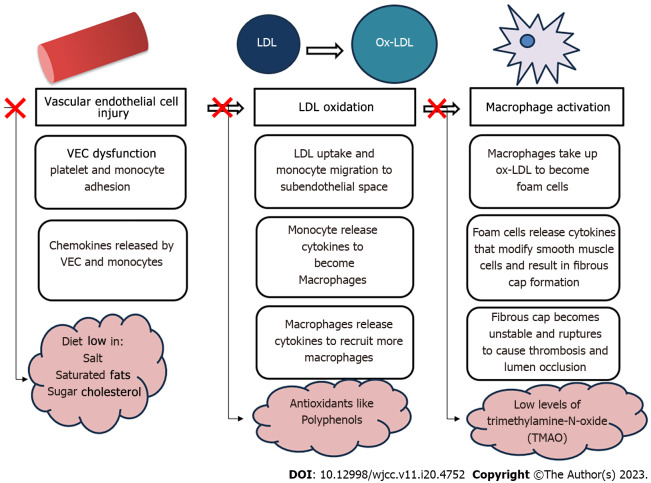
Coronary artery disease (CAD), a primary component of cardiovascular diseases, is one of the top contributors to mortality rates worldwide. In 2021, dietary risk was estimated to be attributed to 6.58 million cardiovascular deaths. Plant-based diets (PBDs), which encourage higher consumption of plant foods and lower intake of animal-based foods, have been shown to reduce the risk of CAD by up to 29% when compared to non-vegetarian diets in a meta-analysis. This article aims to summarize the array of PBDs and compare them with conventional Western diets that include meat. We review the various proposed mechanisms for how the bioactive nutrients of PBDs aid in preventing atherosclerosis and CAD events, as well as other cardiac diseases. We conducted a detailed search of PubMed using our exclusive search strategy using the keywords plant-based diet, vegan diet, phytosterols, CAD, myocardial ischemia, and atherosclerosis. A total of 162 pertinent articles published within the past decade were identified for qualitative synthesis. To ensure the accuracy and reliability of our review, we included a total of 55 full-text, peer-reviewed articles that demonstrated the effects of plant-based diets on CAD and were written in English. We excluded animal studies, or molecular studies, and non-original data like editorials, letters, protocols, and conference abstracts. In this article, we emphasize the importance of dietary interventions, such as PBDs, to prevent CAD and their benefits on environmental sustainability. Integrating plant foods and whole grains into one's daily eating habits leads to an increase in the intake of nutrient-rich foods while reducing the consumption of processed food could not only prevent millions of premature deaths but also provide prevention against many chronic gastrointestinal and metabolic diseases.
冠状动脉疾病(CAD)是心血管疾病的主要组成部分,是全球死亡率的主要贡献因素之一。2021年,据估计饮食风险导致658万人死于心血管疾病。植物性饮食(PBD)鼓励增加植物性食物的摄入量,减少动物性食物的摄入量,一项荟萃分析表明,与非素食饮食相比,植物性饮食可将CAD风险降低多达29%。本文旨在总结各类植物性饮食,并将其与包括肉类在内的传统西方饮食进行比较。我们回顾了关于植物性饮食中的生物活性营养素如何有助于预防动脉粥样硬化和CAD事件以及其他心脏疾病的各种机制。我们使用“植物性饮食”“纯素饮食”“植物甾醇”“CAD”“心肌缺血”和“动脉粥样硬化”等关键词,通过独家搜索策略在PubMed上进行了详细搜索。共识别出过去十年内发表的162篇相关文章进行定性综合分析。为确保我们综述的准确性和可靠性,我们纳入了总共55篇经过同行评审的全文文章,这些文章展示了植物性饮食对CAD的影响且为英文撰写。我们排除了动物研究、分子研究以及诸如社论、信件、方案和会议摘要等非原始数据。在本文中,我们强调饮食干预(如植物性饮食)对预防CAD的重要性及其对环境可持续性的益处。将植物性食物和全谷物纳入日常饮食习惯会增加营养丰富食物的摄入量,同时减少加工食品的消费,这不仅可以预防数百万例过早死亡,还能预防许多慢性胃肠道和代谢疾病。