• 文献检索
  • 文档翻译
  • 深度研究
  • 学术资讯
  • Suppr Zotero 插件Zotero 插件
  • 邀请有礼
  • 套餐&价格
  • 历史记录
应用&插件
Suppr Zotero 插件Zotero 插件浏览器插件Mac 客户端Windows 客户端微信小程序
定价
高级版会员购买积分包购买API积分包
服务
文献检索文档翻译深度研究API 文档MCP 服务
关于我们
关于 Suppr公司介绍联系我们用户协议隐私条款
关注我们

Suppr 超能文献

核心技术专利:CN118964589B侵权必究
粤ICP备2023148730 号-1Suppr @ 2026

文献检索

告别复杂PubMed语法,用中文像聊天一样搜索,搜遍4000万医学文献。AI智能推荐,让科研检索更轻松。

立即免费搜索

文件翻译

保留排版,准确专业,支持PDF/Word/PPT等文件格式,支持 12+语言互译。

免费翻译文档

深度研究

AI帮你快速写综述,25分钟生成高质量综述,智能提取关键信息,辅助科研写作。

立即免费体验

解析64个低收入和中等收入国家财富对生育率的影响

Disentangling wealth effects on fertility in 64 low- and middle-income countries.

作者信息

Hackman Joseph, Hruschka Daniel

机构信息

University of Utah, Department of Anthropology, Salt Lake City, Utah, USA.

Arizona State University, School of Human Evolution and Social Change, Arizona, USA.

出版信息

Evol Hum Sci. 2020 Nov 23;2:e58. doi: 10.1017/ehs.2020.62. eCollection 2020.

DOI:10.1017/ehs.2020.62
PMID:37588348
原文链接:https://pmc.ncbi.nlm.nih.gov/articles/PMC10427476/
Abstract

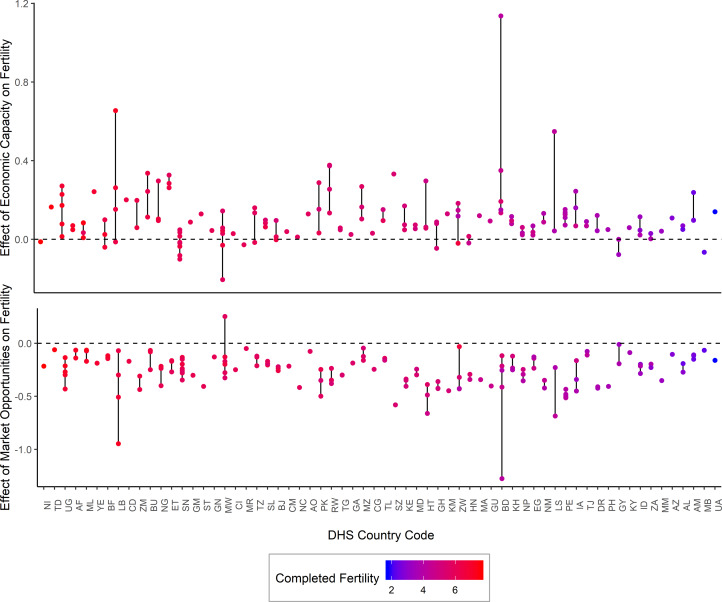
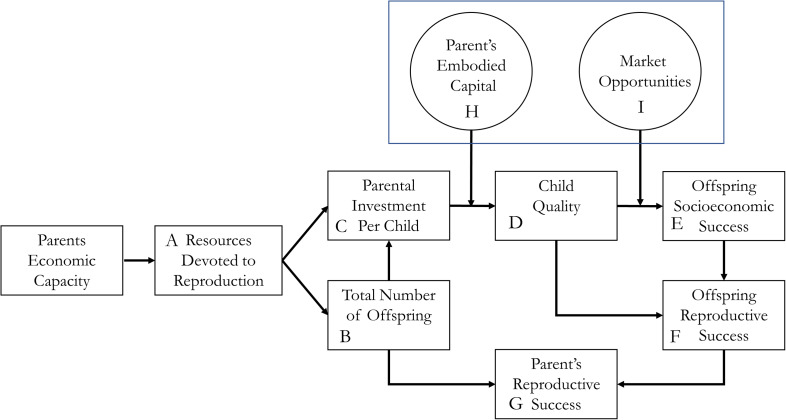
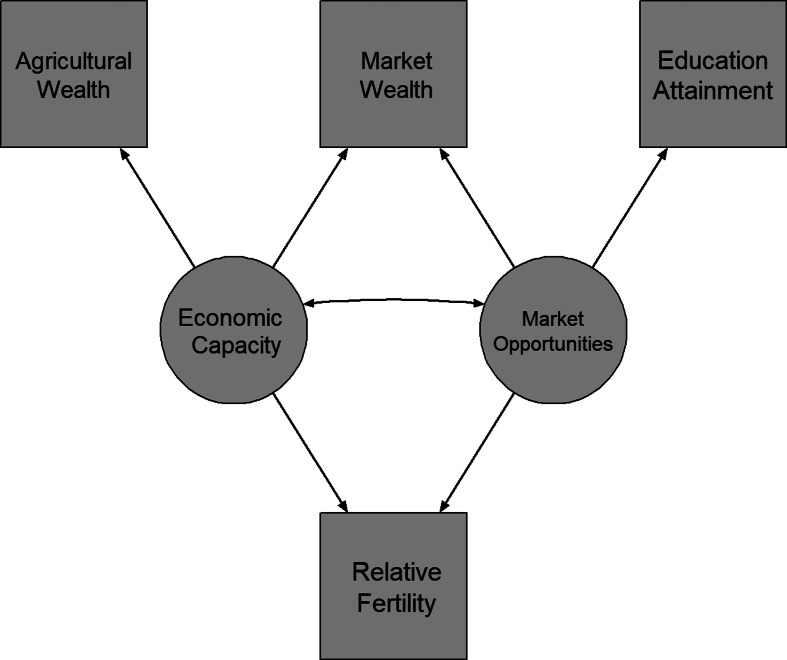
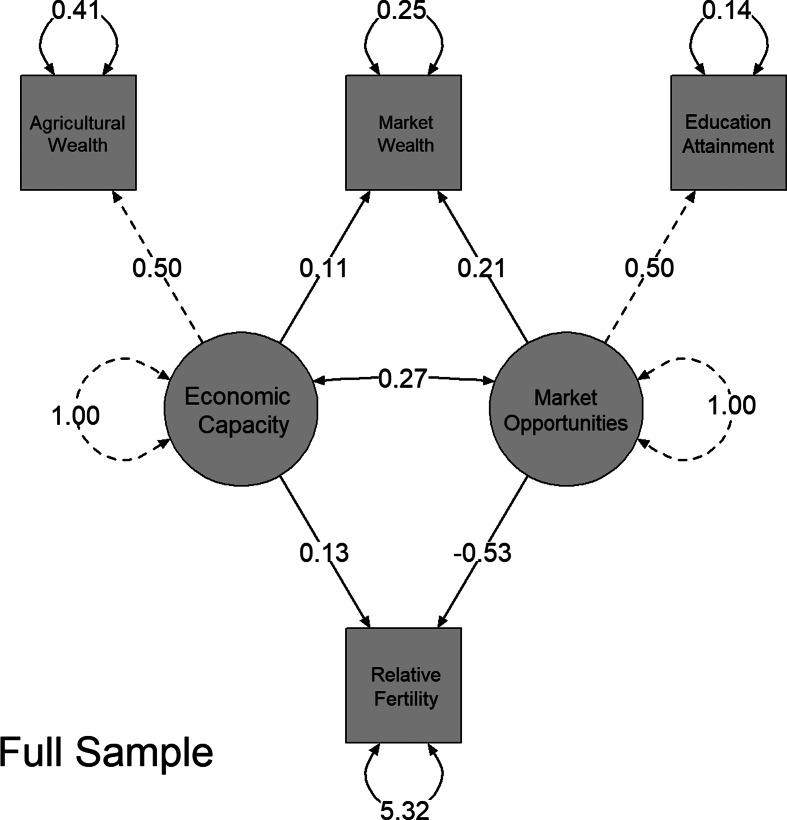
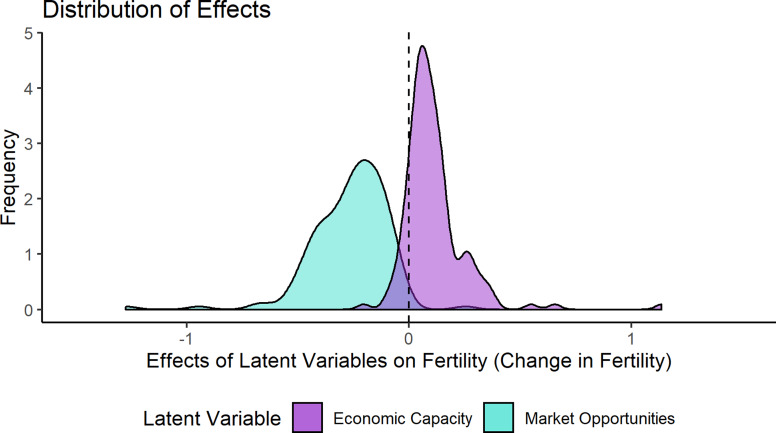
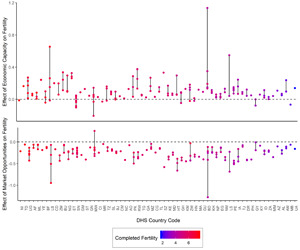
Studies have shown mixed associations between wealth and fertility, a finding that has posed ongoing puzzles for evolutionary theories of human reproduction. However, measures of wealth do not simply capture economic capacity, which is expected to increase fertility. They can also serve as a proxy for market opportunities available to a household, which may reduce fertility. The multifaceted meaning of many wealth measures obscures our ability to draw inferences about the relationship between wealth and fertility. Here, we disentangle economic capacity and market opportunities using wealth measures that do not carry the same market-oriented biases as commonly used asset-based measures. Using measures of agricultural and market-based wealth for 562,324 women across 111,724 sampling clusters from 151 DHS surveys in 64 countries, we employ a latent variable structural equation model to estimate (a) latent variables capturing economic capacity and market opportunity and (b) their effects on completed fertility. Market opportunities had a consistent negative effect on fertility, while economic capacity had a weaker but generally positive effect on fertility. The results show that the confusion between operational measures of wealth and the concepts of economic capacity can impede our understanding of how material resources and market contexts shape reproduction.

摘要

研究表明,财富与生育之间的关联喜忧参半,这一发现一直困扰着人类生殖的进化理论。然而,财富衡量指标不仅仅反映经济能力,而经济能力预计会提高生育水平。这些指标还可以作为家庭可获得的市场机会的代理指标,而市场机会可能会降低生育水平。许多财富衡量指标的多面性含义模糊了我们推断财富与生育之间关系的能力。在此,我们使用一些财富衡量指标来区分经济能力和市场机会,这些指标不存在与常用的基于资产的衡量指标相同的市场导向偏差。利用来自64个国家151项人口与健康调查的111,724个抽样群组中562,324名女性的农业财富和基于市场的财富衡量指标,我们采用潜变量结构方程模型来估计:(a)反映经济能力和市场机会的潜变量;(b)它们对生育结局的影响。市场机会对生育有持续的负面影响,而经济能力对生育的影响较弱,但总体上呈正面影响。结果表明,财富的操作衡量指标与经济能力概念之间的混淆会妨碍我们理解物质资源和市场环境如何影响生育。
https://cdn.ncbi.nlm.nih.gov/pmc/blobs/0e8c/10427476/662412408c19/S2513843X20000626_fig5.jpg
https://cdn.ncbi.nlm.nih.gov/pmc/blobs/0e8c/10427476/f5c293225b33/S2513843X20000626_figAb.jpg
https://cdn.ncbi.nlm.nih.gov/pmc/blobs/0e8c/10427476/d7fcdfd239f9/S2513843X20000626_fig1.jpg
https://cdn.ncbi.nlm.nih.gov/pmc/blobs/0e8c/10427476/710fecb6ff49/S2513843X20000626_fig2.jpg
https://cdn.ncbi.nlm.nih.gov/pmc/blobs/0e8c/10427476/6dfedf676d66/S2513843X20000626_fig3.jpg
https://cdn.ncbi.nlm.nih.gov/pmc/blobs/0e8c/10427476/8b851a49b6da/S2513843X20000626_fig4.jpg
https://cdn.ncbi.nlm.nih.gov/pmc/blobs/0e8c/10427476/662412408c19/S2513843X20000626_fig5.jpg
https://cdn.ncbi.nlm.nih.gov/pmc/blobs/0e8c/10427476/f5c293225b33/S2513843X20000626_figAb.jpg
https://cdn.ncbi.nlm.nih.gov/pmc/blobs/0e8c/10427476/d7fcdfd239f9/S2513843X20000626_fig1.jpg
https://cdn.ncbi.nlm.nih.gov/pmc/blobs/0e8c/10427476/710fecb6ff49/S2513843X20000626_fig2.jpg
https://cdn.ncbi.nlm.nih.gov/pmc/blobs/0e8c/10427476/6dfedf676d66/S2513843X20000626_fig3.jpg
https://cdn.ncbi.nlm.nih.gov/pmc/blobs/0e8c/10427476/8b851a49b6da/S2513843X20000626_fig4.jpg
https://cdn.ncbi.nlm.nih.gov/pmc/blobs/0e8c/10427476/662412408c19/S2513843X20000626_fig5.jpg

相似文献

1
Disentangling wealth effects on fertility in 64 low- and middle-income countries.解析64个低收入和中等收入国家财富对生育率的影响
Evol Hum Sci. 2020 Nov 23;2:e58. doi: 10.1017/ehs.2020.62. eCollection 2020.
2
Soviet theories of economic demography: a survey.苏联经济人口学理论综述
J Comp Econ. 1983 Jun;7(2):105-13. doi: 10.1016/0147-5967(83)90081-1.
3
How Poor Is Your Sample? A Simple Approach for Estimating the Relative Economic Status of Small and Nonrepresentative Samples.你的样本有多贫困?一种简单的方法可用于估算小型和非代表性样本的相对经济地位。
Glob Health Sci Pract. 2023 Apr 28;11(2). doi: 10.9745/GHSP-D-22-00394.
4
Using the Demographic Health Survey wealth index to create family planning market segments based on absolute income levels.利用人口健康调查财富指数,根据绝对收入水平创建计划生育市场细分。
BMJ Glob Health. 2020 Sep;5(9). doi: 10.1136/bmjgh-2020-002450.
5
Primogeniture and fertility: fertility models with unequal bequest.长子继承制与生育能力:具有不平等遗产的生育模型。
Res Popul Econ. 1984;5:167-83.
6
Fertility decline and the changing dynamics of wealth, status and inequality.生育率下降以及财富、地位和不平等状况的动态变化。
Proc Biol Sci. 2015 May 7;282(1806):20150287. doi: 10.1098/rspb.2015.0287.
7
Social contexts of fertility desire among non-childbearing young men and women aged 15-24 years in Nigeria.尼日利亚 15-24 岁的未婚年轻男性和女性的生育意愿的社会背景。
Reprod Health. 2021 Sep 20;18(1):186. doi: 10.1186/s12978-021-01237-1.
8
Comparison of two approaches for measuring household wealth via an asset-based index in rural and peri-urban settings of Hunan province, China.中国湖南省农村和城郊地区通过基于资产的指数衡量家庭财富的两种方法比较。
Emerg Themes Epidemiol. 2010 Sep 3;7(1):7. doi: 10.1186/1742-7622-7-7.
9
[Factors behind global fertility development after 1950: a multivariate analysis of 128 countries].[1950年后全球生育率发展背后的因素:对128个国家的多变量分析]
Demogr Inf. 1984:21-48, 175.
10
Economic models of fertility behaviour in Australia.澳大利亚生育行为的经济模型。
Aust Econ Pap. 1988 Jun;27(50):65-82. doi: 10.1111/j.1467-8454.1988.tb00807.x.

引用本文的文献

1
Socioeconomic and Demographic Factors Affecting Age at First Birth Among Tribal Women in India: An NFHS-5 Analysis.影响印度部落妇女初育年龄的社会经济和人口因素:一项全国家庭健康调查-5分析
J Racial Ethn Health Disparities. 2025 Mar 7. doi: 10.1007/s40615-025-02373-1.
2
Income and Sex Moderate the Association Between Population Density and Reproduction: A Multilevel Analysis of Life History Strategies Across 23 Nations.收入和性别调节人口密度与生育之间的关联:对23个国家生命史策略的多层次分析
Arch Sex Behav. 2025 Jan;54(1):289-305. doi: 10.1007/s10508-024-02955-w. Epub 2024 Jul 22.
3
Wealth in Couples: Introduction to the Special Issue.

本文引用的文献

1
Worldwide fertility declines do not rely on stopping at ideal parities.全球生育率下降并非依赖于停留在理想子女数上。
Popul Stud (Camb). 2019 Mar;73(1):1-17. doi: 10.1080/00324728.2018.1513164. Epub 2018 Oct 24.
2
Material wealth in 3D: Mapping multiple paths to prosperity in low- and middle- income countries.三维物质财富:绘制低收入和中等收入国家实现繁荣的多种途径
PLoS One. 2017 Sep 8;12(9):e0184616. doi: 10.1371/journal.pone.0184616. eCollection 2017.
3
The Reproductive Ecology of Industrial Societies, Part II : The Association between Wealth and Fertility.
夫妻间的财富:特刊引言
Eur J Popul. 2022 Sep 22;38(4):623-641. doi: 10.1007/s10680-022-09640-5. eCollection 2022 Oct.
4
Balancing fertility and livelihood diversity in mixed economies.兼顾混合经济中的生育力和生计多样性。
PLoS One. 2021 Jun 24;16(6):e0253535. doi: 10.1371/journal.pone.0253535. eCollection 2021.
工业社会的生殖生态学,第二部分:财富与生育率之间的关联。
Hum Nat. 2016 Dec;27(4):445-470. doi: 10.1007/s12110-016-9272-9.
4
The Reproductive Ecology of Industrial Societies, Part I : Why Measuring Fertility Matters.工业社会的生殖生态学,第一部分:为何测量生育率至关重要。
Hum Nat. 2016 Dec;27(4):422-444. doi: 10.1007/s12110-016-9269-4.
5
Pathways from education to fertility decline: a multi-site comparative study.从教育到生育率下降的途径:一项多地点比较研究。
Philos Trans R Soc Lond B Biol Sci. 2016 Apr 19;371(1692):20150156. doi: 10.1098/rstb.2015.0156.
6
How does variance in fertility change over the demographic transition?生育率的差异在人口转变过程中是如何变化的?
Philos Trans R Soc Lond B Biol Sci. 2016 Apr 19;371(1692):20150155. doi: 10.1098/rstb.2015.0155.
7
Wealth, fertility and adaptive behaviour in industrial populations.工业人口中的财富、生育能力与适应性行为。
Philos Trans R Soc Lond B Biol Sci. 2016 Apr 19;371(1692):20150153. doi: 10.1098/rstb.2015.0153.
8
Status competition, inequality, and fertility: implications for the demographic transition.地位竞争、不平等与生育率:对人口转变的影响
Philos Trans R Soc Lond B Biol Sci. 2016 Apr 19;371(1692):20150150. doi: 10.1098/rstb.2015.0150.
9
The offspring quantity-quality trade-off and human fertility variation.后代数量与质量的权衡及人类生育力变异
Philos Trans R Soc Lond B Biol Sci. 2016 Apr 19;371(1692):20150145. doi: 10.1098/rstb.2015.0145.
10
Understanding variation in human fertility: what can we learn from evolutionary demography?理解人类生育力的差异:我们能从进化人口学中学到什么?
Philos Trans R Soc Lond B Biol Sci. 2016 Apr 19;371(1692):20150144. doi: 10.1098/rstb.2015.0144.