Division of Cancer Sciences, School of Medical Sciences, Faculty of Biology, Medicine and Health, University of Manchester, Manchester Cancer Research Centre, Wilmslow Road, Manchester, M20 4GJ, UK.
Department of Histopathology, The Christie NHS Foundation Trust, Wilmslow Rd, Manchester, M20 4BX, UK.
Chromosome Res. 2023 Aug 17;31(3):21. doi: 10.1007/s10577-023-09731-x.
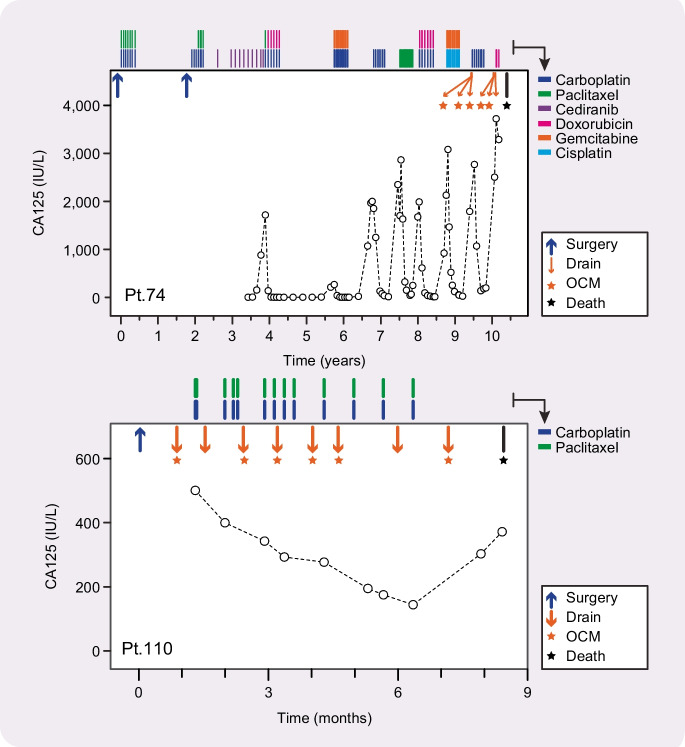
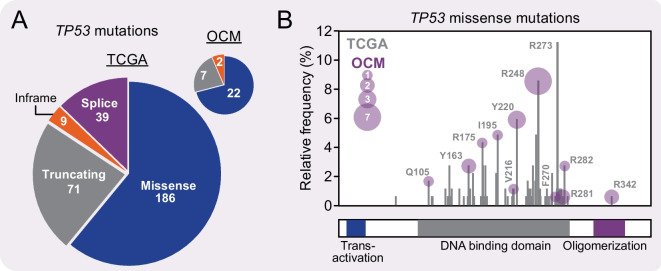
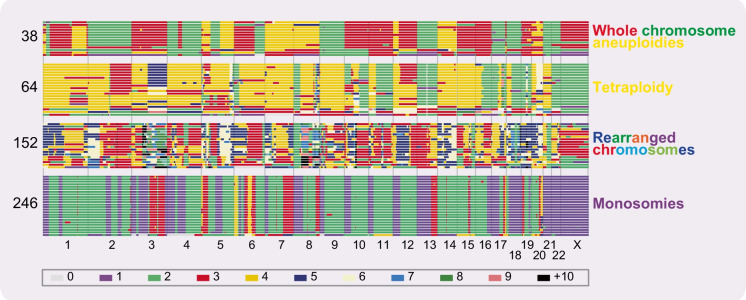
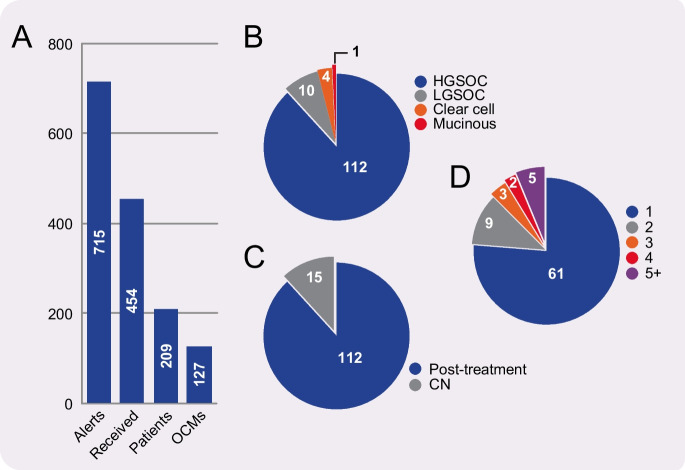
Chromosome instability (CIN) is a cancer hallmark that drives tumour heterogeneity, phenotypic adaptation, drug resistance and poor prognosis. High-grade serous ovarian cancer (HGSOC), one of the most chromosomally unstable tumour types, has a 5-year survival rate of only ~30% - largely due to late diagnosis and rapid development of drug resistance, e.g., via CIN-driven ABCB1 translocations. However, CIN is also a cell cycle vulnerability that can be exploited to specifically target tumour cells, illustrated by the success of PARP inhibitors to target homologous recombination deficiency (HRD). However, a lack of appropriate models with ongoing CIN has been a barrier to fully exploiting disease-specific CIN mechanisms. This barrier is now being overcome with the development of patient-derived cell cultures and organoids. In this review, we describe our progress building a Living Biobank of over 120 patient-derived ovarian cancer models (OCMs), predominantly from HGSOC. OCMs are highly purified tumour fractions with extensive proliferative potential that can be analysed at early passage. OCMs have diverse karyotypes, display intra- and inter-patient heterogeneity and mitotic abnormality rates far higher than established cell lines. OCMs encompass a broad-spectrum of HGSOC hallmarks, including a range of p53 alterations and BRCA1/2 mutations, and display drug resistance mechanisms seen in the clinic, e.g., ABCB1 translocations and BRCA2 reversion. OCMs are amenable to functional analysis, drug-sensitivity profiling, and multi-omics, including single-cell next-generation sequencing, and thus represent a platform for delineating HGSOC-specific CIN mechanisms. In turn, our vision is that this understanding will inform the design of new therapeutic strategies.
染色体不稳定性 (CIN) 是驱动肿瘤异质性、表型适应、药物耐药性和预后不良的癌症标志之一。高级别浆液性卵巢癌 (HGSOC) 是染色体最不稳定的肿瘤类型之一,其 5 年生存率仅约为 30% - 这主要归因于晚期诊断和药物耐药性的快速发展,例如,通过 CIN 驱动的 ABCB1 易位。然而,CIN 也是一种细胞周期脆弱性,可以被利用来特异性地靶向肿瘤细胞,这从 PARP 抑制剂靶向同源重组缺陷 (HRD) 的成功中得到了证明。然而,缺乏具有持续 CIN 的合适模型一直是充分利用疾病特异性 CIN 机制的障碍。随着患者来源的细胞培养物和类器官的发展,这一障碍现在正在被克服。在这篇综述中,我们描述了我们在建立一个超过 120 个患者来源的卵巢癌模型 (OCM) 的活体生物库方面的进展,这些模型主要来自 HGSOC。OCM 是高度纯化的肿瘤细胞,具有广泛的增殖潜力,可以在早期传代时进行分析。OCM 具有不同的核型,表现出内在和患者间的异质性,以及远高于已建立的细胞系的有丝分裂异常率。OCM 涵盖了 HGSOC 的广泛特征,包括一系列 p53 改变和 BRCA1/2 突变,并显示出临床上看到的耐药机制,例如 ABCB1 易位和 BRCA2 回复。OCM 易于进行功能分析、药物敏感性分析和多组学分析,包括单细胞下一代测序,因此代表了一个阐明 HGSOC 特异性 CIN 机制的平台。反过来,我们的愿景是,这种理解将为设计新的治疗策略提供信息。