Department of Thyroid and Vascular Surgery, the Affiliated Hospital of Southwest Medical University, No. 25, Taiping Street, Luzhou, Sichuan, 646000, China.
Department of Thyroid Surgery, people's Hospital of Deyang, Deyang, Sichuan, 618000, China.
J Nanobiotechnology. 2023 Aug 17;21(1):271. doi: 10.1186/s12951-023-02058-z.
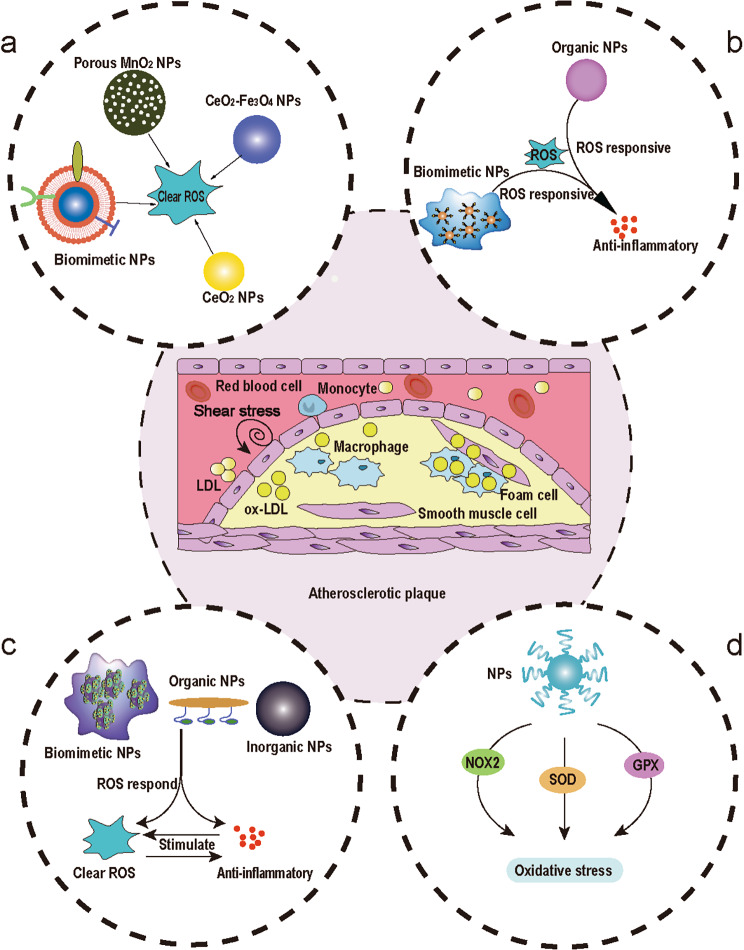
The development of atherosclerosis (AS) is closely linked to changes in the plaque microenvironment, which consists primarily of the cells that form plaque and the associated factors they secrete. The onset of inflammation, lipid deposition, and various pathological changes in cellular metabolism that accompany the plaque microenvironment will promote the development of AS. Numerous studies have shown that oxidative stress is an important condition that promotes AS. The accumulation of reactive oxygen species (ROS) is oxidative stress's most important pathological change. In turn, the effects of ROS on the plaque microenvironment are complex and varied, and these effects are ultimately reflected in the promotion or inhibition of AS. This article reviews the effects of ROS on the microenvironment of atherosclerotic plaques and their impact on disease progression over the past five years and focuses on the progress of treatment strategies based on scavenging ROS of nanoparticles for AS. Finally, we also discuss the prospects and challenges of AS treatment.
动脉粥样硬化(AS)的发展与斑块微环境的变化密切相关,斑块微环境主要由形成斑块的细胞和它们分泌的相关因子组成。炎症的发生、脂质的沉积以及伴随斑块微环境的细胞代谢的各种病理变化,将促进 AS 的发展。大量研究表明,氧化应激是促进 AS 的一个重要条件。活性氧(ROS)的积累是氧化应激最重要的病理变化。反过来,ROS 对斑块微环境的影响是复杂多样的,这些影响最终反映在促进或抑制 AS 的发生上。本文综述了 ROS 对动脉粥样硬化斑块微环境的影响及其对疾病进展的影响,重点介绍了近五年来基于纳米颗粒清除 ROS 的 AS 治疗策略的研究进展。最后,我们还讨论了 AS 治疗的前景和挑战。