Department of Pharmaceutical Technology, Institute of Pharmacy, University of Innsbruck, Innrain 80/82, 6020 Innsbruck, Austria.
Department of Industrial Pharmacy, Faculty of Pharmacy, University of Medicine and Pharmacy at Ho Chi Minh city, 700000 Ho Chi Minh City, Vietnam.
ACS Appl Mater Interfaces. 2023 Aug 30;15(34):40304-40316. doi: 10.1021/acsami.3c09337. Epub 2023 Aug 18.
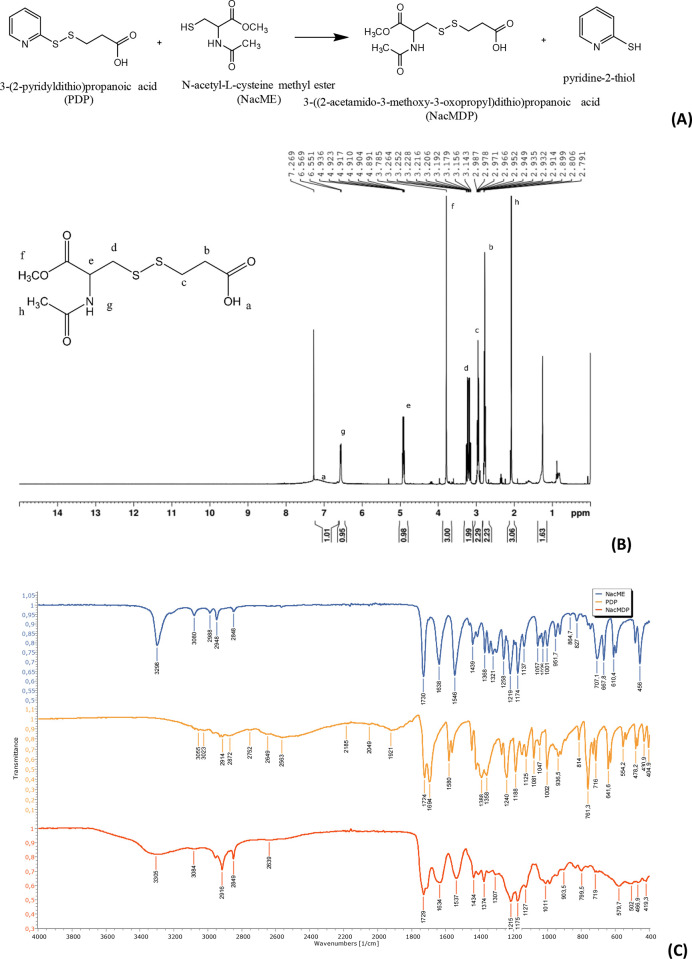
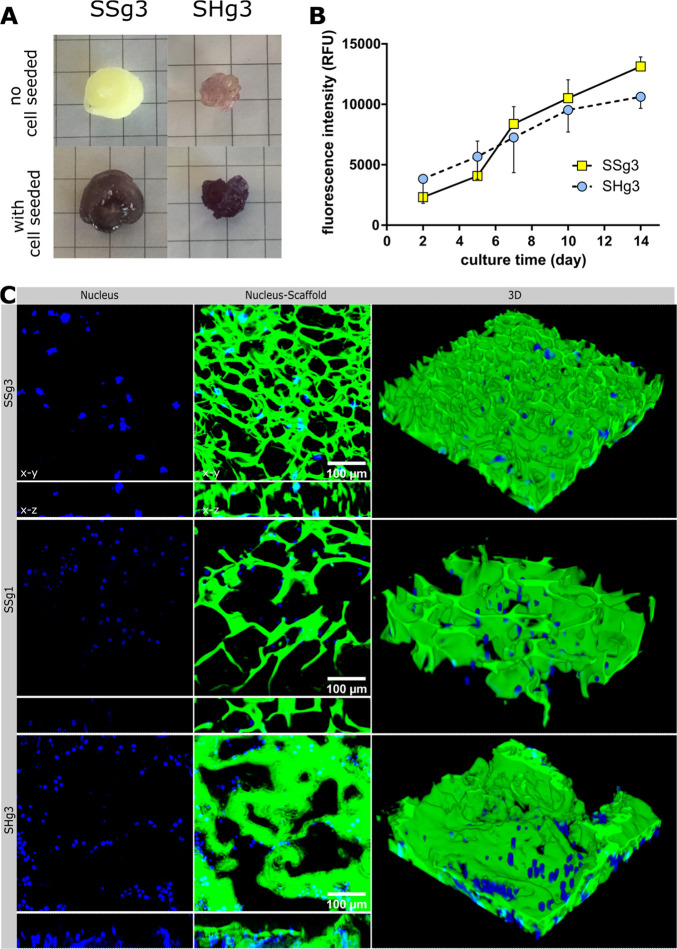
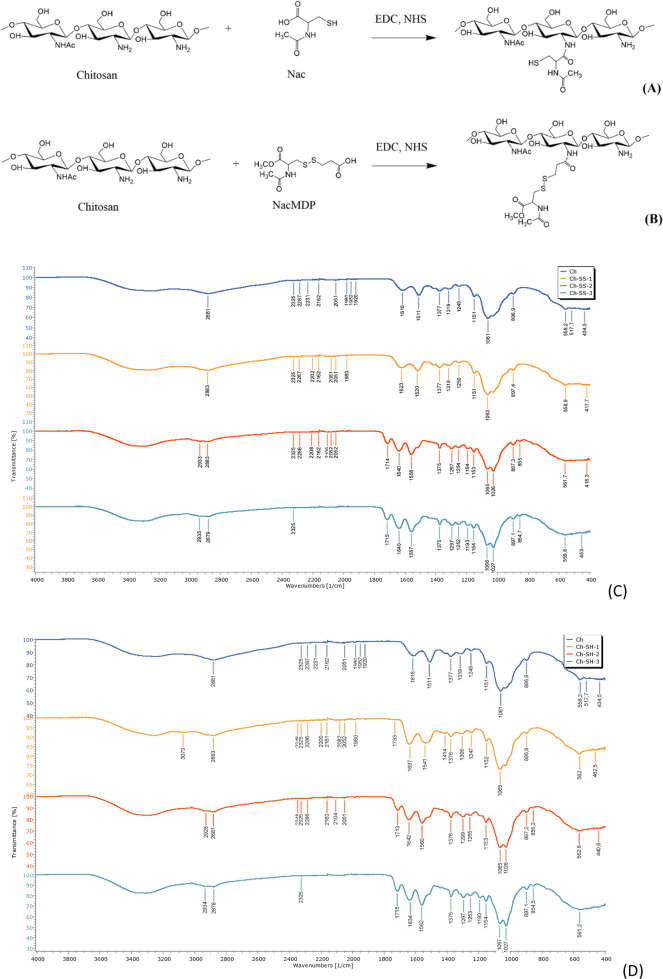
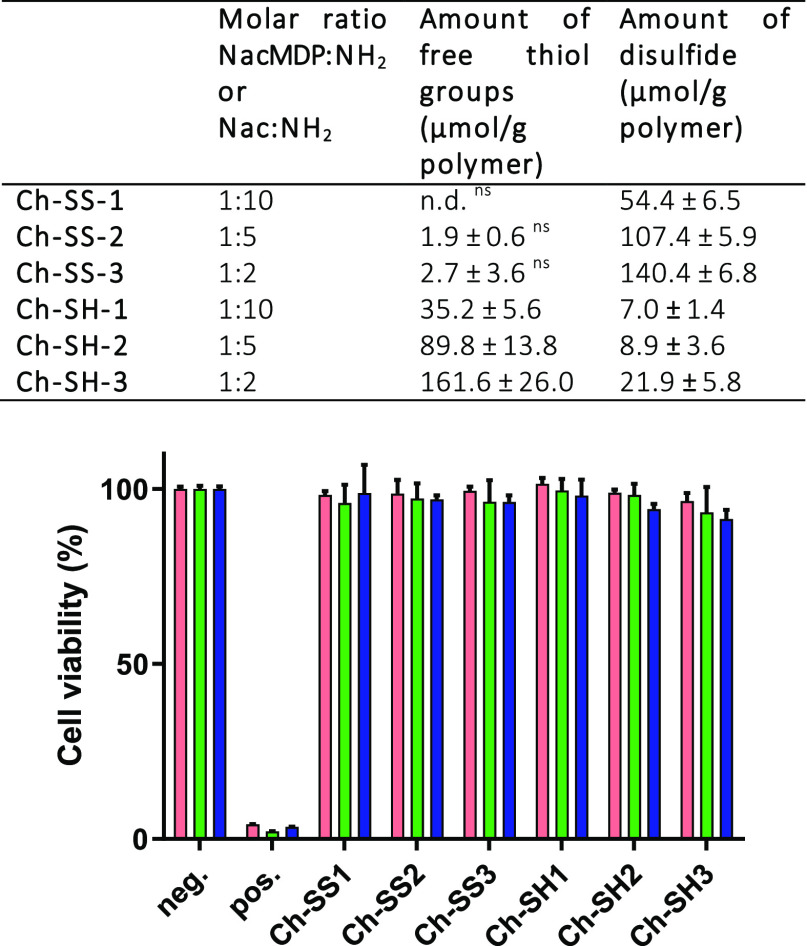
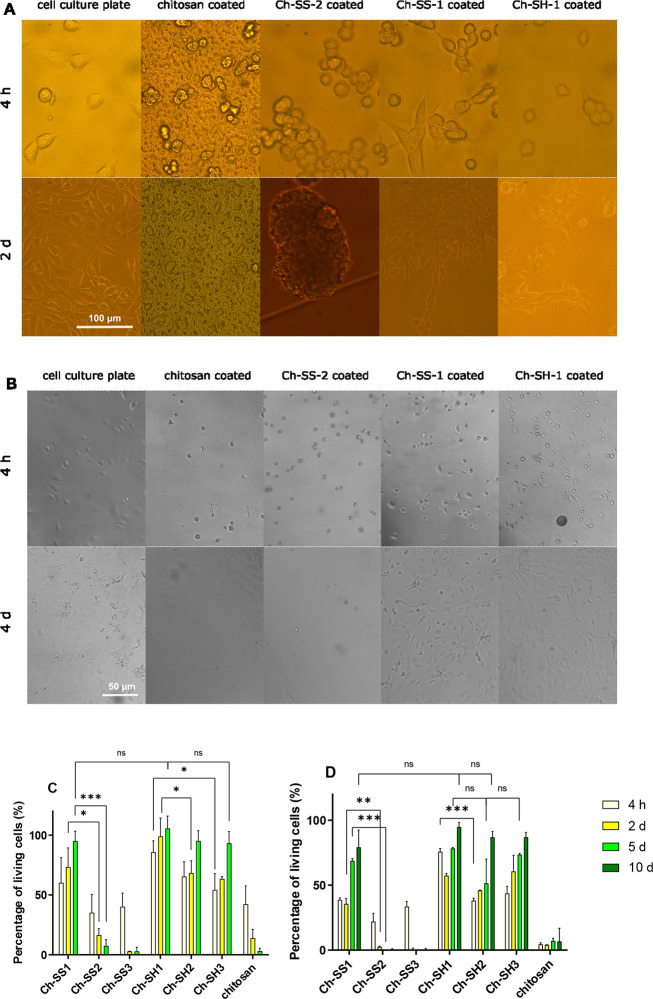
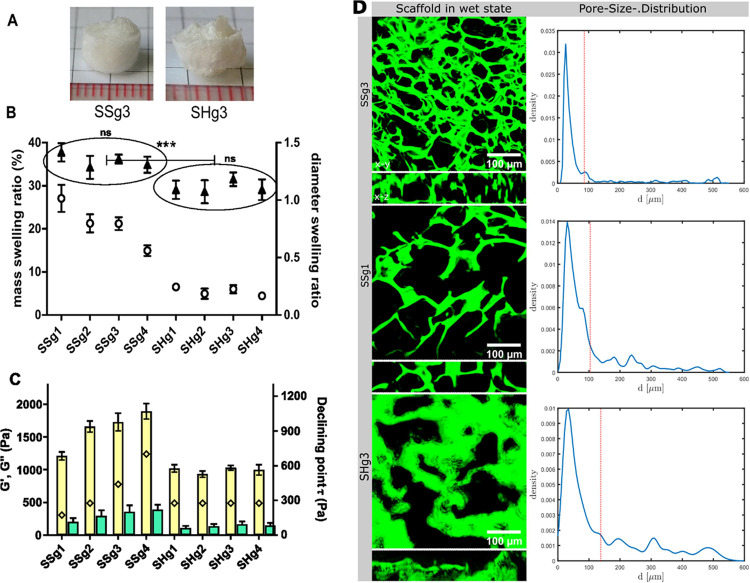
Chitosan (Ch) and different Ch derivatives have been applied in tissue engineering (TE) because of their biocompatibility, favored mechanical properties, and cost-effectiveness. Most of them, however, lack cell adhesive properties that are crucial for TE. In this study, we aimed to design an S-protected thiolated Ch derivative exhibiting high cell adhesive properties serving as a scaffold for TE. 3-((2-Acetamido-3-methoxy-3-oxopropyl)dithio) propanoic acid was covalently attached to Ch via a carbodiimide-mediated reaction. Low-, medium-, and high-modified Chs (Ch-SS-1, Ch-SS-2, and Ch-SS-3) with 54, 107 and 140 μmol of ligand per gram of polymer, respectively, were tested. In parallel, three thiolated Chs, namely Ch-SH-1, Ch-SH-2, and Ch-SH-3, were prepared by conjugating -acetyl cysteine to Ch at the same degree of modification to compare the effectiveness of disulfide versus thiol modification on cell adhesion. Ch-SS-1 showed better cell adhesion capability than Ch-SS-2 and Ch-SS-3. This can be explained by the more lipophilic surfaces of Ch-SS as a higher modification was made. Although Ch-SH-1, Ch-SH-2, and Ch-SH-3 were shown to be good substrates for cell adhesion, growth, and proliferation, Ch-SS polymers were superior to Ch-SH polymers in the formation of 3D cell cultures. Cryogels structured by Ch-SS-1 (SSg) resulted in homogeneous scaffolds with tunable pore size and mechanical properties by changing the mass ratio between Ch-SS-1 and heparin used as a cross-linker. SSg scaffolds possessing interconnected microporous structures showed good cell migration, adhesion, and proliferation. Therefore, Ch-SS can be used to construct tunable cryogel scaffolds that are suitable for 3D cell culture and TE.
壳聚糖(Ch)及其衍生物由于其生物相容性、优良的机械性能和成本效益,已被应用于组织工程(TE)。然而,它们中的大多数缺乏细胞黏附特性,这对 TE 至关重要。在本研究中,我们旨在设计一种 S 保护的巯基化壳聚糖衍生物,该衍生物具有高细胞黏附特性,可用作 TE 的支架。3-((2-乙酰胺基-3-甲氧基-3-氧代丙基)二硫基)丙酸通过碳二亚胺介导的反应与壳聚糖共价连接。分别用低、中、高取代度壳聚糖(Ch-SS-1、Ch-SS-2 和 Ch-SS-3),其配体与聚合物的摩尔比分别为 54、107 和 140 μmol/g,进行了测试。同时,通过将-乙酰半胱氨酸偶联到壳聚糖上,制备了三种巯基化壳聚糖,即 Ch-SH-1、Ch-SH-2 和 Ch-SH-3,以比较二硫化物与硫醇修饰对细胞黏附的有效性。Ch-SS-1 显示出比 Ch-SS-2 和 Ch-SS-3 更好的细胞黏附能力。这可以用更高取代度的 Ch-SS 具有更亲脂性的表面来解释。虽然 Ch-SH-1、Ch-SH-2 和 Ch-SH-3 被证明是细胞黏附、生长和增殖的良好底物,但 Ch-SS 聚合物在 3D 细胞培养物的形成中优于 Ch-SH 聚合物。通过改变 Ch-SS-1 和用作交联剂的肝素之间的质量比,可以调节 Ch-SS-1 构建的 cryogel 结构的均匀性、孔径大小和机械性能。具有互穿微孔结构的 SSg 支架具有良好的细胞迁移、黏附和增殖能力。因此,Ch-SS 可用于构建适用于 3D 细胞培养和 TE 的可调谐 cryogel 支架。