School of Clinical Medicine, University of New South Wales, Sydney, Australia.
School of Biomedical Sciences, University of New South Wales, Sydney, Australia.
Blood. 2023 Oct 26;142(17):1448-1462. doi: 10.1182/blood.2023021120.
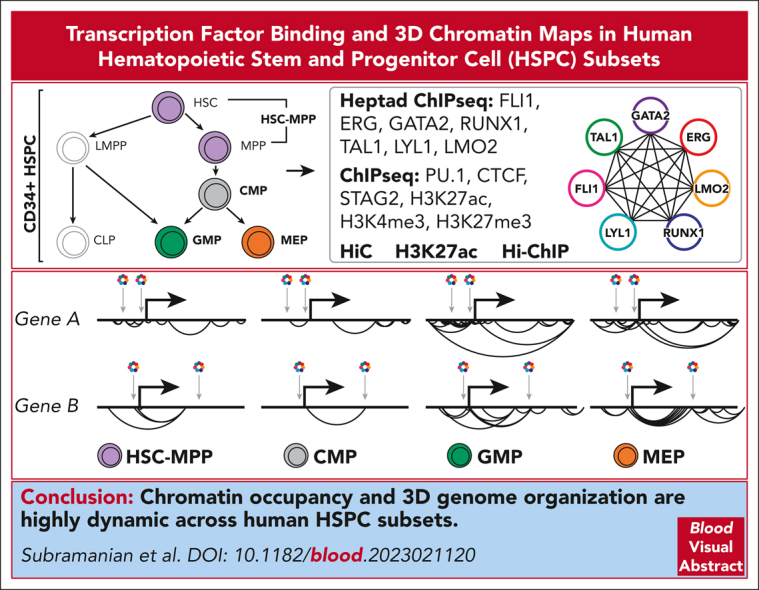
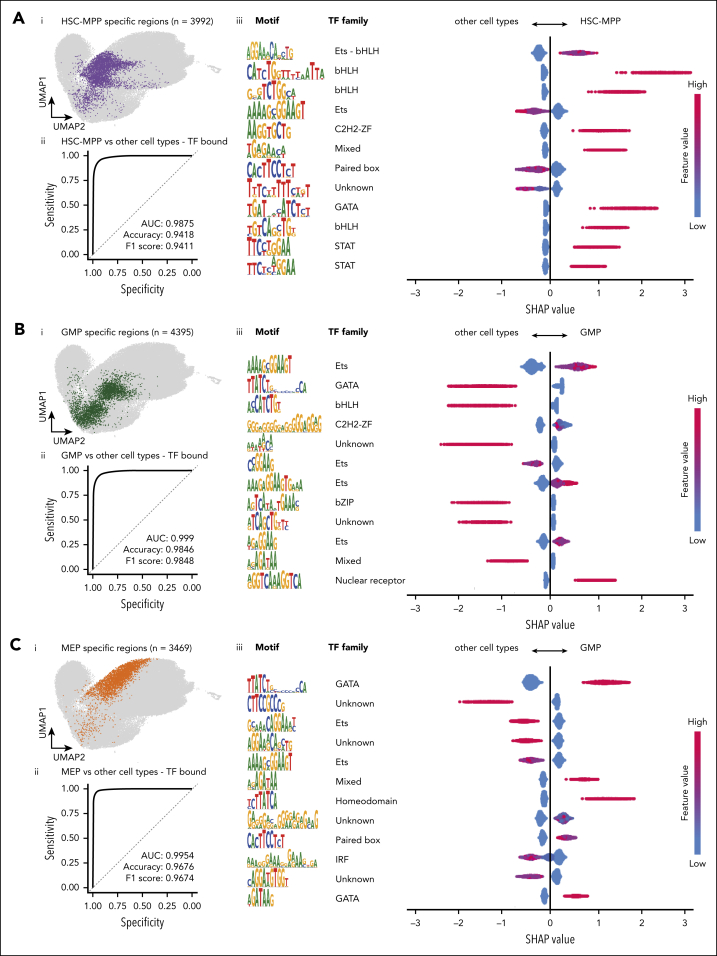
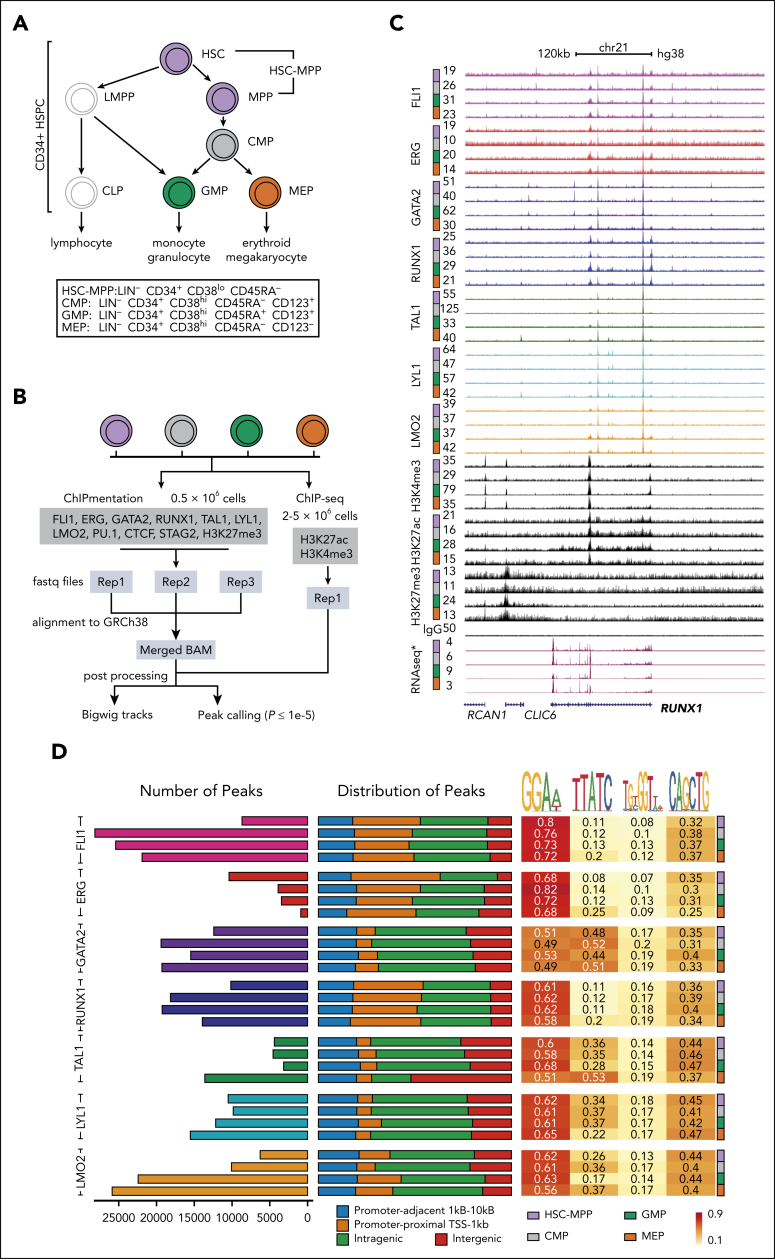
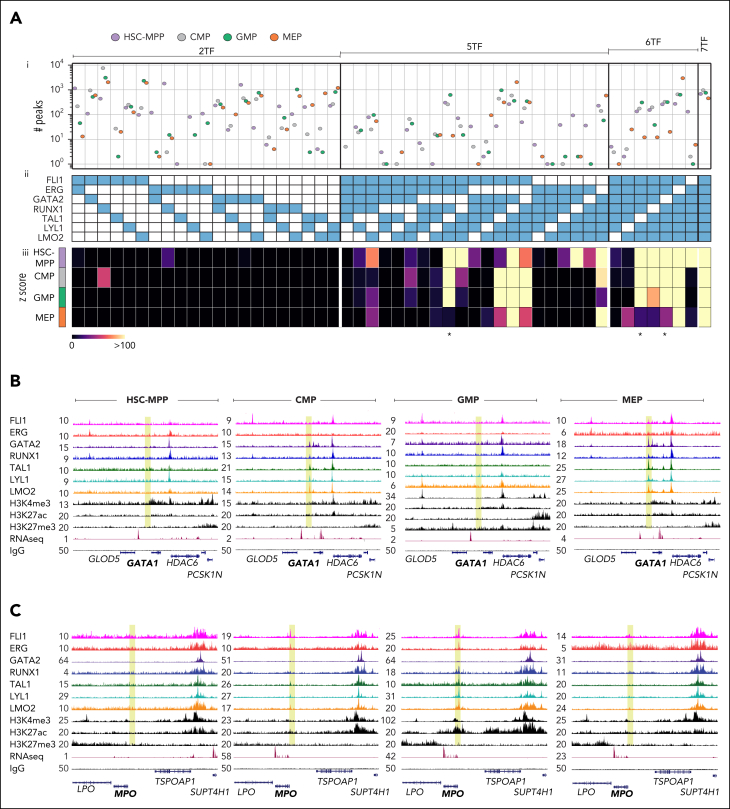
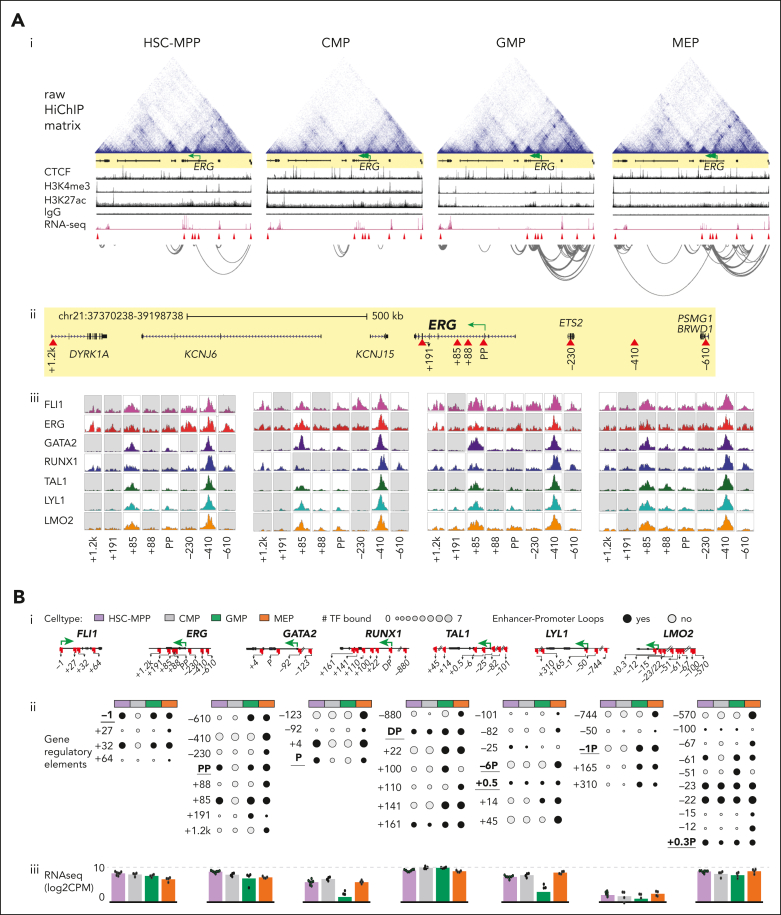
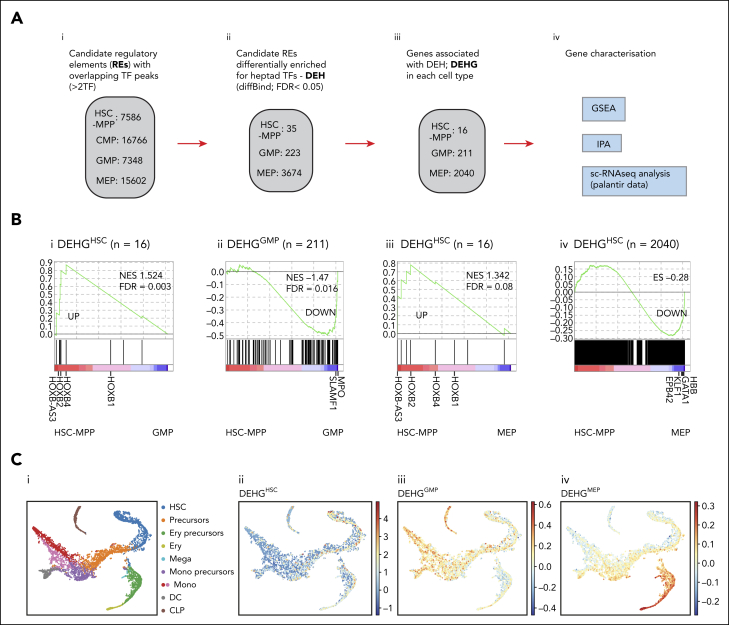
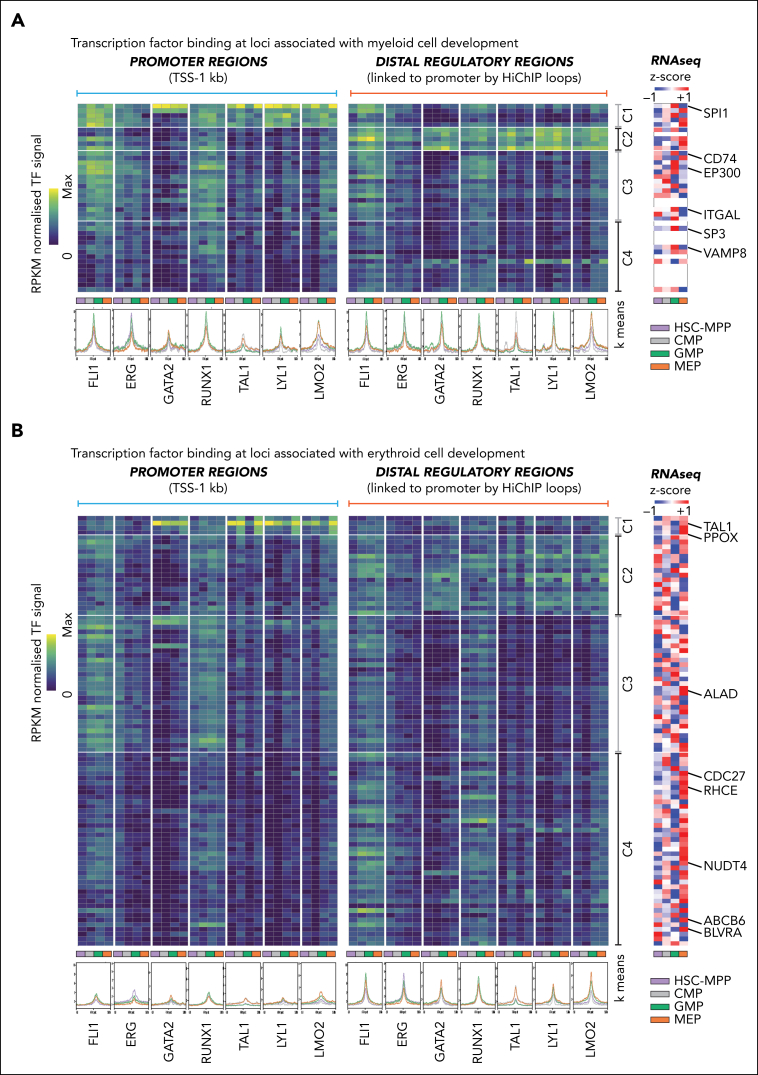
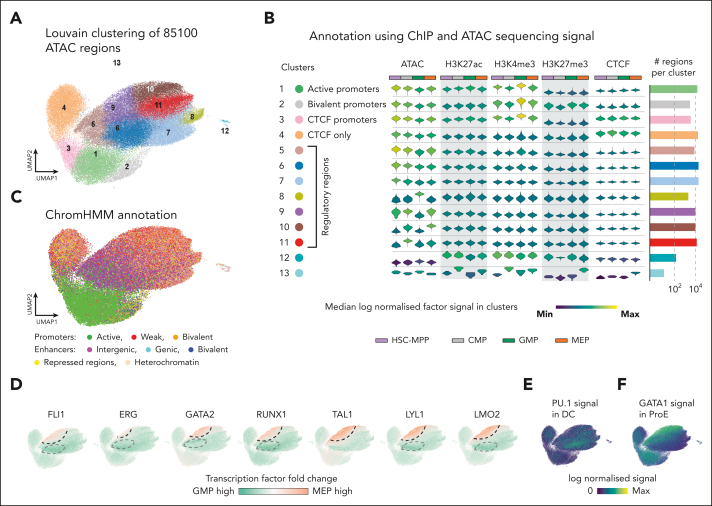
Hematopoietic stem and progenitor cells (HSPCs) rely on a complex interplay among transcription factors (TFs) to regulate differentiation into mature blood cells. A heptad of TFs (FLI1, ERG, GATA2, RUNX1, TAL1, LYL1, LMO2) bind regulatory elements in bulk CD34+ HSPCs. However, whether specific heptad-TF combinations have distinct roles in regulating hematopoietic differentiation remains unknown. We mapped genome-wide chromatin contacts (HiC, H3K27ac, HiChIP), chromatin modifications (H3K4me3, H3K27ac, H3K27me3) and 10 TF binding profiles (heptad, PU.1, CTCF, STAG2) in HSPC subsets (stem/multipotent progenitors plus common myeloid, granulocyte macrophage, and megakaryocyte erythrocyte progenitors) and found TF occupancy and enhancer-promoter interactions varied significantly across cell types and were associated with cell-type-specific gene expression. Distinct regulatory elements were enriched with specific heptad-TF combinations, including stem-cell-specific elements with ERG, and myeloid- and erythroid-specific elements with combinations of FLI1, RUNX1, GATA2, TAL1, LYL1, and LMO2. Furthermore, heptad-occupied regions in HSPCs were subsequently bound by lineage-defining TFs, including PU.1 and GATA1, suggesting that heptad factors may prime regulatory elements for use in mature cell types. We also found that enhancers with cell-type-specific heptad occupancy shared a common grammar with respect to TF binding motifs, suggesting that combinatorial binding of TF complexes was at least partially regulated by features encoded in DNA sequence motifs. Taken together, this study comprehensively characterizes the gene regulatory landscape in rare subpopulations of human HSPCs. The accompanying data sets should serve as a valuable resource for understanding adult hematopoiesis and a framework for analyzing aberrant regulatory networks in leukemic cells.
造血干/祖细胞(HSPCs)依赖于转录因子(TFs)之间的复杂相互作用来调节向成熟血细胞的分化。一组 7 个 TF(FLI1、ERG、GATA2、RUNX1、TAL1、LYL1、LMO2)结合在大量 CD34+ HSPCs 中的调节元件上。然而,特定的七聚体-TF 组合在调节造血分化方面是否具有不同的作用仍不清楚。我们在 HSPC 亚群(干细胞/多能祖细胞加共同髓系、粒细胞巨噬细胞和巨核细胞红细胞祖细胞)中绘制了全基因组染色质接触(HiC、H3K27ac、HiChIP)、染色质修饰(H3K4me3、H3K27ac、H3K27me3)和 10 个 TF 结合谱(七聚体、PU.1、CTCF、STAG2),发现 TF 占据和增强子-启动子相互作用在细胞类型之间有显著差异,并且与细胞类型特异性基因表达相关。特定的七聚体-TF 组合富集了不同的调节元件,包括 ERG 特有的干细胞特异性元件,以及 FLI1、RUNX1、GATA2、TAL1、LYL1 和 LMO2 组合特有的髓系和红细胞特异性元件。此外,HSPC 中七聚体占据的区域随后被谱系定义的 TF(包括 PU.1 和 GATA1)结合,表明七聚体因子可能为成熟细胞类型的使用预先准备调节元件。我们还发现,具有细胞类型特异性七聚体占据的增强子在 TF 结合基序方面具有共同的语法,这表明 TF 复合物的组合结合至少部分受到 DNA 序列基序中编码特征的调节。总之,这项研究全面描述了人类 HSPC 中稀有亚群的基因调控景观。伴随的数据集应该作为理解成人造血的有价值资源,并为分析白血病细胞中异常调控网络提供框架。