Abughoush Mahmoud, Olaimat Amin N, Al-Holy Murad A, Al-Dabbas Maher, Alavi Sajid, Maghaydah Sofyan, Choudhury Imranul, Nour Mohammad, Abu-Ghoush Laith
Science of Nutrition and Dietetics Program, College of Pharmacy, Al Ain University, P.O. Box 64141, Abu Dhabi, United Arab Emirates.
Department of Clinical Nutrition and Dietetics, Faculty of Applied Medical Sciences, The Hashemite University, P.O. Box 330127, Zarqa, 13133, Jordan.
Heliyon. 2023 Aug 5;9(8):e18936. doi: 10.1016/j.heliyon.2023.e18936. eCollection 2023 Aug.
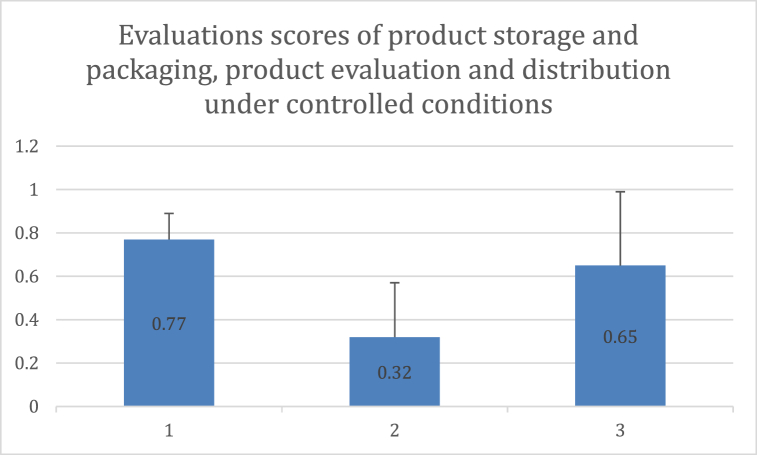
The quality and the safety of the foods that are served at fast foods restaurants and their effect on the consumer health could become a matter of concern during COVID-19. Therefore, the objectives of this study were i) to evaluate the quality and safety of raw foods, suitability and availability of manufacturing places, physical facilities, drinking water and waste management system, and processing conditions, and ii) to assess the knowledge, attitudes, practices regarding food safety and hygienic practices among food handlers at fast foods restaurants in the different universities in Jordan during COVID-19. The study was conducted in 12 fast foods restaurants of 3 different universities in Jordan which are located in different places in Jordan. A desirable practice was given a score of one while no score will be allotted for an undesirable practice through using a standard questionnaire for all the food establishments. This was used to compare with the maximum score obtainable for that relevant operation and the percentage scores was calculated for each operation. Analysis of Variance (ANOVA) of the data was performed to study the significant differences at P ≤ 0.05 in all the evaluated properties among the food establishments in the different universities. The results showed that low percentage scores were obtained with 68%, 75%, 32% and 56% for the production area, waste management, product evaluation (chemical, microbial) and food safety program application, respectively. Also, it was found that there were insignificant differences at P ≤ 0.05 among different food serving establishments in different universities in all the safety properties. This means that all the food establishments in all the universities suffer from the same problems with the same degree. As a conclusion, more work should be done to produce safe food in the different food establishments that were studied in the different universities.
在新冠疫情期间,快餐店提供的食品质量与安全及其对消费者健康的影响可能会成为人们关注的问题。因此,本研究的目的是:(i)评估生食的质量与安全、生产场所的适宜性与可用性、物理设施、饮用水和废物管理系统以及加工条件;(ii)评估新冠疫情期间约旦不同大学快餐店食品处理人员在食品安全和卫生习惯方面的知识、态度和做法。该研究在约旦3所不同大学的12家快餐店进行,这些快餐店位于约旦的不同地方。通过使用针对所有食品企业的标准问卷,对理想做法给予1分,对不良做法则不记分。这用于与该相关操作可获得的最高分进行比较,并计算每个操作的百分比得分。对数据进行方差分析(ANOVA),以研究不同大学食品企业在所有评估属性上P≤0.05时的显著差异。结果显示,生产区域、废物管理、产品评估(化学、微生物)和食品安全计划应用的百分比得分较低,分别为68%、75%、32%和56%。此外,发现在所有安全属性方面,不同大学的不同食品服务企业之间在P≤0.05时不存在显著差异。这意味着所有大学的所有食品企业都存在相同程度的相同问题。总之,应开展更多工作,以便在不同大学所研究的不同食品企业中生产出安全的食品。