Faculty of Veterinary Medicine, Norwegian University of Life Sciences (NMBU), Ås, Norway.
Faculty of Chemistry, Biotechnology and Food Science, Norwegian University of Life Sciences (NMBU), Ås, Norway.
Sci Rep. 2023 Aug 22;13(1):13701. doi: 10.1038/s41598-023-40640-5.
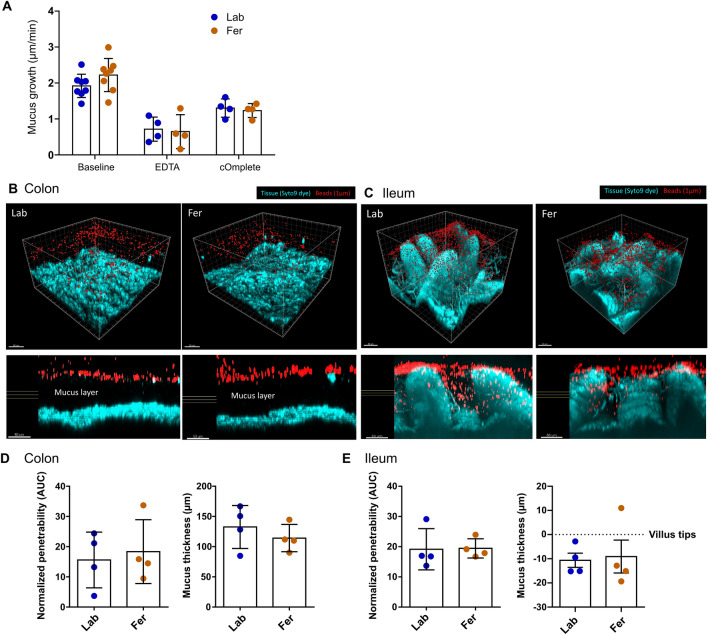
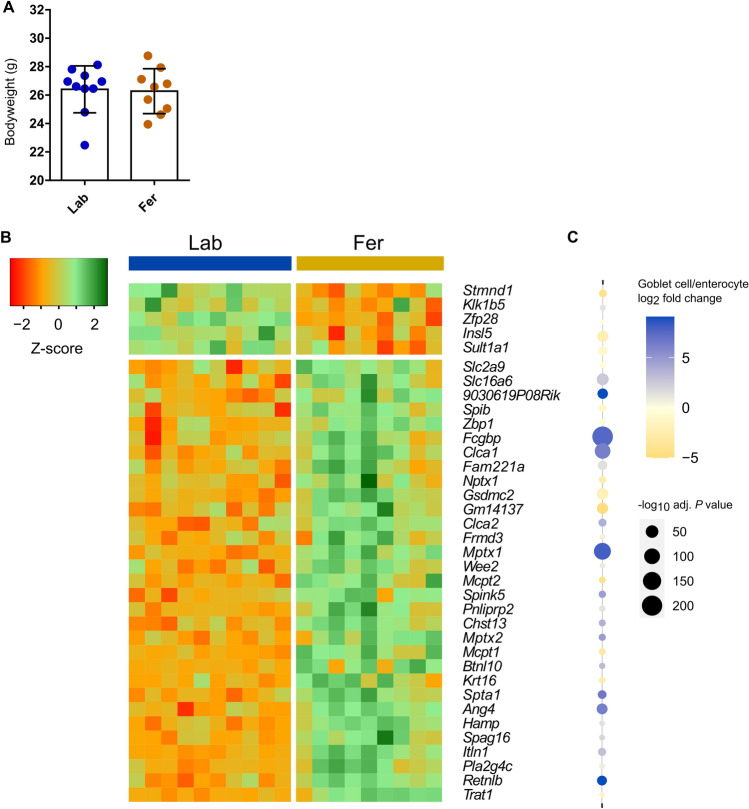
To close the gap between ultra-hygienic research mouse models and the much more environmentally exposed conditions of humans, we have established a system where laboratory mice are raised under a full set of environmental factors present in a naturalistic, farmyard-type habitat-a process we have called feralization. In previous studies we have shown that feralized (Fer) mice were protected against colorectal cancer when compared to conventionally reared laboratory mice (Lab). However, the protective mechanisms remain to be elucidated. Disruption of the protective intestinal barrier is an acknowledged player in colorectal carcinogenesis, and in the current study we assessed colonic mucosal barrier properties in healthy, feralized C57BL/6JRj male mice. While we found no effect of feralization on mucus layer properties, higher expression of genes encoding the mucus components Fcgbp and Clca1 still suggested mucus enforcement due to feralization. Genes encoding other proteins known to be involved in bacterial defense (Itln1, Ang1, Retnlb) and inflammatory mechanisms (Zbp1, Gsdmc2) were also higher expressed in feralized mice, further suggesting that the Fer mice have an altered intestinal mucosal barrier. These findings demonstrate that microbial experience conferred by housing in a farmyard-type environment alters the intestinal barrier properties in mice possibly leading to a more robust protection against disease. Future studies to unravel regulatory roles of feralization on intestinal barrier should aim to conduct proteomic analyses and in vivo performance of the feralized mice intestinal barrier.
为了缩小超卫生研究小鼠模型与人类更具环境暴露性的条件之间的差距,我们建立了一个系统,即在一个自然的、农场式栖息地中,实验室小鼠在一整套环境因素下生长,我们称之为驯化。在之前的研究中,我们已经表明,与传统饲养的实验室小鼠(Lab)相比,驯化(Fer)小鼠可以预防结直肠癌。然而,保护机制仍有待阐明。肠道屏障的破坏是结直肠发生癌变的一个公认的因素,在目前的研究中,我们评估了健康的、驯化的 C57BL/6JRj 雄性小鼠的结肠黏膜屏障特性。虽然我们没有发现驯化对黏液层特性有影响,但编码黏液成分 Fcgbp 和 Clca1 的基因的更高表达仍然表明由于驯化导致黏液增强。编码其他已知参与细菌防御(Itln1、Ang1、Retnlb)和炎症机制(Zbp1、Gsdmc2)的基因在驯化小鼠中的表达也更高,这进一步表明 Fer 小鼠的肠道黏膜屏障发生了改变。这些发现表明,在农场式环境中饲养所获得的微生物经验改变了小鼠的肠道屏障特性,可能导致对疾病更强大的保护。未来旨在揭示驯化对肠道屏障的调节作用的研究,应旨在进行蛋白质组学分析和体内 Fer 小鼠肠道屏障的性能。