Fan Suixing, Wang Yuewen, Jiang Hanwei, Jiang Xiaohua, Zhou Jianteng, Jiao Yuying, Ye Jingwei, Xu Zishuo, Wang Yue, Xie Xuefeng, Zhang Huan, Li Yang, Liu Wei, Zhang Xiangjun, Ma Hui, Shi Baolu, Zhang Yuanwei, Zubair Muhammad, Shah Wasim, Xu Zhipeng, Xu Bo, Shi Qinghua
Division of Reproduction and Genetics, First Affiliated Hospital of USTC, Hefei National Research Center for Physical Sciences at the Microscale, the CAS Key Laboratory of Innate Immunity and Chronic Disease, School of Basic Medical Sciences, Division of Life Sciences and Medicine, Biomedical Sciences and Health Laboratory of Anhui Province, Institute of Health and Medicine, Hefei Comprehensive National Science Center, University of Science and Technology of China, Hefei, Anhui, China.
Institute of Andrology, Nanjing Drum Tower Hospital, The Affiliated Hospital of Nanjing University Medical School, Nanjing, Jiangsu, China.
Cell Discov. 2023 Aug 23;9(1):88. doi: 10.1038/s41421-023-00577-5.
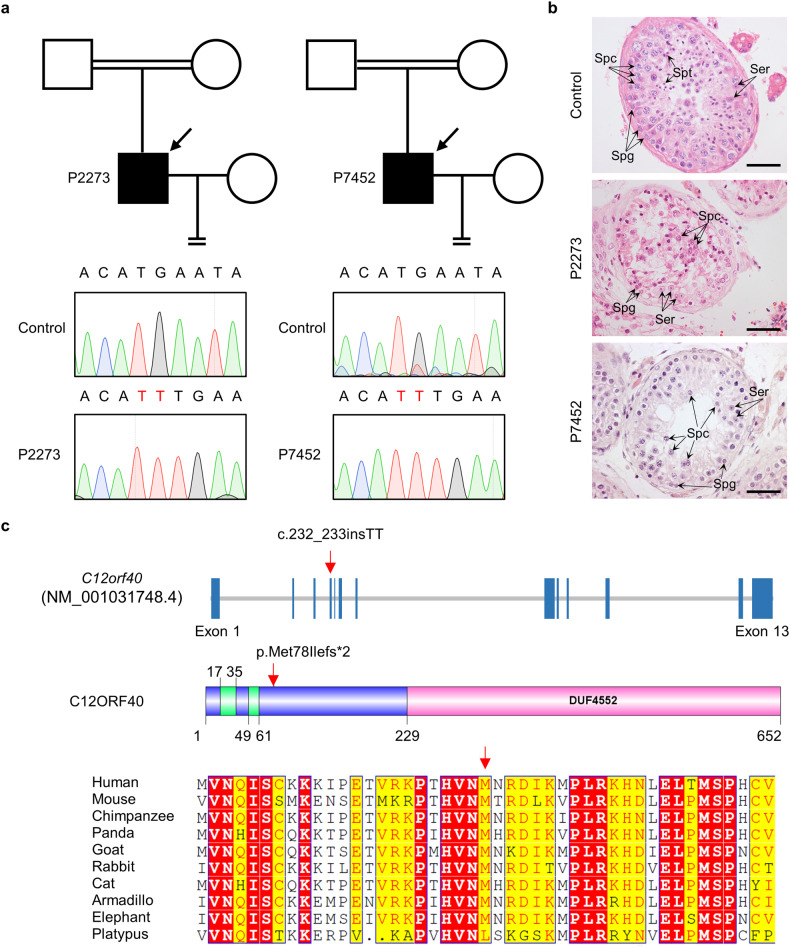
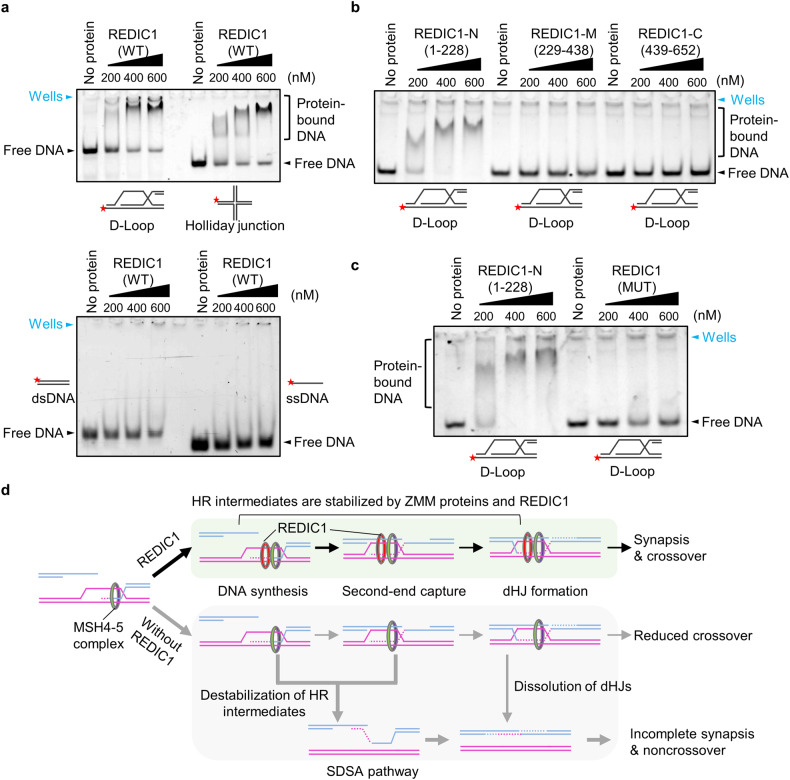
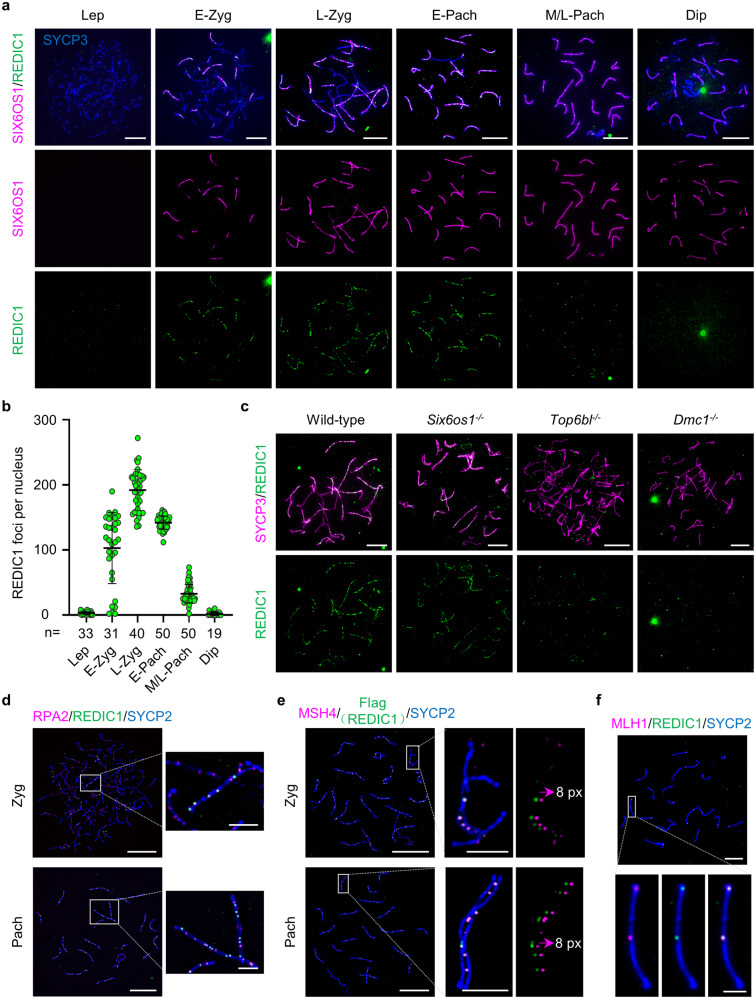
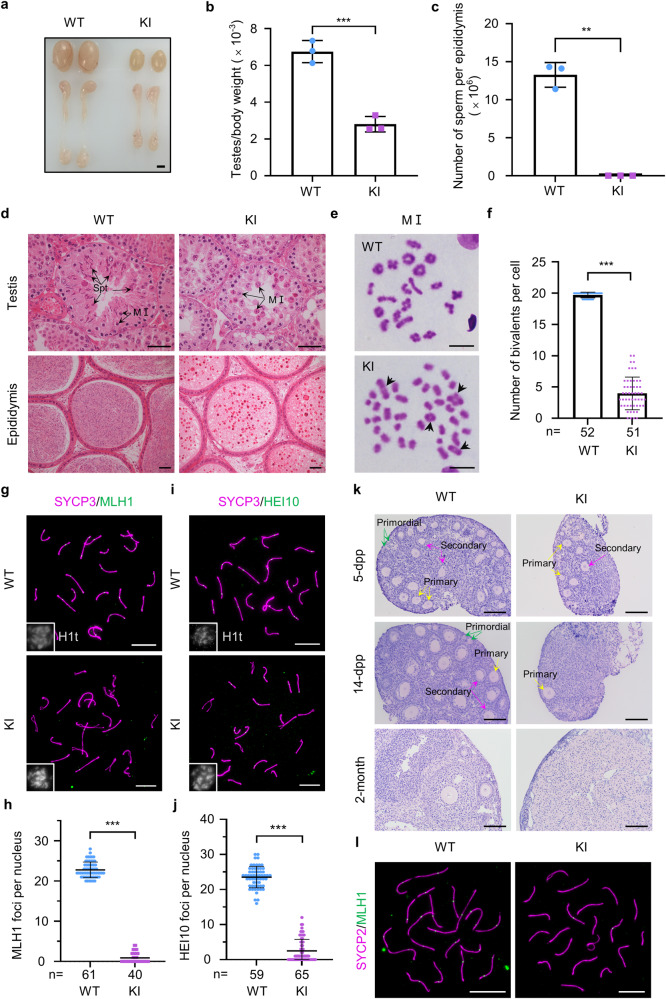
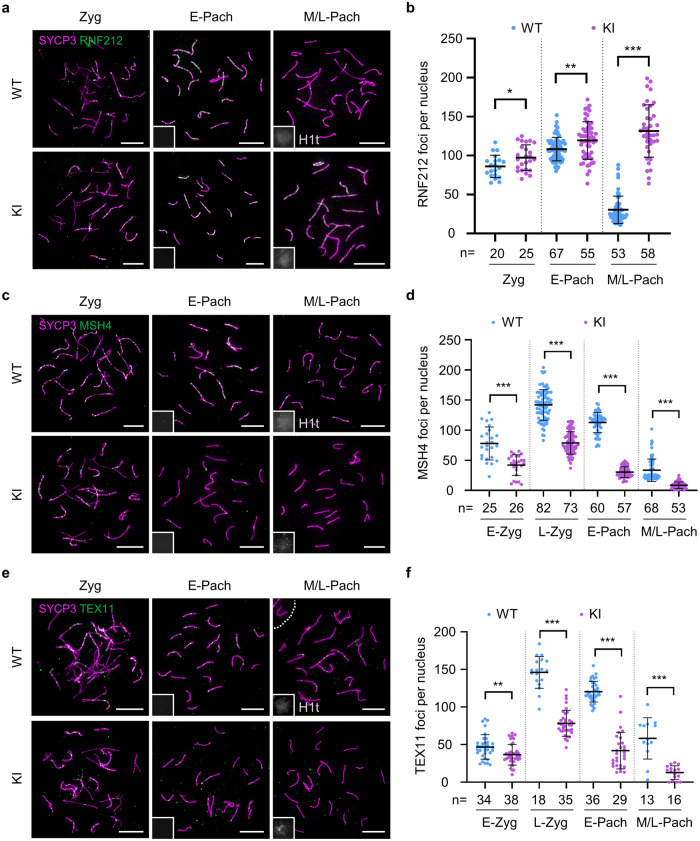
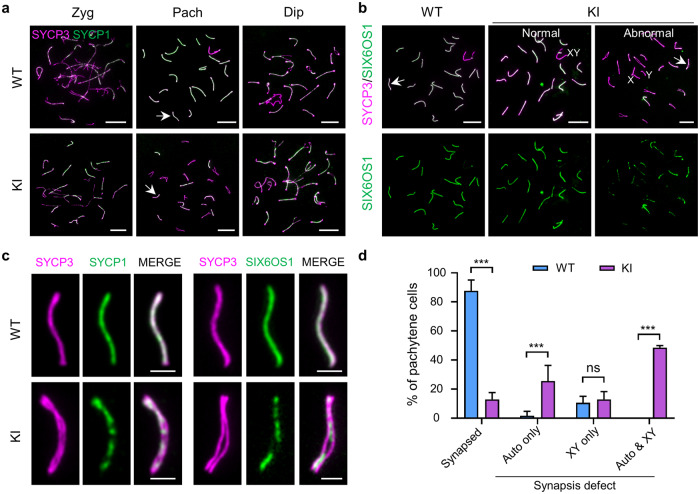
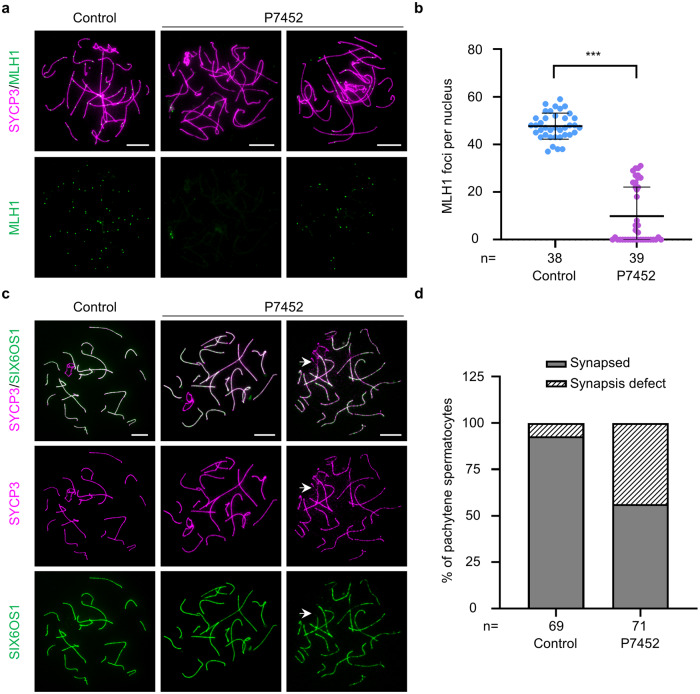
During meiosis, at least one crossover must occur per homologous chromosome pair to ensure normal progression of meiotic division and accurate chromosome segregation. However, the mechanism of crossover formation is not fully understood. Here, we report a novel recombination protein, C12ORF40/REDIC1, essential for meiotic crossover formation in mammals. A homozygous frameshift mutation in C12orf40 (c.232_233insTT, p.Met78Ilefs*2) was identified in two infertile men with meiotic arrest. Spread mouse spermatocyte fluorescence immunostaining showed that REDIC1 forms discrete foci between the paired regions of homologous chromosomes depending on strand invasion and colocalizes with MSH4 and later with MLH1 at the crossover sites. Redic1 knock-in (KI) mice homozygous for mutation c.232_233insTT are infertile in both sexes due to insufficient crossovers and consequent meiotic arrest, which is also observed in our patients. The foci of MSH4 and TEX11, markers of recombination intermediates, are significantly reduced numerically in the spermatocytes of Redic1 KI mice. More importantly, our biochemical results show that the N-terminus of REDIC1 binds branched DNAs present in recombination intermediates, while the identified mutation impairs this interaction. Thus, our findings reveal a crucial role for C12ORF40/REDIC1 in meiotic crossover formation by stabilizing the recombination intermediates, providing prospective molecular targets for the clinical diagnosis and therapy of infertility.
在减数分裂过程中,每对同源染色体至少必须发生一次交叉,以确保减数分裂的正常进行和准确的染色体分离。然而,交叉形成的机制尚未完全了解。在此,我们报告了一种新的重组蛋白C12ORF40/REDIC1,它对哺乳动物减数分裂交叉的形成至关重要。在两名患有减数分裂停滞的不育男性中鉴定出C12orf40的纯合移码突变(c.232_233insTT,p.Met78Ilefs*2)。展开的小鼠精母细胞荧光免疫染色显示,REDIC1根据链侵入在同源染色体的配对区域之间形成离散的焦点,并与MSH4共定位,随后在交叉位点与MLH1共定位。c.232_233insTT突变纯合的Redic1敲入(KI)小鼠由于交叉不足和随之而来的减数分裂停滞而导致两性不育,这在我们的患者中也观察到。重组中间体标记物MSH4和TEX11的焦点在Redic1 KI小鼠的精母细胞中数量上显著减少。更重要的是,我们的生化结果表明,REDIC1的N末端与重组中间体中存在的分支DNA结合,而鉴定出的突变会损害这种相互作用。因此,我们的研究结果揭示了C12ORF40/REDIC1通过稳定重组中间体在减数分裂交叉形成中的关键作用,为不孕症的临床诊断和治疗提供了潜在的分子靶点。