Ikram Muhammad, Shazaib Muhammad, Haider Ali, Shahzadi Anum, Baz Shair, Algaradah Mohammed M, Ul-Hamid Anwar, Nabgan Walid, Abd-Rabboh Hisham S M, Ali Salamat
Solar Cell Applications Research Lab, Department of Physics, Government College University Lahore 54000 Pakistan
Department of Physics, Riphah Institute of Computing and Applied Sciences (RICAS), Riphah International University 14 Ali Road Lahore Pakistan.
RSC Adv. 2023 Aug 23;13(36):25305-25315. doi: 10.1039/d3ra04664h. eCollection 2023 Aug 21.
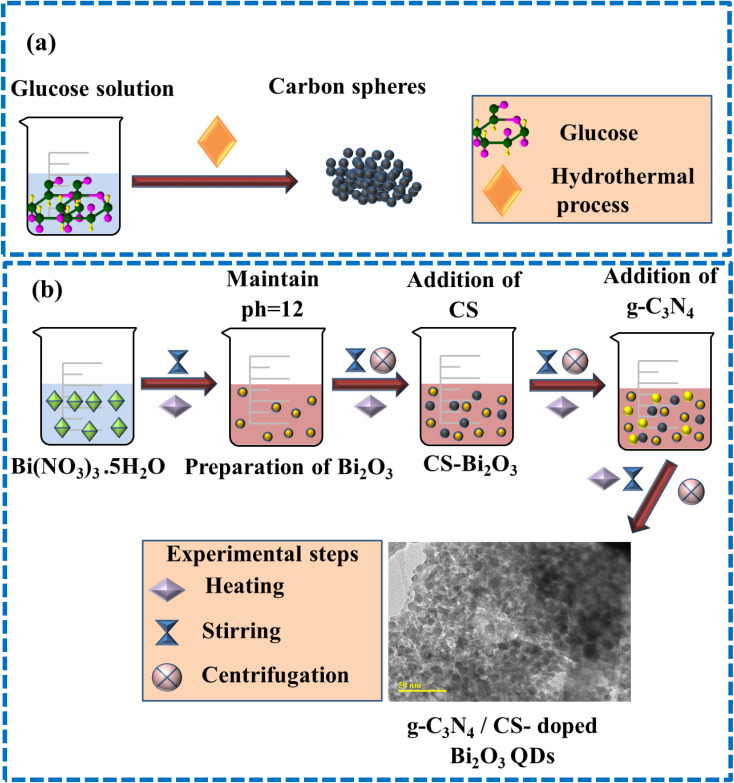
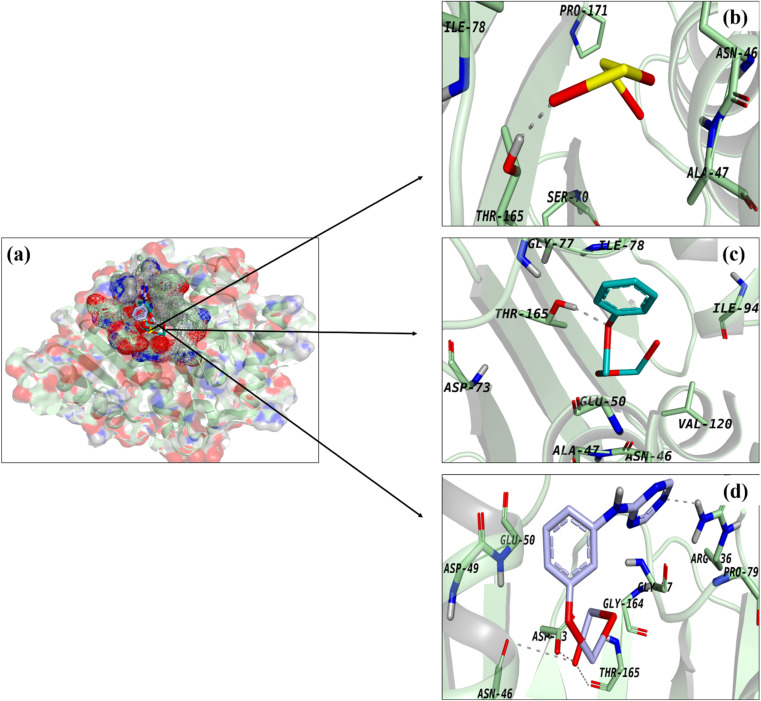
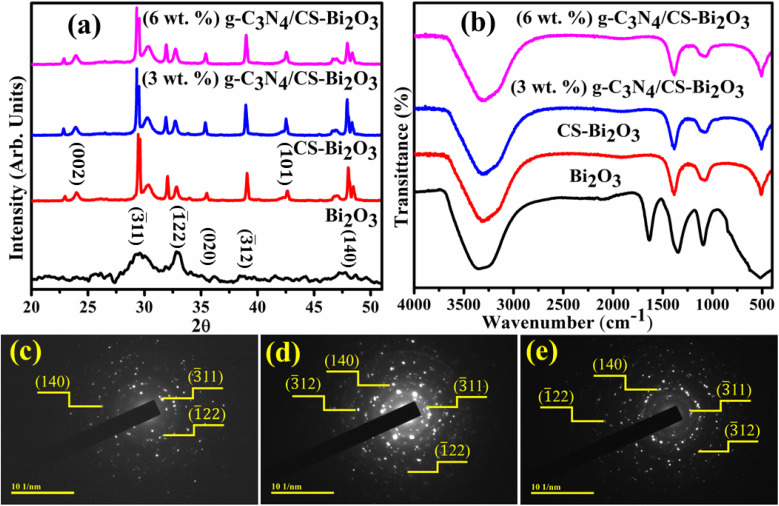
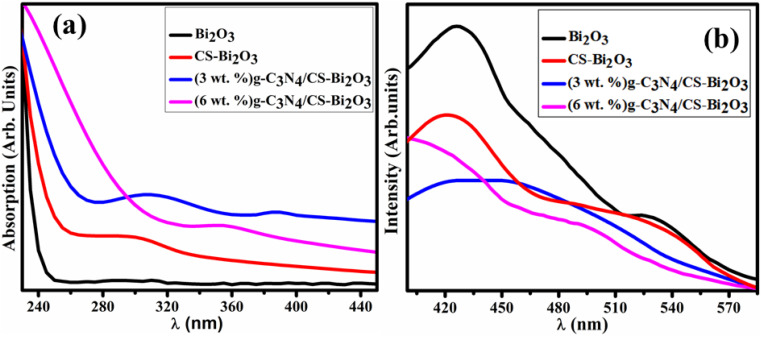
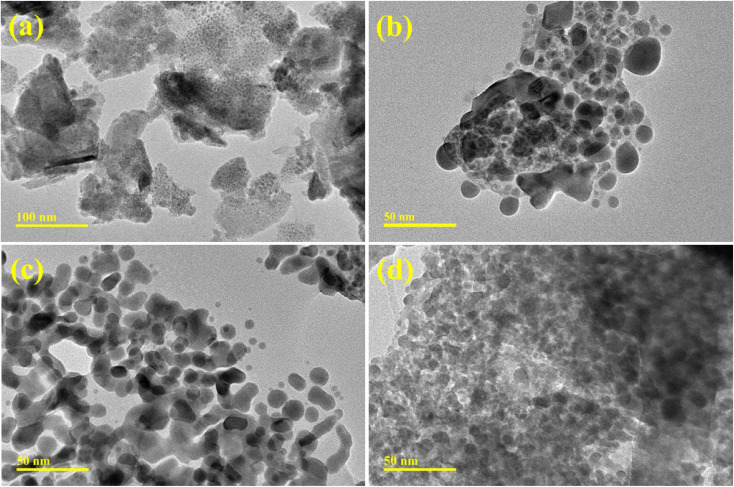
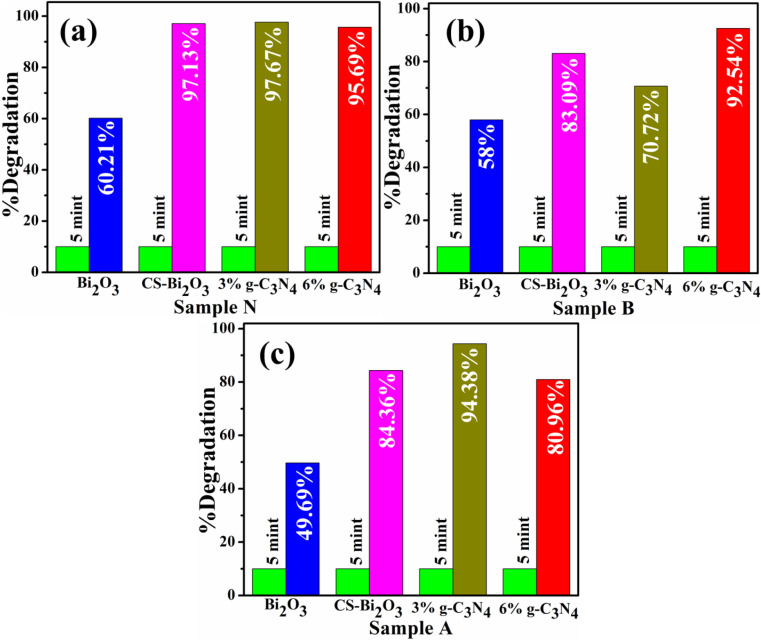
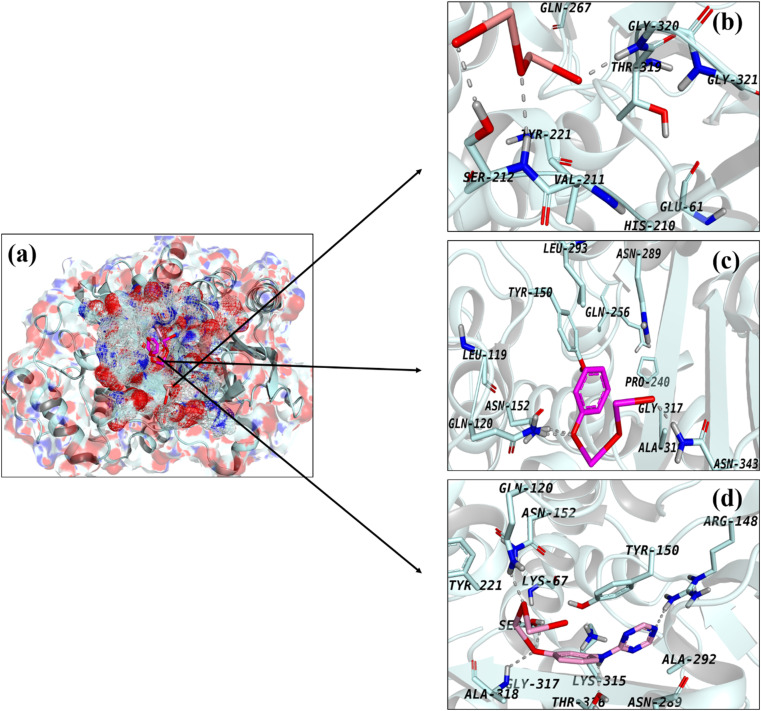
Herein, BiO quantum dots (QDs) have been synthesized and doped with various concentrations of graphitic carbon nitride (g-CN) and a fixed amount of carbon spheres (CS) using a co-precipitation technique. XRD analysis confirmed the presence of monoclinic structure along the space group 2/ and 2/. Various functional groups and characteristic peaks of (Bi-O) were identified using FTIR spectra. QDs morphology of BiO showed agglomeration with higher amounts of g-CN by TEM analysis. HR-TEM determined the variation in the -spacing which increased with increasing dopants. These doping agents were employed to reduce the exciting recombination rate of BiO QDs by providing more active sites which enhance antibacterial activity. Notably, (6 wt%) g-CN/CS-doped BiO exhibited considerable antimicrobial potential in opposition to at higher values of concentrations relative to ciprofloxacin. The (3 wt%) g-CN/CS-doped BiO exhibits the highest catalytic potential (97.67%) against RhB in a neutral medium. The compound g-CN/CS-BiO has been suggested as a potential inhibitor of β-lactamase and DNA gyrase based on the findings of a molecular docking study that was in better agreement with bactericidal activity.
在此,采用共沉淀技术合成了BiO量子点(QDs),并掺杂了不同浓度的石墨相氮化碳(g-CN)和固定量的碳球(CS)。X射线衍射(XRD)分析证实了沿空间群2/和2/存在单斜结构。利用傅里叶变换红外光谱(FTIR)确定了(Bi-O)的各种官能团和特征峰。通过透射电子显微镜(TEM)分析,BiO量子点的形态显示出随着g-CN含量增加而发生团聚。高分辨率透射电子显微镜(HR-TEM)确定了晶面间距的变化,其随着掺杂剂增加而增大。这些掺杂剂通过提供更多活性位点来降低BiO量子点的激子复合率,从而增强抗菌活性。值得注意的是,相对于环丙沙星,(6 wt%)g-CN/CS掺杂的BiO在较高浓度值下对表现出相当大的抗菌潜力。(3 wt%)g-CN/CS掺杂的BiO在中性介质中对罗丹明B(RhB)表现出最高的催化潜力(97.67%)。基于分子对接研究结果,化合物g-CN/CS-BiO被认为是β-内酰胺酶和DNA促旋酶的潜在抑制剂,这与杀菌活性更相符。