
R6/2和zQ175DN亨廷顿舞蹈症小鼠模型的尿液代谢组
The Urine Metabolome of R6/2 and zQ175DN Huntington's Disease Mouse Models.
作者信息
Speziale Roberto, Montesano Camilla, Di Pietro Giulia, Cicero Daniel Oscar, Summa Vincenzo, Monteagudo Edith, Orsatti Laura
机构信息
Experimental Pharmacology Department, IRBM SpA, Via Pontina km 30.600, 00071 Pomezia, Italy.
Department of Chemistry, Sapienza University of Rome, Piazzale Aldo Moro 5, 00185 Roma, Italy.
出版信息
Metabolites. 2023 Aug 18;13(8):961. doi: 10.3390/metabo13080961.
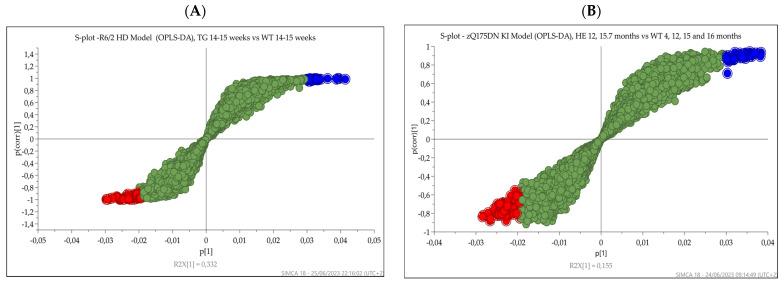
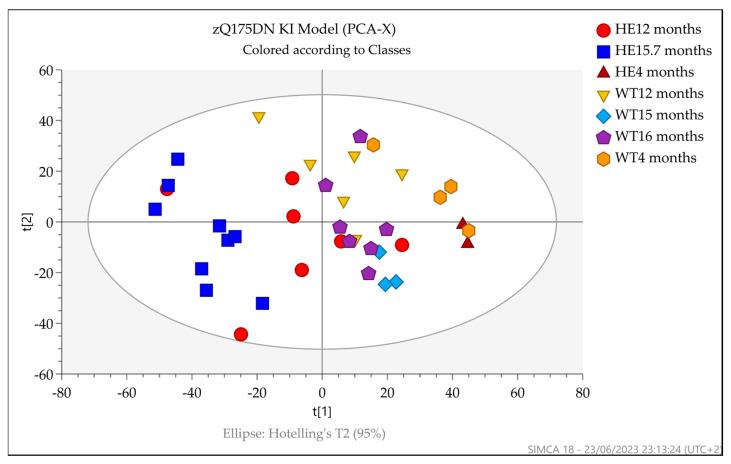
Huntington's disease (HD) is caused by the expansion of a polyglutamine (polyQ)-encoding tract in exon 1 of the huntingtin gene to greater than 35 CAG repeats. It typically has a disease course lasting 15-20 years, and there are currently no disease-modifying therapies available. Thus, there is a need for faithful mouse models of HD to use in preclinical studies of disease mechanisms, target validation, and therapeutic compound testing. A large variety of mouse models of HD were generated, none of which fully recapitulate human disease, complicating the selection of appropriate models for preclinical studies. Here, we present the urinary liquid chromatography-high-resolution mass spectrometry analysis employed to identify metabolic alterations in transgenic R6/2 and zQ175DN knock-in mice. In R6/2 mice, the perturbation of the corticosterone metabolism and the accumulation of pyrraline, indicative of the development of insulin resistance and the impairment of pheromone excretion, were observed. Differently from R6/2, zQ175DN mice showed the accumulation of oxidative stress metabolites. Both genotypes showed alterations in the tryptophan metabolism. This approach aims to improve our understanding of the molecular mechanisms involved in HD neuropathology, facilitating the selection of appropriate mouse models for preclinical studies. It also aims to identify potential biomarkers specific to HD.
亨廷顿舞蹈症(HD)是由亨廷顿基因外显子1中编码多聚谷氨酰胺(polyQ)的序列扩增至超过35个CAG重复序列所引起的。其病程通常持续15至20年,目前尚无改善病情的疗法。因此,需要可靠的HD小鼠模型用于疾病机制的临床前研究、靶点验证和治疗化合物测试。已构建了多种HD小鼠模型,但均不能完全重现人类疾病,这使得为临床前研究选择合适的模型变得复杂。在此,我们展示了用于鉴定转基因R6/2和zQ175DN基因敲入小鼠代谢改变的尿液液相色谱 - 高分辨率质谱分析。在R6/2小鼠中,观察到皮质酮代谢紊乱以及吡咯赖氨酸积累,这表明存在胰岛素抵抗和信息素排泄受损。与R6/2不同,zQ175DN小鼠表现出氧化应激代谢物的积累。两种基因型在色氨酸代谢方面均有改变。该方法旨在增进我们对HD神经病理学相关分子机制的理解,有助于为临床前研究选择合适的小鼠模型。它还旨在鉴定HD特有的潜在生物标志物。




 Zotero 插件